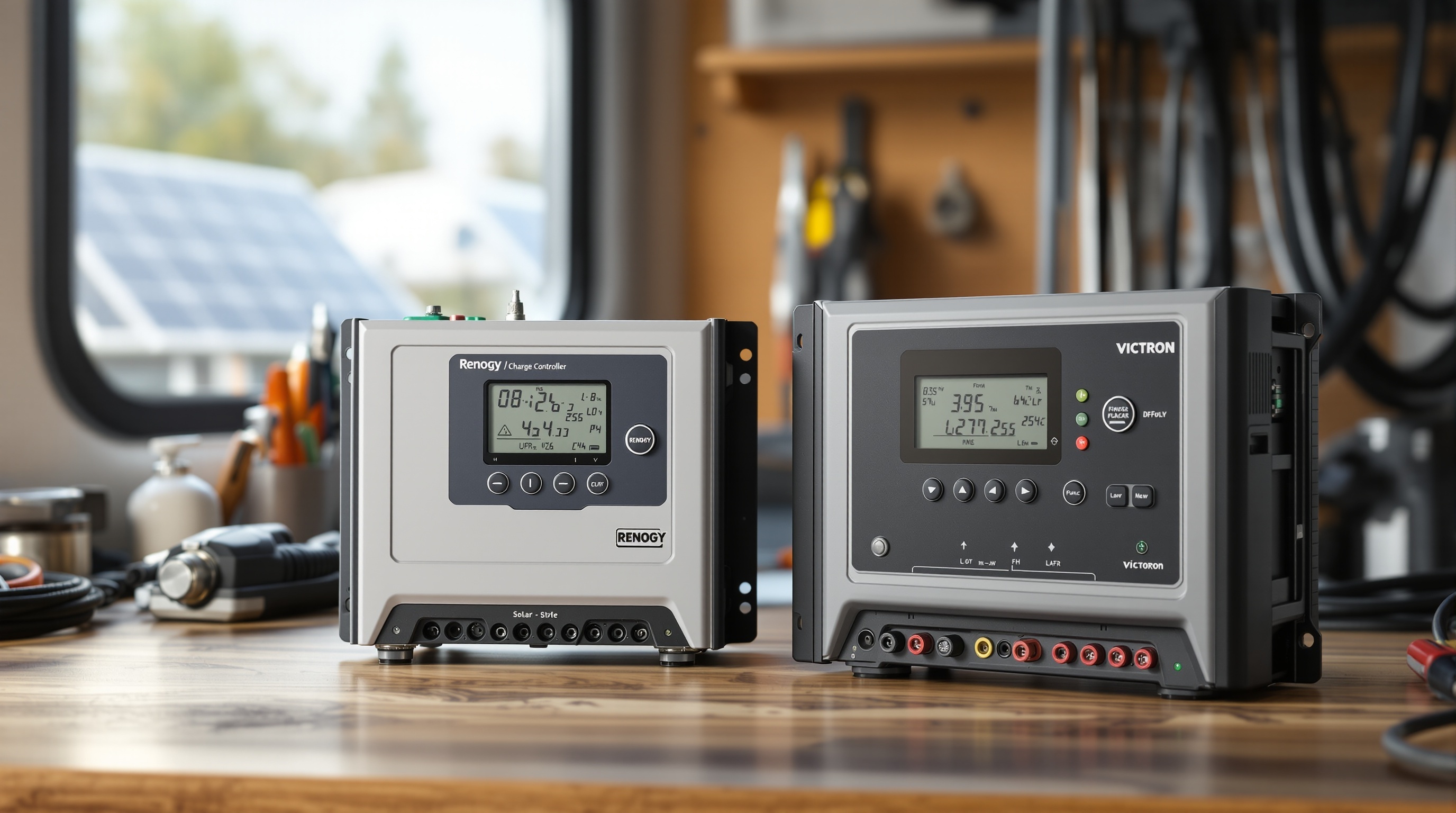
Renogy vs Victron Solar Panels: Which is Better for Your RV?
Renogy 200W gives you the most output per panel. Victron is the premium choice for build quality and low light performance.
📋 What you'll discover
- Compare head to head specifications and verified owner reported performance
- See typical output in different conditions based on manufacturer data
- Understand warranty and build quality differences
- Calculate total system cost for your RV
- Choose the right brand for your budget
Comparison Transparency
Smart RV Hub earns a commission on qualifying purchases or subscriptions made through links to A1 SolarStore.
We have no affiliate relationship with Renogy and Victron.
This material connection may influence which brands we cover, though our underlying analysis is based on published specifications and verified user reviews.
Affiliate Disclosure
This page contains affiliate links to A1 SolarStore.
When you purchase from A1 SolarStore through these links, we may earn a commission at no additional cost to you.
This helps support our free calculators, guides, and research tools. Read our full disclosure
Affiliate link. We may earn a commission at no extra cost to you.
Where to Buy: What Our Partner Actually Stocks
Our solar partner A1 SolarStore carries Victron but does not carry Renogy. Renogy sells direct, and that is where to buy their panels.
A1 stocks panels from JA Solar, Canadian Solar, Mission, Trina, REC, Longi, Hyundai, Jinko, Silfab and Qcells alongside Victron, verified August 2026.
If the wattage and price matter more to you than the badge, compare that range against the sizing you worked out above.
Affiliate link. We may earn a commission at no extra cost to you.
Not sure how many panels you need?
Before choosing between Renogy and Victron, find out exactly how many watts you need. Then check our complete panel buying guide for more options.
Get My Wattage NumberNew to RV solar? Start with RV solar explained from the ground up before diving into specific brands.
How Do Renogy and Victron Compare Head to Head?
Renogy 200W wins on total output per panel and is slightly lighter, while Victron 175W leads on efficiency, build quality, and warranty service. Panel pricing moves constantly, so check current figures at the retailer before you decide.
| Feature | Renogy 200WMost Watts Per Panel | Victron 175WPremium Quality |
|---|---|---|
| Price | $150 to $220 $0.75 to $1.10 per watt | Check current price Typically more per watt than Renogy |
| Power Output | 200W | 175W |
| Efficiency Rating | 21% | 22% Winner (Highest rated spec) |
| Real World Output | Below 200W rating (heat, angle, and shade cut output) | Below 175W rating (heat, angle, and shade cut output) |
| Weight | About 23.4 lbs (N type, per published spec sheet) | About 24.3 lbs (11 kg, per published spec sheet) |
| Build Quality | 4 out of 5 stars, Excellent | 5 out of 5 stars, Premium build Winner |
| Low Light Performance | Good | Strong (per owner reports) Specific quantitative low light test data not published |
| Warranty | 25 years | 25 years |
| Warranty Service | 4 out of 5 stars, Fast processing | 5 out of 5 stars, praised in owner reports |
| Trustpilot Customer Rating | 4 stars 6,900+ reviews (verified July 2026) | Limited sample on Trustpilot ~72 reviews; refer to manufacturer specs and dealer reviews |
- Over 60 Fulfillment Centers
- Free Shipping on Qualifying Orders
- Rated Excellent on Trustpilot, checked August 2026 (opens in a new tab)
Trust signals verified August 2026. Check a1solarstore.com for current details.
Affiliate link. We may earn a commission at no extra cost to you.
A1 SolarStore does not carry Renogy. They stock panels from JA Solar, Canadian Solar, Mission, Trina, REC, Longi, Hyundai, Jinko, Silfab and Qcells, verified August 2026.
Choose Renogy If...
- You want the most output from each panel, which means fewer panels and fewer roof mounts for the same array
- Maximum power output is your priority (200W vs 175W)
- You value bundled mounting hardware in kit versions
- You're building a large array (400W+) where savings multiply
- You want a track record that speaks for itself rather than paying for brand name alone
💰 Indicative Panel Pricing (800W Renogy Array):
4× Renogy 200W ≈ $600 to $880 (panels only)
Add controllers, mounts, and wiring separately. Check Renogy's own store for current pricing, since A1 SolarStore does not carry Renogy.
Choose Victron If...
- You want premium build quality
- Stronger low light performance matters for your setup (based on owner reports)
- You value brand reputation and ecosystem integration
- You're full time RVing or in harsh environments
- You want warranty support that owners often praise
Indicative Panel Pricing (700W Victron Array):
For 4× Victron 175W, check the live price (panels only)
Victron typically costs more per watt than Renogy. Add controllers, mounts, and wiring separately.
Performance Comparison
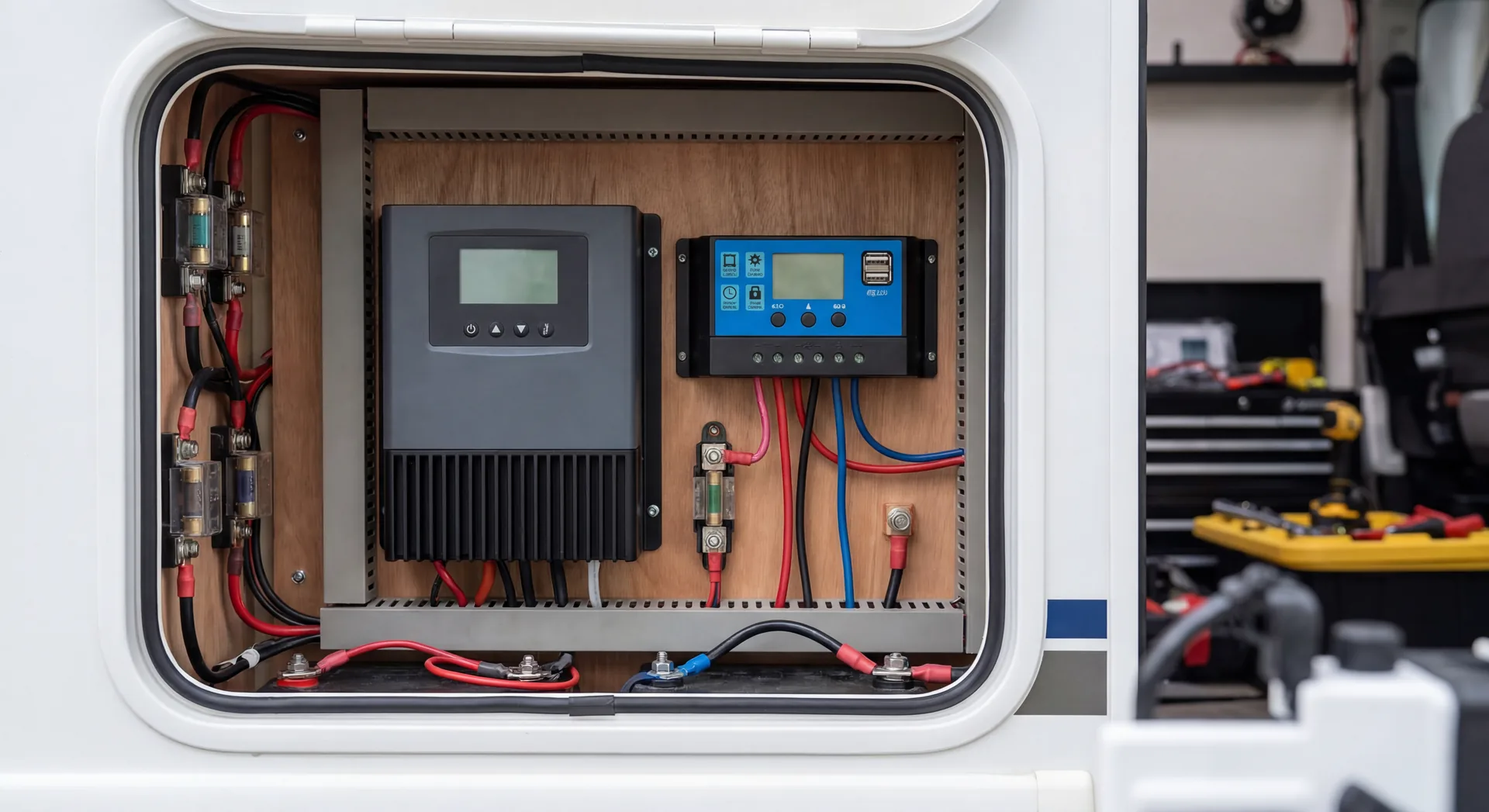
The numbers below come from manufacturer specifications, warranty terms, and owner feedback. No lab testing was conducted by this publication.
Renogy rates the 200W panel at 200W peak output in full sun. Victron rates its 175W panel lower, but owners consistently report strong output in overcast conditions, which Renogy users note less frequently.
In practice: Renogy puts out more total daily watt hours when the sun is high, while Victron holds its ground on cloudy days based on owner reports.
Price Analysis
Renogy 200W panels typically cost $150 to $220 each (prices vary). For an 800W system, budget approximately $600 to $880 for Renogy panels alone.
Victron is better known for its MPPT charge controllers than its panels. Always check current pricing before ordering, as solar equipment prices shift regularly.
Cost per watt moves with stock and promotions on both brands, so the only figure worth acting on is the one live at the retailer today.
Renogy gives you more watts from each panel, which means fewer panels and fewer roof mounts for the same array. Victron's construction and warranty service are what its price reflects.
Pro Tip
A popular setup among experienced RVers is pairing Renogy panels with a Victron SmartSolar MPPT charge controller.
You get value pricing on panels and premium electronics with full monitoring, without paying Victron prices across every component.
Weighing Renogy on the battery side as well? Our Renogy vs Battle Born lithium battery comparison breaks down how the two brands stack up on storage.
Ready to order? Our guide to authorized RV solar panel retailers covers where to buy with free shipping and matched system kits.
Watching your budget? The current RV solar deals roundup tracks live discounts on panels, kits, and batteries from both brands.
Want everything in one box? Browse complete RV solar installation kits for pre matched panels, controllers, and wiring ready for DIY setup.
How the Controllers and Monitoring Compare
Panels are the least differentiated part of either brand, so for most builds the real decision is the charge controller.
Renogy's MPPT line is the Rover series, and the Renogy Rover covers typical RV arrays at a noticeably lower price than the equivalent Victron unit.
The Victron MPPT equivalent is the SmartSolar range, and a Victron controller carries Bluetooth on board rather than as an accessory.
That difference matters day to day, because a Renogy Rover generally needs a separate Bluetooth dongle before you can read it from a phone.
Victron then extends into VRM, its remote monitoring portal, which logs history and lets you check the system from anywhere with a signal.
On storage, neither brand is the obvious default. A Victron battery sits at the premium end, and many RV builds pair either controller with a Battle Born or comparable LiFePO4 bank instead.
Whatever the badge, check the battery has a proper BMS, since the BMS is what protects lithium cells from over charge and low temperature charging.
Inverters follow the same pattern, with Victron strongest where the inverter is permanent and handles shore power changeover automatically.
Based on published appliance draw, a 2,000 watt inverter suits most rigs, and a 3000W unit is the step up for anyone running a microwave and an air conditioner.
One component that gets skipped and should not: a correctly rated fuse on every positive run, sized to the cable rather than to the device.
Based on published specs, the honest summary is that Renogy wins on price per watt and Victron wins on monitoring depth and expansion room.
Frequently Asked Questions
Is Renogy or Victron better for RV solar panels?
Renogy 200W panels offer strong value with 21% cell efficiency and proven reliability, though real world output typically runs below the rated figure because of heat, angle, and shade.
Victron is the premium choice with 22% cell efficiency, superior build quality, and solid low light performance.
Renogy suits value focused installations; Victron suits full time RV use where build quality matters more than upfront price.
Check current prices as they fluctuate.
Is Victron solar worth the extra cost over Renogy?
Renogy delivers the higher output per panel of the two.
If you're living in your RV full time, dealing with harsh conditions like extreme heat or salt air, or you want the Victron monitoring ecosystem to tie your whole system together, the extra spend on build quality and warranty support makes sense.
Compare current prices before you order, as they shift.
Can I use Renogy panels with a Victron charge controller?
Yes.
This is a popular setup.
Renogy panels work with any brand of MPPT charge controller.
Many experienced RVers pair Renogy panels with a Victron SmartSolar MPPT controller to combine value pricing on panels with strong electronics and monitoring.
Check current retailer pricing for the panel and controller combination you choose.
What is the real world efficiency of Renogy vs Victron solar panels?
According to manufacturer specifications and user reviews: Renogy 200W panels are rated at 200W peak output.
Victron 175W panels are rated at 175W peak output.
Victron gets consistent praise in low light conditions based on user reports, while Renogy delivers more total daily energy due to its higher wattage rating.
Which brand has better warranty service for RV solar panels?
Owner reports often praise Victron's warranty support, and both brands publish 25 year power output warranties.
Read each brand's claim terms before you buy.
If smoother warranty claims matter more to you than maximum output per panel, Victron is the pick.
How much does an 800W RV solar system cost with Renogy vs Victron?
A four panel Renogy 200W array totals roughly $600 to $880 based on panel only pricing of $150 to $220 each.
Victron 175W panels typically cost more per watt than Renogy, so check the live retailer price before you budget a four panel Victron array.
Renogy gives you more total wattage per system; Victron gives you higher per panel efficiency and stronger build quality.
Total kit pricing including mounts and wiring varies by retailer.
Which brand is lighter, Renogy or Victron solar panels?
Per published spec sheets, the Victron BlueSolar 175W panel weighs about 24.3 lbs (11 kg) and the Renogy 200W N type rigid panel about 23.4 lbs, so the Renogy is slightly lighter.
The older Renogy 200W mono panel was heavier at about 26.5 lbs, so check the model you are buying.
Weight matters most on weight sensitive rigs and larger arrays where every panel adds up, and Renogy also delivers more watts per panel.
Do Renogy and Victron panels have the same warranty length?
Both carry a 25 year power output warranty, so warranty length is a tie.
The difference is in service, where owner reports often praise Victron's warranty support and Renogy offers solid warranty support of its own.
If smoother claims matter to you, that is part of what the higher per panel Victron price reflects.
What is the best brand of solar charge controller?
Victron is the usual answer for a solar charge controller, because its MPPT range has long service life and its monitoring goes deeper than most in the category.
Renogy MPPT controllers cost noticeably less and perform well on a straightforward build, which is why they appear in so many starter kits.
Pick Victron when you want deep monitoring and expansion room, and Renogy when the system is simple and budget is the deciding factor.
Is Renogy good quality?
Renogy is good quality for the price bracket it sits in, and it is one of the most widely used brands in RV solar for that reason.
Based on published specs and user reviews, the panels and MPPT controllers do the job reliably on standard builds, and the main criticisms concern support response times rather than hardware failure.
Victron sits a tier above on tolerances and monitoring, which is what the price difference buys.
Is Renogy a Chinese company?
Renogy was founded in the United States and is headquartered in California, with manufacturing in China as is standard across almost the entire solar industry.
Victron Energy is Dutch, headquartered in the Netherlands, and also manufactures in Asia.
Country of origin is a weak signal here, because both brands use comparable supply chains and the meaningful difference is in component tolerance and warranty service.
Can you mix Renogy and Victron components in the same system?
Yes, and mixing the two is one of the most common ways RVers build a system on a budget.
The usual pattern is Renogy panels with a Victron charge controller and a Victron shunt for monitoring, because panels are the least differentiated part and monitoring is where Victron earns its premium.
Panels, controllers, inverters and batteries only need matching voltage and correct sizing, not a matching badge.
Do Renogy and Victron work with LiFePO4 batteries?
Both brands support LiFePO4 batteries, and a lithium bank is the normal pairing for either one on a modern RV build.
Set the charge controller to the lithium profile rather than leaving it on the lead acid default, because the wrong charge profile is the most common cause of disappointing performance from LiFePO4 batteries.
A shunt based battery monitor is worth adding either way, since lithium holds voltage almost flat and voltage alone tells you very little about the state of charge.
Do I need an inverter with a Renogy or Victron system?
An inverter is only required if you want to run household AC appliances, because lights, water pumps, fans and USB charging all run on DC already.
Victron inverters and combined inverter chargers are the stronger option for permanent installs and for anyone who wants shore power changeover handled automatically.
Renogy inverters cover simpler needs at a lower price, which is enough when the AC load is an occasional laptop charger rather than a daily draw.
Smart RV Hub Editorial Team
RV Technology Research and Reviews
Our writers research smart RV technology full time, covering solar power, connectivity, security, and power management.
Every guide draws on published manufacturer specifications and verified owner reviews, so you can compare options with confidence.
Meet the editorial team and our review standardsReady to Choose Your Solar Panels?
Run the solar sizing calculator first so you know exactly how many panels you need, then pick up the right brand below.
Affiliate link. We may earn a commission at no extra cost to you.
Not sure how many panels you need? Use the solar calculatorA1 SolarStore does not carry Renogy. They stock panels from JA Solar, Canadian Solar, Mission, Trina, REC, Longi, Hyundai, Jinko, Silfab and Qcells, verified August 2026.
Related Resources & Next Steps
Solar Equipment & Calculators
- Renogy and Victron aren't your only options. See our top 10 RV solar panels reviewed against published specs.
- New to RV solar? Read the RV solar fundamentals guide before locking in a brand.
- Don't guess on wattage. Use the free solar panel calculator to get your exact number before you order.
- Adding batteries to the system? Compare the top lithium iron phosphate battery options for RVs so your storage matches your panels.
Power Management & Planning
- Getting more from the panels you already have. Read the RV power management guide for practical efficiency tips.
- Going full time? See what full time RV solar systems actually need in terms of panel count and storage.
- Planning trips around good solar exposure? The RV trip planning guide covers routing and campsite selection.
- Camping off grid to make solar pay off faster? Try camping at host businesses between stops such as wineries and farms.
- Which controller to pair with your panels? See the maximum power point tracking vs pulse width modulation efficiency breakdown and know which one fits your system size.
- Not sure how much solar you need? Pin down your exact panel, battery, and controller requirements first. Still on the fence? Our payback timeline for different camping habits gives an honest cost breakdown.
Still deciding? Use the quick sizing tool first to pin down your exact wattage.
Then browse all 10 of our reviewed panels to see how Renogy and Victron stack up against the full field.
Want the full picture? Read our start to finish solar setup guide.
Fast US shipping. Other trust signals verified August 2026.
Shop RV Solar Panels and BatteriesAffiliate link. We may earn a commission at no extra cost to you.
See all our solar coverage collected in one place.