Lithium Battery Upgrades for RVs, Explained
What really changes when lead acid comes out, including the part nobody budgets.
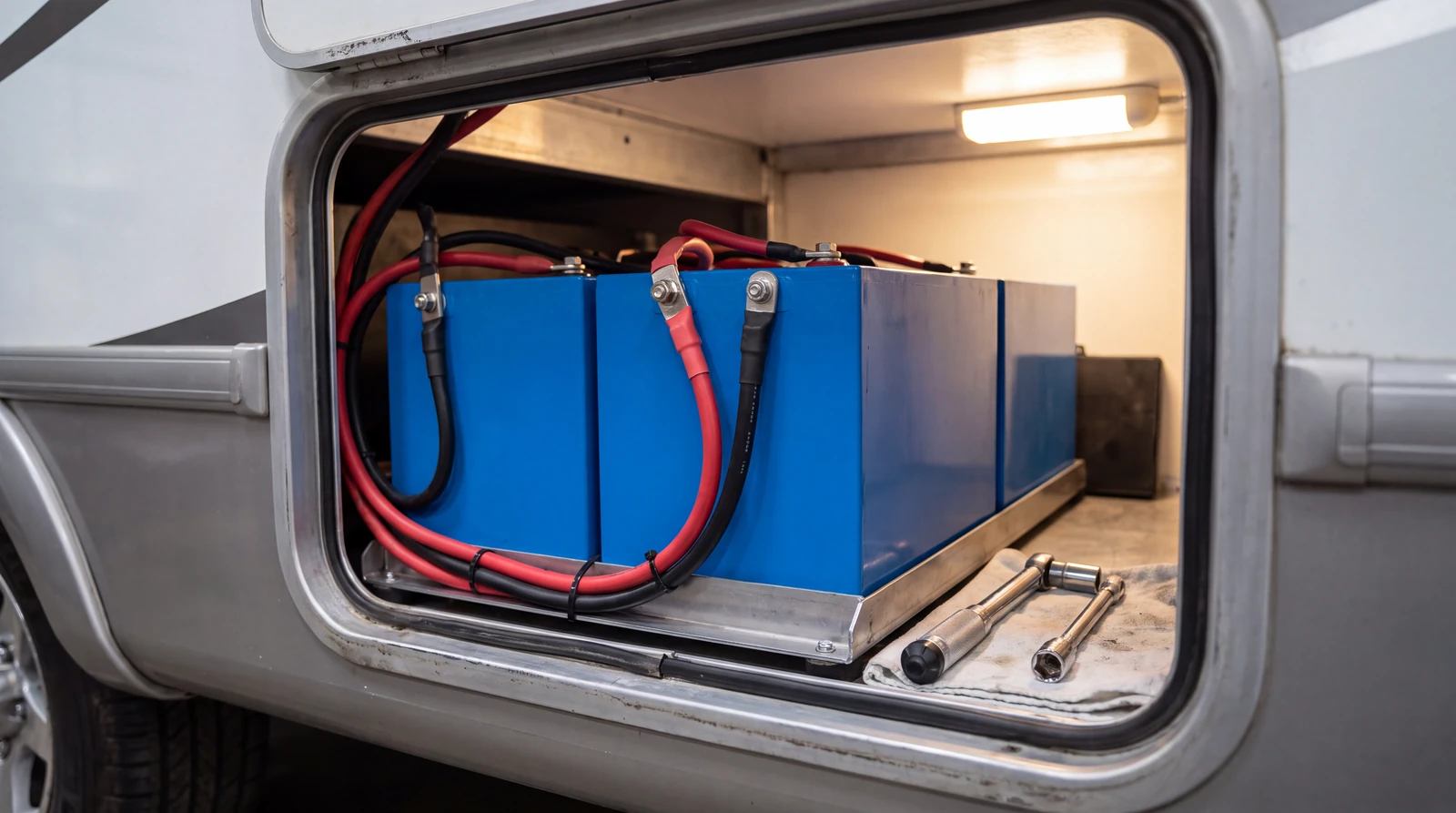
The Four Things That Change
Every figure below comes from published manufacturer specs and matches the numbers across our battery guides, last verified August 2026.
Usable capacity roughly doubles
LiFePO4 tolerates 80 to 100 percent depth of discharge where lead acid is limited to about 50, so a 100Ah battery goes from about 50 usable amp hours to 80 to 100, per published specs.
Weight drops sharply
Common 100Ah LiFePO4 batteries publish weights around 24 to 35 pounds, and matching their usable power with lead acid takes several times the weight.
Cycle life multiplies
Published ratings run 3,000 to 6,000 cycles at 80 percent depth of discharge for LiFePO4, against roughly 300 to 500 at 50 percent for lead acid.
Your charging gear may need to follow
Converters without a lithium profile can stop short of a full charge, and alternator charging usually wants a DC to DC charger, per manufacturer charging guidance.
The Same Rated Battery, Twice the Usable Power
Rated amp hours are the number on the label, and usable amp hours are what your rig actually gets.
Cycle Life Is Where the Price Gap Closes
Lithium costs more per battery and less per cycle, which is why daily users convert first.
The Part Nobody Budgets: Charging
A lithium bank changes what your charging equipment is asked to do, per manufacturer charging guidance.
The converter needs a lithium profile to reach full charge, and many older lead acid units stop short.
Charging from the engine usually wants a DC to DC charger, which protects the alternator and gives lithium the profile it expects. Our DC to DC charging guide covers that decision.
Solar controllers mostly need a settings change rather than replacement, covered in our charge controller guide.
Affiliate Disclosure
This page contains affiliate links to A1 SolarStore.
When you purchase from A1 SolarStore through these links, we may earn a commission at no additional cost to you.
This helps support our free calculators, guides, and research tools. Read our full disclosure
When the checks above come back yes, the battery aisle is the next stop, and lithium is where the browsing starts.
Fast US shipping. Other trust signals verified August 2026.
Compare RV Solar Panel PricesAffiliate link. We may earn a commission at no extra cost to you.
Tire and battery safety tips by email
Lithium charging notes, cold weather rules, and the specs that matter, from published sources.
Free by email. Unsubscribe anytime.
Where These Figures Come From
Depth of discharge, cycle life, and weight figures here are manufacturer specifications, the same fact checked numbers our battery guides already carry.
No battery was installed or cycle tested by us in the making of this page.
Last verified August 2026, and manufacturers revise ratings without notice.
Smart RV Hub Editorial Team
RV Technology Research and Reviews
Our writers research smart RV technology full time, covering solar power, connectivity, security, and power management.
Every guide draws on published manufacturer specifications and verified owner reviews, so you can compare options with confidence.
Meet the editorial team and our review standardsLithium Upgrade Questions
Is upgrading to lithium worth it?
If you camp off grid regularly, usually yes: a 100Ah LiFePO4 delivers 80 to 100 usable amp hours where a 100Ah lead acid safely gives about 50, per published depth of discharge specs.
If your RV lives on hookups, the honest answer is that lead acid may never limit you.
What actually changes when I swap to lithium?
Four things: usable capacity roughly doubles for the same rated size, weight drops sharply, cycle life multiplies, and your charging equipment may need updating.
The charging part is the one that surprises people, and it is covered in detail on this page.
How much lighter is lithium?
Published specs put common 100Ah LiFePO4 batteries around 24 to 35 pounds, while getting the same usable power from lead acid takes roughly double the rated capacity and several times the weight.
On a small trailer that difference is real payload back.
How long does a lithium battery last?
Manufacturer published ratings run 3,000 to 6,000 cycles at 80 percent depth of discharge for LiFePO4, against roughly 300 to 500 cycles at 50 percent for lead acid.
Cycled daily, that is the difference between years and a decade plus.
Will my existing converter charge a lithium battery?
Maybe not fully: many lead acid converters stop short of the charge voltage LiFePO4 needs, per manufacturer charging guidance.
Check whether your converter has a lithium setting before the swap, because a battery that never fills wastes the money you spent on it.
Does lithium work in cold weather?
LiFePO4 batteries should not be charged below freezing, and manufacturers publish either low temperature charge protection or built in heating as the fix.
Winter campers should treat that feature as required, not optional.
Do I need to change my solar charge controller?
Most MPPT controllers publish a lithium charging profile, so usually a settings change rather than new hardware.
Our MPPT vs PWM guide covers what the controller does in the chain.
Can I mix lithium with my old lead acid batteries?
No. The two chemistries charge to different voltages and manufacturers direct against mixing them in one bank.
The upgrade is a full bank swap, which is part of budgeting it honestly.
The product picks, and the charging chain around the new bank.
The Lithium Packs We Compared
Decided to upgrade? The compared picks live here.
Where The Battery Fits The Chain
How the battery fits the wider solar chain.
RV DC to DC Charging Guide
The alternator side of charging a lithium bank.
Sizing An Inverter To The Bank
The bigger usable bank can feed a bigger inverter.
Controllers And Lithium Chemistry
What the controller does when the chemistry changes.
Panels And Battery As One System
Size panels and battery as one system, not two buys.
Where the Published Numbers Stop
Specs settle capacity, weight, and cycles, but they cannot see your battery bay: its dimensions, its ventilation, and whether it ever drops below freezing.
Measure the bay and check your converter's label before ordering, then pick the battery itself with our lithium battery comparison.
Fast US shipping. Other trust signals verified August 2026.
Compare RV Solar Panel PricesAffiliate link. We may earn a commission at no extra cost to you.