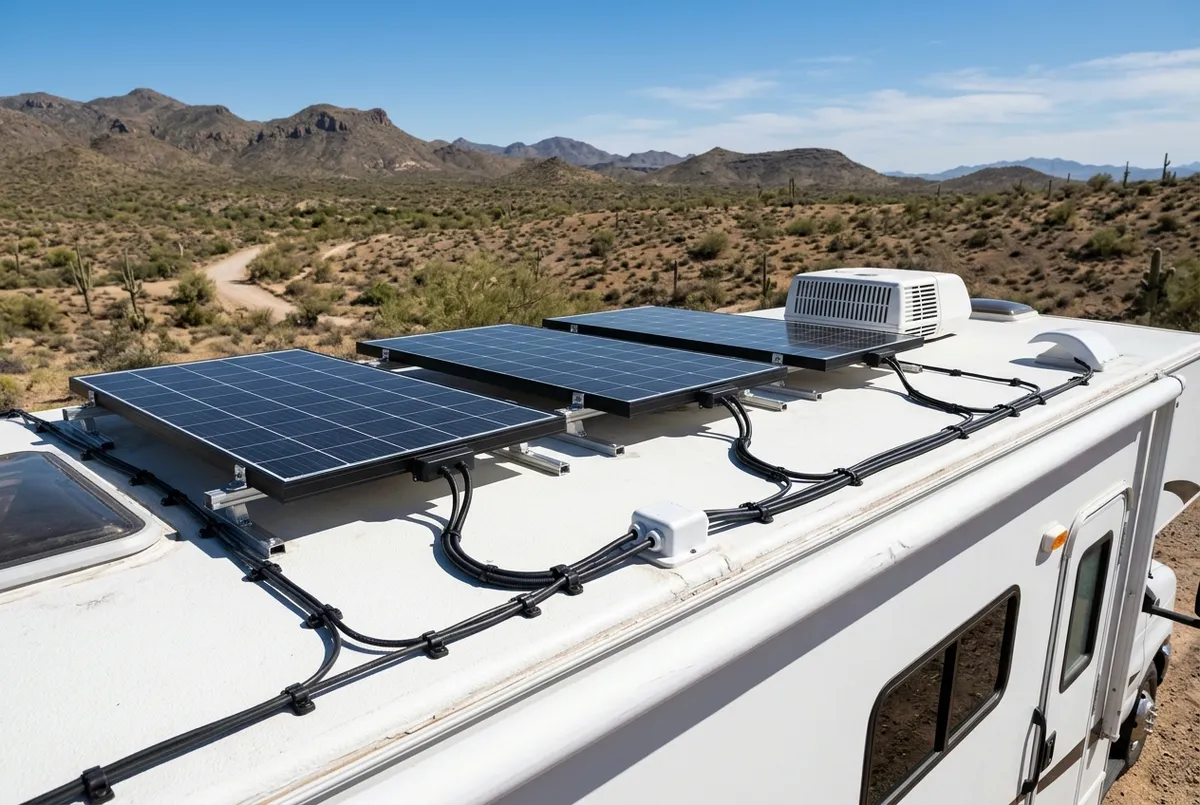
600 Watt RV Solar Kit Review: The Part Timer's Sweet Spot
Verdict: for weeks long trips without hookups, a 600 watt RV solar kit is where capability meets sensible cost.
How this review was judged
Based on published specs and user reviews, never first person testing.
Every price on the page links to the listing it came from.
Affiliate Disclosure Smart RV Hub may earn a commission if you purchase from A1 SolarStore through these links, at no additional cost to you; see our full disclosure.
Kit cost and the tiers either side
Linked kit and battery listings sit further down, under the system cost.
Weekenders save with 400W, and daily inverter users step up to 800W.
If 600 watts fits the way you camp, the next step is pricing camper panels for a system around that size.
Free shipping options on qualifying orders
Rated 4.4 of 5 on Trustpilot, checked November 2026 (opens in a new tab)Ships from over 60 US fulfillment centers, checked October 2026.
Shop RV Solar Panels and BatteriesAffiliate link. We may earn a commission at no extra cost to you.
What Does a 600W Kit Actually Run?
Allowing five peak sun hours and normal losses, three panels bring in roughly 2,100 watt hours a day.
That runs the full part time load list with margin, though the sun hours for your state may differ.
The part time load list fits inside the roughly 2,100 watt hours three panels bring in, with spare left for a cloudy day.

That harvest also depends on how the three panels are joined, which the guide to wiring panels in series or parallel works through.
What Comes in a 600W RV Solar Kit?
Published kit listings typically bundle three 200W panels, an MPPT controller (it squeezes more charge from each panel than a basic controller), plus cable, fuses, and mounting feet.
What lands in the box varies by retailer, and our review of A1 SolarStore as a solar supplier covers what it sells: panels, controllers and batteries, not a boxed kit.
Curved roofs and portable kits
Curved roofs need a different panel type, and our flexible versus rigid comparison covers when to switch.
Not ready to drill the roof at all? Our portable solar panel comparison weighs a suitcase kit against a fixed array like this one.
Typical 600W kit configuration
Panels
3× 200W monocrystalline
Compare the efficiency and output warranty each listing states, since both vary by brand
Controller
40A to 60A MPPT
Input headroom decides whether the kit can take a fourth panel later
Wiring
Solar cable with weatherproof MC4 plugs, plus fusing
Follow the kit manual for wire gauge and fuse ratings, and confirm fuses are in the box
Mounts
Z shaped brackets for each panel
Curved roofs need different hardware, sold separately
Not included
Battery bank and inverter
Budget a 200Ah to 300Ah lithium (LiFePO4) bank for this tier
| Component | Typical spec | What to check |
|---|---|---|
| Panels | 3× 200W monocrystalline | Compare the efficiency and output warranty each listing states, since both vary by brand |
| Controller | 40A to 60A MPPT | Input headroom decides whether the kit can take a fourth panel later |
| Wiring | Solar cable with weatherproof MC4 plugs, plus fusing | Follow the kit manual for wire gauge and fuse ratings, and confirm fuses are in the box |
| Mounts | Z shaped brackets for each panel | Curved roofs need different hardware, sold separately |
| Not included | Battery bank and inverter | Budget a 200Ah to 300Ah lithium (LiFePO4) bank for this tier |
Will Three Panels Fit on a Mid Size Roof?
Three 200W panels want roughly 33 square feet of open roof, a size most mid size rigs can spare.
Renogy lists each 200W N type rigid panel at 49.7 by 30.1 inches Renogy listing, so tape out the row between your vent and the rear cap before you order.
- Three panels of 49.7 by 30.1 inches each, in one row.
- About 33 square feet of clear roof in total.
- Red outlines are the AC and vent to work around.
- The dashed outline is room a fourth panel would need later.
Leave room for a fourth panel if you might grow into 800W later, and check the controller can take it.
The guide to fitting panels yourself covers sealing each mount, and a seasonal look over the roof seals keeps those holes dry.
How Does the 600W Tier Hold Up?
Strengths
- Real cloudy day margin: the load list fits with roughly 900 watt hours spare on a typical day
- Fits most roofs: three panels need about 33 square feet, which mid size rigs have
- Matched components: one box means the controller already suits three panels, with cable and feet to fit
- Sensible cost step: a third panel adds half again the harvest of a two panel kit
Limits
- No air conditioning: AC from solar needs a far larger system, so see the panel and battery math for cooling off grid
- Batteries sold separately: the kit price is not the system price, and our ranked lithium batteries for RV solar fill that gap
- Daily inverter loads strain it: a microwave or induction cooktop every day pushes past what three panels bring in
Best for
Part time RVers on weeks long trips, remote workers running a router and laptop, and owners whose heaviest draw is a 12V fridge.
Check 600W Against Your Own Loads
The watt calculator for RV appliances turns your appliance list into a figure before you commit to a tier.
- Total your daily watt hours from the appliances you actually run.
- Set that total against the roughly 2,100 watt hours this tier harvests at five peak sun hours.
- Drop to 400W for weekend loads, or move up to 800W if an inverter runs every day.
Should You Size Up or Down Instead?
The right kit follows your travel style, not the biggest number the roof fits.
Which kit size fits how you travel?
Pick how you travel and see which RV solar kit size fits, plus what a 600 watt tier and its neighbors typically run.
600W kit · ~2,100 Wh per day
The weekend stack plus a router, CPAP, and cloudy day margin.
About 600 watts is the sweet spot for trips that run a week or more.
Estimates at 5 sun hours after typical system losses. Your location varies.
Affiliate link. We may earn a commission at no extra cost to you.
What Does a Complete 600W System Cost?
Retail listings show complete 600W kits at about $890 to $1,330 for panels, controller, and cable.
- Kits: a Rich Solar 600W kit at $889.40 and a Renogy 600W premium kit at $1,322.99.
- Batteries: a LiTime 12V 200Ah at $469.99, or a LiTime 12V 300Ah at $639.99.
Add one battery to one kit and the full system runs about $1,360 to $1,960. These are November 10, 2026 listings, and solar prices move often.
- Kit only: about $890 to $1,330 for panels, controller and cable.
- Kit plus a 200Ah lithium battery: about $1,360 to $1,790.
- Kit plus a 300Ah lithium battery: about $1,530 to $1,960.
Sources: the Rich Solar and Renogy kit listings, and the 200Ah and 300Ah battery listings, checked November 10, 2026.
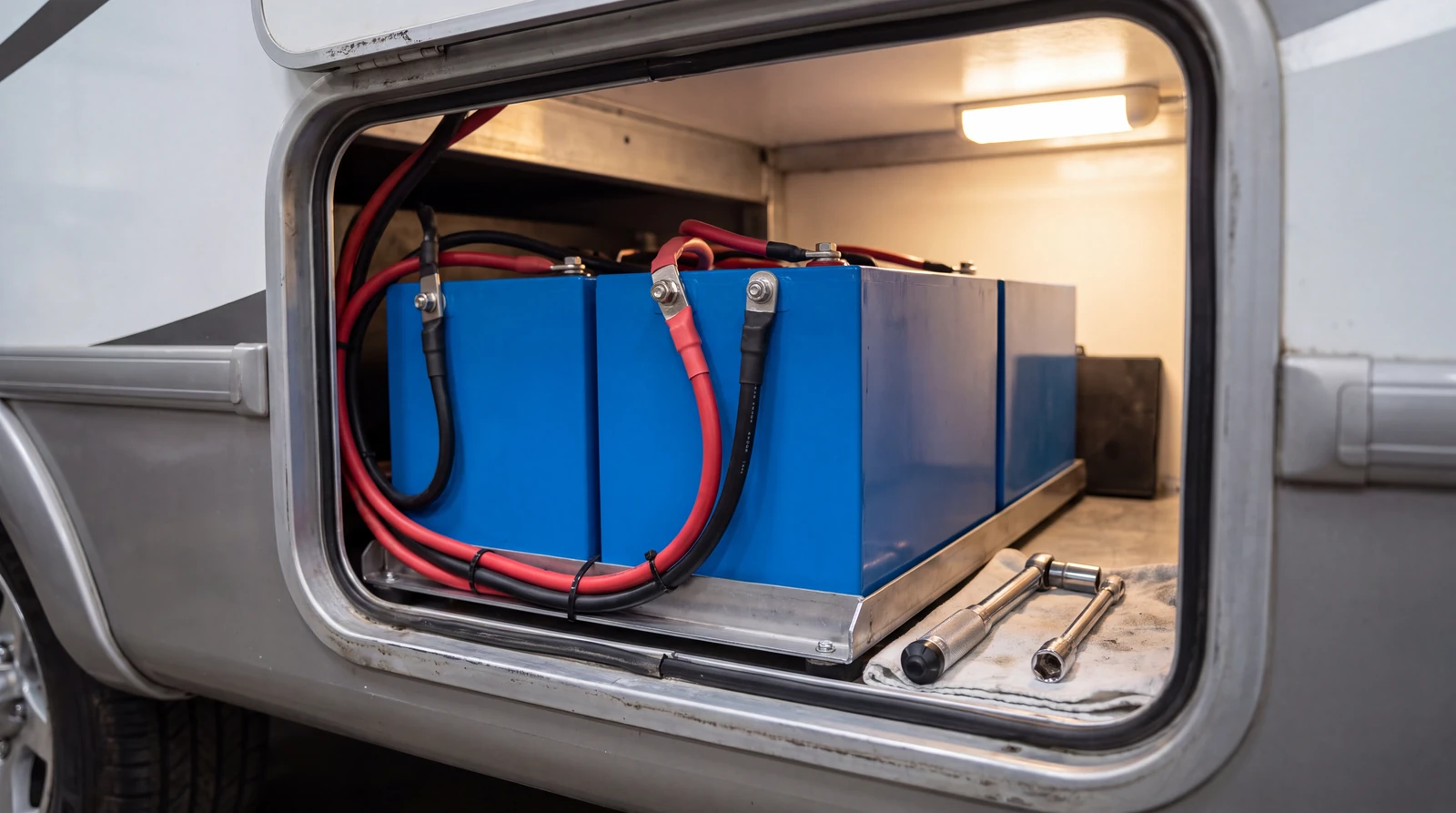
It also helps to judge RV solar kits by their delivered total before you commit.
Whether that spend pays off depends on your camping pattern, which our worth it analysis works through honestly.
- Over 60 Fulfillment Centers
- Free Shipping on Qualifying Orders
- Rated Excellent on Trustpilot, checked November 2026 (opens in a new tab)
Trust signals verified October 2026. Check a1solarstore.com for current details.
Free shipping options on qualifying orders
Rated 4.4 of 5 on Trustpilot, checked November 2026 (opens in a new tab)Ships from over 60 US fulfillment centers, checked October 2026.
Shop RV Solar Panels and BatteriesAffiliate link. We may earn a commission at no extra cost to you.
Smart RV Hub Editorial Team
RV Technology Research and Reviews
Our writers research smart RV technology full time, covering solar power, connectivity, security, and power management.
Every guide draws on published manufacturer specifications and owner reviews, so you can compare options with confidence.
Meet the editorial team and our review standards600W Solar Kit Questions
Is a 600 watt solar kit enough for an RV?
For part time RVers, yes.
A 600W kit harvests roughly 2,100 watt hours on a typical day, which covers a 12 volt fridge, router, laptop, lights, and CPAP with margin.
Full timers running inverter loads daily usually step up to 800W.
What comes in a 600 watt RV solar kit?
Based on current kit listings, a typical bundle is three 200W monocrystalline panels, a 40A to 60A MPPT charge controller, solar cable, fusing, and mounting hardware.
Batteries and inverters are usually sold separately, so budget for those too.
How much does a 600 watt RV solar kit cost?
On November 10, 2026, three panel kits listed at about $890 to $1,330 before batteries, such as Rich Solar's three panel kit with a 40A MPPT controller at $889.40 from Outbound Power.
A 200Ah to 300Ah lithium battery adds roughly $470 to $640, so plan on about $1,360 to $1,960 for the system.
Each listing is linked in the cost section above.
What is the size of a 600 watt solar panel?
A 600W RV array is usually three 200W panels rather than one panel.
Renogy gives its 200W N type rigid panel as 49.7 by 30.1 inches and 23.4 pounds, checked October 2026.
Three of them cover about 31 square feet and weigh about 70 pounds before mounts, which is why this guide budgets about 33 square feet of clear roof once you allow for gaps.
Single panels above 400W are residential size, such as the Qcells Q.TRON 435W at 67.8 by 44.6 inches per the Qcells datasheet, so they suit only large, flat roofs.
How many batteries does a 600 watt kit need?
As a sizing rule of thumb, a common pairing is 200Ah to 300Ah of LiFePO4 lithium, which stores roughly one to nearly two days of harvest.
More storage smooths cloudy stretches, and our sizing guide walks the math.
Will a 600W solar kit run an RV air conditioner?
No. Running a 13,500 BTU air conditioner from solar takes 1,200W or more of panels and 600Ah or more of lithium, because according to Dometic, its Brisk II draws about 1,700 watts at full load.
A 600W kit is sized for everything except air conditioning.
What controller should a 600 watt kit have?
At 600W on a 12 volt bank, current kits pair the panels with a 40A to 60A MPPT controller.
MPPT matters more as arrays grow, because it turns the panels' extra voltage into charging current that a basic PWM controller leaves unused.
Can you expand a 600 watt kit later?
Often yes, if the controller has headroom or the panels wire into a higher voltage series string.
Check the controller's maximum input specs before counting on expansion, since an undersized controller is the usual thing that blocks a fourth panel.
Should I buy a kit or separate parts?
Kits arrive with panels, controller, wiring, and mounts matched to work together, which avoids the compatibility mistakes first time buyers often make.
Experienced builders sometimes save by picking parts, at the cost of doing that matching themselves.
Who sells 600 watt RV solar kits?
Some RV solar retailers sell boxed kits, while A1 SolarStore sells the panels, controllers and batteries separately.
Compare what each kit includes, since wiring and mounting contents vary between listings.
Can I install a 600 watt RV solar kit myself?
As a rough guide, a kit this size is a realistic do it yourself job for owners who are comfortable with basic electrical work and roof mounting.
The job is drilling and sealing roof penetrations, running cable, and wiring the charge controller.
Our RV solar installation guide walks through each step, and it is a reasonable point to hire a professional if the wiring stage feels outside your comfort zone.
Should I choose flexible or rigid panels for a 600 watt kit?
Rigid monocrystalline panels are the standard choice at this tier and hold up better over years on a flat roof.
Flexible panels suit a curved roof or a weight sensitive build, and our flexible versus rigid comparison breaks down the trade off in full.
Keep Sizing the System
The hub this 600W review sits under.
Size It for Your Own LoadsSwap these ballpark figures for a calculation built on your own loads.
Best RV Solar Panels 2026Compare the 200W panels a three panel kit is built from.
Best Lithium Batteries for RVsThe storage half of the system.
Host Stays Between TripsPut the panels to work on overnight stays at farms and wineries.
RV LIFE ProPlan the routes between the off grid stays this kit makes possible.
Short on time? Watch our quick film on the three parts of a solar system instead.