RV DC to DC Charging, Explained
The box between your alternator and your house battery, and who actually needs it.
The Three Signs You Need One
Profiles, sizing, and smart alternator behavior below follow charger and vehicle manufacturer documentation, last verified August 2026.
You run lithium
LiFePO4 wants a controlled charging profile, and manufacturers direct alternator charging through a DC to DC unit rather than a plain connection.
Your vehicle has a smart alternator
Voltage drops once the start battery fills, so a direct connection barely charges the house bank. The charger boosts it back to a full profile.
Your drives are your charging window
Travel heavy schedules put more hours on the alternator than the sun. A 40 amp charger moves about 80Ah in a two hour drive, before losses.
Where It Sits in the Charging Picture
A traveling rig has up to three charge sources: the alternator while driving, solar while parked, and shore power at hookups.
The DC to DC charger owns the driving column, and published units commonly deliver 18 to 60 amps, sized under the alternator's rated output per manufacturer guidance.
The arithmetic makes travel days count: a 40 amp unit over a two hour drive moves about 80 amp hours before losses.
The solar column belongs to the charge controller, covered in our controller guide, and combined units with a solar input exist for small installs.
The install, honestly
The cable run from the front of the vehicle to the house bank is the real work, sized to current and length with fusing at both battery ends.
The gauge and fuse tables live in the charger manual, and the reasoning behind them is walked through in our wiring guide.
Affiliate Disclosure
This page contains affiliate links to A1 SolarStore.
When you purchase from A1 SolarStore through these links, we may earn a commission at no additional cost to you.
This helps support our free calculators, guides, and research tools. Read our full disclosure
The charging hardware for both columns, controllers included, lives in one catalog aisle.
Fast US shipping. Other trust signals verified August 2026.
Shop RV Batteries and SolarAffiliate link. We may earn a commission at no extra cost to you.
Solar sizing tips by email
Alternator charging math, wiring rules, and the profile settings lithium expects.
Free by email. Unsubscribe anytime.
Where This Comes From
Charging profiles, current ranges, and sizing rules follow charger manufacturer documentation, and smart alternator behavior follows vehicle maker documentation.
The drive time figures are arithmetic on those published ratings, since no charger of ours was installed or metered for this page.
Last verified August 2026. Your charger manual's tables override every general figure here.
Smart RV Hub Editorial Team
RV Technology Research and Reviews
Our writers research smart RV technology full time, covering solar power, connectivity, security, and power management.
Every guide draws on published manufacturer specifications and verified owner reviews, so you can compare options with confidence.
Meet the editorial team and our review standardsDC to DC Charging Questions
What does a DC to DC charger actually do?
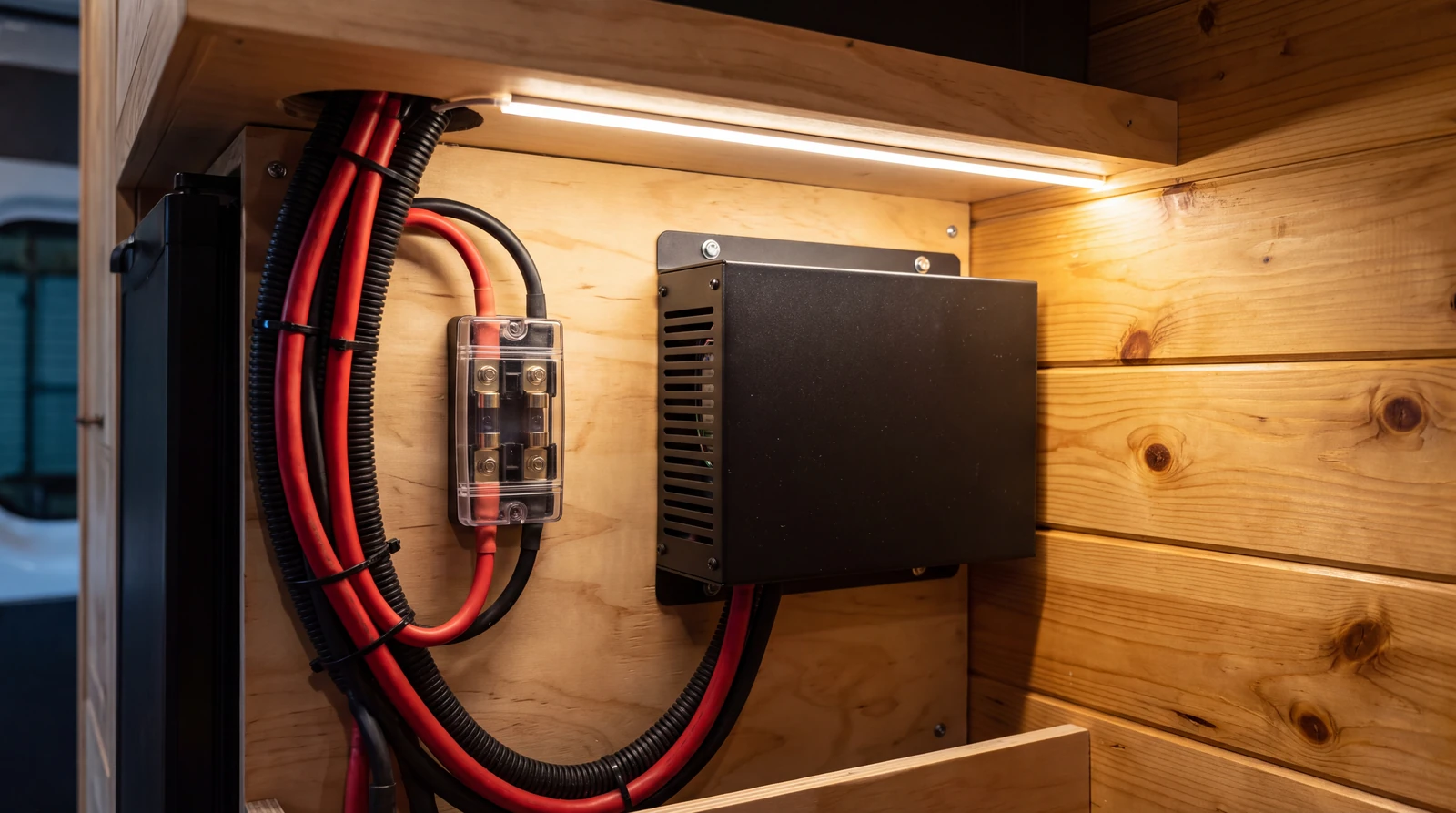
It takes rough power from your vehicle's alternator and feeds the house battery the exact charging profile its chemistry expects, per charger manufacturer documentation.
It also controls how much current the alternator is asked for, which protects both ends of the cable.
Do I need a DC to DC charger?
Two signs say yes: a lithium house battery, or a modern vehicle with a smart alternator that drops its voltage once the start battery is full.
An older vehicle charging a lead acid house battery through an isolator can genuinely be fine without one.
Why does lithium change the answer?
LiFePO4 accepts current so eagerly that a plain alternator connection can run hot on long drives, and manufacturers direct lithium charging through a controlled profile.
The charger is how the alternator and the lithium bank stop arguing.
What is a smart alternator and why does it matter?
Modern vehicles drop alternator voltage once the start battery is full, per manufacturer documentation, which can leave a directly connected house battery barely charging.
A DC to DC charger boosts that low voltage back to a full charging profile.
What size DC to DC charger should I get?
Published units commonly run 18 to 60 amps, and manufacturer guidance sizes them well under the alternator's rated output.
Bigger is not automatically better: the alternator has to feed the vehicle and the charger at once.
Does a DC to DC charger replace solar?
They stack: the charger fills the bank while driving, solar fills it while parked.
Many published charger models combine both jobs in one box with a solar input, which suits small installs.
How much do drives actually put back in?
Arithmetic, not magic: a 40 amp charger over a two hour drive moves about 80 amp hours before losses.
That is a meaningful share of a typical lithium bank, which is why travel days count as charging days.
What wiring does the install need?
Heavy gauge cable sized to the current and run length, with fusing at both battery ends, per the charger manual's table.
Our solar wiring guide covers why the fuse sits close to each battery.
The battery, the solar half, and the wiring that connects them.
Lithium Battery Upgrade, Explained
Why the chemistry swap creates this charging question.
Choosing The Battery Bank
The bank both charging sources feed.
The Solar Charging Half
The solar half of the charging picture.
Cable Gauge And Fusing
Cable gauge and fusing for the install.
Roof Charging Versus Drive Charging
Balancing drive charging against roof charging.
Sizing The Load Side
The load side the charging exists to feed.
Next Step
Settling the driving column leaves the parked column, and that one is a sizing question rather than a yes or no.
Our guide to matching panels to battery capacity works out how much roof the battery bank actually needs once drives are doing their share.
Wide selection for any setup
Rated 4.4 of 5 on Trustpilot, checked August 2026 (opens in a new tab)Fast US shipping. Other trust signals verified August 2026.
Shop RV Batteries and SolarAffiliate link. We may earn a commission at no extra cost to you.