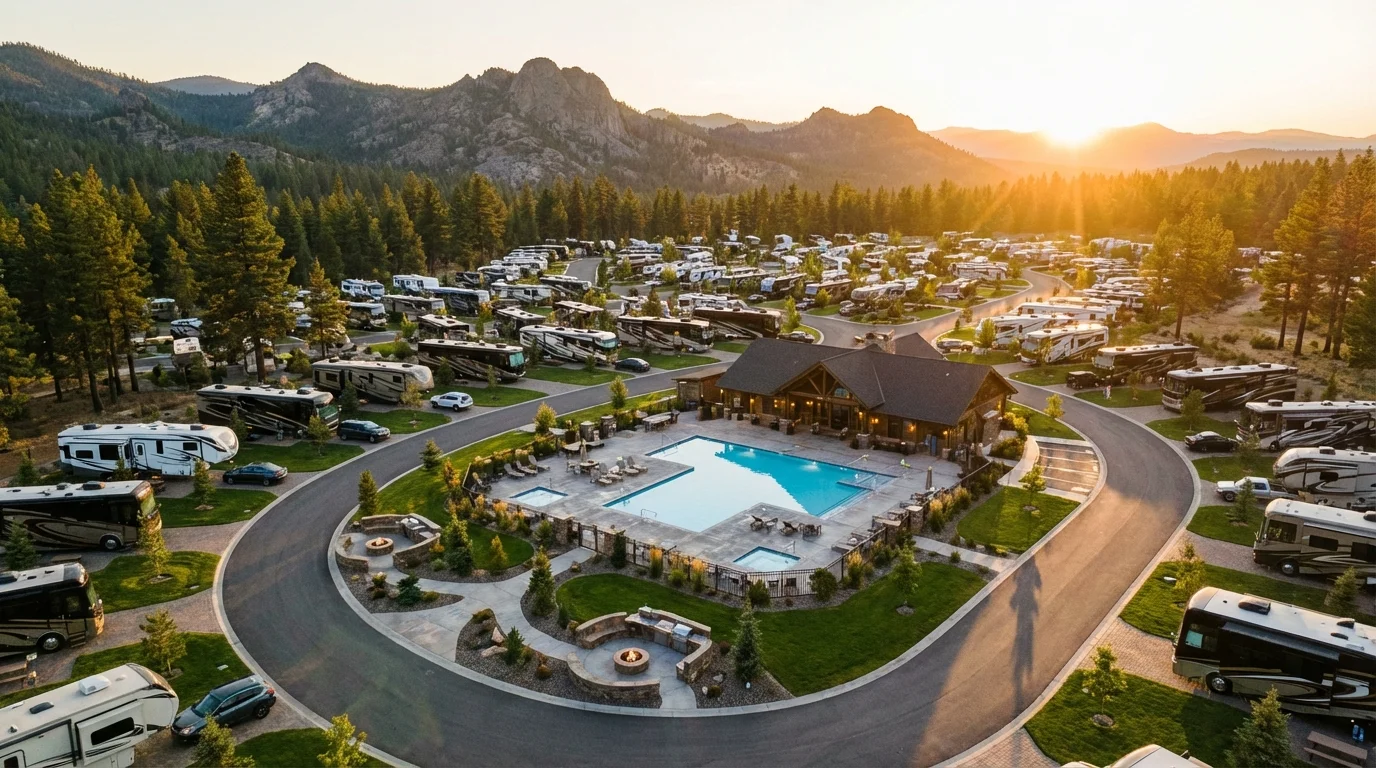
Protecting your RV investment requires a comprehensive security approach that addresses both traditional threats and modern challenges.
*This article contains affiliate links.
If you purchase through these links, Smart RV Hub may earn a commission at no extra cost to you.*
Today's smart security systems offer unprecedented protection and peace of mind for RV owners.
1. What Security Risks Do RVs Face?
RVs face unique security challenges compared to traditional homes.
Their mobility, valuable contents, and often remote parking locations make them attractive targets for theft and vandalism.
Common security threats include:
- Break ins while parked in campgrounds.
- Theft of external equipment like bikes and generators.
- Catalytic converter theft.
- Unauthorized access when the RV is unattended for extended periods.
The financial impact extends beyond replacing stolen items.
Insurance claims, increased premiums, and the emotional stress of violation can significantly affect your RV lifestyle.
2. Modern Smart Security Solutions
Integrated Surveillance and Monitoring
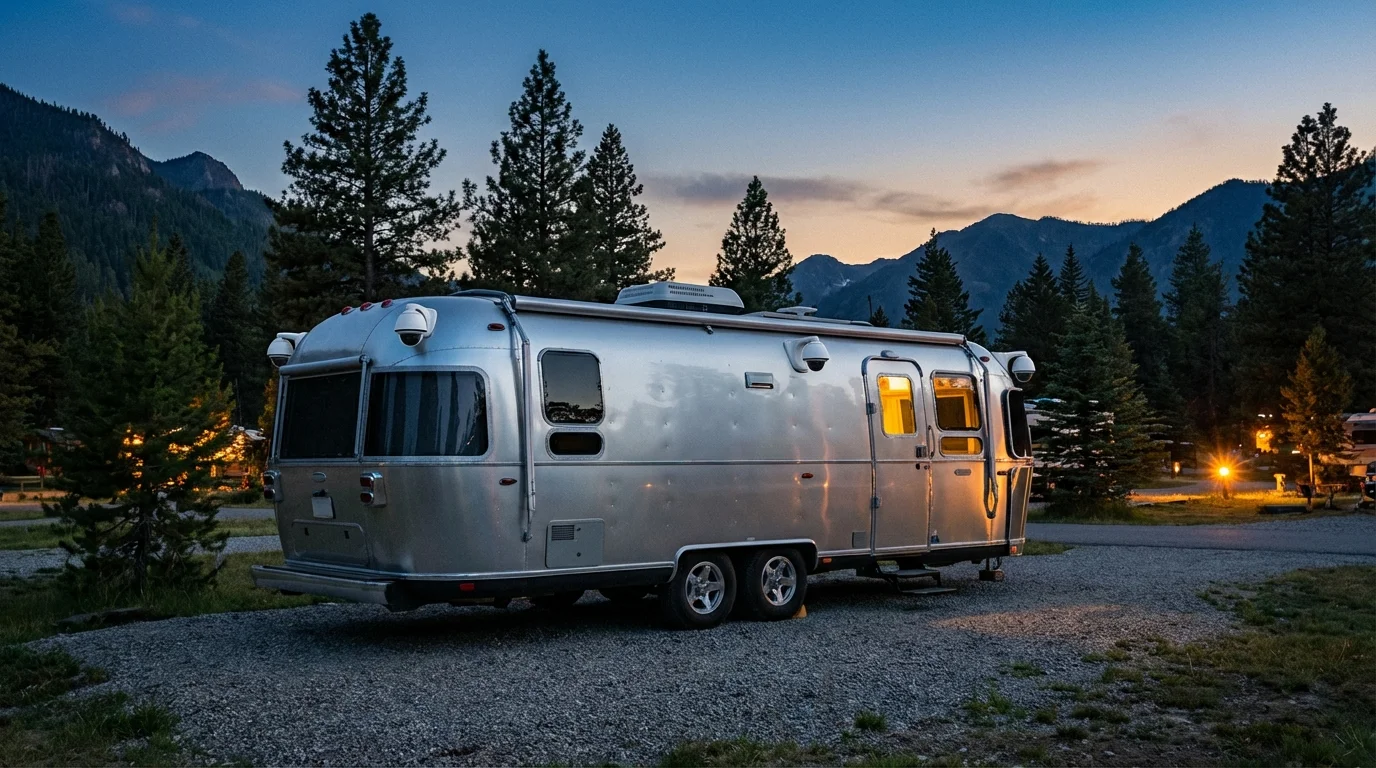
Integrated surveillance systems with high definition cameras and night vision capabilities provide 24/7 monitoring around your RV perimeter.
These systems offer smartphone alerts, cloud storage, and two way audio communication.
Advanced motion detection filters out false alarms from wind or small animals while immediately alerting you to genuine threats.
Some systems include facial recognition to identify familiar faces versus potential intruders.
Smart Lock and Access Control
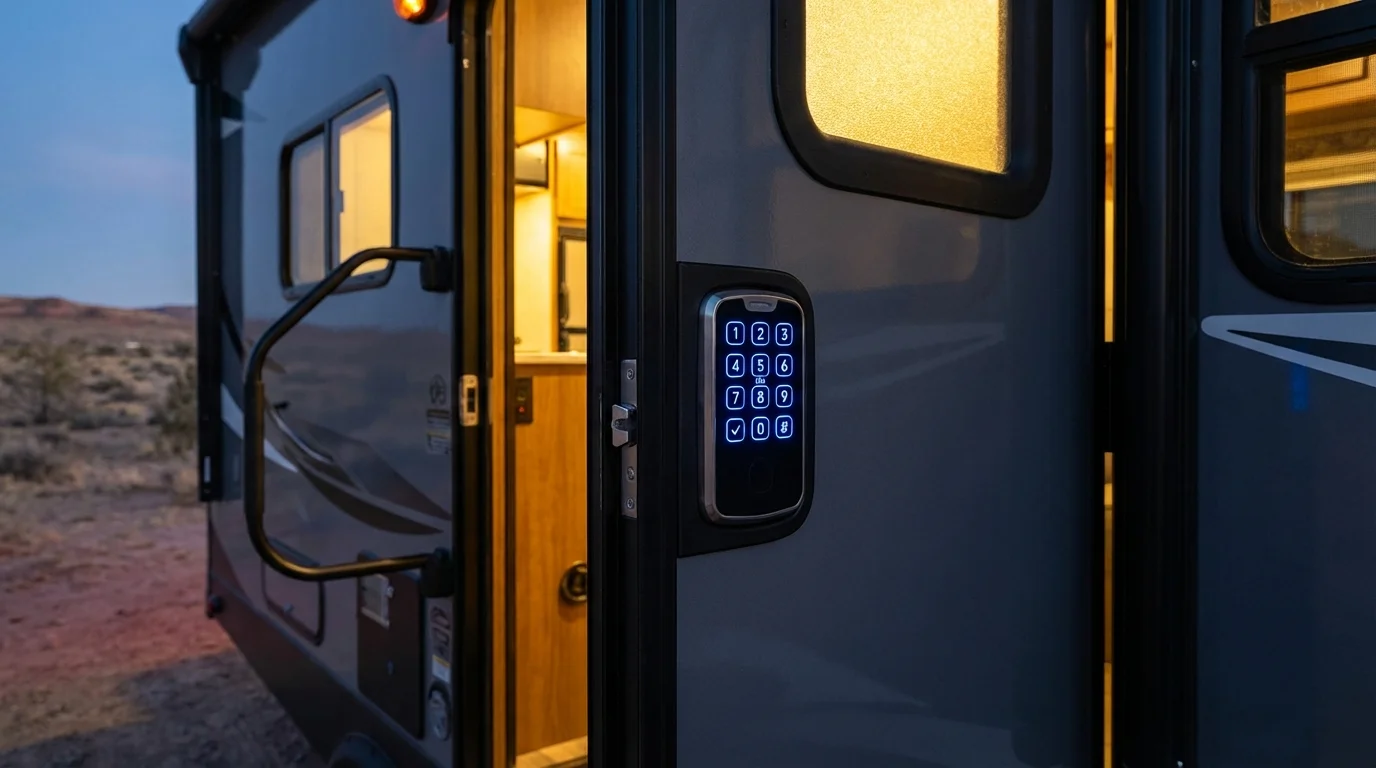
Smart lock technology eliminates the risk of lost keys while providing multiple access methods.
Smartphone apps, numeric codes, and backup physical keys ensure you never get locked out.
Remote locking capabilities allow you to secure your RV from anywhere, while access logs show exactly who entered and when.
Temporary codes can be shared with trusted friends or service personnel.
According to the manufacturer, the RVLock V4 smart lock lists at about $200 direct.
Comprehensive Alarm and Power Systems
Comprehensive alarm systems integrate door sensors, window monitors, and motion detectors into a unified network.
These systems connect to your smartphone for instant notifications regardless of your location.
Battery backup, such as a 12 volt lithium battery, keeps protection running even when disconnected from shore power.
Solar charging options provide sustainable operation during extended boondocking adventures.
3. How Does GPS Tracking Help Recover a Stolen RV?
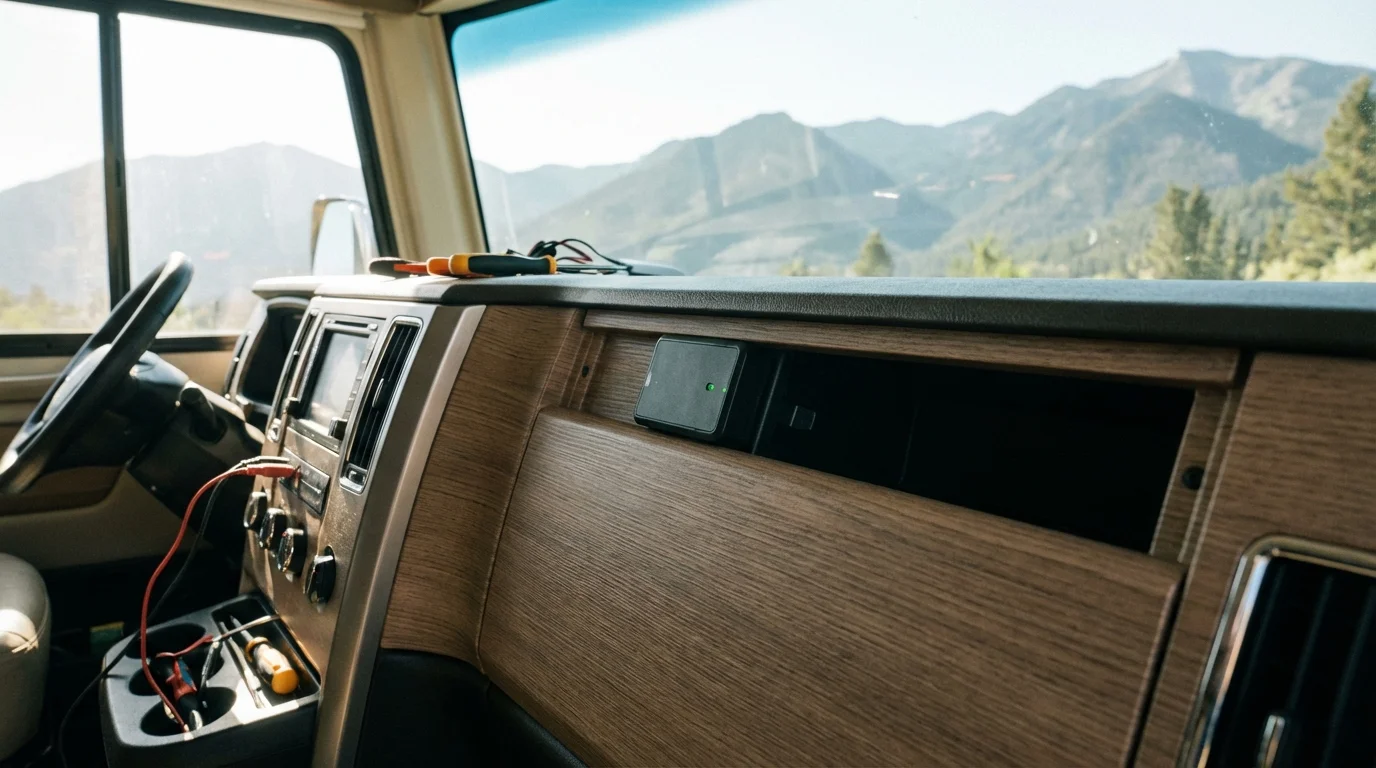
Real time GPS tracking provides precise location data if your RV is stolen.
Geofencing alerts notify you immediately if your RV moves outside predetermined boundaries.
Recovery services work with law enforcement to locate and retrieve stolen RVs.
Hidden installation makes these systems difficult for thieves to disable.
4. Should You Install It Yourself or Hire a Pro?
Professional installation ensures optimal system performance and warranty coverage.
Experienced technicians understand RV specific challenges like vibration resistance and power management.
- DIY installation is possible for many systems but requires electrical knowledge and attention to proper mounting techniques.
- Most DIY kits go from box to armed in under 1 hour, using adhesive mounts and a guided app setup.
- Consider factors like wire routing, weatherproofing, and integration with existing RV systems.
- Power consumption affects your RV's electrical system, especially during off grid camping.
- Choose energy efficient components and consider solar charging for extended operation.
Our guide to off grid power for your RV covers sizing a system that carries a security load overnight.
5. Choosing the Right System
Budget considerations range from basic alarm systems under $500 to comprehensive smart security packages exceeding $3,000.
Determine your specific needs and prioritize features accordingly.
For guidance on how security fits into a complete smart RV setup, read our overview of the systems a modern rig runs.
Security also appears in a ranked list of smart RV upgrades alongside power and climate control.
- RV size and layout influence camera placement and sensor coverage.
- Larger RVs may require additional components for complete protection.
- Usage patterns affect system requirements.
- Full time RVers need different features than weekend campers.
- Consider your typical camping locations and security concerns.
Tools for researching campgrounds before you arrive include member reviews that flag security problems at specific parks.
6. Smart Integration Benefits
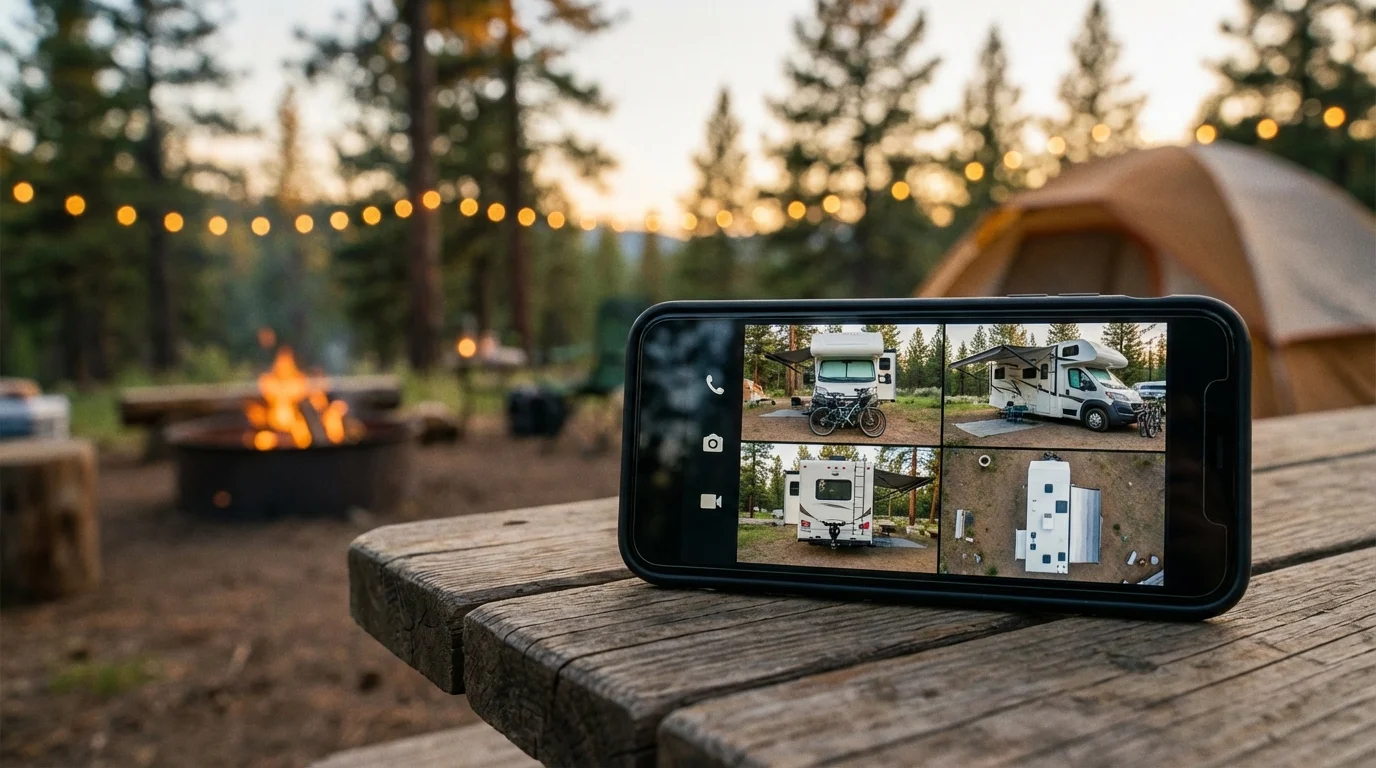
Smartphone connectivity allows remote monitoring and control from anywhere with cellular service.
Real time alerts, live video feeds, and system status updates keep you informed.
- Voice control integration with the 2 big assistants, Alexa and Google Assistant, provides hands free operation.
- Simple voice commands can arm systems, check status, or view camera feeds.
- Automation features learn your routines and adjust security settings accordingly.
- Systems can automatically arm when you leave and disarm upon return.
Security works best inside a wider setup, and how smart RV systems talk to each other explains the hub that ties them together.
7. Professional Monitoring Services
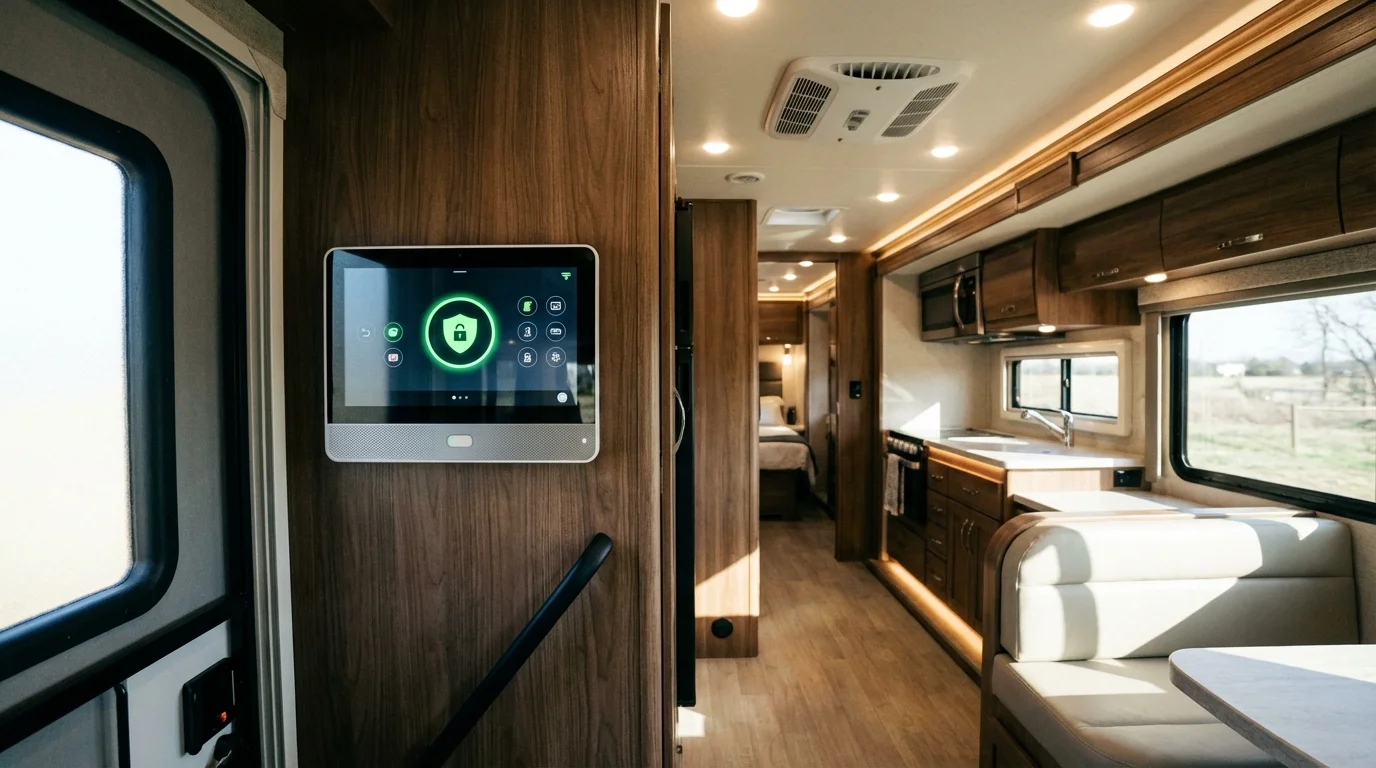
24/7 monitoring centers provide immediate response to security alerts.
Trained operators assess threats and coordinate with local authorities when necessary.
Emergency response services can dispatch security personnel, police, or emergency services based on the type of alert received.
- Monitoring costs typically range from $20 to $50 monthly. They provide invaluable peace of mind, especially during extended travel or when RV is stored long term.
- According to ADT, its Self Setup professional monitoring starts at $24.99 a month, checked October 2026.
- Camera plans start lower, at $4.99 a month per the Ring plan pricing checked the same month.
8. How Do You Maintain an RV Security System?
Regular system testing ensures all components function properly.
Monthly checks of sensors, cameras, and communication systems prevent failures when protection is needed most.
Software updates enhance functionality and security.
Many systems update automatically, while others require manual updates through smartphone apps or computer interfaces.
Battery replacement schedules for wireless components prevent unexpected failures.
Most systems provide low battery warnings well in advance of component failure.
9. Cost Benefit Analysis
Security system costs pale in comparison to potential theft losses.
Industry estimates from RV insurance providers indicate the average RV theft claim exceeds $15,000, not including personal belongings and emotional trauma.
- Insurance premium discounts often offset system costs over time. Many insurers offer significant discounts for RVs equipped with approved security systems.
- Peace of mind value cannot be quantified but significantly enhances the RV lifestyle experience. Knowing your home and belongings are protected allows fuller enjoyment of your adventures.
Modern smart RV security systems represent a wise investment in protecting your mobile lifestyle.
From basic alarm systems to comprehensive monitoring solutions, today's technology provides unprecedented protection and convenience for RV owners.
Affiliate Disclosure Smart RV Hub may earn a commission if you purchase through these links, at no additional cost to you; see our full disclosure.
Affiliate link. We may earn a commission at no extra cost to you.
Affiliate link. We may earn a commission at no extra cost to you.