
You're deep in a national forest, surrounded by towering pines, when you glance at your RV's battery monitor.
It's dropping faster than you expected.
The generator roars to life, shattering the peaceful silence you came here for.
Your neighbors shoot you that look.
You wonder how much longer you can stay before heading back to a $60-per-night campground with hookups.
There's a better way.
RV solar panels transform how you travel by capturing free energy from the sun to power your appliances, lights, and electronics for 7 to 14 days without hookups or generators.
A properly sized solar system costs between $2,000 and $8,000 depending on your power needs but pays for itself in campground savings within 18 to 24 months for active boondockers.
*This article contains affiliate links.
If you purchase through these links, Smart RV Hub may earn a commission at no extra cost to you.*
What This Guide Covers
This guide compares 12 RV solar systems, from 200 watt portable setups to 1,200 watt roof mounted arrays, based on published specifications and verified owner reviews.
By the end of this guide, you'll know exactly what system you need, what it costs, and whether you can install it yourself.
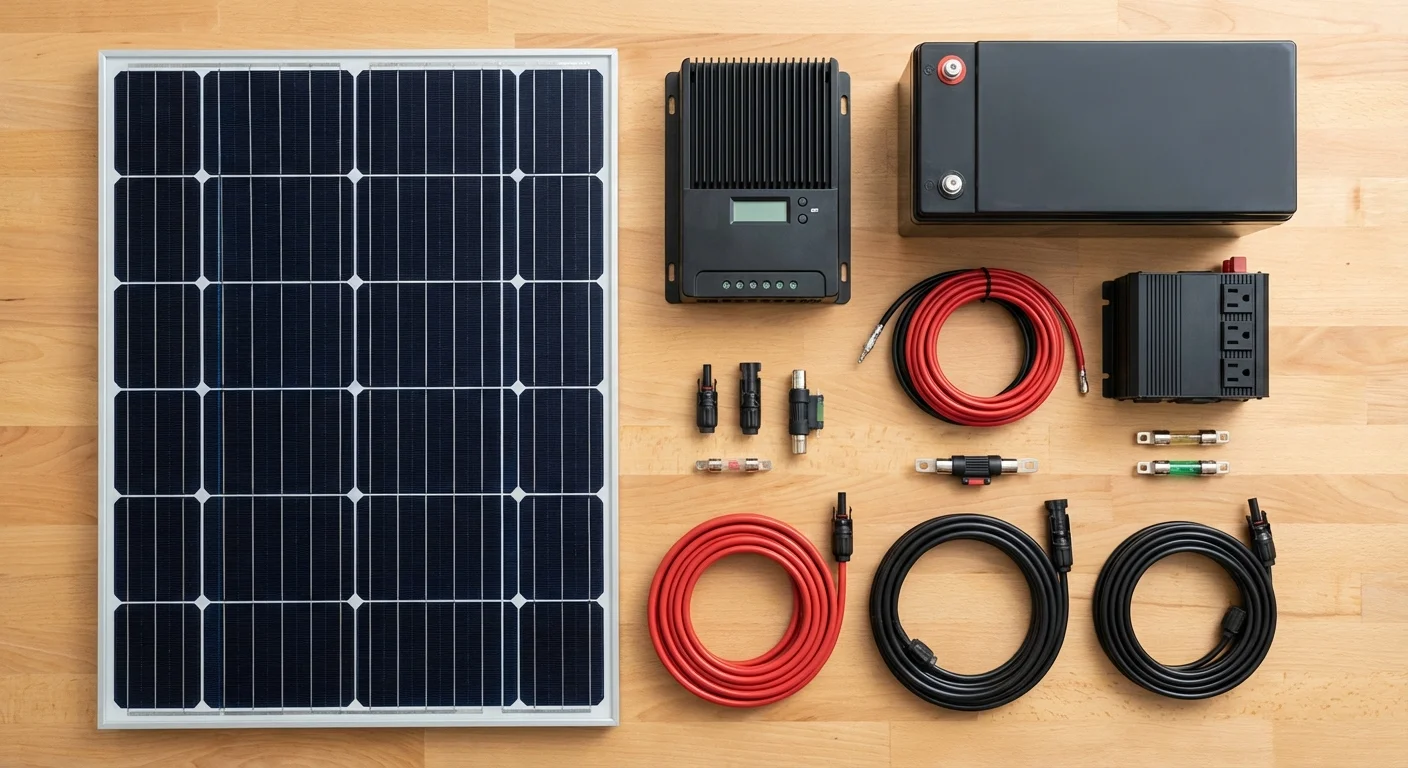
What Are RV Solar Panels?
RV solar panels are photovoltaic systems specifically designed to keep your RV batteries charged using free energy from the sun.
Think of them like a phone charger that never runs out panels collect sunlight during the day and continuously top up your batteries.
A complete RV solar system consists of four main components:
- Solar panels (capture sunlight)
- Charge controller (regulates power flow)
- Battery bank (stores energy)
- Inverter (converts 12V DC to 120V AC)
Are RV Solar Panels Worth It?
The short answer: absolutely if you spend 30 or more nights a year camping without hookups.
ROI Framework:
- Mid range 400W system: $3,200 DIY / $4,800 professional
- Campground savings: $35 to $80 per night
- Payback: 64 to 96 nights of dry camping
Full time RVers save $900 to $2,400 monthly in campground fees.
Seasonal RVers see 2 to 3 year payback periods.
Weekend warriors face 5 to 10 year payback but gain lifestyle transformation.
How Much Do RV Solar Panels Cost?
Entry Level ($1,500 to $2,500): 200 to 400W with AGM batteries
- Powers: Lights, water pump, phone charging, small TV
Mid Range ($3,000 to $5,000): 400 to 600W with MPPT controller
- Powers: All basics plus coffee maker, laptop, occasional microwave
Premium ($6,000 to $8,500): 800 to 1,200W with lithium batteries
- Powers: All appliances except AC, work from RV setup
How Many Solar Panels Do I Need?
Calculate your daily power usage:
- List all appliances and runtime
- Calculate total amp hours (Ah) per day
- Match solar wattage to consumption
Four Usage Patterns:
- Light use (50 to 75Ah/day): 200 to 300W needed
- Moderate use (75 to 125Ah/day): 400 to 600W needed
- Heavy use (125 to 200Ah/day): 800 to 1,200W needed
- AC capable (200Ah+): 1,400W+ needed
Climate matters: Southwest produces 2× more power than Pacific Northwest.
Safety margin: Oversize by 20 to 30% for cloudy days and winter.
For a worked example of the same audit, see the sizing steps in our solar power guide.
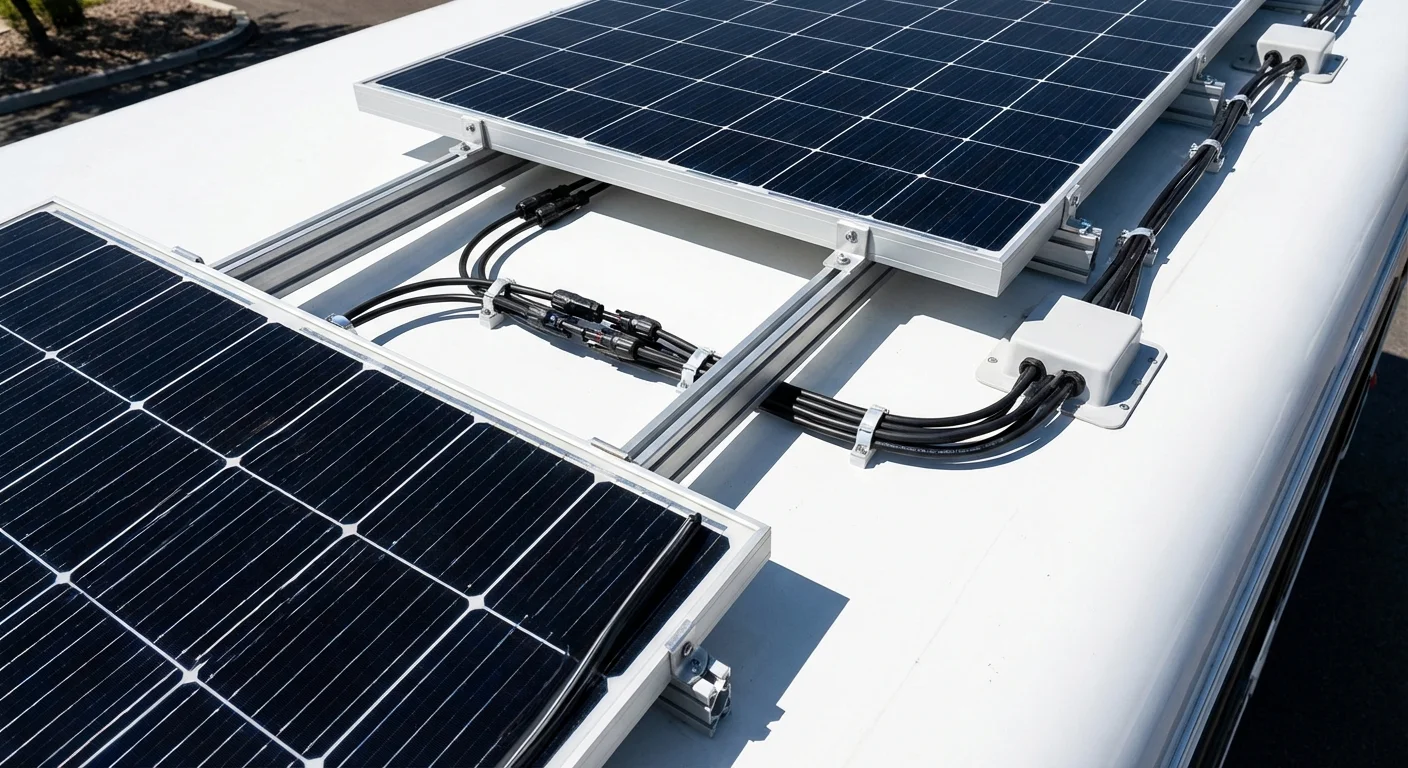
Types of RV Solar Panels
Monocrystalline (RECOMMENDED):
- Highest efficiency (18 to 22%)
- 25 to 30 year lifespan
- Best for limited roof space
- $0.75 to $1.25 per watt
Polycrystalline (Budget Option):
- Good efficiency (15 to 17%)
- Lower cost (15 to 25% cheaper)
- Requires more roof space
- $0.60 to $0.95 per watt
Flexible Panels (Specialty):
- Conforms to curved roofs
- 70% lighter weight
- Shorter lifespan (5 to 10 years)
- $1.20 to $2.00 per watt
Portable Panels (Supplemental):
- No installation required
- Angle adjustable (30 to 50% more power)
- Daily deployment needed
- $1.00 to $1.75 per watt
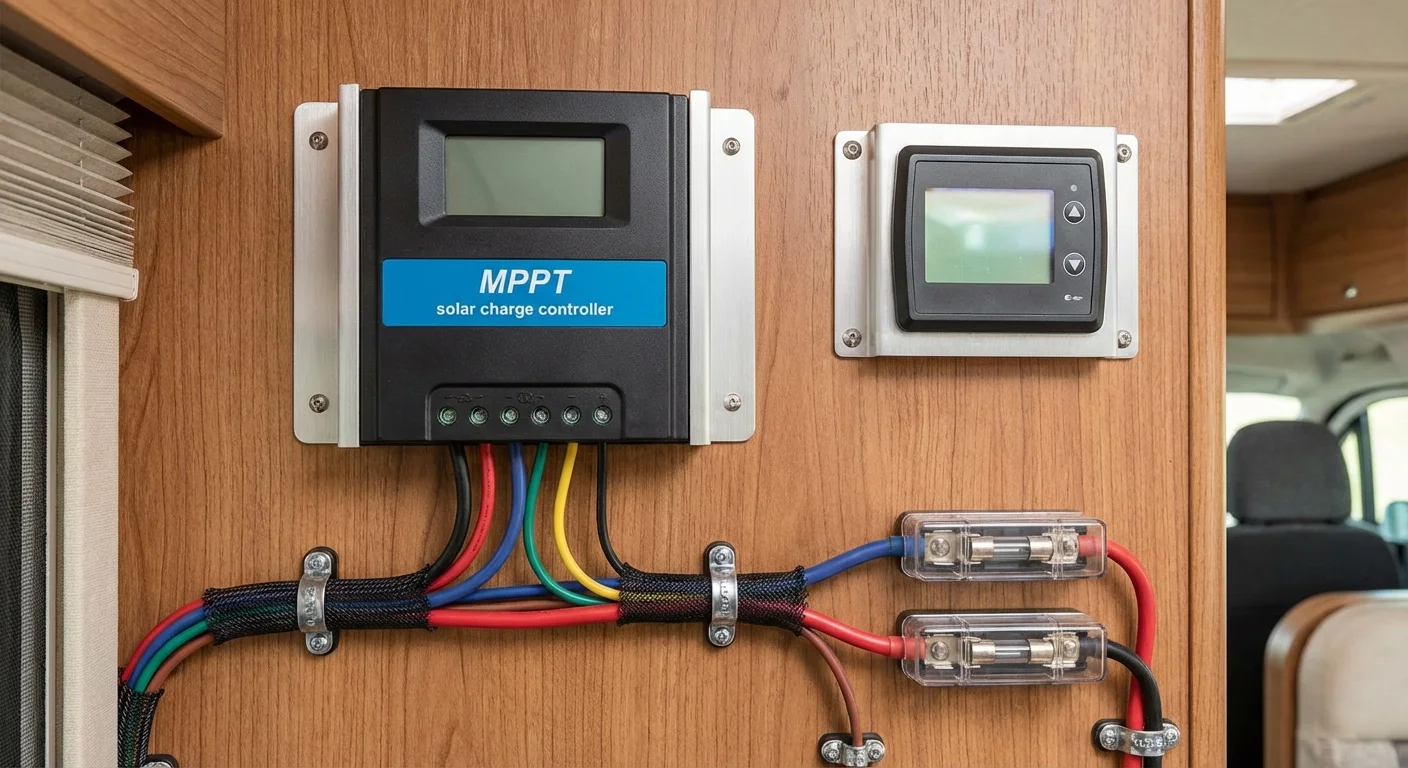
MPPT vs PWM Charge Controllers
MPPT (Maximum Power Point Tracking):
- 20 to 30% more efficient than PWM
- Best for systems 300W+
- Superior in cold weather
- $150 to $400
PWM (Pulse Width Modulation):
- Basic, reliable, affordable
- Suitable for systems under 200W
- Wastes excess voltage
- $30 to $80
Recommendation: Choose MPPT for 85 percent of installations.
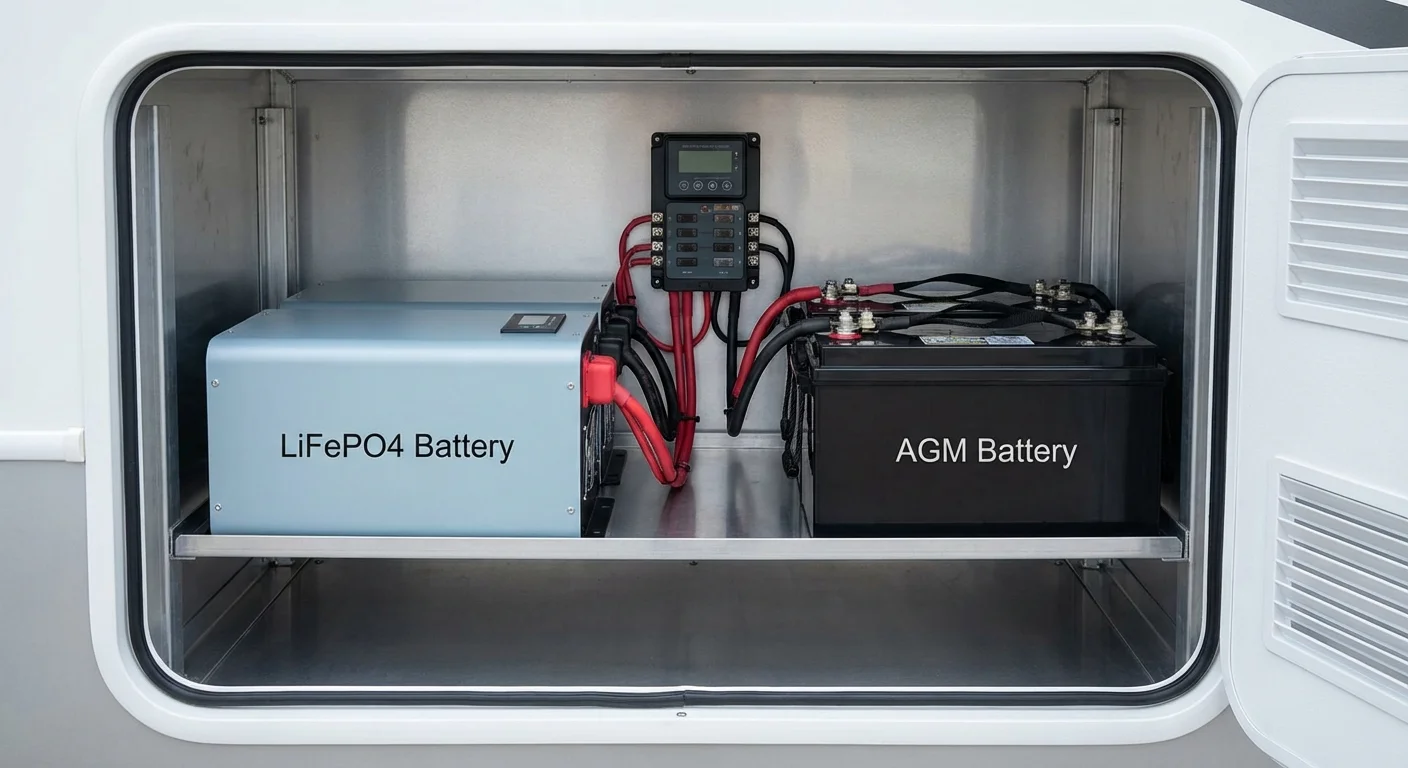
Best Batteries for RV Solar
Lithium (LiFePO4) RECOMMENDED:
- 100% usable capacity
- 10 to 15 year lifespan (3,000 to 5,000 cycles)
- Lightweight (approximately 50% lighter than lead acid)
- $800 to $1,200 per 100Ah
AGM (Middle Ground):
- 50% usable capacity
- 5 to 7 year lifespan
- Maintenance free
- $250 to $350 per 100Ah
Flooded Lead Acid (Budget):
- 50% usable capacity
- 3 to 5 year lifespan
- Requires maintenance
- $100 to $150 per 100Ah
10 Year Cost Comparison:
- Lithium: $2,000 (no replacement needed)
- AGM: $2,400 (one replacement)
- Lithium saves $400 and 195 pounds weight
DIY vs Professional Installation
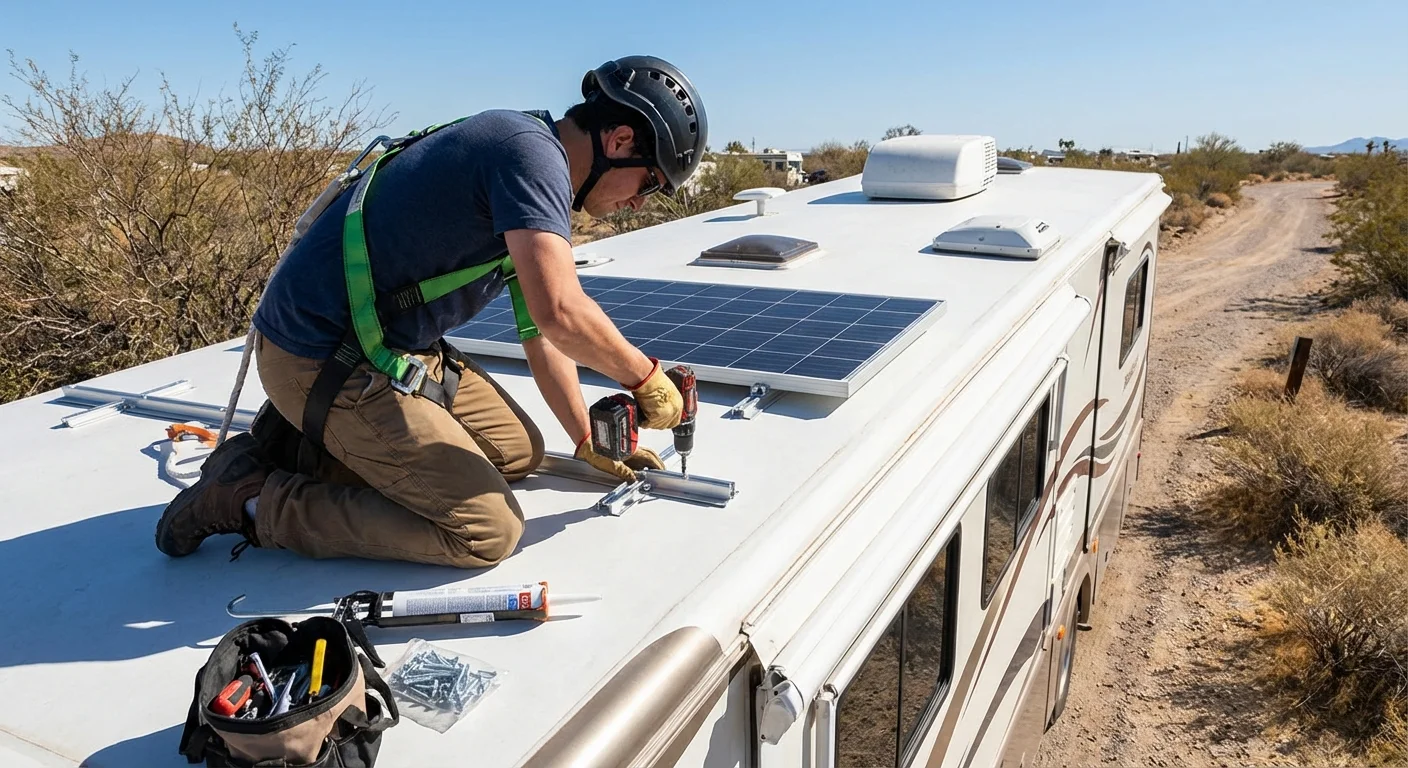
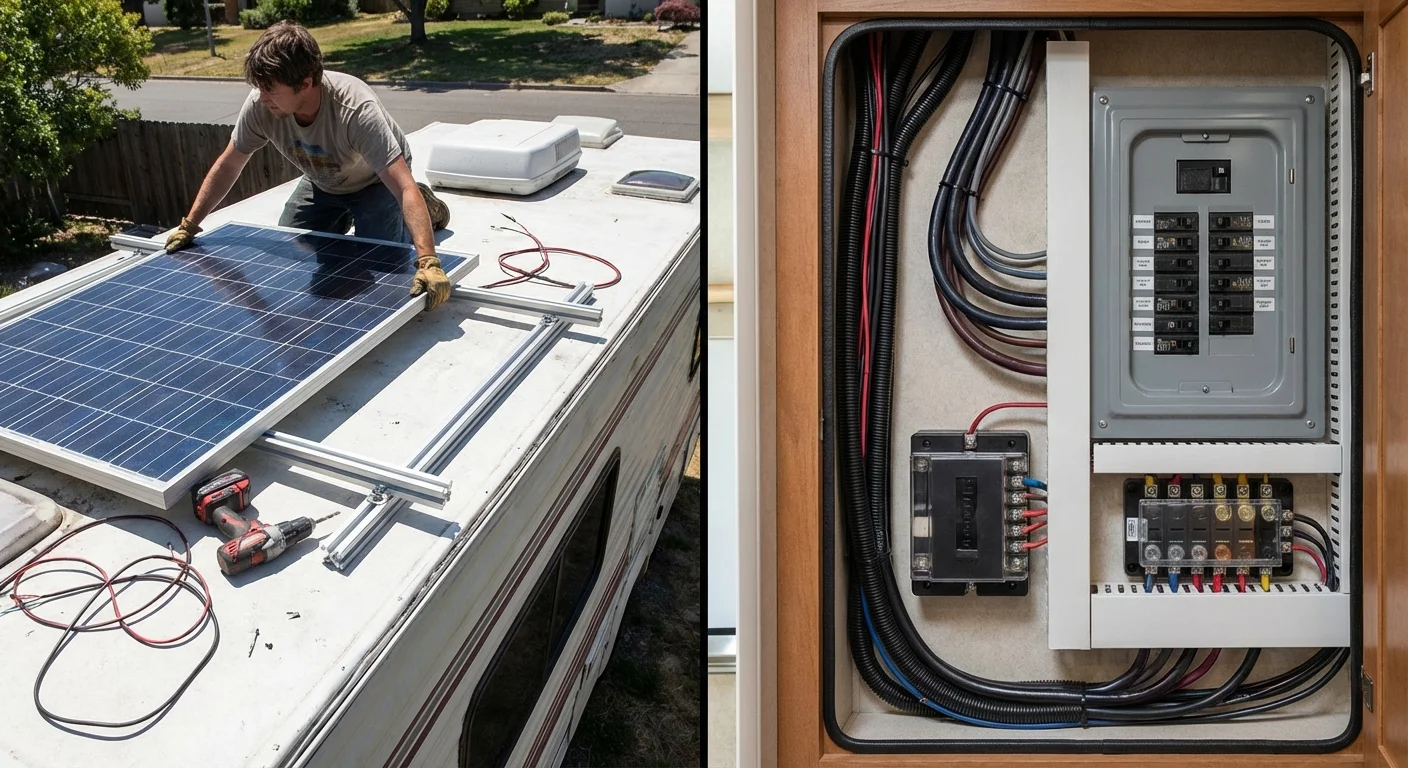
DIY Pros:
- Save 30 to 50% ($500 to $2,000)
- Learning experience
- Complete customization
- Time: 2 to 3 days first time
DIY Cons:
- Roof warranty concerns
- Safety risks (fall, electrical)
- Tools needed ($100 to $200)
Professional Pros:
- Warranty protection
- Quality assurance
- Speed (4 to 8 hours)
- Expertise
Professional Cons:
- Higher cost
- Less customization
- Scheduling delays
Hire a pro if: Active roof warranty, limited physical ability, zero electrical experience, complex system, time constraints.
Best RV Solar Panel Kits for 2026
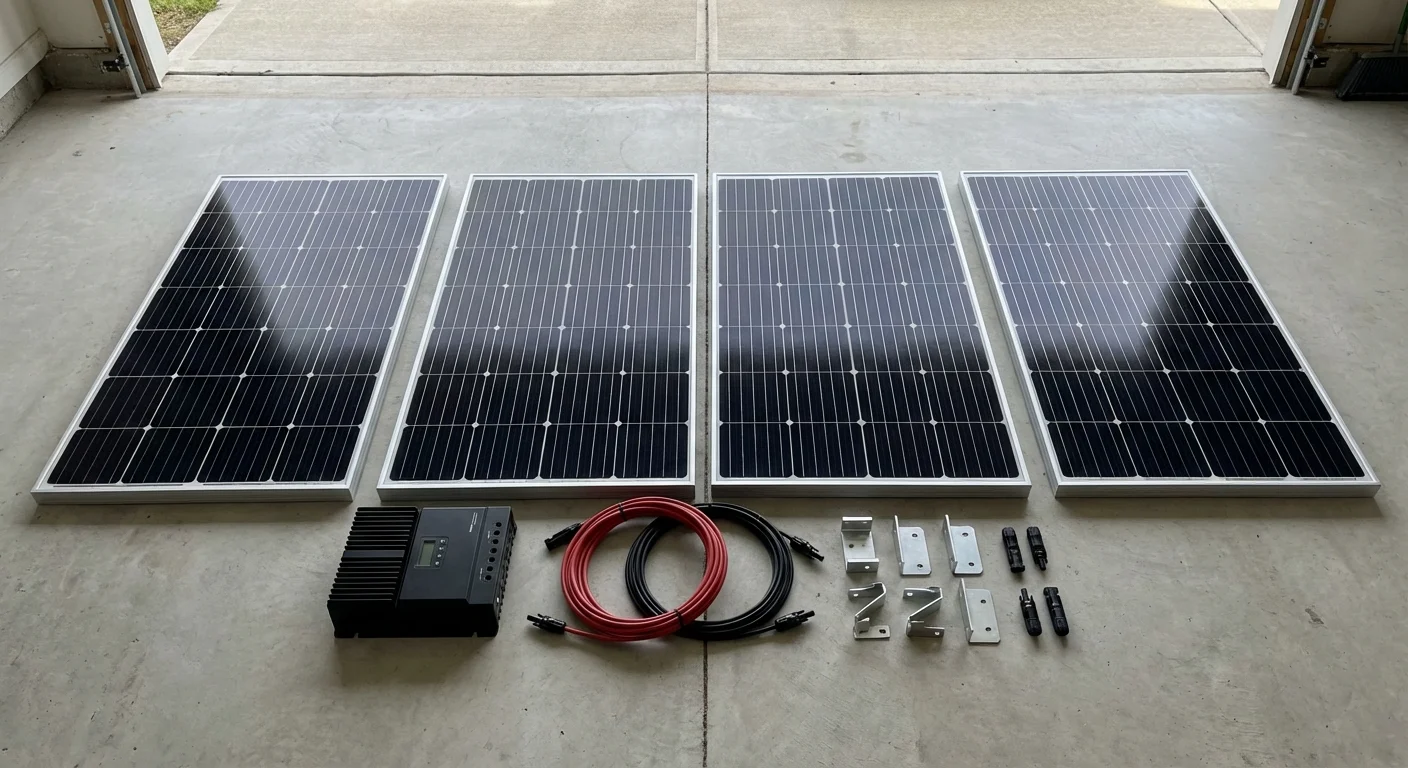
Best Budget: 400W matched kit (typically $600 to $1,200 across the market)
- 4×100W monocrystalline panels + 40A MPPT controller
- Room for one more panel on the same controller
- Best for: DIY beginners, moderate power needs
A1 SolarStore sells RV solar parts separately rather than as boxed kits, and its panel range includes Trina, Canadian Solar, and REC (stock verified August 2026).
Affiliate Disclosure
This page contains affiliate links.
When you purchase through these links, we may earn a commission at no additional cost to you.
This helps support our free calculators, guides, and research tools. Read our full disclosure
Affiliate link. We may earn a commission at no extra cost to you.
Best Premium: Victron 600W ($4,200)
- 3×200W panels + SmartSolar MPPT
- 98% efficiency, Bluetooth monitoring
- 10 year warranty
- Best for: Tech savvy, maximum efficiency
Affiliate link. We may earn a commission at no extra cost to you.
Best Portable: EcoFlow Delta Pro ($3,600)
- 3,600Wh battery + 400W portable panels
- Zero installation
- Home backup dual use
- Best for: RV renters, shade avoidance
Best Value: WindyNation 400W Complete ($2,800)
- Everything included (panels, controller, batteries, inverter)
- Beginner friendly instructions
- Best for: Non technical users
Can You Run AC on Solar?
Reality check: Yes, but expensive ($12,000-$18,000 system required).
System requirements for AC:
- 1,400W+ solar panels
- 400Ah+ lithium batteries
- 3,000W inverter
- Total cost: $12,000 to $18,000
This budget is out of reach for many RVers, and that's perfectly OK.
Smarter approach: $4,500 to $6,000 system + $1,000 generator for AC = better value.
What you CAN realistically power:
- 400W system: Fridge, lights, TV, laptop, fans
- 600W system: Above + microwave, hair dryer (limited)
- 1,200W system: All appliances except overnight AC
Performance: Seasons, Weather, and Shade
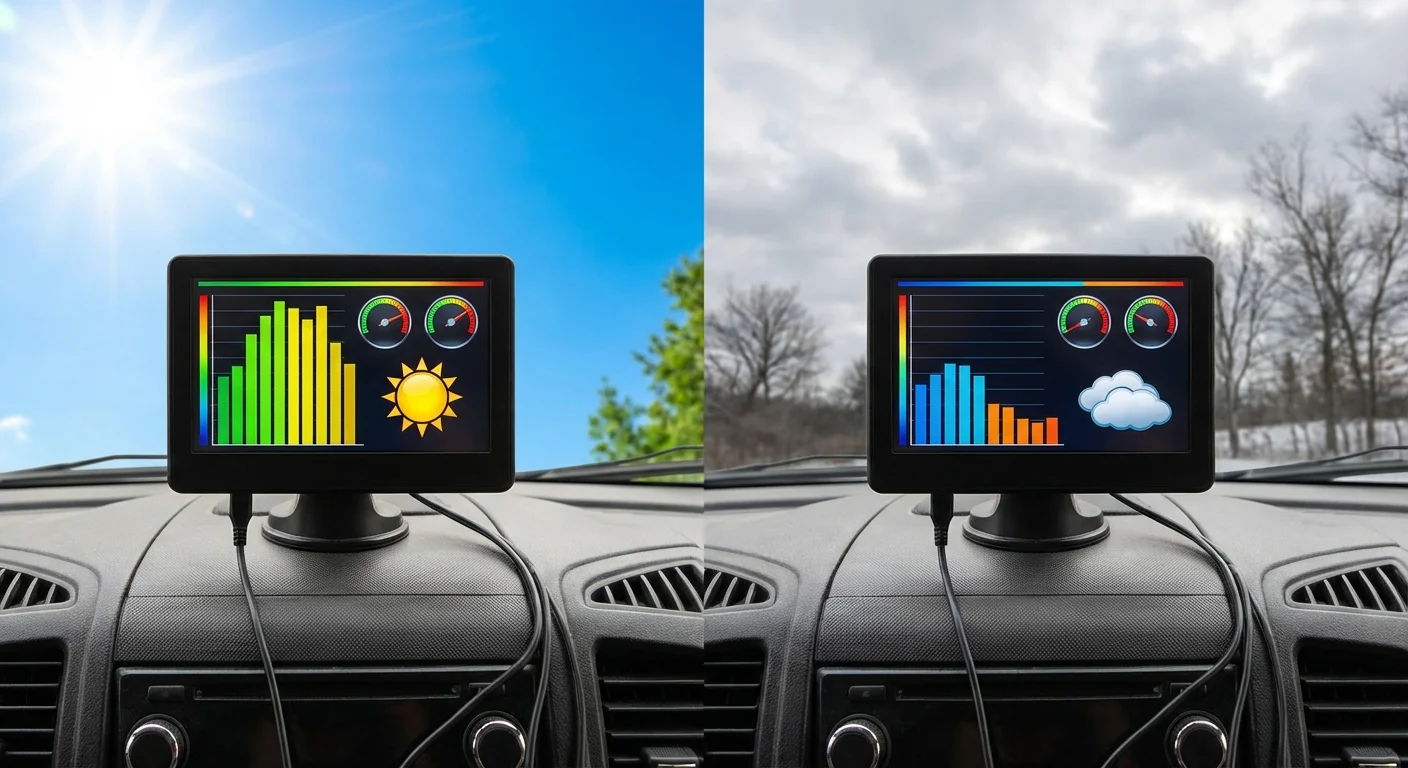
Seasonal variations:
- Summer vs winter: 2× difference in northern states
- Arizona 400W: 2,000Wh summer, 1,600Wh winter
- Pacific Northwest 400W: 2,000Wh summer, 800Wh winter
Cloudy day performance: 10 to 30% of sunny day output
Partial shade impact: 40 to 70% reduction depending on panel wiring
Temperature effects: Panels MORE efficient in cold (counterintuitive)
Winter tips:
- Tiltable mounts increase production 30 to 40%
- Keep panels clear of snow
- Expect 30 to 50% less production Dec Feb
- Lithium batteries perform better in cold
Maintenance and Troubleshooting
Minimal maintenance required:
- Clean panels: 2 to 4 times per year
- Annual connection inspection
- Monitor performance with battery monitor
A monitor is one of several smart monitoring upgrades worth fitting at the same time.
Common issues:
- Low charging: Check shade, connections, controller settings, dirt
- Battery not holding charge: Check age, parasitic loads
- Inverter shutoff: Check overload, low voltage, loose cables
Component lifespans:
- Solar panels: 25 to 30 years (0.5% annual degradation)
- Charge controllers: 10 to 15 years
- Batteries: Flooded (3 to 5yr), AGM (5 to 7yr), Lithium (10 to 15yr)
- Inverters: 10 to 15 years
Where to Buy RV Solar Panels
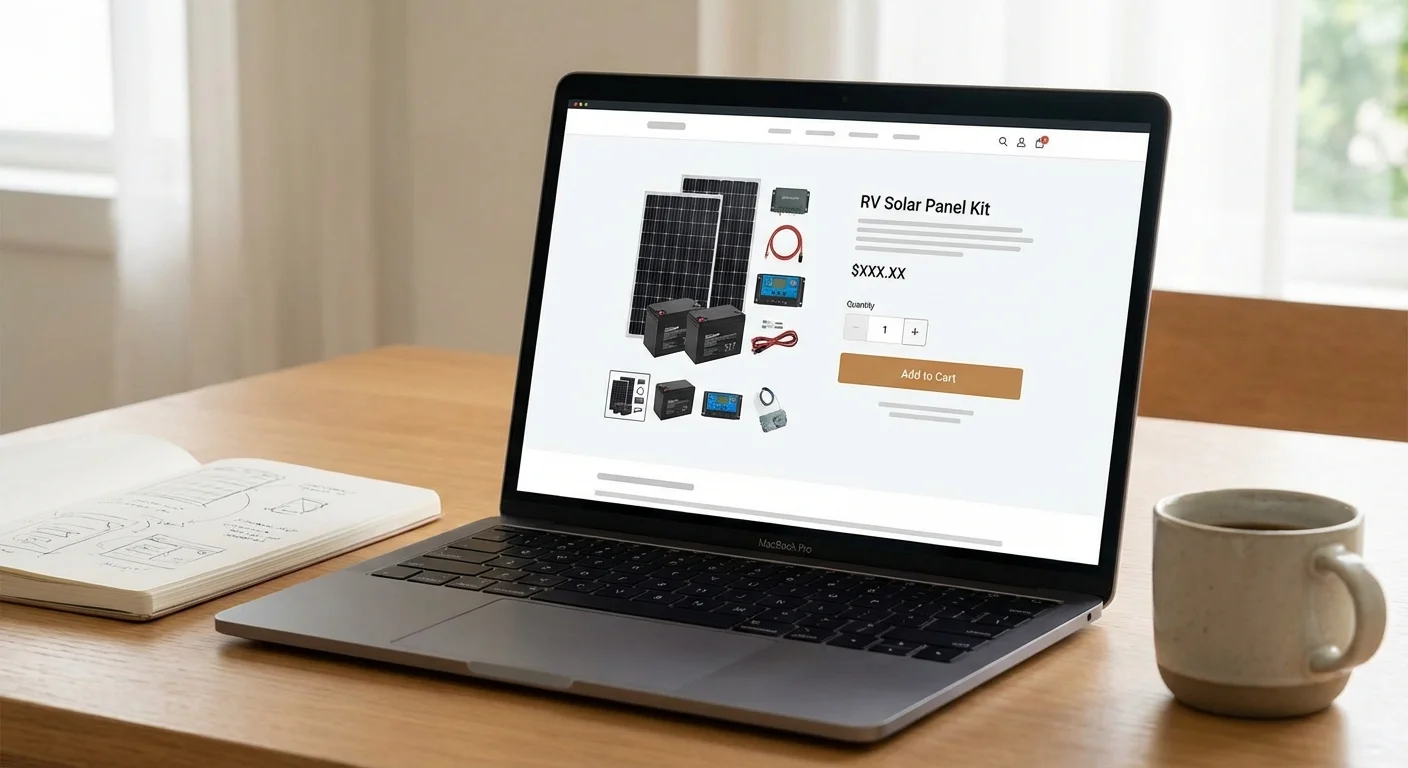
For the full retailer breakdown and deal timing strategies, see our guide on where to buy RV solar panels.
Our Recommended Retailers (Core 4)
A1 SolarStore (Our #1 Pick):
- ✅ 63+ fulfillment centers (fast shipping)
- ✅ 90% order confirmation rate (most reliable)
- ✅ RV specific solar expertise
- ✅ Complete kits + individual components
- ✅ Excellent post-purchase customer support
Affiliate link. We may earn a commission at no extra cost to you.
Other Options
Amazon:
- Pros: Fast shipping (Prime), easy returns
- Cons: Limited tech support, counterfeit risk
- Best for: Experienced buyers who know what they need
Specialized RV Retailers (Camping World, etrailer):
- Pros: RV specific expertise, installation services
- Cons: 10 to 20% higher prices
- Best for: First time buyers wanting guidance
Discount strategies:
- Black Friday: 15 to 25% off
- Off season: 10 to 20% off (Sept Nov)
- Used marketplace: 40 to 60% savings (verify condition)
Timing matters, so check the current solar deals roundup before you order.

Not Ready to Buy? Test Solar First with an RV Rental
If you're unsure whether solar is right for you, rent an RV with a solar setup before investing $2,000 to $8,000 in your own system.
Many RV owners on Outdoorsy offer rigs with complete solar systems you can test drive your off grid lifestyle before committing.
Start by seeing which rigs with solar already fitted are listed near you.
Benefits of renting first:
- Experience real world solar performance
- Learn how much power you actually use
- Test different system sizes
- No risk commitment before buying
Affiliate link. We may earn a commission at no extra cost to you.
Every Outdoorsy rental includes a protection plan, at state liability limits or $500,000 on the Peace of Mind package, plus 24/7 Coach Net roadside assistance making it the safest way to test RV solar before making your investment.
Conclusion
Solar isn't just about saving money on campground fees though that $900 to $2,400 monthly savings is substantial.
It's about freedom.
The freedom to camp where you want, when you want, for as long as you want.
Cutting generator hours is also part of the payback math on RV solar.
Your action plan:
- Calculate daily power usage
- Choose system size (200W light, 400 to 600W moderate, 800W+ heavy)
- Decide DIY vs professional
- Compare recommended solar kits to find your match
- Install system
- Enjoy off grid camping
Need help choosing?
Use our quick way to price a full array to find the right system for your budget, or turn your daily usage into panel and battery numbers with our step by step walkthrough.
Thousands of non electricians successfully install and use solar systems every year.
You don't need to be an expert just follow this guide.
This article contains affiliate links.
We may earn a commission at no extra cost to you, which helps keep Smart RV Hub free.