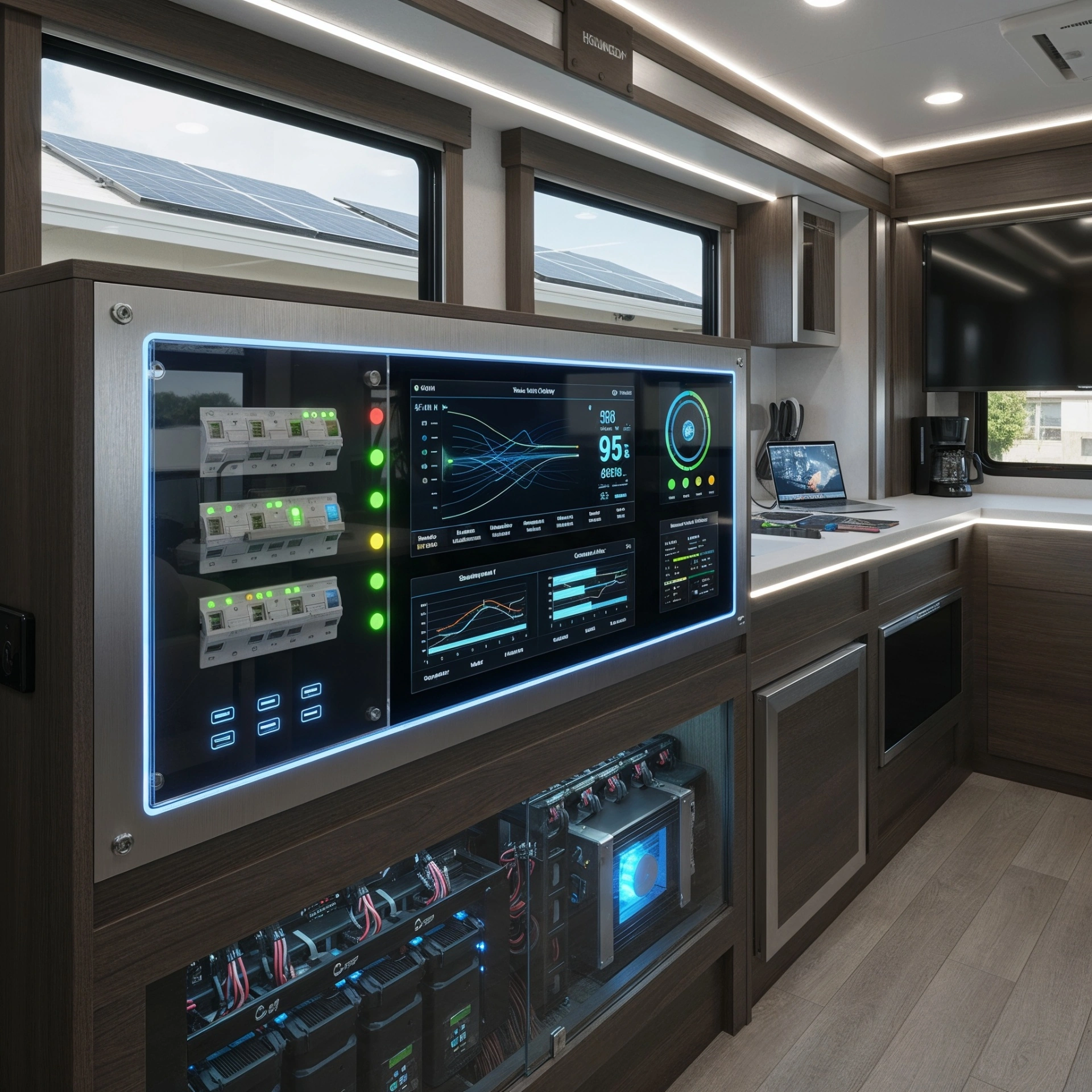
RV and Trailer Power Management: Go Further Off Grid
Smart battery, solar, and inverter systems that extend how long you can stay off grid.
Power management is the foundation of comfortable off grid RV living. It affects everything from how long you can run your climate control system off grid to whether your smart automation routines stay active overnight.
Without reliable electricity, even well equipped RVs become uncomfortable fast. Knowing your consumption, generation, and storage numbers is what separates a weekend of anxiety from a month of freedom.
Many RVers get power wrong for the same reason: they guess instead of measure.
They pick solar panels based on roof space rather than actual daily use. They drain batteries too deep without realizing the long term damage this does to cycle life.
Modern power monitoring systems cut out the guesswork by tracking exactly how much energy you use and generate, down to the appliance level.
With real numbers, you can size your solar array correctly, choose the right battery bank, and camp anywhere without watching the meter nervously. Here is what you need to know.
Affiliate Disclosure
This page contains affiliate links.
When you purchase through these links, we may earn a commission at no additional cost to you.
This helps support our free calculators, guides, and research tools. Read our full disclosure
📋 What you'll discover
- Extend off grid time significantly with solar integration
- Help prevent battery damage with automated power monitoring
- Track energy usage in real time for all systems
- Automatically prioritize critical systems during low power
- Prevent costly battery damage with smart charging
✓ Built to last your RV adventures
Rated 4.4 of 5 on Trustpilot on Trustpilot, checked August 2026 (opens in a new tab)Fast US shipping. Other trust signals verified August 2026.
See RV Solar Kit PricesAffiliate link. We may earn a commission at no extra cost to you.
What Smart Power Features Does My RV Need?
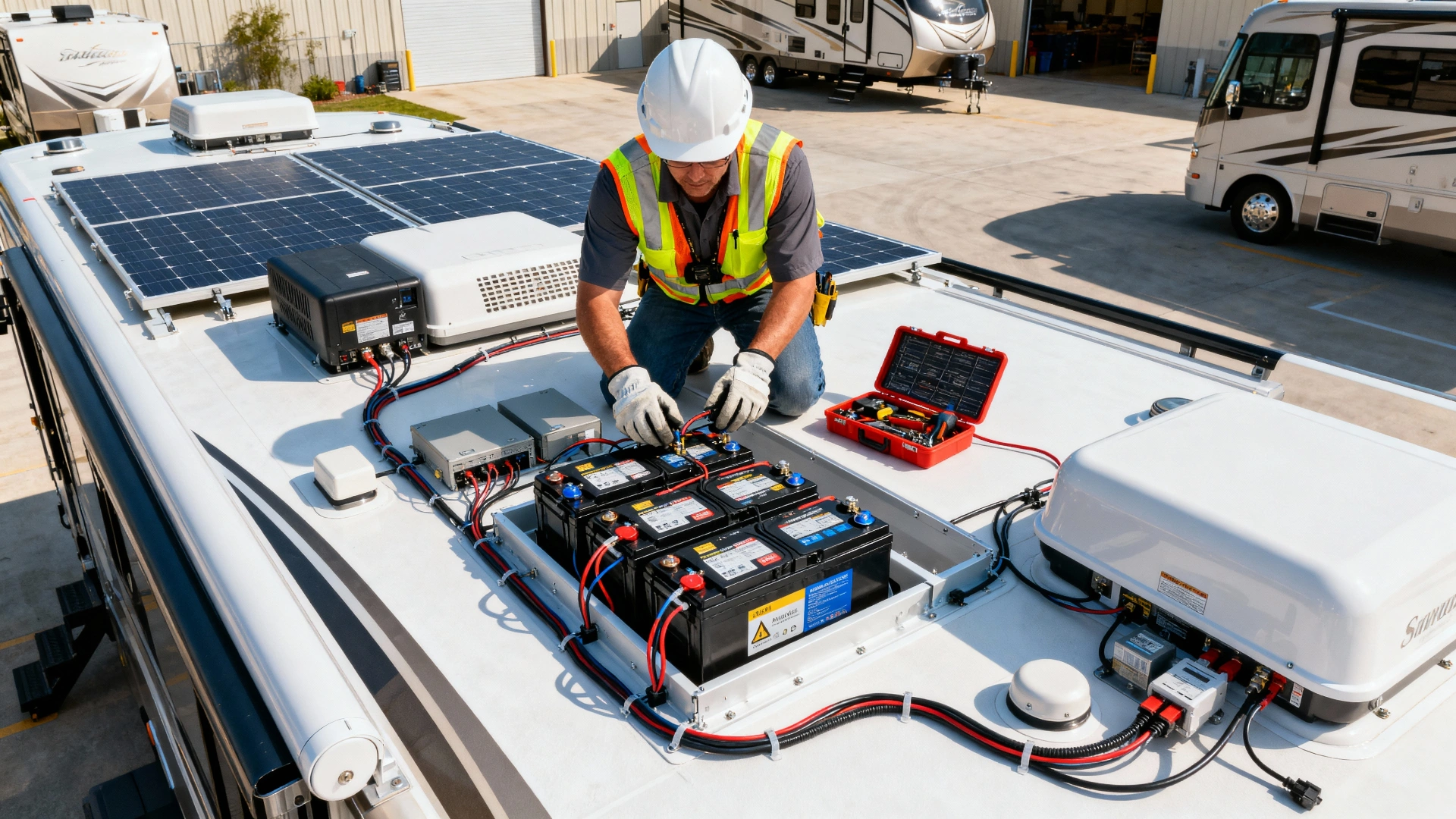
Smart RV power management automatically monitors solar input, battery state, and load to prevent battery damage and extend off grid time.
Good power management coordinates every watt coming in and going out of your RV.
Solar charges the batteries.
The batteries feed your appliances.
A smart controller sits in the middle and makes sure nothing gets wasted or overloaded.
With the right setup, you can keep critical systems running for days. Your battery bank feeds everything from the GPS navigation system to your smart TV display.
The payoff is less time hunting for hookups and more time in the spots worth reaching.
Fast US shipping. Other trust signals verified August 2026.
See RV Solar Kit PricesAffiliate link. We may earn a commission at no extra cost to you.
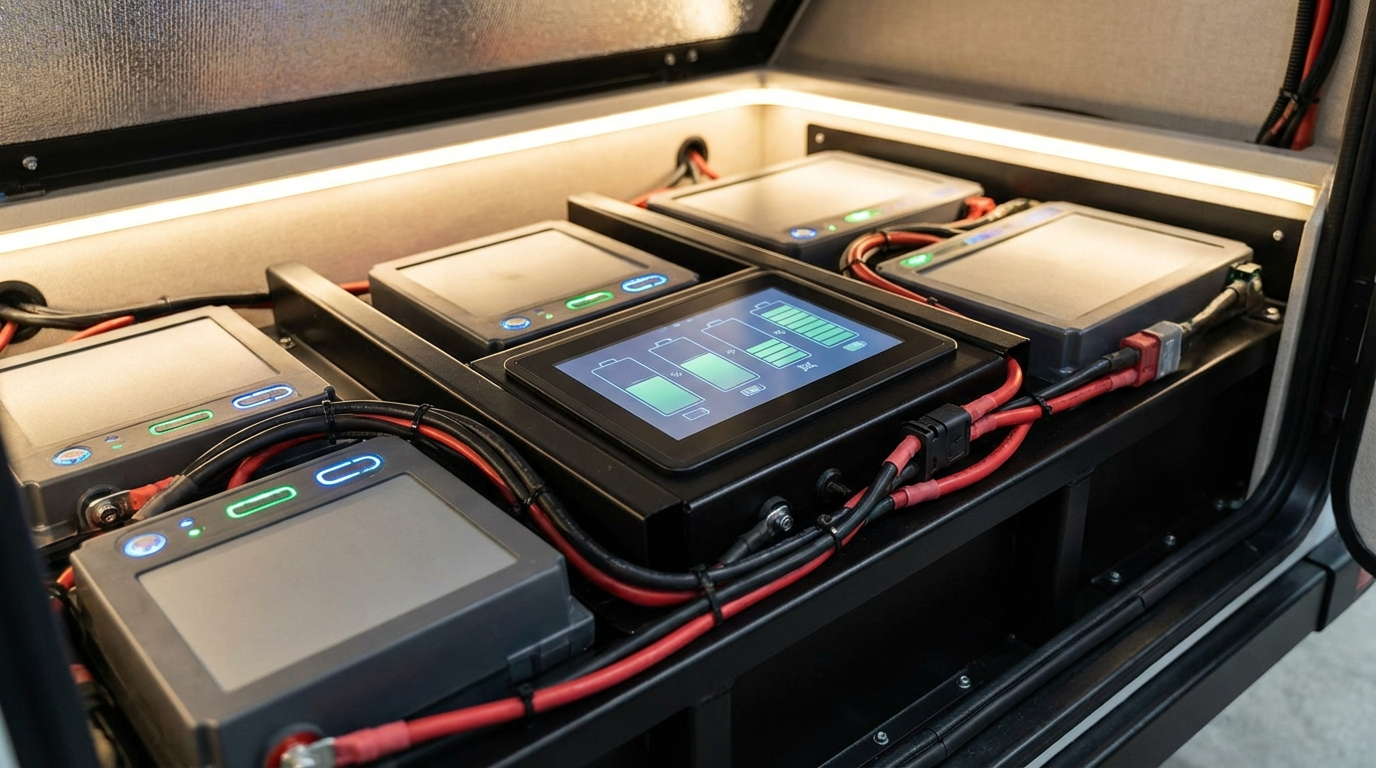
- Solar panel integration and monitoring to capture available sunlight.
- Battery level tracking and alerts so you know before you run low.
- Automatic power source switching between solar, battery, and shore power.
- Per appliance energy consumption data so you know what is actually draining things.
- Smart appliance scheduling to shift loads to peak solar hours.
- Generator auto start and stop based on battery level thresholds.
- Load shedding that cuts non essential circuits first when power is tight.
How Do I Maintain My RV Batteries Properly?
Battery maintenance is less complicated than most people expect. Whether you're running lead acid or lithium, a few consistent habits go a long way.
Check terminal connections monthly. Corrosion or a loose connection causes voltage drops that quietly damage your electrical system over time.
Lead acid batteries need electrolyte checks and a top up with distilled water when levels drop.
Lithium batteries skip that step, but their battery management system firmware is worth updating when new versions come out.
Temperature is the factor most RVers underestimate. Sustained heat above 40°C (104°F) shortens battery life measurably, and a hard freeze can permanently damage lead acid cells.
Mount batteries in a ventilated compartment and add insulation if you camp in winter. Many current RV models include temperature sensors that dial back charging rates automatically in extreme conditions.
Don't drain them flat. As a general rule lead acid is treated as half usable and lithium as far deeper, but the usable depth for your pack is the figure your battery maker publishes, so work from that.
Thinking about upgrading? Our roundup of the lithium packs that earn their price compares the leading options.
Use a dedicated battery monitor rather than reading voltage alone. Voltage under load lies; a proper shunt based monitor gives you the real state of charge.
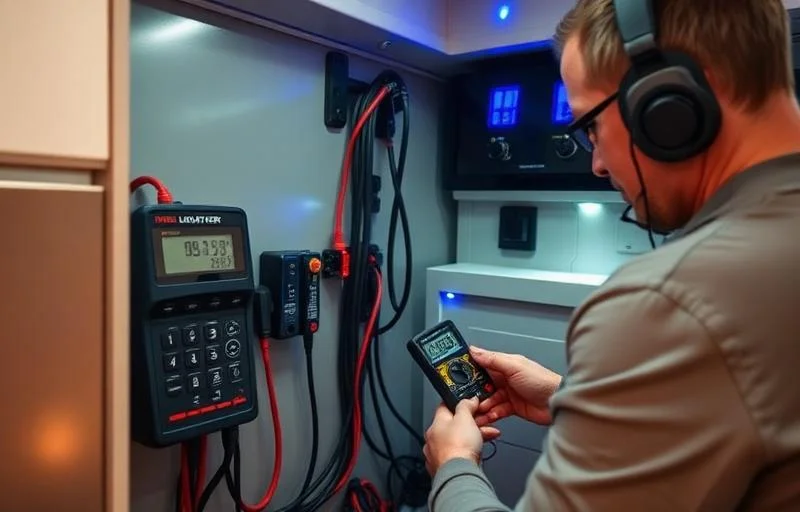
Solar Integration
Solar is the engine of a serious off grid setup, but panel count alone doesn't tell the full story.
Not sure how many panels you actually need?
Use our free solar sizing calculator to work out the right setup for your rig and daily habits, or follow the full method for matching panels to daily draw step by step.
A well designed RV solar system pairs efficient panels with an MPPT charge controller and real time monitoring so you always know what's coming in versus going out.
You can see solar input and battery charge levels on a single screen, which takes the guesswork out of deciding whether to run the air conditioning or save the watts for the night.
For a deeper look at panel types, sizing, and wiring options, the full RV solar walkthrough covers it all.
Tiltable and adjustable panel mounts can add 20 to 30% more daily harvest on cloudy days by facing the panel directly at the sun.

Smart Distribution
Smart distribution panels rank your circuits so the fridge and water pump keep running when capacity drops.
The entertainment system and USB chargers get cut first. Your food stays cold.
You can adjust those priorities to match how you actually use your rig, not some factory default assumption.
Most systems also flag unusual power draws. A spike at 2am often means a failing appliance rather than normal overnight consumption.
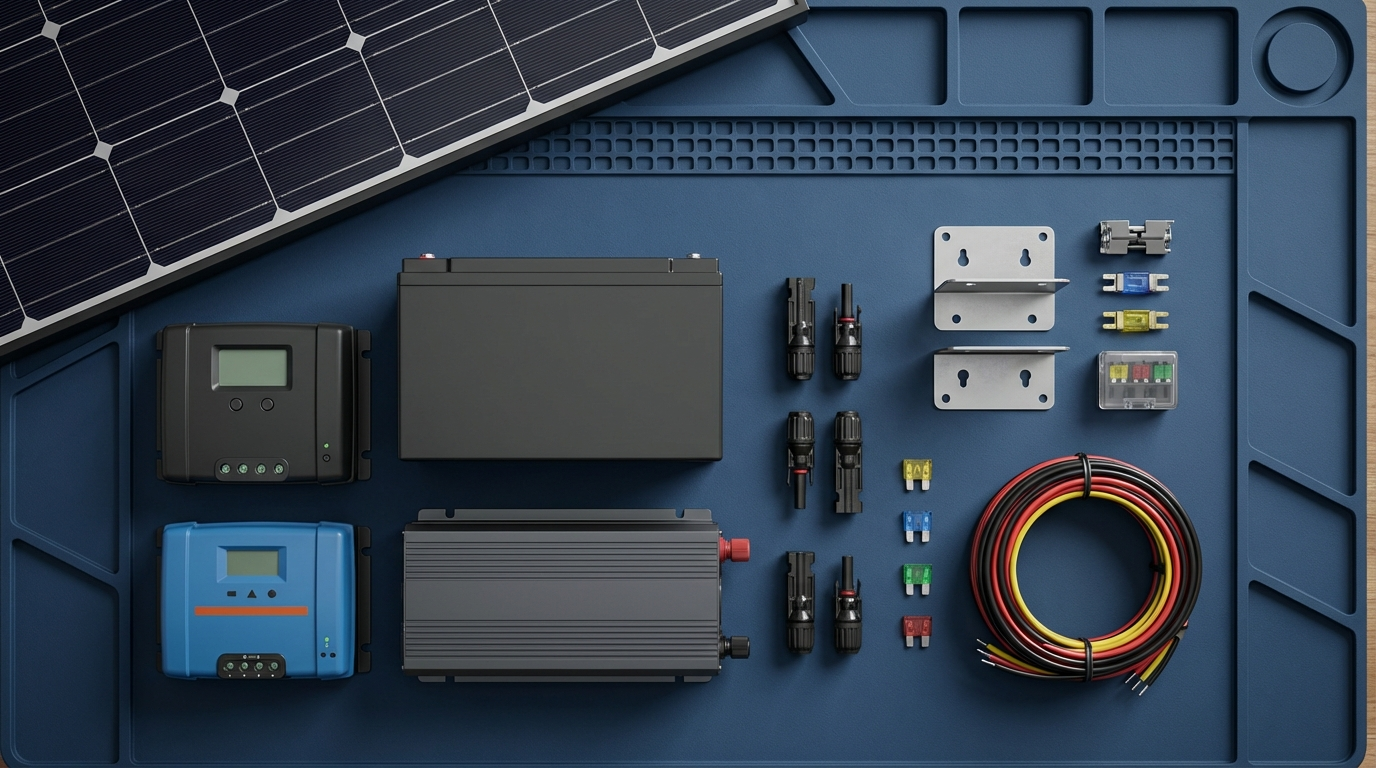
Usage Analytics
Usage data tells you which appliances are the real culprits. Calculate your exact power needs with our battery capacity calculator.
Many RVers are surprised to find the inverter idle draw or the water pump accounts for a bigger slice than expected.
Once you know where the watts actually go, you can make targeted changes rather than guessing which appliance to unplug.
Historical trends show whether your habits are improving over time. See our recommended solar panels for pairing with a monitoring system.

☀️ Complete Solar & Power Systems for RV Energy Independence
Professional-grade solar panels, batteries, and power stations designed for serious off grid RV living.
A1 SolarStore - Complete Off Grid Systems
Premium solar panels, lithium battery banks, power stations, and complete off grid electrical systems, shipping free on qualifying orders.
- • Complete Solar Kits
- • Off Grid Systems
- • Power Stations
- • Free shipping on qualifying orders
- • Over 60 Fulfillment Centers
Affiliate link. We may earn a commission at no extra cost to you.
A1 SolarStore - Premium Battery Solutions
Complete lithium battery systems, charge controllers, and inverters shipped from over 60 fulfillment centers, verified May 2026.
- • Lithium Batteries
- • Charge Controllers
- • Inverters
- • Over 60 fulfillment centers
- • Year Round Support
Affiliate link. We may earn a commission at no extra cost to you.
A1 SolarStore, Inverters and Backup Power
RV inverters and lithium batteries to carry the load when the sun is not doing the work.
- • RV Mobile Inverters
- • Lithium Batteries
- • MPPT Charge Controllers
- • Free shipping on qualifying orders
- • Over 60 Fulfillment Centers
Affiliate link. We may earn a commission at no extra cost to you.
Affiliate link. We may earn a commission at no extra cost to you.
Affiliate links. We may earn a commission at no extra cost to you.
Find Off Grid Camping Spots
Now that you know your solar setup, discover 30,000+ campgrounds with RV Life Pro.
Filter by boondocking friendly locations and cell coverage.
Affiliate link. We may earn a commission at no extra cost to you.
Frequently Asked Questions
What is smart RV power management?
Smart RV power management uses automated systems to monitor and distribute electrical power across your RV.
It tracks solar input, battery levels, and consumption in real time, automatically prioritizing critical loads and preventing battery damage.
Victron builds smart power management gear for RVs, including the VRM monitoring platform, and A1 SolarStore stocks its line (verified August 2026).
How does solar integration work in an RV?
Solar panels on the RV roof convert sunlight to electricity, which flows through an MPPT charge controller to charge lithium or AGM batteries.
A smart power management system monitors production vs consumption and can automatically switch between solar, battery, shore power, and generator input.
Most setups use 400 to 800W of panels with 200 to 400Ah of lithium battery storage.
What size battery bank does an RV need?
Battery size depends on daily power usage.
Weekend campers typically need 200Ah of lithium battery capacity, while full time RVers need 300 to 400Ah.
Lithium (LiFePO4) batteries are preferred over AGM for deeper discharge capability (80% vs 50%), longer lifespan (3,000+ cycles), and lighter weight.
Can I monitor my RV power system remotely?
Yes.
Victron smart power management systems support remote monitoring through the VRM portal on your smartphone.
You can track battery levels, solar production, and power consumption from anywhere with an internet connection.
Ready to Upgrade Your RV?
Explore our technology packages and get personalized pricing for your smart RV upgrade.
Explore Related Features
Set It And Forget It Controls
Automate your RV's energy management for optimal efficiency
RV Air Conditioning And Heat
Smart temperature management optimized for power consumption
Pumps, Heaters And Tank Levels
Efficient water heating and pumping with power monitoring
Smart Galley Appliances
Monitor kitchen appliance power draw in real time
RV Speaker And Amp Setup
Low power audio systems optimized for 12V operation
What Are the Best Battery Maintenance Practices for My RV?
Battery care is simpler than the forums make it sound. A few consistent habits keep your bank healthy for years.
Whether you're on lead acid or lithium, the fundamentals are the same: don't abuse the depth of discharge and keep an eye on your connections.
Check terminals monthly. Corrosion builds up faster in coastal and humid environments, and a loose connection causes voltage drops that quietly damage electronics downstream.
Lead acid batteries need electrolyte top ups with distilled water when levels fall below the plates.
Lithium batteries skip that entirely, though the battery management system firmware is worth updating when new versions release.
Heat is the quiet killer.
Sustained temperatures above 40°C (104°F) shorten battery life noticeably, and a hard freeze can destroy lead acid cells overnight.
Mount batteries in a ventilated bay, add insulation for winter camping, and check whether your charger has an automatic temperature compensation setting.
Don't drain them flat. Lead acid is generally treated as half usable and lithium as far deeper, and your battery maker publishes the depth that actually applies to your pack.
Skip the voltage gauge for state of charge readings. A shunt based battery monitor gives you the real number; voltage under load is too inconsistent to trust.
How Do I Plan My RV Power System?
Use our interactive tools to calculate your power needs and find the right setup for how you actually travel