
The RV Technology Upgrade Checklist That Helps You Avoid Costly Mistakes
What you'll discover
- Build a checklist that matches your RV and travel style
- Know exactly what to research before you spend a dollar
- Track what you've covered so nothing falls through the gaps
- Spot compatibility problems before they become expensive ones
Most RV solar systems pair 400 to 800W of panels with 200 to 400Ah of lithium battery capacity.
According to battery makers' ratings, lithium LiFePO4 is safe to 80 percent depth of discharge and AGM to 50 percent.
On the connectivity side, according to the FCC's published limits, mobile boosters are certified up to a 50 decibel gain cap.
Why Does an RV Technology Checklist Matter?
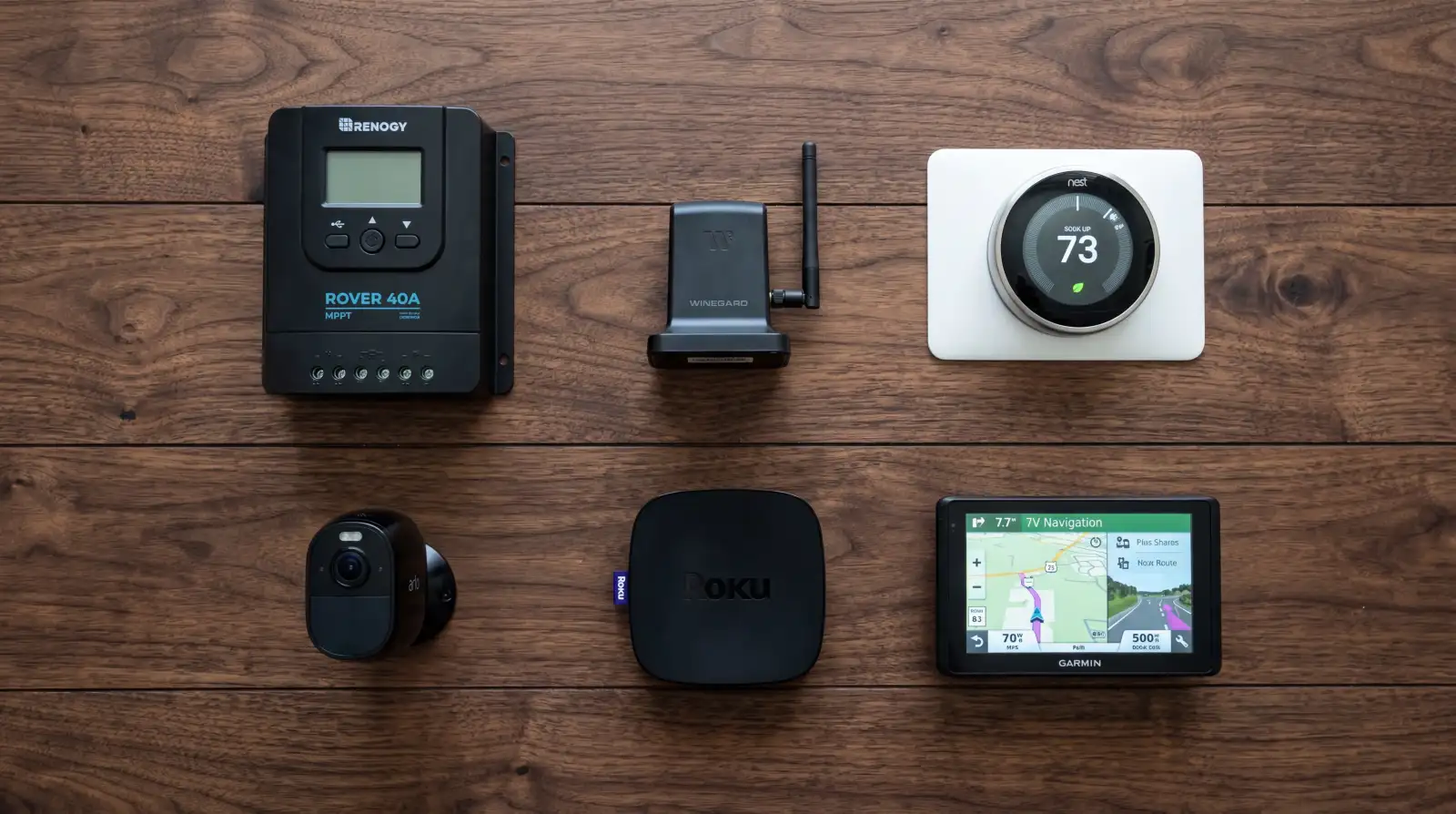
Modern RVs can include dozens of technology systems, from solar charge controllers to WiFi boosters to smart thermostats.
Without a clear plan, it's easy to skip a key upgrade or buy gear that doesn't fit your rig's electrical system.
This checklist generator builds a focused research plan based on your RV type, travel style, and current setup.
You get a clear list of what to research and why it matters for your situation, rather than wading through random product reviews.
Avoid Costly Mistakes
Installing a 3,000W inverter on a rig with a single Group 24 battery drains that battery fast and leaves you frustrated.
The checklist flags compatibility issues before you spend money.
Prioritize What Matters
A remote worker needs reliable internet before a premium sound system. Full timers need solid power management before entertainment upgrades.
The checklist orders items by impact.
What Does the RV Technology Checklist Cover?
| Category | What it covers | Why it matters |
|---|---|---|
| Power and solar | Solar panels, lithium batteries, inverters, charge controllers, and shore power management | Every other system runs on what this one provides. |
| Connectivity | Cellular boosters, WiFi extenders, satellite internet, mobile hotspots, and antenna selection | Important for remote workers and anyone who streams. |
| Climate and comfort | Smart thermostats, heat pumps, ventilation fans, heated holding tanks, and humidity control | Keeps you comfortable across seasons. |
| Security and monitoring | Cameras, motion sensors, GPS trackers, tire pressure monitors, and leak detectors | Protects your rig whether you are inside or away from it. |
| Entertainment | Streaming devices, marine grade speakers, outdoor audio, smart TVs, and gaming setups | Makes downtime enjoyable at any campsite. |
| Navigation and safety | RV specific GPS units, backup cameras, tire pressure monitoring systems, and dash cams | Keeps you safe on roads built for much smaller vehicles. |
Solar is a core upgrade on nearly every checklist. Our explainer on what a solar setup involves covers panels, controllers, and battery sizing.
As a complete kit example, according to Renogy's listing, its 400W 12V kit with a Rover 40A MPPT controller costs $639.99, checked October 2026.
AI Technology Research Checklist
Get a personalized checklist of technology features to research based on your specific needs
What Should You Do After Generating Your Checklist?
Check your electrical capacity first. Every tech upgrade draws power.
Before adding devices, know your battery bank size (in amp hours), inverter capacity (in watts), and solar input (in watts).
Our power and battery calculators estimate these numbers for you.
Start with the foundation. Power management and connectivity come before most other upgrades.
A smart thermostat won't help if your batteries can't run the AC.
A security camera is useless without cellular data to send alerts.
Check installation requirements before ordering. Some upgrades are simple to add, like a WiFi booster.
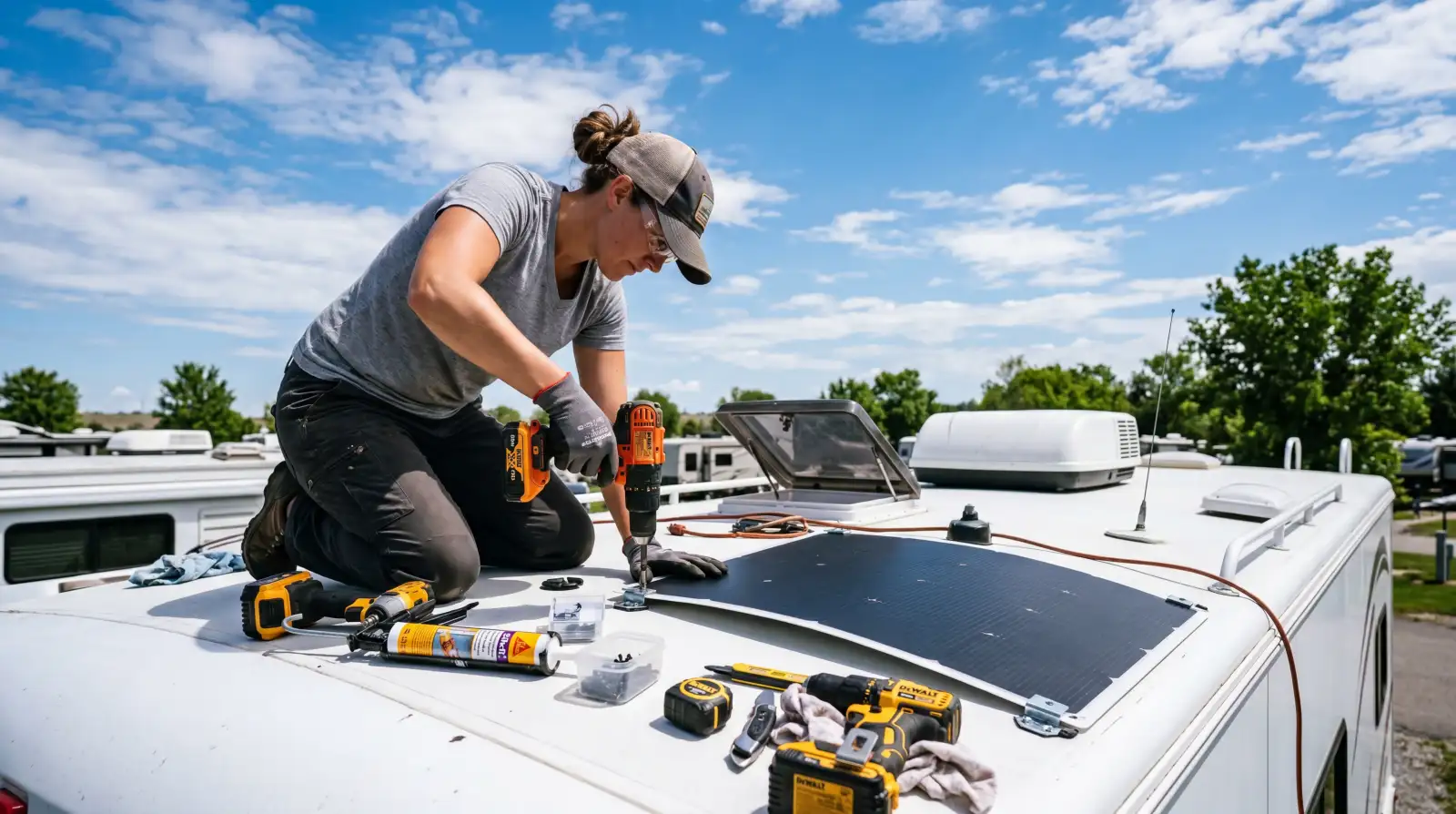
Others, like a rooftop solar array, may require drilling, wiring, and a charge controller installation.
Know what's involved before parts arrive at your door.
Budget for the full system, not just the main component. A $300 solar panel also needs four other things.
- A charge controller, $80 to $200
- Wiring, $30 to $60
- Mounting hardware, $50 to $100
- Possibly a new battery bank, $800 to $2,000 for lithium
Affiliate Disclosure Smart RV Hub may earn a commission if you purchase through these links, at no additional cost to you; see our full disclosure.
Related Tools
Explore other tools to help you make smart RV technology decisions
Camp Cost Tracker
Log what every night on the road costs in seconds and see your real nightly average, free night savings, and membership break even point
AI Technology Readiness Assessment
Get personalized RV technology recommendations based on your experience level and travel goals to build the perfect setup
Enhanced Feature Matcher
Describe your RV usage plans and discover which technology features match your needs for connectivity and entertainment
Free shipping options on qualifying orders
Rated 4.5 of 5 on Trustpilot, checked October 2026 (opens in a new tab)Ships from over 60 US fulfillment centers, checked October 2026.
Shop RV Solar Panels and BatteriesAffiliate link. We may earn a commission at no extra cost to you.
Liability insurance is included on every booking, and protection packages add roadside help
Book Your First RV TripAffiliate link. We may earn a commission at no extra cost to you.
Explore Technology Features
Read deeper on the technology behind your checklist
Browse our complete collection of planning tools
Lifestyle PlannerDesign a tech setup for your travel style
Power and Towing CalculatorsCalculate solar, power, and towing requirements
Rate Your RV Tech ReadinessFind tech that matches your experience level
Feature MatcherMatch smart features to your travel plans
Frequently Asked Questions
Can I save or print my generated checklist?
Yes.
Your checklist appears on screen after you answer the questions, so your browser print function will save or print it.
The tool also has a Download PDF button that saves the full checklist.
A screenshot is a quick alternative if you only want something to check off later.
Does the checklist recommend specific brands?
No, the checklist works in categories and priorities such as power, connectivity and security rather than naming brands.
It tells you what to research and why it matters for your setup, and you compare products using the guides elsewhere on the site.
The focus stays on your needs, not on one recommendation.
How is this different from a general RV upgrade guide?
A general guide covers upgrades for RVers in general, while this checklist is built from your own answers about your rig, your travel style and your current setup.
It orders items by what matters most for the way you actually travel.
That ordering is what turns a broad topic into a focused research plan.
Can I run the checklist again if my plans change?
Yes, run it again whenever you like.
New answers give you a checklist that matches your changed plans, and nothing limits how many times you generate it.
Revisiting it before a big trip, or when you switch from weekend trips to full time travel, keeps the plan current.
Does it work out my exact electrical capacity?
No, the checklist flags categories such as power and connectivity as priorities based on your answers rather than calculating your battery capacity.
That math belongs to the separate power and battery calculators linked from your results.
Use the checklist to decide what to research, then confirm the numbers with a calculator.