Free Camping Near Me: How to Find No Cost RV Spots Tonight
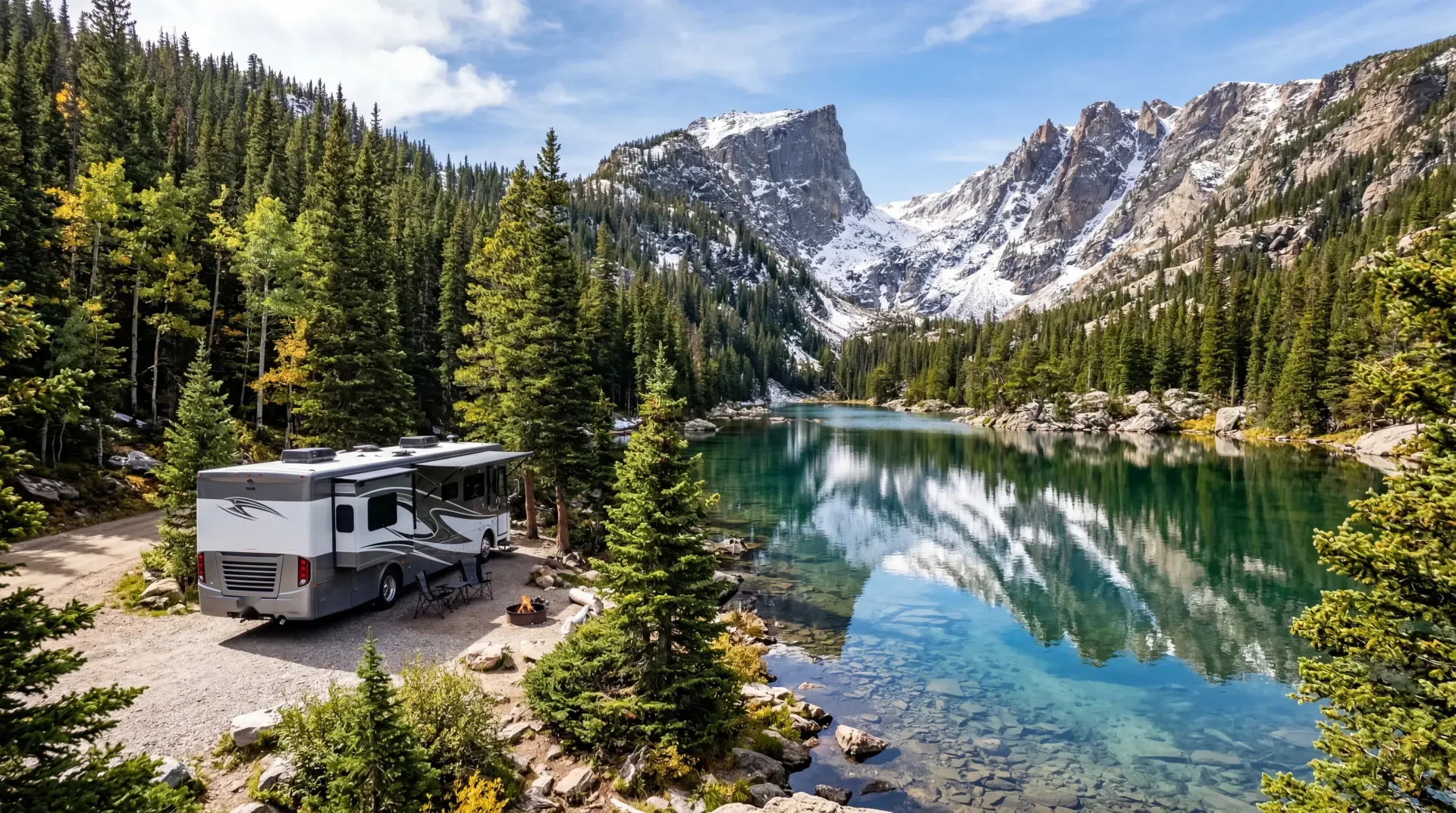
Free camping is real. It is legal, and closer than most people think.
If free camping is only part of the plan, choose your next step by goal.
Land figures from the Bureau of Land Management and the Forest Service.
How this guide works
Stay limits and posted closures apply, so check each area's rules before you park.
Hundreds of millions of acres of public land in the US allow dispersed camping at no cost, and thousands of parking lots allow a single overnight.
The catch is knowing which land is open, how long you can stay, and what you give up compared to a paid site.
This guide covers all three, plus the exact tools that map free spots near your current location. Everything here is based on published land management rules and user reviews, not guesswork.
What this guide covers
- Where free camping is actually legal across the US
- How to find a no cost spot near you tonight, by region
- Stay limits, etiquette, and the rules that keep spots open
- Honest limits of free sites and when a membership makes sense
Affiliate Disclosure Smart RV Hub may earn a commission if you purchase through these links, at no additional cost to you; see our full disclosure.
The paid options named on this page are Harvest Hosts and RV Life Pro, and either may pay us a commission when you join through our links, at no extra cost to you.
Free public land suits most nights.
When you would rather arrive knowing a spot is held for you, a host membership is the paid bridge.
No nightly fee once you join, a purchase from the host is customary
Start Your Harvest Hosts MembershipAffiliate link. We may earn a commission at no extra cost to you.
What Free Camping Legally Means
"Free camping" is not one thing.
It covers three legally distinct situations, and mixing them up is how people end up with a knock on the door at 2am.
Dispersed camping means camping outside a campground, with no marked sites and no services.
Everything else is off limits.
That means highway shoulders, trailheads posted "no camping," and any private land you have not been invited onto.
- BLM land: Free outside campgrounds and posted closures.
- National forest: Free along roads on the Motor Vehicle Use Map.
- Store or casino lot: One night only, with a clear yes first.
- Shoulders and posted trailheads: Off limits, and so is private land.
BLM Dispersed Camping
The Bureau of Land Management administers roughly 245 million acres, mostly in the western states. Dispersed camping is permitted on most of it at no charge, outside developed campgrounds and posted closures.
National Forest Dispersed Camping
The Forest Service manages 154 national forests, and most allow free dispersed camping along designated forest roads. Each one publishes a Motor Vehicle Use Map showing exactly where you can drive and camp.
Overnight Retail Parking With Permission
Some Walmart, Cabela's, Bass Pro Shops, and casino lots allow a single overnight if the store and the city both permit it.
This is parking, not camping. No slides, no chairs, no awning, one night only.
Checking local rules first
Rules change district by district, so verify current rules with the local field office or ranger district before you commit to a spot.
If the vocabulary is new, our what is boondocking guide explains dispersed camping from the ground up.
How Do You Find Free Camping Near You Tonight?
Where you are in the country changes the answer more than anything else.
Here is the fastest path to a legal free spot in each region type.
- West: Open a free camping app, then check the district map, then arrive with daylight left.
- Midwest, East: Try a national forest, then grassland or state forest, then a free small town park.
- Near a city: Call the store for a yes, then park at the lot's edge, then leave early next morning.
In the West: Public Land Is Everywhere
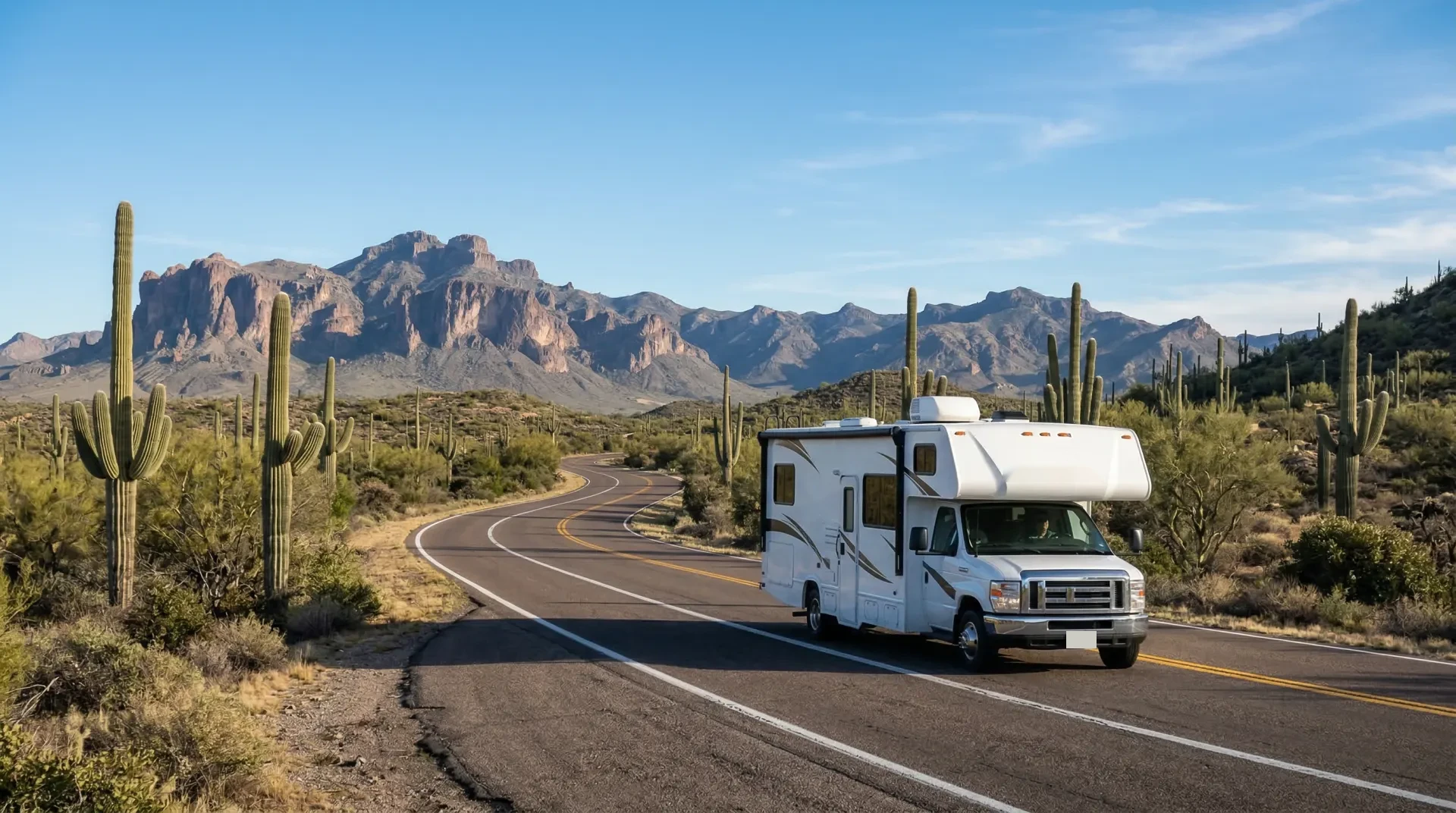
If you are west of the Rockies, you are rarely more than an hour from free BLM or national forest camping.
Arizona, Nevada, Utah, New Mexico, and eastern Oregon are especially dense with open land.
- Open FreeRoam or iOverlander, filter for free sites, and pick one with recent reviews that mention rigs your size.
- Then cross check it against the BLM or Forest Service map for that district to confirm it is still open.
- Arrive with daylight left. Dispersed roads are unpaved, and reviews cannot tell you how last week's rain treated them.
In the Midwest and East: Forests, Grasslands, and City Parks
Public land is thinner east of the plains, but it is not gone. National forests like Ocala in Florida, Pisgah in North Carolina, and Hoosier in Indiana allow dispersed camping in designated areas.
National grasslands and some state forests add more options across the Midwest.
Free city parks in small towns
Many small towns in the Midwest also run free or donation based city parks with RV spots, a tradition that survives in Kansas, Nebraska, and Iowa.
These city park listings show up in Freecampsites.net and Campendium more reliably than in official sources.
Short on time? Watch the short video on RV LIFE Pro, Campendium and AllStays instead.
Anywhere: Overnight Retail Options
When you are near a city and just need to sleep, a retail lot with permission beats circling for a campground.
Call the store, ask for the manager, and get a clear yes before you park.
Then take the edge of the lot, keep everything inside the rig, and leave early.
Our free RV overnight parking guide ranks all six retail and roadside options with pros and cons for each.
How Long Can You Stay at a Free Campsite?
Free does not mean unlimited.
Most BLM and national forest dispersed sites carry a 14 day limit within a set period, based on each agency's stay rules such as the BLM camping rules, after which you must move a set distance away.
Shorter Limits Near Busy Areas
Popular districts near tourist towns often post shorter limits, and a few very busy areas ban dispersed camping entirely.
These rules shift with fire seasons and visitor pressure, so check current local rules with the ranger district or field office before you go.
Etiquette That Keeps Spots Open
- Use existing clearings and fire rings instead of creating new ones.
- Pack out every piece of trash, including food scraps.
- Keep generators quiet during posted hours, typically 10pm to 6am.
- Camp the required distance from water sources, which as a rough guide is 100 to 200 feet.
- Never dump tanks on the ground.
- Respect posted closures even when a spot looks fine.
Land managers close areas when campers trash them. They rarely reopen.
Following Leave No Trace principles is the difference between free camping surviving another decade or disappearing behind fee gates.
What Do Free Campsites Not Give You?
Honest math matters here.
Free camping trades money for uncertainty, and that trade is not for everyone.
No Hookups
There is no power post, no water spigot, and no sewer connection.
Your batteries, tanks, and planning are the whole utility system.
No Reservations
Dispersed sites are first come, first served, and the best ones fill by Friday afternoon in season.
You can drive an hour down a forest road and find every clearing taken.
Security Varies
There is no host, no gate, and no neighbor obligated to watch your rig.
Most stays are uneventful based on published rules and user reviews, but you carry the risk yourself.
A Harvest Hosts membership answers the reservation part of this gap, though not the hookups.
- The All Access plan covers more than 9,600 host locations, including wineries, farms, and museums, verified October 2026.
- Every stay is confirmed by the host in advance, so you arrive knowing you have a spot.
- Most stays are one night with no hookups.
- Members support the host business with a purchase of about $30 a night, according to Harvest Hosts, so a night has no fee but is not free.
Member rating and where to start
The program holds a 4.7 of 5 rating on Trustpilot across 4,106 reviews Trustpilot, checked October 2026.
New to the program? Start with what Harvest Hosts is or check the current Harvest Hosts discount code availability before joining.
Affiliate link. We may earn a commission at no extra cost to you.
Gear That Makes Free Camping Comfortable
Power runs out first at a free site.
Solar panels paired with a lithium battery bank keep the fridge, lights, and devices running without generator noise.
A modest setup covers a quick weekend escape, while full time boondockers usually scale up to a much larger panel array.
Guides for sizing a solar setup
Our overview of how an off grid power system fits together explains panels, batteries, and inverters in plain language.
When you are ready to pick wattage, the solar system sizing guide walks through the math for your actual appliances.
Beyond power, extra fresh water capacity, a portable waste tote, and offline maps cover the other gaps a campground normally fills.
None of it is mandatory for one night, but each piece extends how long a free spot stays comfortable.
Plan Tonight's Stop Before You Need It
The stress is not the camping. It is searching at 6pm with a low fuel light.
The fix is to pick a primary spot and a paid backup before you start driving.
- RV Life Pro maps more than 30,000 campgrounds alongside clearance and weight limits, so your backup plan lives in the same tool as your route, verified October 2026.
- It comes with a 7 day free trial for new annual subscribers, and you can cancel anytime during the trial and pay nothing.
The full trip planning workflow
For the full planning workflow, our master guide for putting a trip together covers routing, budgeting, and overnight strategy end to end.
Affiliate link. We may earn a commission at no extra cost to you.
Frequently Asked Questions
Where can I find free camping near me tonight?
Start with public land: BLM areas in the West and national forests across the country allow free dispersed camping in most areas.
Apps like FreeRoam, iOverlander, and Campendium map free spots near your location with reviews from other campers.
If you are near a city, overnight retail parking with permission from the store manager is the fastest fallback.
Is dispersed camping on BLM land really free?
Yes, dispersed camping on most Bureau of Land Management land costs nothing.
There are no fees, no reservations, and no hookups.
Some high demand areas require a free or low cost permit, so verify current rules with the local field office before you go.
How long can you stay at a free campsite?
According to BLM and Forest Service stay rules, most dispersed sites carry a 14 day limit within a set period before you must relocate.
The exact rule varies by district, and some popular areas post shorter limits.
Check current local rules with the ranger district or field office before you settle in.
Is free camping safe?
Based on published rules and user reviews, most free camping experiences are uneventful.
Security varies because there is no host, no gate, and no staff.
Arrive in daylight, trust your instincts, and keep a backup location mapped in case a spot feels wrong.
Can I sleep in a Walmart parking lot tonight?
Many Walmart locations allow one night RV parking, but local ordinances override corporate policy in plenty of cities.
Call the store and ask for permission before you commit.
Our full guide to free overnight parking covers every retail option in detail.
What app shows free camping near me?
FreeRoam, iOverlander, Campendium, and Freecampsites.net all map free camping locations across the US.
RV Life Pro adds trip planning on top, with more than 30,000 campgrounds and RV safe routing in one tool, verified October 2026.
Is Harvest Hosts free camping?
No, Harvest Hosts is a paid annual membership of $99 to $179 a year (checked October 2026), and most stays are one night with no hookups.
There are no nightly fees once you join, though members are encouraged to spend about $30 with each host, and the All Access plan covers more than 9,600 host locations.
It works as a bridge between free public land and paid campgrounds when you want a confirmed, unique overnight.
Sources: Harvest Hosts plans and Harvest Hosts on the suggested spend.
Where can I legally camp for free?
The legal places to camp for free are mostly federal public land, which means Bureau of Land Management areas and National Forest dispersed camping.
Dispersed camping means no marked camp sites, no water and no trash collection, so you carry everything in and out.
Always check the local ranger district for current fire restrictions and stay limits before you settle in.
Can you camp for free in national parks?
Free camping inside national parks is rare, because the developed camping spots inside park boundaries almost always carry a nightly fee.
The practical route is to camp on the National Forest or Bureau of Land Management land that often borders a park, then drive in for the day.
Backcountry permits are a separate case, and some national parks issue them at little or no cost for hikers rather than for RVs.
How do I find free camping spots near me?
Start with a public land map layer, because knowing what is federal land rules out most of the guesswork before you drive anywhere.
Cross check any spot against recent member reports, since a road that suited a van last spring may not suit a 30 ft rig now.
Filter for the one amenity you genuinely need, whether that is cell signal, a vault toilet or a level pad, and accept that free camp sites rarely offer more than one.
Related Guides
All six retail and roadside options for a free single night stop.
What Is Boondocking?How to find free public land sites and what to check before you park.
What Is Harvest Hosts?How the membership works, host types, and who it fits.
RV Trip Planning GuideRouting, budgeting, and overnight strategy for any trip length.
RV Solar Power GuideSize your solar setup for off grid camping.
Boondockers WelcomePrivate driveways and land where hosts invite RVers to stay.
Add Me to The Unplugged RV Waitlist
The Unplugged RV is a beginner's roadmap to off grid and boondocking freedom, covering power, water, and where to stay.
The book is not on sale yet and no release date is set.
No spam, and you can unsubscribe anytime. See our Privacy Policy.
Smart RV Hub Editorial Team
RV Technology Research and Reviews
Our writers research smart RV technology full time, covering solar power, connectivity, security, and power management.
Every guide draws on published manufacturer specifications and owner reviews, so you can compare options with confidence.
Meet the editorial team and our review standards