RV Safe GPS and Bridge Clearance: What to Check
Your maps app plans for a car. Your roof pays for the difference.
The Mechanism, at a Glance
A car router and a rig aware router given the same trip produce different roads, because only one of them knows how tall you are.
Why Good Drivers Hit Low Bridges
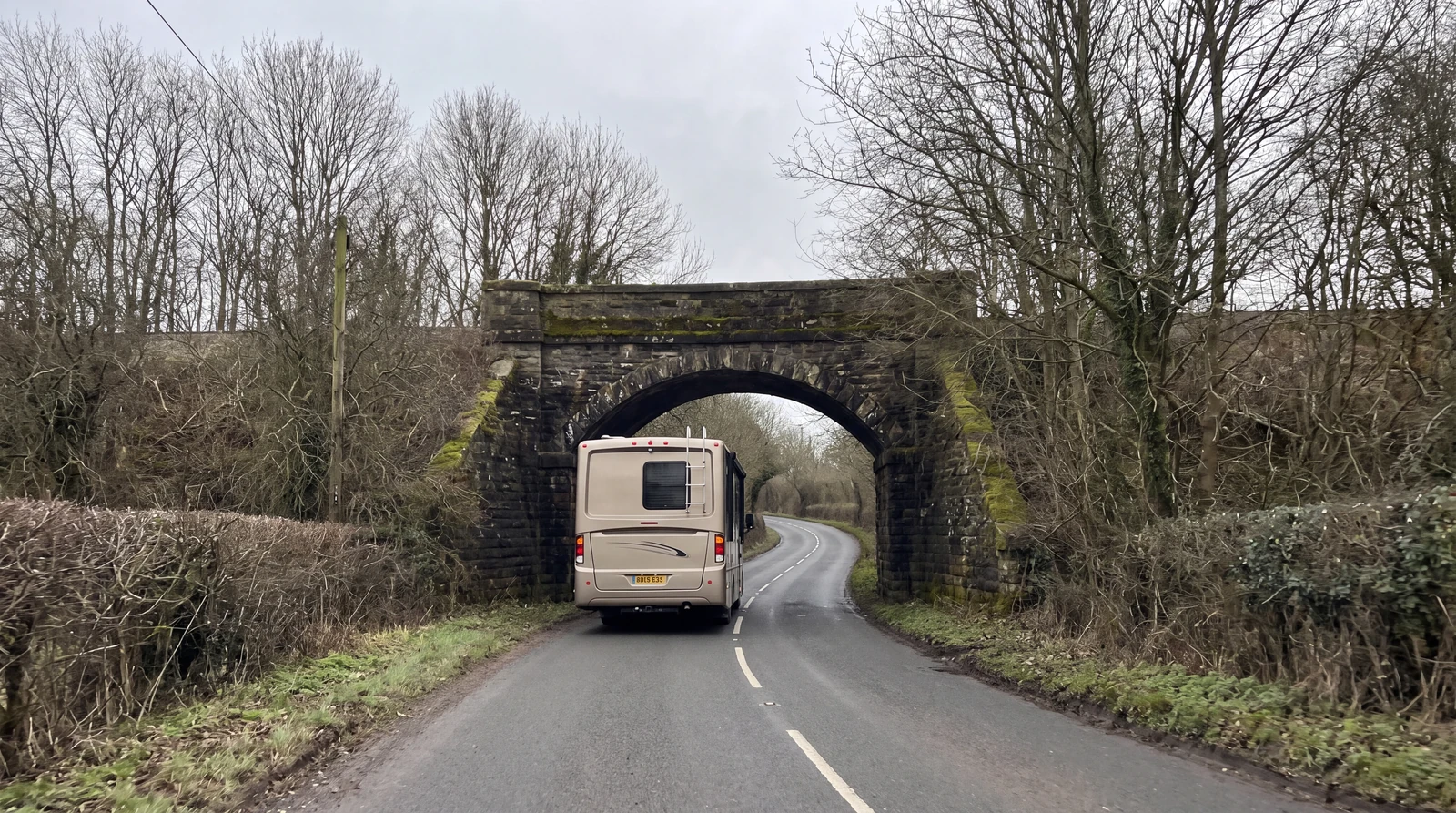
Bridge strikes are a routing failure before they are a driving failure: the app confidently led the rig onto a road it should never have seen.
Reported motorhome repair ranges run $5,000 to $30,000, with common deductibles of $500 to $2,500, and body shop turnarounds measured in weeks.
The fix is cheap by comparison, which is what the rest of this page covers.
The Four Checks That Prevent It
Cost ranges above and routing behavior below follow published insurance industry ranges and vendor documentation, last verified August 2026.
Measure the real height
Tape measure to the tallest point, usually the AC unit. Write it in the cab where the driver sees it.
Add margin, then enter it
Enter the measured height plus a few inches into every routing tool you use, and never the optimistic sticker figure.
Plan with rig profile routing
Use a router that accepts height, weight, and propane status, so restrictions shape the route before the drive.
Trust the sign over the screen
Databases lag reality. The posted clearance at the bridge is the final authority, every time.
What a Truck Route Sign Means, and When a Weigh Station Applies
Clearance is the restriction that damages a rig, and it is not the only one a route can break.
Two more come up often enough that it is worth knowing where your RV sits on each.
Truck routes
Some roads carry a designated truck route, and some towns ban larger vehicles from the streets either side of it.
Whether an RV counts depends on the jurisdiction and usually on weight rather than on what the vehicle is called.
Weigh stations
Rules vary by state, and a few require any vehicle over a stated weight to pull in, private ones included.
Most recreational rigs are exempt in most states, so the useful move is knowing your loaded weight rather than assuming either way.
Both come back to the same number as the clearance checks, which is what the rig actually weighs when it is loaded for a trip.
Affiliate Disclosure
This page contains affiliate links to RV Life Pro.
When you purchase from RV Life Pro through these links, we may earn a commission at no additional cost to you.
This helps support our free calculators, guides, and research tools. Read our full disclosure
Where the Tools Come In
RV Life Pro publishes rig profile routing against height, weight, and propane restrictions as its core function, planned in RV Trip Wizard and driven in its GPS app.
It is not the only rig aware option, and our comparison with CoPilot GPS lays out the honest differences.
Low bridges tend to sit on the same rural and mountain roads that drop cell signal, so downloaded maps that keep working with no signal keep rig profile routing running when the connection does not.
Navigate confidently anywhere
Try Low Bridge Routing Free for 7 DaysAffiliate link. We may earn a commission at no extra cost to you.
Trip planning tips by email
Height margins, restriction data notes, and routing built around a rig's real size.
Free by email. Unsubscribe anytime.
Where This Comes From
We did not drive these routes or strike any bridges, and nothing here reports our own navigation testing.
Repair and deductible ranges follow published insurance industry figures, and routing behavior follows vendor documentation.
Last verified August 2026. The posted clearance at any bridge overrides every database, including the ones these tools use.
Smart RV Hub Editorial Team
RV Technology Research and Reviews
Our writers research smart RV technology full time, covering solar power, connectivity, security, and power management.
Every guide draws on published manufacturer specifications and verified owner reviews, so you can compare options with confidence.
Meet the editorial team and our review standardsBridge Clearance Questions
Is regular GPS safe for RVs?
No: car navigation apps plan for a vehicle with no height or weight, so they will happily route a 13 foot rig toward an 11 foot bridge.
The app is not broken, it just answers a different question than the one an RV driver is asking.
How does RV safe GPS avoid low bridges?
You enter your rig's height, weight, length, and propane status, and the router plans against a database of published restrictions.
RV Life Pro, for example, publishes exactly this rig profile routing as its core function.
How much does a bridge strike cost?
Reported repair ranges for motorhome bridge strikes run $5,000 to $30,000, with common insurance deductibles of $500 to $2,500 on top.
Weeks in a body shop are the part no policy pays back.
What height should I enter for my RV?
The measured height of the tallest point, usually the air conditioner, plus a safety margin.
The sticker height is the factory figure and your antenna, vent covers, or roof rack may stand above it.
Can I trust clearance databases completely?
No, and honest routing vendors say so: construction, repaving, and signage errors mean the posted number at the bridge is the final word.
The database removes surprises from the plan, and the driver still owns the last hundred feet.
Why do posted clearances differ from real clearance?
Repaving raises the road and lowers the gap, and some jurisdictions post below the measured height as a buffer.
Both effects argue for margin in the height you enter, not margin you mentally subtract at the bridge.
Do truck GPS apps work for RVs?
They share the restriction awareness, and truck routing may prefer roads an RV does not want, like industrial corridors over scenic routes.
RV specific tools add campgrounds and travel style routing on top of the safety layer.
What if my route has no RV safe option?
Sometimes the honest answer is a longer way around, and planning tools make that cost visible before departure rather than at the bridge.
A detour measured in minutes beats a strike measured in weeks.
Does RV safe GPS work with no cell signal?
Low bridges and rig profile routing tend to matter most on the same rural and mountain roads where cell signal drops out first.
Downloading offline maps before departure keeps the height and weight aware routing running without a live connection.
The planners, the navigators, and the comparison between them.
The App Behind Safe Routing
The membership built around rig profile routing.
RV Trip Wizard Explained
The planner that applies your profile before the drive.
RV Life Pro vs CoPilot GPS
Two rig aware navigators compared.
Best RV GPS Comparison
Dedicated GPS hardware against the apps.
Best RV TPMS Guide
The other highway risk a screen can watch.
Full Trip Planning Walkthrough
The whole trip around the safe route.
The Number Only You Can Supply
Every tool on this page routes against the height you type in, and none of them can climb on your roof with a tape measure.
Measure once, add margin, and the whole stack of databases and routers finally has something true to work with.
Affiliate link. We may earn a commission at no extra cost to you.