How to Ship an RV With uShip: The Full Process
A walkthrough of the marketplace, from listing to delivery day.
Complete enough to follow whether or not you use the platform.
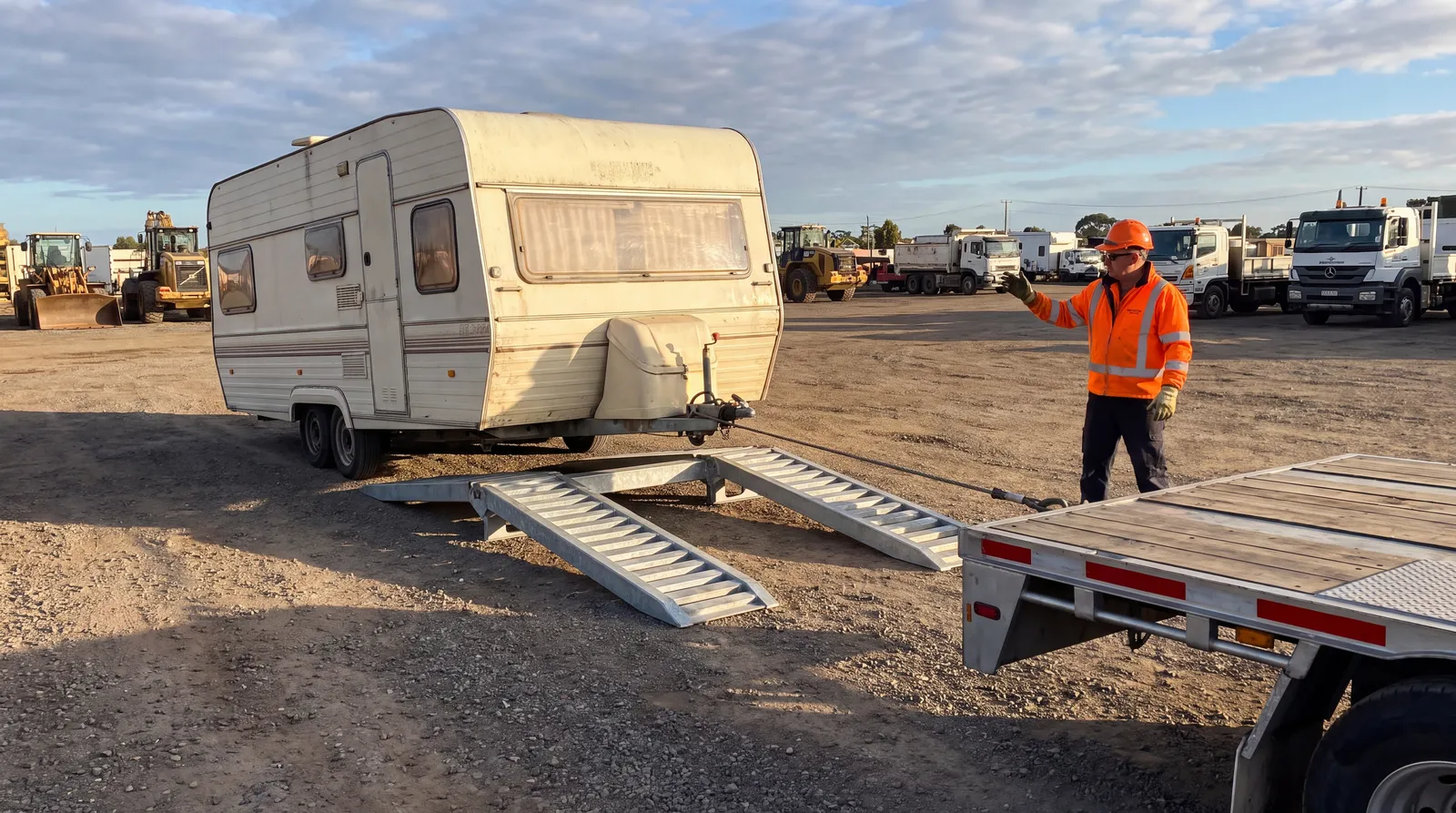
The Process in Five Steps
- Get your numbers ready. Length, height, weight, and whether the rig runs.
- Post the listing. Route, date window, condition, and photographs.
- Read the bids. Compare insurance and feedback before price.
- Prepare the rig. Strip it, secure it, and photograph every side.
- Walk it at both ends. The condition report is what any claim rests on.
Have these ready before you list
Length, height, and dry weight from the plate or the manual, not from memory.
Full pickup and delivery addresses, since a city name alone produces vaguer bids.
Whether the rig drives or needs towing, because that decides which carriers can bid at all.
Step One: Posting Your RV Shipment
The quality of your listing decides the quality of the bids, because carriers price what they can see.
- Gather your RV details. Year, make, model, length, height, weight, and whether it drives or tows.
- Set your pickup and delivery points. Full addresses give more accurate bids than a city name alone.
- Choose your date window. A flexible window attracts more carriers than a single fixed day.
- Declare the condition honestly. Say if the rig does not run, because it changes the equipment needed.
- Add photographs. Clear exterior shots from each side help carriers price the job properly.
- Post the listing. Carriers see it and start responding with bids.
Height matters more than owners expect, because bridge and overpass clearance decides the route a carrier can take.
Step Two: Reading the Bids
The lowest bid is not automatically the one to take.
Four things are worth comparing before price, and they are all on the carrier profile.
Feedback history
Look at how many vehicle moves they have completed, not just the overall score.
Insurance amount
Check the stated cargo cover against what your rig is worth.
Equipment type
Confirm they have the trailer or towing setup your RV class needs.
Cancellation terms
Know what happens if either side moves the date before you accept.
Get the pre listing checklist by email
The numbers and photographs to have ready before you post a shipment.
Free by email. Unsubscribe anytime.
Step Three: Preparing the RV for Pickup
Preparation is where a later dispute is most often avoided.
- Remove personal belongings, since cargo insurance generally covers the vehicle rather than its contents.
- Secure or remove awnings, antennas, and satellite domes.
- Close and latch every window, vent, and storage bay.
- Disconnect the battery if the rig will sit for a while after delivery.
- Photograph every side, the roof, and the interior before the driver arrives.
- Leave roughly a quarter tank of fuel in a drivable rig, no more.
Those photographs are among the most useful things you can do, because they date stamp the condition before anyone else touches the rig.
Step Four: Pickup and Delivery Day
At pickup, the driver walks the rig with you and completes a condition report.
Read it before signing. Six months from now this paper is the only evidence either of you will have.
At delivery, repeat the same walk around before you sign anything.
Note any new damage on the delivery paperwork at the time, since raising it days later is far harder to support.
Five mistakes that cost owners money
- Taking the lowest bid without reading the insurance amount.
- Understating the height or weight, which cancels the pickup on the day.
- Leaving belongings inside and assuming they are covered.
- Signing the condition report without reading it.
- Noticing damage after the driver has left rather than at delivery.
Where This Comes From
The process here follows uShip published description of how the marketplace works.
We have not shipped an RV through the platform, so nothing on this page reports how a move went.
Last verified August 2026, and the platform changes its process without notice.
Smart RV Hub Editorial Team
RV Technology Research and Reviews
Our writers research smart RV technology full time, covering solar power, connectivity, security, and power management.
Every guide draws on published manufacturer specifications and verified owner reviews, so you can compare options with confidence.
Meet the editorial team and our review standardsuShip RV Transport Questions
How does uShip work for RV transport?
uShip is a marketplace rather than a carrier, so you post the details of your RV and route and carriers respond with bids.
You then choose one based on their price, their feedback history, and the insurance they carry.
Is bidding cheaper than a fixed transport quote?
Bidding surfaces a range rather than a single number, so the low end tends to sit below a fixed quote and the high end can sit above it.
The tradeoff is that you do the comparing yourself instead of one company handling it.
How do I know a bidding carrier is legitimate?
Established carrier profiles carry feedback from previous shipments, which is the main signal available before you book.
Check their published insurance details and their cancellation terms before accepting a bid, not after.
How long does it take to get bids on an RV shipment?
Based on the platform's published guidance, listings commonly attract bids within a day or two.
Popular routes move faster than remote ones, and a flexible pickup window attracts more responses than a fixed date.
Do I need to be there for pickup and delivery?
Someone has to release the RV at pickup and receive it at delivery, but it does not have to be you personally.
Whoever is present needs to complete the condition report with the driver, because a driver disputes a claim against that document, not against memory.
What insurance covers my RV in transit?
Carriers on the platform carry their own cargo insurance, and the coverage amount is stated on their profile.
Check that figure against what your RV is worth, because a carrier insured well below your rig's value leaves you exposed.
Can I ship an RV that does not run?
Yes, but say so in the listing, because a non running rig needs winching equipment and changes which carriers can take the job.
Hiding it leads to a canceled pickup and a relisting, which costs more time than declaring it did.
What should I remove from the RV before shipping?
Take out personal belongings, anything loose, and anything valuable, since carrier cargo insurance generally covers the vehicle rather than its contents.
Secure or remove exterior items such as awnings, antennas, and satellite domes.
Costs, alternatives, and what to do with the rig once it arrives.
RV Shipping Cost Guide
What transport actually costs by size, distance, and method.
uShip vs Transport Companies
Marketplace bidding against a single fixed quote.
Class A, B, And C Compared
Which class you own decides how it has to travel.
Maintenance Checks Before You Ship
The pre transport condition check worth doing first.
Rent Or Own, Which Suits You
Whether moving a rig you own is the right call at all.
RV Storage Preparation
Prepping a rig that is going into storage after transit.
Before You List
Have the length, height, weight, and running condition to hand, because those four decide who can bid at all.
For a sense of the numbers first, our breakdown of what transporters charge sets out the published ranges by size and distance.