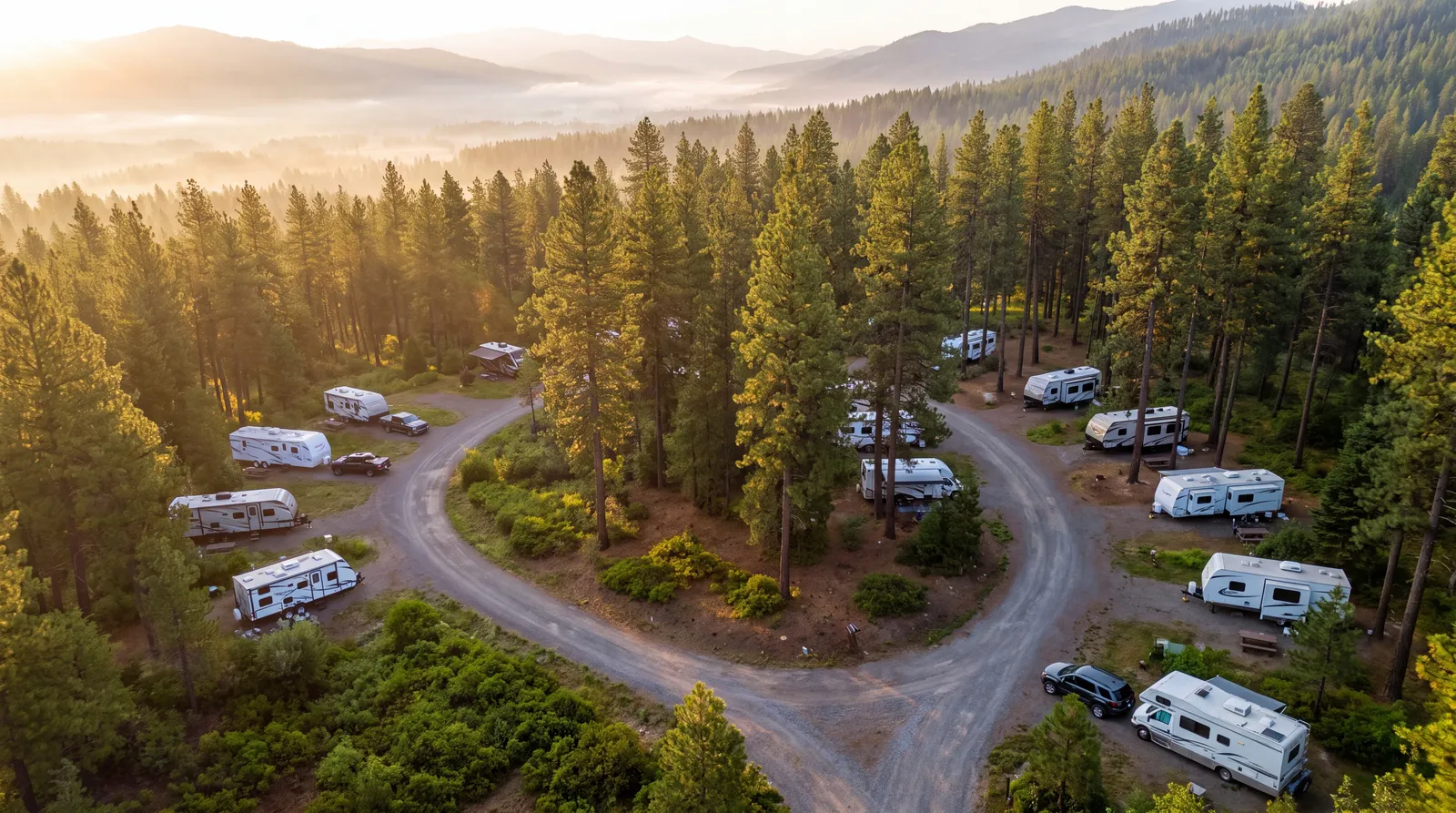
Best Campgrounds by Region: A Practical US Guide
Season, rig length limits, and how far ahead each region books.
Busiest parks: the NPS Yosemite lottery page. Six month windows: the National Forest Foundation.
Affiliate Disclosure Smart RV Hub may earn a commission if you purchase from Harvest Hosts and RV LIFE Pro through these links, at no additional cost to you; see our full disclosure.
Which Region Is Best for the Month You Can Travel?
Each region peaks at a different time of year, so the month you can camp narrows the map before anything else.
Northeast
Late May to mid October, fall foliage books hardest
Southeast
Year round, winter is the premium season
Midwest
May through September
Southwest desert
Fall through spring, with summer heat the limit
Mountain West
A short June to September window at altitude
Pacific Coast
Year round in the south, May to October in the north
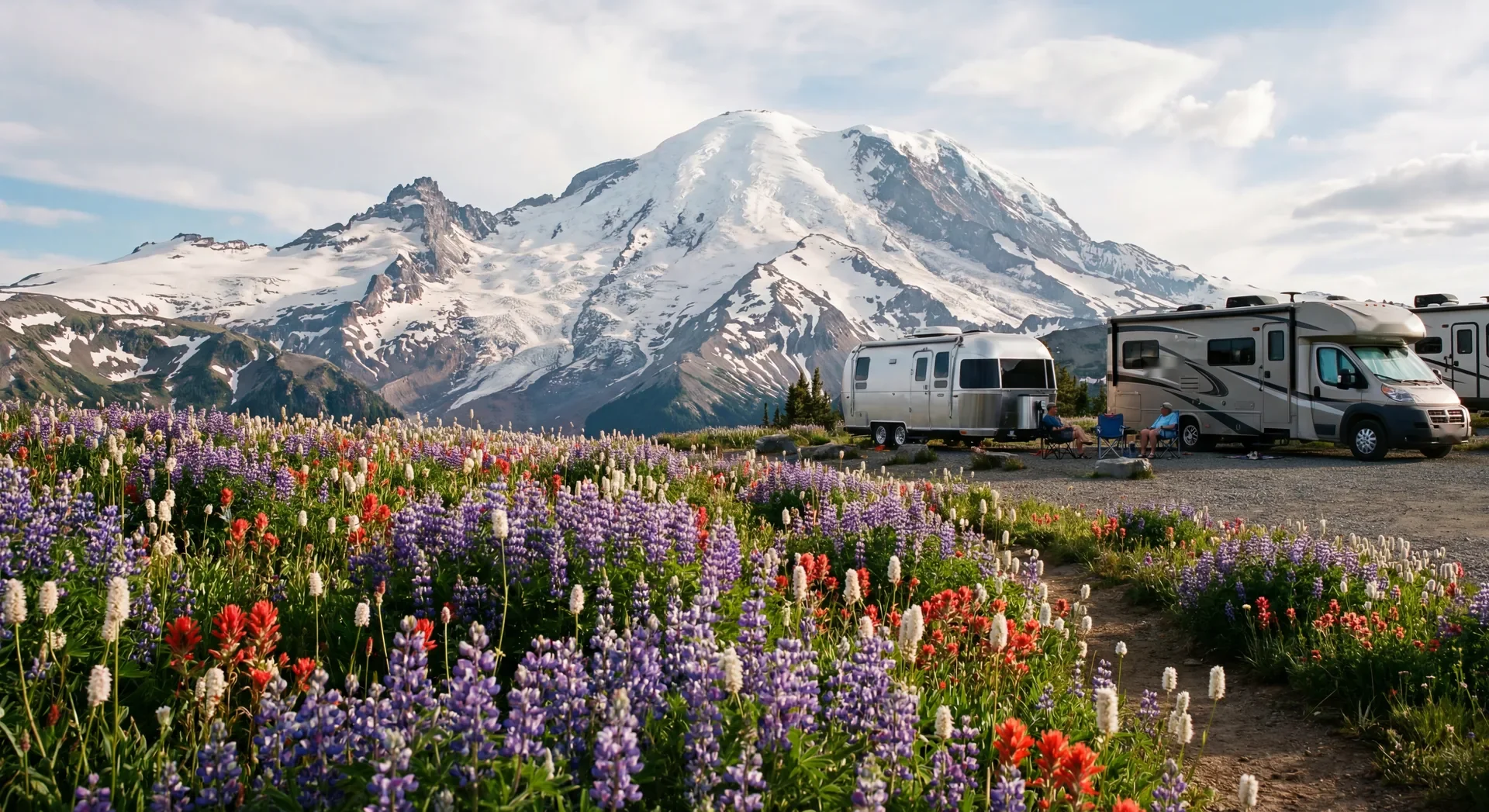
How Far Ahead Do Campgrounds Book in Each Region?
The booking window varies more between regions than any other campground detail.
- Florida state parks: 11 months for residents, 10 for non residents, per Florida State Parks.
- Acadia on the Maine coast: 6 months, per the NPS.
- California state parks: 6 months, per California State Parks.
- Dispersed camping on public land: no booking, per the BLM.
Which Campgrounds Stand Out in Each of the Five Regions?
Every season, rig limit and booking figure below is taken from published park and campground listings, last verified November 2026.
Northeast
Season: Late May to mid October.
Rig limit: Tighter at older state parks. Booking: As early as the window opens for coast and fall foliage.
Southeast
Season: Year round, winter peak.
Rig limit: Longest rigs at private parks. Booking: Up to 11 months at Florida State Parks.
Midwest
Season: May to September.
Rig limit: Longer on newer loops. Booking: A few weeks.
Southwest and Mountain West
Season: Fall to spring in the desert, June to September at altitude.
Rig limit: Tight at many national park sites. Booking: 6 months, none for dispersed public land.
Pacific Coast
Season: Year round south, May to October north.
Rig limit: Tight on coastal loops. Booking: 6 months.
Lead times: Florida State Parks, National Forest Foundation and California State Parks.
Northeast
Dense forest, coastal Maine, and the fall color season that drives its peak demand.
- Season
- Late May to mid October, with the fall peak booking hardest.
- Rig limits
- Older state park loops often publish tighter length limits than newer ones, so long rigs need checking site by site.
- Booking window
- As early as the window opens for coastal and fall foliage sites, a few weeks elsewhere.
Worth knowing: Tree cover is good for shade and poor for both satellite and solar.
Southeast
Year round camping, Florida state parks, and the Gulf and Atlantic coasts.
- Season
- Year round, with winter as the premium season and a humid summer.
- Rig limits
- Private parks here are where the longest rigs usually find room, so check each listing for length and hookups.
- Booking window
- According to Florida State Parks, residents can book 11 months ahead and non residents 10 months, the longest lead time here.
Worth knowing: Hurricane season runs June 1 to November 30, per NOAA. Closures follow.
Midwest
Great Lakes shoreline, river valleys, and the lowest booking pressure of the five regions here.
- Season
- May through September, with a hard freeze either side.
- Rig limits
- Newer state park loops tend to publish longer site limits, but check each listing before booking.
- Booking window
- A few weeks is usually enough outside holiday weekends.
Worth knowing: Mosquito season and lake effect weather shape the shoulder months more than crowds do.
Southwest and Mountain West
Desert boondocking, red rock national parks, and a large supply of public land open to dispersed camping, per the Bureau of Land Management.
- Season
- Fall through spring in the desert, a short June to September window at altitude.
- Rig limits
- Many national park campgrounds here publish tight site lengths, so check each listing before booking.
- Booking window
- Six months for the headline parks, none at all for dispersed public land.
Worth knowing: Altitude and summer heat both matter more than the campground itself.
Pacific Coast
Coastal state parks, redwoods, and a reservation system where popular sites go quickly.
- Season
- Year round in the south, May to October in the north.
- Rig limits
- Coastal state park loops are often tight, so the published length for each site matters most here.
- Booking window
- Six months ahead, and popular sites can go the day reservations open.
Worth knowing: Coastal fog and narrow approach roads catch out first time visitors more than the sites do.
Public land rules: BLM. Florida windows: Florida State Parks.
A Named Campground to Start With in Each Region
One well known park campground per region, with the one fact that shapes booking it.
Northeast
Blackwoods Campground, Acadia National Park, Maine
Most sites open 6 months ahead on Recreation.gov. Source: National Park Service.
Southeast
Florida state park campgrounds
Florida residents can book 11 months ahead, the longest window here. Source: Florida State Parks.
Midwest
Dunewood Campground, Indiana Dunes National Park
Open April 1 to November 1, on the Lake Michigan shore. Source: National Park Service.
Southwest and Mountain West
Watchman Campground, Zion National Park, Utah
Reservations are required and open up to 6 months ahead. Source: National Park Service.
Pacific Coast
Upper Pines Campground, Yosemite National Park, California
The one Yosemite campground on reservations all year, on a 5 month window. Source: National Park Service.
Once you have picked a region, member reviews across RV LIFE Pro's 30,000 plus campground listings can show what the access road and the sites are like, per the RV LIFE help center.
The annual plan starts with a 7 day trial for new subscribers, which you can cancel before it bills.
New annual subscribers only, cancel inside 7 days to pay nothing (checked October 2026)
RV safe routes and campsites
Find Campsites with a Free 7 Day TrialAffiliate link. We may earn a commission at no extra cost to you.
Campground finding tips by email
Booking windows, rig fit checks, and the parks that open reservations early.
Free by email. Unsubscribe anytime.
No spam, and you can unsubscribe anytime. See our Privacy Policy.
How Do You Check a Campground Before You Book?
Three checks decide whether a campsite works for your rig, and the listing only answers the first.
Read the published length
The listed length tells you whether a rig fits the pad and nothing about whether it can reach it.
Check the approach road
Overhanging branches and the turn into the loop are what catch out long rigs.
Watch a video tour of the loop
Park photographs are chosen by the park, and a still image leaves things out.
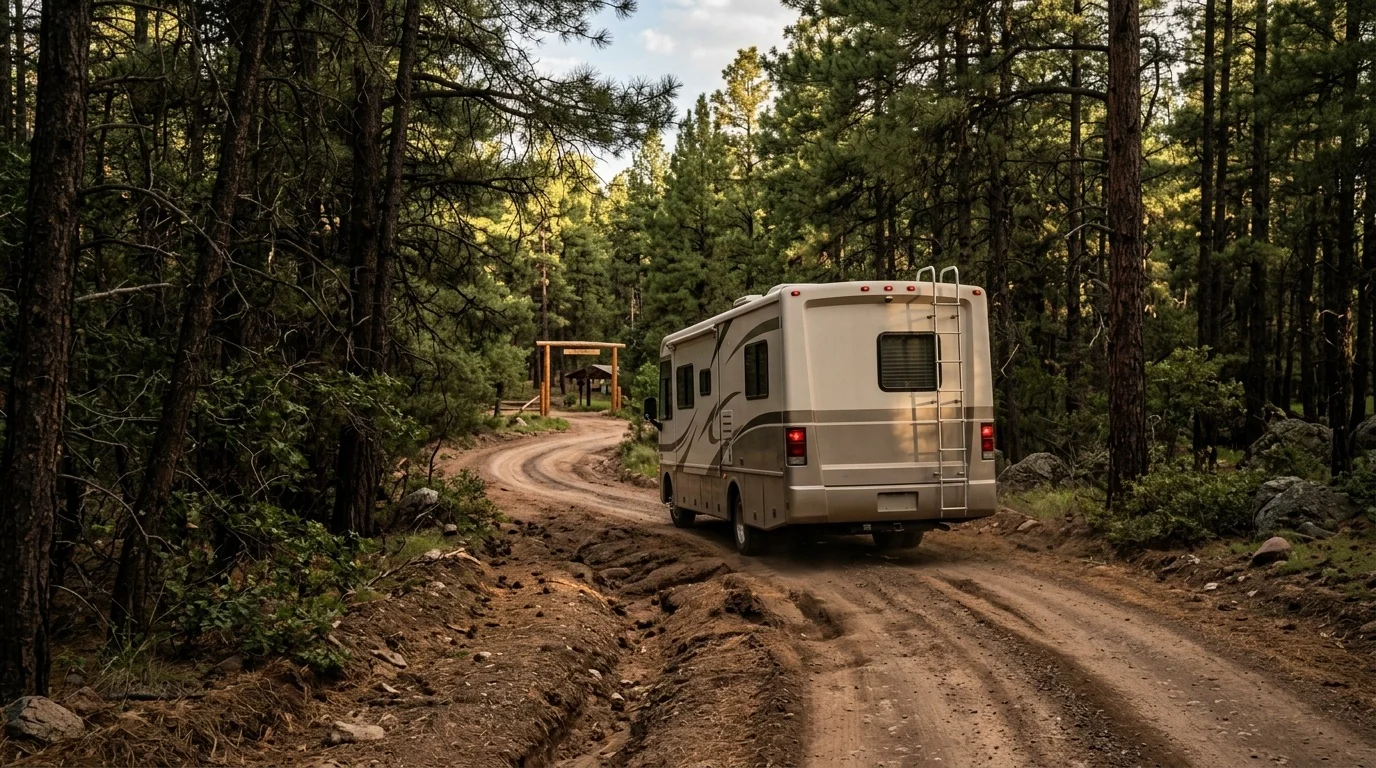
Season, limit and booking figures on this page come from published campground and park listings, last verified November 2026.
Where These Figures Come From
No campground on this page was visited. Nothing here reports a stay.
Every season, rig limit and booking window is taken from published park service, state park and campground listings.
Last verified November 2026, and parks change both limits and windows without notice.
Smart RV Hub Editorial Team
RV Technology Research and Reviews
Our writers research smart RV technology full time, covering solar power, connectivity, security, and power management.
Every guide draws on published manufacturer specifications and owner reviews, so you can compare options with confidence.
Meet the editorial team and our review standardsRegional Camping Questions
Which region is best for RV camping?
There is no single answer, because the regions peak at different times of year.
The Southwest is at its best from fall through spring, the Mountain West is a short summer season, and the Southeast runs year round with a humid summer.
How far ahead do I need to book a campground?
Book national park and coastal sites the day their reservation window opens.
State parks and private parks are usually reachable within a few weeks, outside of holiday weekends.
How do I know a site will fit my rig?
Published campground listings state a maximum length per site, and that figure is the one to check before anything else.
What listings rarely state is the approach, so a site rated for your length can still be hard to reach with a long rig.
How do national park campgrounds compare with private parks?
They are different rather than better, and the trade is scenery against services.
National park sites usually offer limited or no hookups, while private parks trade the setting for full hookups, laundry and reliable connectivity.
What is the cheapest region for RV camping?
Public land in the Southwest and Mountain West is the lowest cost option, since most BLM land allows dispersed camping with no permit or reservation, per the Bureau of Land Management.
Coastal state and national park campgrounds charge a nightly fee, so they cost more than a free dispersed site.
Can I camp year round in one region?
The Southwest and the Gulf Coast are the two that support genuine year round RV use for most rigs.
Everywhere else has either a freeze season or a humidity season that shapes when you want to be there.
How do I check what a campsite actually looks like?
Photographs on a listing are chosen by the park, so they show the site at its best angle.
Video tours of the loop and the approach road show the things a still photograph leaves out, which is why they are worth checking before a long booking.
Do I need reservations for public land camping?
Dispersed camping on federal land generally needs no reservation, and that is much of its appeal.
Developed BLM campgrounds are typically first come, first served, though some take reservations through Recreation.gov, per the BLM.
Finding sites, checking them, and the free alternative.
A method that works whether you need a site tonight or next season.
Video tours against written reviews before you book.
The public land option alongside these paid parks.
What each term actually promises about facilities.
Overnight stays at wineries and farms between parks.
Building the route these campgrounds sit on.
Getting There and Filling the Nights Between
Choosing a region is easy. Driving to it and covering the nights on the way are what the rest of the plan has to solve.
Two tools cover most of that. They solve different problems.
Routing a large rig to the region
Mountain and desert regions are where a car route is most likely to send an RV under a low bridge or up a road it should not take. Car routing ignores height, weight and grade.
A planner built for RV dimensions routes around clearance, weight and grade instead. Read our review of RV LIFE Pro before you decide.
Annual plan trial for new subscribers, cancel before it bills (terms checked October 2026)
RV safe routes and campsites
Start Your Free 7 Day TrialAffiliate link. We may earn a commission at no extra cost to you.
Covering the nights in between
The long drives between regions are where campground fees add up fastest, and where a booked site matters least.
According to the Harvest Hosts plans page, the Classic membership covers more than 6,000 host locations (checked October 2026).
Overnight host stays at wineries, farms and breweries fill those nights instead. Our how host stays work explains how the network works.
No nightly fee once you join, a purchase from the host is customary
See Membership Plans and JoinAffiliate link. We may earn a commission at no extra cost to you.
Next Step
Picking a region narrows the map, not the search. Finding an actual site is its own job, with its own timing.
Our guide to finding campgrounds by booking horizon covers tonight, this weekend, and next season separately.