Best RV Rentals in Seattle, Washington (2026)
For most families, the best RV rental in Seattle is a Class C motorhome, with the power for Snoqualmie Pass and none of the length limits of a Class A.
Couples planning an Olympic or Cascades loop will find a Class B camper van easier to park and drive.
Affiliate Disclosure
This page contains affiliate links.
When you purchase through these links, we may earn a commission at no additional cost to you.
This helps support our free calculators, guides, and research tools. Read our full disclosure
Seattle RV Rentals Compared
Pacific Northwest ready rigs, listed by owners across the Seattle metro area.
A protection plan with state liability limits is built into every booking, with $500,000 available on the paid Peace of Mind package. Add a protection package for 24/7 roadside help on passes and ferry routes.
Affiliate link. We may earn a commission if you book, at no extra cost to you.
📋 What you'll discover
- Compare Seattle RV rentals for Olympic and Rainier National Parks
- See what an RV rental in Seattle costs per night and per week
- Get tips on San Juan Islands ferry reservations and camping
- Book through Outdoorsy for extensive PNW adventure selection
How we picked these rentals
Recommendations on this page are based on published platform inventory, verified user reviews, and pricing at time of writing.
The primary "book through" recommendation links to Outdoorsy, an affiliate partner that pays Smart RV Hub a commission on qualifying bookings.
Other platforms named in this guide (such as Cruise America, Road Bear RV, and El Monte RV) are not affiliate partners.
See our full affiliate disclosure.
Seattle RV Travel Destination
This Pacific Northwest base reaches rainforests, alpine peaks, and ferry served islands.
- Olympic National Park
- Mount Rainier National Park
- North Cascades National Park
- Snoqualmie Falls
- San Juan Islands
What a Week of RV Rental in Seattle Costs
A seven night Seattle RV rental is easiest to picture as the nightly rate multiplied by seven. On the rates set out later in this guide, that works out at roughly $1,050 for a camper van, about $1,575 for a Class C, and about $2,625 for a Class A.
- Camper van for two travelers: seven nights at $150 a night, about $1,050
- Class C motorhome for a family of four: seven nights at $225 a night, about $1,575
- Class A motorhome for six travelers: seven nights at $375 a night, about $2,625
Those figures cover the rig alone. The itemized sample weeks later in this guide, which add insurance, mileage, campgrounds, fuel, and groceries, come to $1,991 for the van, $3,130 for the Class C, and $4,613 for the Class A.
Rates climb through July and August, so the same week booked in September usually lands nearer the bottom of each range. To price your own dates, add ferry fares and campgrounds in the RV rental cost calculator.
The Best RV to Rent From Seattle for a Family of Four
For a family of four, the Class C motorhome is the most practical Seattle RV rental, based on published listings and user reviews. Listing classes put Class C sleeping capacity at four to six people, at $175 to $300 per night.
The bunk above the driver's cab gives two children their own berth, with a queen or full size bed at the rear. Pick a rig under 30 feet so it fits park campgrounds such as Cougar Rock at Mount Rainier, where Recreation.gov states a 35 foot cap for motorhomes.
- Class B camper van, sleeps 2 to 3 at $125 to $175 per night. Easiest to drive on mountain roads, but tight for four.
- Travel trailer, sleeps 4 to 8 at $100 to $200 per night. The cheapest route if you already have a tow vehicle.
- Class A motorhome, sleeps 6 to 8 at $300 to $500 per night. Roomy, but restricted on narrow Cascade passes.
Families booking an RV rental in Seattle for July or August should reserve three to four months ahead. Popular family rigs get scarce well before peak summer dates.
Adding ferry fares and campgrounds to the total? Estimate it with the RV rental cost calculator
Disclosure: This guide contains affiliate links. We may earn a commission if you book through our links, at no extra cost to you.
How an RV Changes a Pacific Northwest Trip
RV rentals can offer savings compared to Seattle hotel stays
Many local RVs listed by Seattle owners on Outdoorsy, so check live availability for your dates
National park gateway. Olympic, Mount Rainier, and North Cascades all within 3 hours
Puget Sound to Pacific coast. Rainforests, glaciers, islands, and wild coastline from one starting point
Summer paradise. July and August offer perfect 70 to 80°F weather and long daylight
Pacific Northwest basecamp. Explore the best of WA from Seattle with your lodging on wheels
Ready to explore? Browse Seattle RV rentals on Outdoorsy and start planning your Pacific Northwest adventure today.
The Problem with Traditional Seattle Vacations
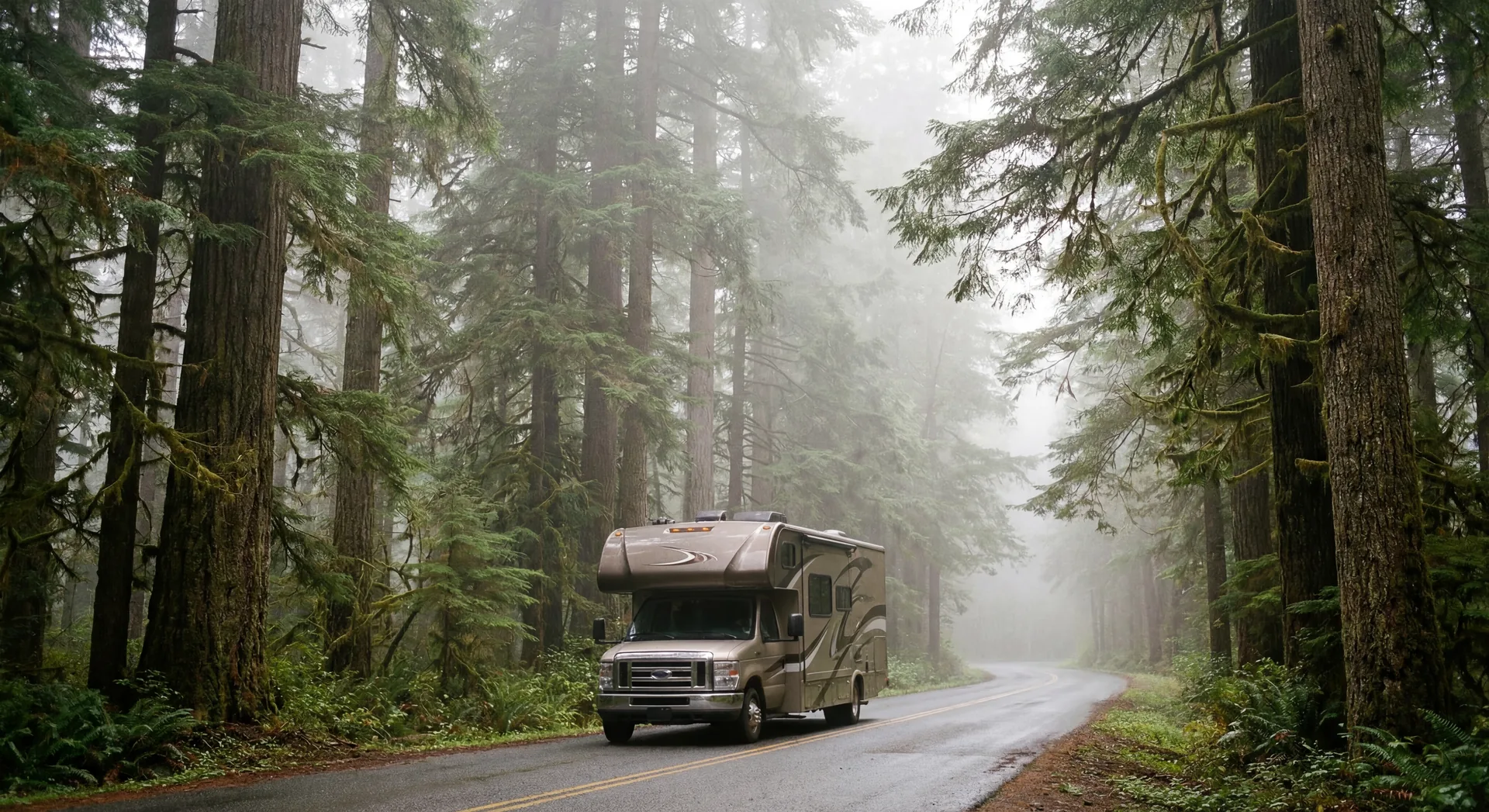
You're planning a Pacific Northwest road trip from Seattle.
Hotel in downtown Seattle near Pike Place Market: $350 per night.
Lodge at Olympic National Park: $300 per night.
Cabin near Mount Rainier: $275 per night.
Times seven nights.
Plus car rental.
Plus dining out at every meal.
Plus ferry tickets to the San Juan Islands.
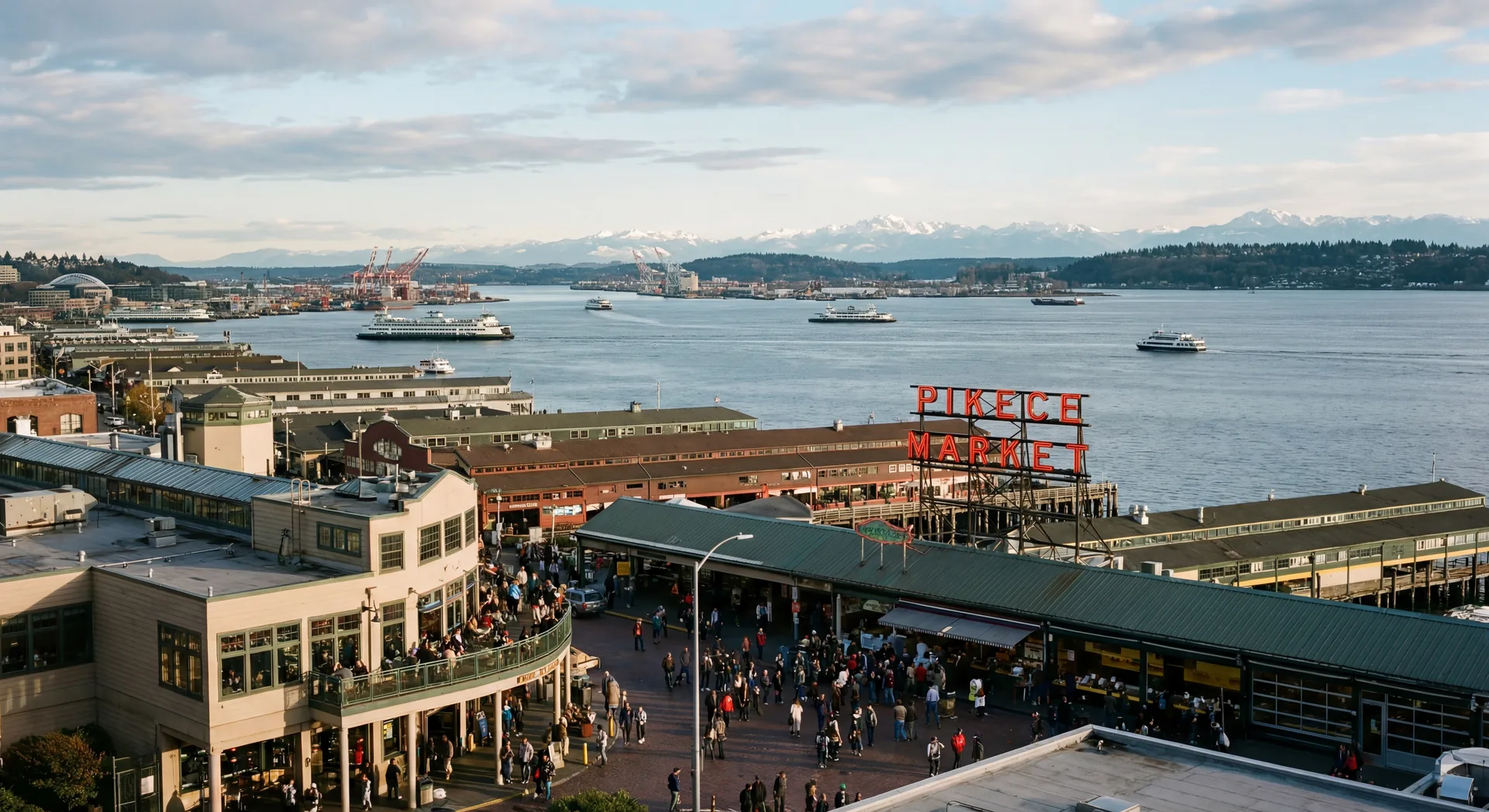
You want to see the Space Needle, stroll Pike Place Market, and catch the sunset from the Seattle Great Wheel.
Then you want to drive to the Olympic Peninsula rainforests and camp along the Pacific coast.
But with hotel costs in Seattle varying by season and neighborhood, the total adds up fast.
A week of hotel hopping between Puget Sound, the national parks, and the islands can easily run $4,000 or more before you've even bought groceries.
There's a better way.
RV rentals in Seattle let you wake up inside the national parks.
Camp at Sol Duc in Olympic with rainforest outside your window.
Stay at Cougar Rock in Mount Rainier with glacier views at sunrise.
Explore the San Juan Islands with your lodging on the ferry with you.
Park near Pike Place Market for a morning and then head west to the Olympic Peninsula by afternoon.
No checkout times.
No park entrance reentries.
No missing the sunrise at Mount Rainier because your lodge is outside the park.
An RV rental in Seattle gives you the freedom to explore the Pacific Northwest at your own pace.
Your kitchen, bathroom, and bed travel with you wherever you go.
This guide covers every step of renting an RV in Seattle, from choosing the right rig for Cascade mountain passes and wet coastal roads, to what it really costs and where to take it once you leave the city.
For a full overview across all destinations, see our rental guide that covers every step.
Why Seattle is Perfect for RV Rentals
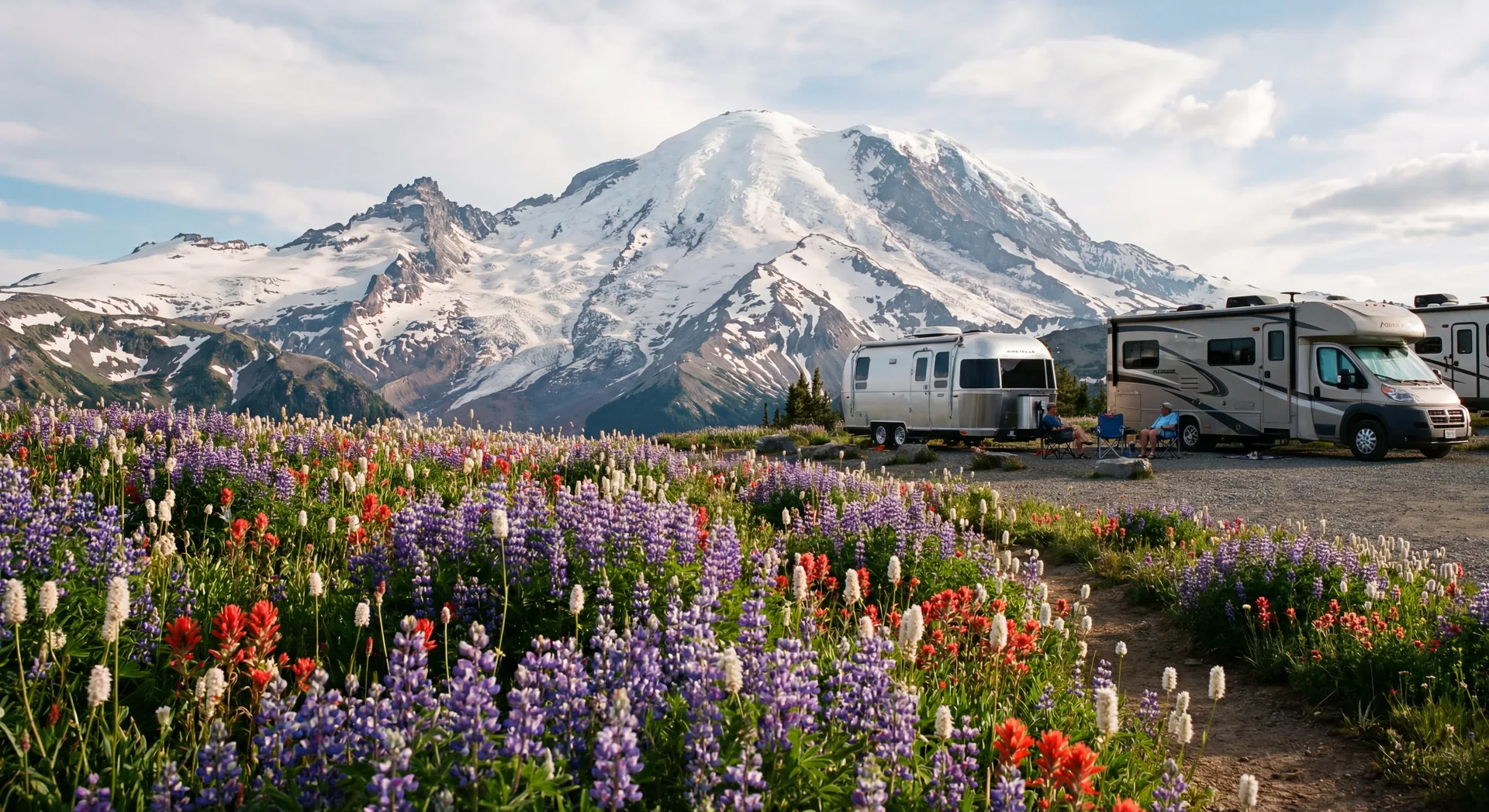
Seattle sits at the center of the Pacific Northwest's greatest hits.
Within a few hours, you have rainforests, glaciers, islands, volcanic landscapes, and wild Pacific coast beaches.
No other city in the continental US offers this kind of natural diversity from a single starting point.
Geographic Advantages
Olympic National Park: About 2.5 hours to Port Angeles by ferry, and about 4 hours to the Hoh Rain Forest.
The largest temperate rainforest in the contiguous US, plus alpine meadows and wild coastline.
Take I-5 south to Olympia, then US 101 north along the Hood Canal to reach the Hoh Rainforest.
Mount Rainier National Park: 2 hours south via SR 706.
Iconic glacier covered volcano with wildflower meadows and world class hiking.
Take I-5 south to SR 512, then SR 7 and SR 706 to the Nisqually entrance.
The route is well maintained and RV friendly.
North Cascades National Park: 2 hours northeast via I-5 and SR 20.
Rugged wilderness with 300+ glaciers and dramatic mountain scenery along the North Cascades Highway.
SR 20 (the North Cascades Highway) is seasonal, typically closing in November or December and reopening in late April or May.
San Juan Islands: 2 hours north via I-5, then ferry from Anacortes.
Whale watching, kayaking, and island hopping paradise accessible by Washington State Ferries.
RV reservations on the ferry are essential during summer months.
Oregon Coast: 4 hours south on I-5.
Dramatic sea stacks, charming coastal towns, and incredible beach camping along the Pacific coast.
Cascade Range and Eastern Washington: 2 hours east via I-90 over Snoqualmie Pass.
Wine country near Ellensburg and the dry side of the Cascades.
A completely different landscape from the lush western side of the mountains.
Month by Month Weather Guide
Understanding Seattle's weather patterns is the key to planning a great RV trip.
January through March:
40 to 50°F with frequent rain.
Most mountain campgrounds are closed.
Snow on all major passes.
Not ideal for RV travel unless you stick to lowland areas around Puget Sound.
April:
50 to 58°F with rain tapering off.
Some lower elevation campgrounds begin opening.
Cherry blossoms bloom in Seattle.
Early season can mean fewer crowds at parks near Seattle.
May:
55 to 65°F with decreasing rain.
Many campgrounds open for the season around Memorial Day weekend.
Mountain passes reopen.
This is an excellent month for budget travelers who want lower rates.
June:
60 to 70°F with mostly dry conditions.
All campgrounds open.
Longer days with sunlight until 9:00 PM.
Wildflowers begin in the alpine meadows of Mount Rainier.
July:
70 to 80°F with very little rain.
Peak season for RV rentals in Seattle.
Light until 9:30 PM.
Book your RV 3 to 4 months ahead for July availability.
August:
70 to 80°F and one of the two driest months.
Wildflower season peaks at Paradise on Mount Rainier.
Fire season can affect air quality in eastern Washington.
September:
60 to 72°F with occasional rain returning late in the month.
The hidden gem for Seattle RV travel.
Fewer crowds, still warm, and fall colors begin across the Cascade Range.
October:
50 to 60°F with rain returning.
Mountain campgrounds begin closing after Labor Day and through October.
Fall colors peak.
Last chance for many high elevation destinations.
November through December:
40 to 50°F with heavy rain.
Most mountain campgrounds closed.
Snow on passes.
Best to avoid unless you are an experienced cold weather camper.
Insider Tip: July and August RV rentals in Seattle are often fully booked by April.
If you want peak summer, reserve 3 to 4 months ahead.
September is the hidden gem with fewer crowds, good weather, and easier availability.
RV Friendly Infrastructure
Washington State supports RV travelers exceptionally well.
200+ campgrounds from rainforest sites to alpine meadows to beach camping along Puget Sound and the Pacific coast.
Tall Chief RV & Camping Resort in Fall City offers a convenient staging point just 30 minutes east of Seattle with full hookups, laundry, and a camp store.
Lake Pleasant RV Park in Bothell sits just north of Seattle with easy access to I-5 and I-405.
Extensive state park system with many RV friendly sites and full hookups throughout Washington state.
Dump stations at most state parks, RV parks, and rest areas along I-5 and I-90.
Camping World location in Fife (near Tacoma) for supplies, service, and propane.
Rest areas are well maintained along I-5 and I-90, with many offering overnight parking for RVs in designated spots.
Choosing the Right RV Type for the Pacific Northwest
Not all RVs work equally well on Pacific Northwest roads.
Mountain passes, narrow forest roads, and ferry size limits mean your RV choice matters more here than in many other regions.
Here is how each type performs in the Seattle area.
Class B Camper Vans (Best for Couples)
Perfect for: Couples, solo travelers, first timers, and anyone who wants to explore Seattle city streets and mountain roads with equal ease.
Daily Rate: $125 to $220
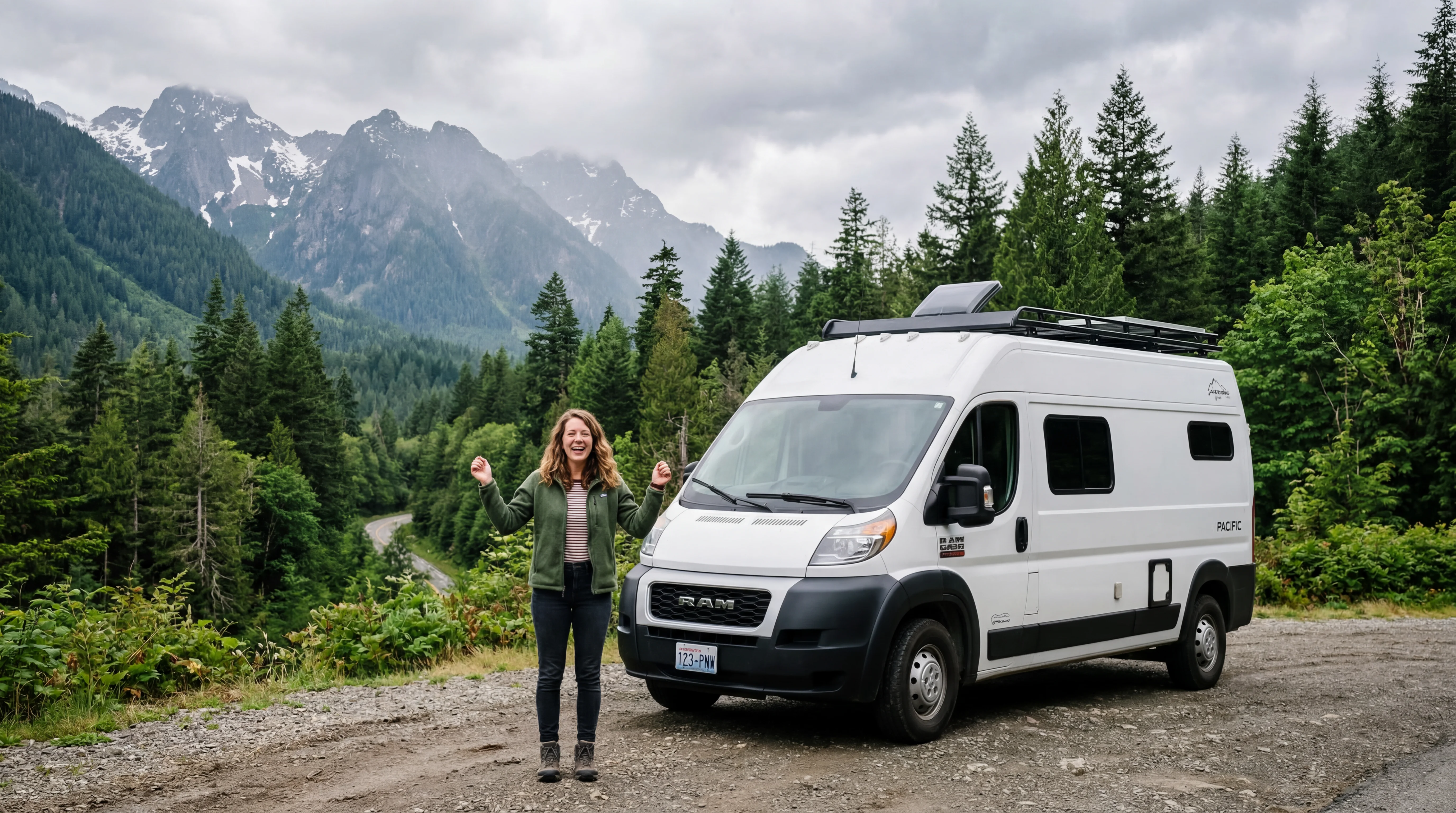
Class B vans are built on van chassis: the Mercedes Sprinter, Ford Transit, and Ram ProMaster are the most common bases, sized to handle Seattle's narrow mountain roads and ferry vehicle decks, where Washington State Ferries publishes its standard vehicle fare for rigs under 22 feet.
From the outside they blend into any Seattle neighborhood parking spot or Cascade trailhead lot, while inside they carry a compact kitchen, bathroom, bed, and sometimes a small refrigerator.
Why they excel in the Pacific Northwest:
- Easy to drive on narrow mountain roads and forest service roads
- Vans under 22 feet ride Washington State Ferries at the standard vehicle fare
- Parks in regular spots in downtown Seattle, Friday Harbor, and trailheads
- Best fuel economy (14 to 18 MPG) for long drives on US 101 and SR 20
- Perfect for navigating tight campground roads at Olympic National Park
Limitations:
- Limited space for more than 2 people
- Smaller holding tanks require more frequent dumping
- No slide outs or separate living areas
- Air conditioning may be limited to a roof unit
Class C Motorhomes (Best for Families)
Perfect for: Families of 4 to 6, comfortable camping, the best balance of space and drivability for Pacific Northwest roads.
Daily Rate: $175 to $300
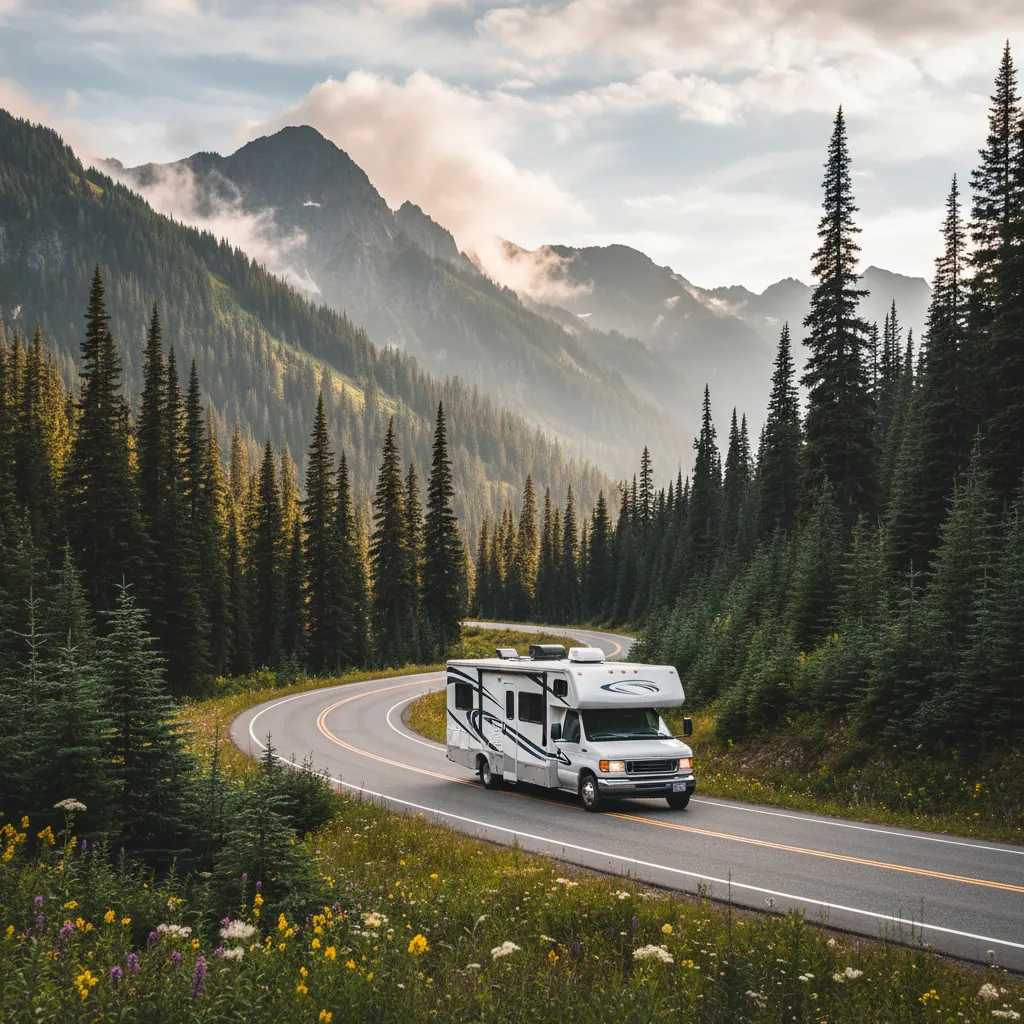
Class C motorhomes are recognizable by the cab over bunk that stretches above the driver's cabin, the same spot kids claim immediately at every Pacific Northwest campground.
A truck chassis carries a house structure behind the cab, giving the Class C enough power for Snoqualmie Pass without the length and weight limitations of a Class A.
As a rough guide, most are 24 to 30 feet long.
Why families choose Class C for Seattle trips:
- Overhead bunk is perfect for kids (they love it)
- Full kitchen with stove, refrigerator, microwave, and sink
- Separate bathroom with shower
- Queen or full size bed in the rear
- Generator for air conditioning and power when off grid
- Adequate power for mountain passes on I-90 and SR 20
Limitations:
- Moderate fuel economy (8 to 12 MPG)
- Challenging to park in downtown Seattle (use an RV park as a base)
- Some campgrounds at Olympic and Rainier have 35 foot limits, according to the National Park Service
- May need to disconnect and explore cities by rideshare
Seattle specific tip: Choose a class C RV under 30 feet for the best flexibility at national park campgrounds.
Recreation.gov states that Cougar Rock at Mount Rainier has a 35 foot limit for motorhomes.
Many Olympic campgrounds cap at 21 to 35 feet depending on the site.
Travel Trailers (Best for Base Camping)
Perfect for: Extended stays, budget travelers with a tow vehicle, families who want to set up camp and explore by car.
Daily Rate: $100 to $200 (trailer only, tow vehicle separate)
Travel trailers available through Seattle owners range from compact 16 foot models suited to tight campground loops at the Hoh Rainforest, up to spacious 30 foot layouts for longer stays at full hookup parks near Puget Sound.
Treat those lengths as a ballpark, since each listing differs.
You tow them to a campground, unhitch, and use your vehicle for day trips.
Why the basecamp strategy works near Seattle:
- Park your trailer at Tall Chief RV & Camping Resort or Lake Pleasant RV Park
- Explore Seattle, Olympic, and Rainier with your truck or SUV
- No packing up between destinations
- Lowest daily rental rates of any RV type
- Full kitchen, bathroom, and bed without driving a large vehicle
Limitations:
- Requires a proper tow vehicle (check weight ratings carefully)
- More setup time at each campground (leveling, stabilizing, hookups)
- Backing up takes practice, especially at tight campground sites
- Cannot access the kitchen or bathroom while driving
Class A Motorhomes (Best for Luxury Groups)
Perfect for: Groups of 6 to 8, luxury comfort, experienced RV drivers, extended road trips along I-5 or I-90.
Daily Rate: $300 to $500
Class A motorhomes sit at the top of the size range, a fact worth keeping in mind when planning routes through the Cascades, where mountain pass width and campground length limits become real constraints.
These bus style coaches extend their footprint with multiple slide outs and full apartment level amenities, best suited to I-5 and I-90 corridors rather than the winding two lane passes of the North Cascades or Olympic Peninsula.
Luxury features:
- Multiple air conditioning units (important for eastern WA summer heat)
- Full size residential refrigerator
- King size bed in the master suite
- Washer and dryer in some models
- Multiple bathrooms
Limitations:
- Difficult to maneuver on narrow PNW forest roads
- Poor fuel economy (6 to 10 MPG)
- Will not fit at many national park campgrounds (35 foot limit at Cougar Rock)
- Parking restrictions in downtown Seattle and most WA city centers
- Oversized vehicle fees on Washington State Ferries
Mountain driving warning: Class A motorhomes over 35 feet are not recommended for SR 20 (North Cascades Highway), Hurricane Ridge Road in Olympic, or the Sunrise Road at Mount Rainier.
Stick to I-5, I-90, and US 101 main corridors.
Quick Comparison: Seattle RV Types
| RV Type | Daily Rate | Best For | Sleeps | MPG | Mountain Roads | Ferry Friendly |
|---|---|---|---|---|---|---|
| Class B Van | $125 to $220 | Couples | 2 to 3 | 14 to 18 | Excellent | Yes |
| Class C | $175 to $300 | Families | 4 to 6 | 8 to 12 | Good | Yes |
| Travel Trailer | $100 to $200 | Base camp | 4 to 8 | Varies | Good | Yes (check length) |
| Class A | $300 to $500 | Groups | 6 to 8 | 6 to 10 | Limited | Fees apply |
Affiliate link. We may earn a commission at no extra cost to you.
Top RV Rental Companies in Seattle
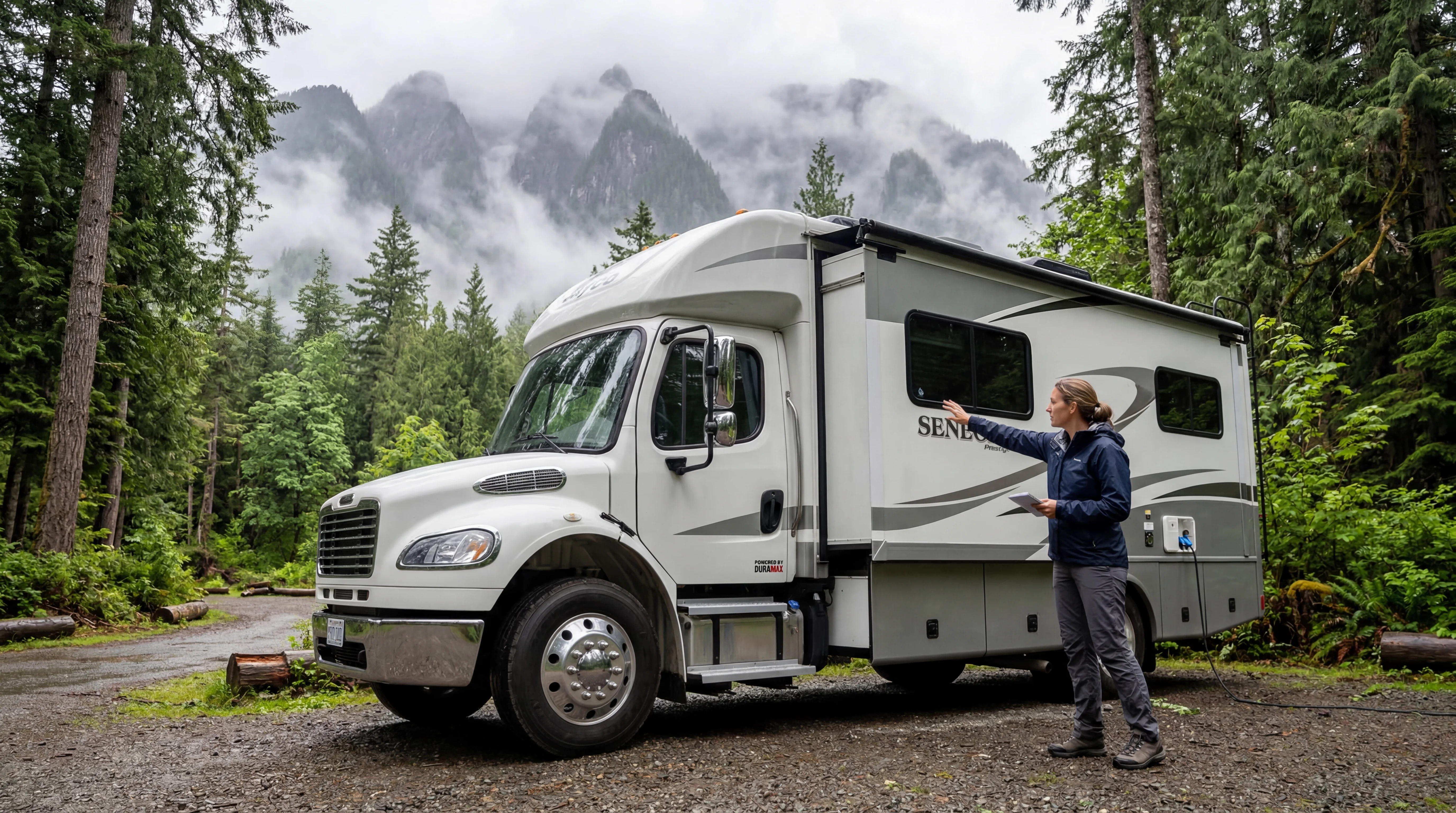
You have several options for starting your RV rental in the Seattle area, from peer to peer platforms to traditional RV hire companies.
Here is how the main rental companies and platforms compare.
Our guide to the major rental websites provides a deeper look at every major platform.
1. Outdoorsy (Featured Platform)
A leading peer to peer RV rental marketplace with many Seattle RV listings.
Outdoorsy connects renters directly with local owners across the Seattle area who list their own RVs when they are not using them for Cascade weekends or Olympic Peninsula loops.
Because inventory comes from private owners rather than a corporate fleet, the selection of makes, sizes, and outfitting options is far wider than any single rental company can match.
Key Outdoorsy Features
- Widest selection from compact campervans to luxury Class A coaches
- A protection plan travels with every booking, with $500,000 liability available on the Peace of Mind package, useful peace of mind on Washington's mix of mountain roads and wet weather driving
- Round the clock roadside assistance available with protection packages, including help if you are stuck on a remote stretch of US 101 or SR 20
- Verified owner reviews from real renters
- Many owners offer delivery to Seattle Tacoma International Airport or your first campground
- Cancellation terms set by each individual owner rather than a one size fits all corporate policy, terms are shown clearly before you book
How to book on Outdoorsy:
- Search for Seattle RV rentals and filter by dates, RV type, and budget
- Message owners with questions about their RV and your trip plans
- Complete your booking with secure payment
- Pick up your RV at the owner's location or arrange delivery
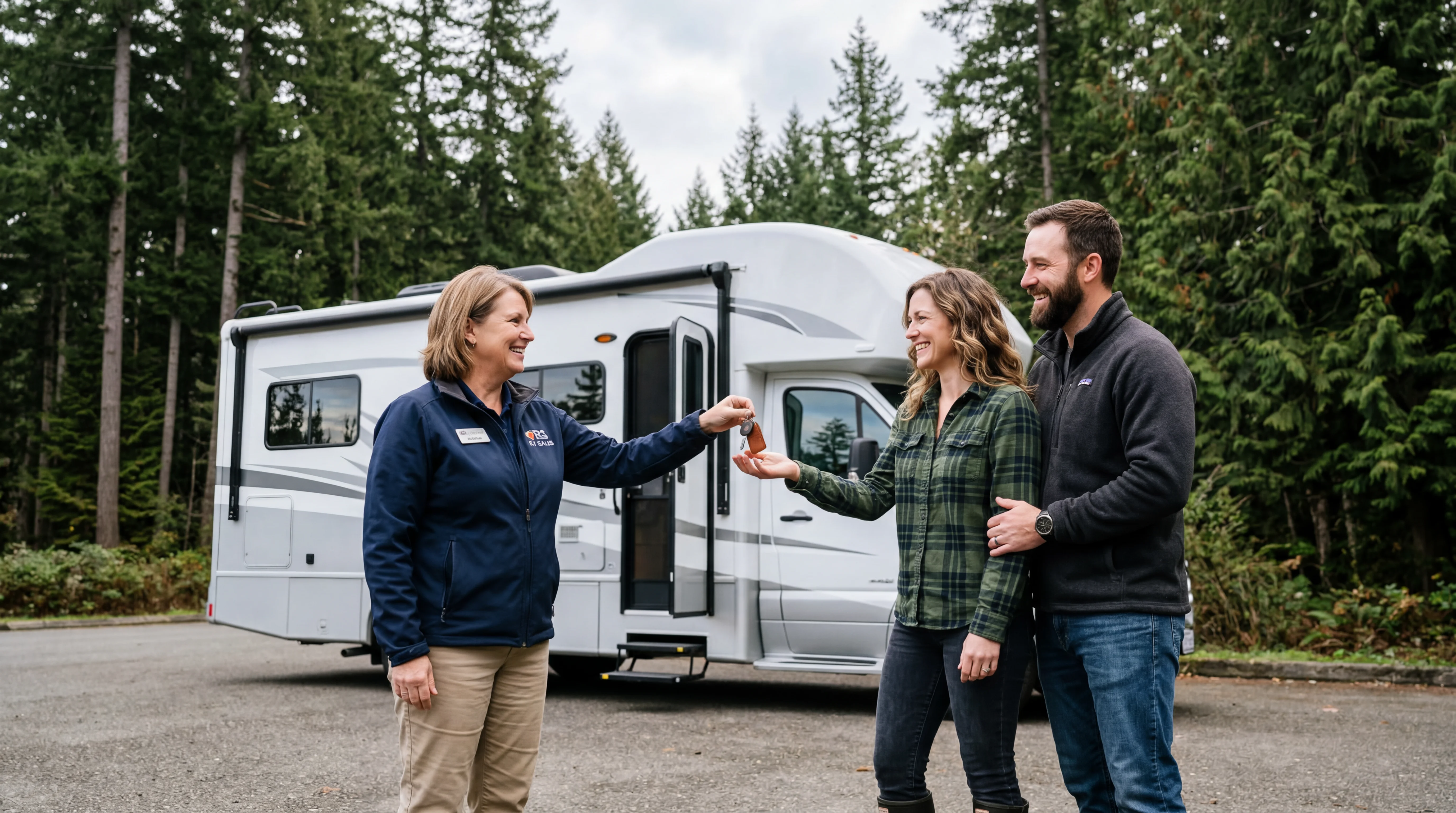
- Get a full walkthrough of all systems before you depart
Typical Seattle pricing: $125 to $400 per night depending on RV type and season, with rates rising sharply in July and August when the Pacific Northwest's dry summer window draws peak demand.
Browse Seattle RVs on Outdoorsy
Affiliate link. We may earn a commission if you book, at no extra cost to you.
2. Cruise America
Fleet rental company with Seattle area locations.
Cruise America runs a uniform fleet of Class C motorhomes from its Seattle area location, each maintained to the same standard so there are no surprises when you pull into a Cascade Range campground.
The consistent spec also means staff can walk you through every system quickly, which helps first timers who want a straightforward experience before tackling Pacific Northwest driving.
Best for: Consistent fleet experience, one way rentals (popular Seattle to Portland route), and travelers who want a straightforward booking process.
Fleet options:
- Standard C25 (25 foot Class C, sleeps 5)
- Large C30 (30 foot Class C, sleeps 7)
- Compact Truck Camper (sleeps 3)
One way rentals: Cruise America offers one way rentals from Seattle to Portland, San Francisco, Los Angeles, and other West Coast cities.
This is ideal for Pacific coast road trips.
Typical pricing: Quote your dates on Cruise America, since rates move with season.
3. Escape Campervans
Colorful campervan specialist with a Seattle location near Sea Tac airport, reached by a free shuttle.
Escape Campervans are known for their hand painted exterior murals.
Each van is unique and Instagram ready.
Best for: Couples and solo travelers wanting a fun, compact option with personality.
Fleet: Converted vans with bed, small kitchen, and basic camping gear included.
Typical pricing: Quote your dates on Escape's site, since rates move with season.
4. Road Bear RV
Road Bear RV is a fleet rental company offering Class C motorhomes and larger units from their Seattle area rental location.
Best for: International travelers (Road Bear runs an international booking line), families, and groups needing a larger Class C.
Fleet options: Road Bear publishes Class C motorhomes from 23 to 31 feet, plus a 23 to 25 foot Super Van Camper.
Check Road Bear's site for current model years.
Typical pricing: Quote your dates on Road Bear's site, since rates move with season.
5. El Monte RV
El Monte RV operates one of the longest running RV rental fleets in the US, with a Seattle location.
Best for: Budget travelers, long term rentals (weekly and monthly discounts), and families wanting a reliable Class C.
Fleet options: According to El Monte, its Class C motorhomes run from about 21 to 32 feet, with budget vans and a Class A under its Mighty brand.
Also offers RV sales if you fall in love with the lifestyle.
El Monte is a solid choice for a motorhome rental in Seattle with competitive weekly rates.
Typical pricing: Quote your dates on El Monte's site, and check its current deals for longer rentals.
6. Local Seattle Camper Van Companies
Several small, locally owned fleets of camper vans and compact RVs operate around Seattle.
Best for: Supporting local business and getting Pacific Northwest advice from the people who maintain the van.
Check recent reviews, mileage terms and insurance cover before you book one.
Rental Company Comparison
| Company | Type | RV Options | Price Range | One Way | Airport Pickup |
|---|---|---|---|---|---|
| Outdoorsy | Peer to peer | All types | $125 to $400 | Some owners | Many owners deliver |
| Cruise America | Fleet | Class C | Quote your dates | Yes | Check location |
| Escape | Fleet | Vans | Quote your dates | Yes | Free shuttle |
| Road Bear RV | Fleet | Class C, van | Quote your dates | Yes | Hotel shuttle on request |
| El Monte RV | Fleet | Class C | Quote your dates | Yes | Check location |
| Local van fleets | Local | Vans | Varies | Varies | Ask the company |
Thinking About Buying?
If renting leads to buying, solar is one of the strongest upgrades.
Calculate your power needs and see how much you could save with solar independence.
Free resource
Check our current deals for renters booking this season before booking to save on your rental.
What Does It Really Cost to Rent an RV in Seattle?
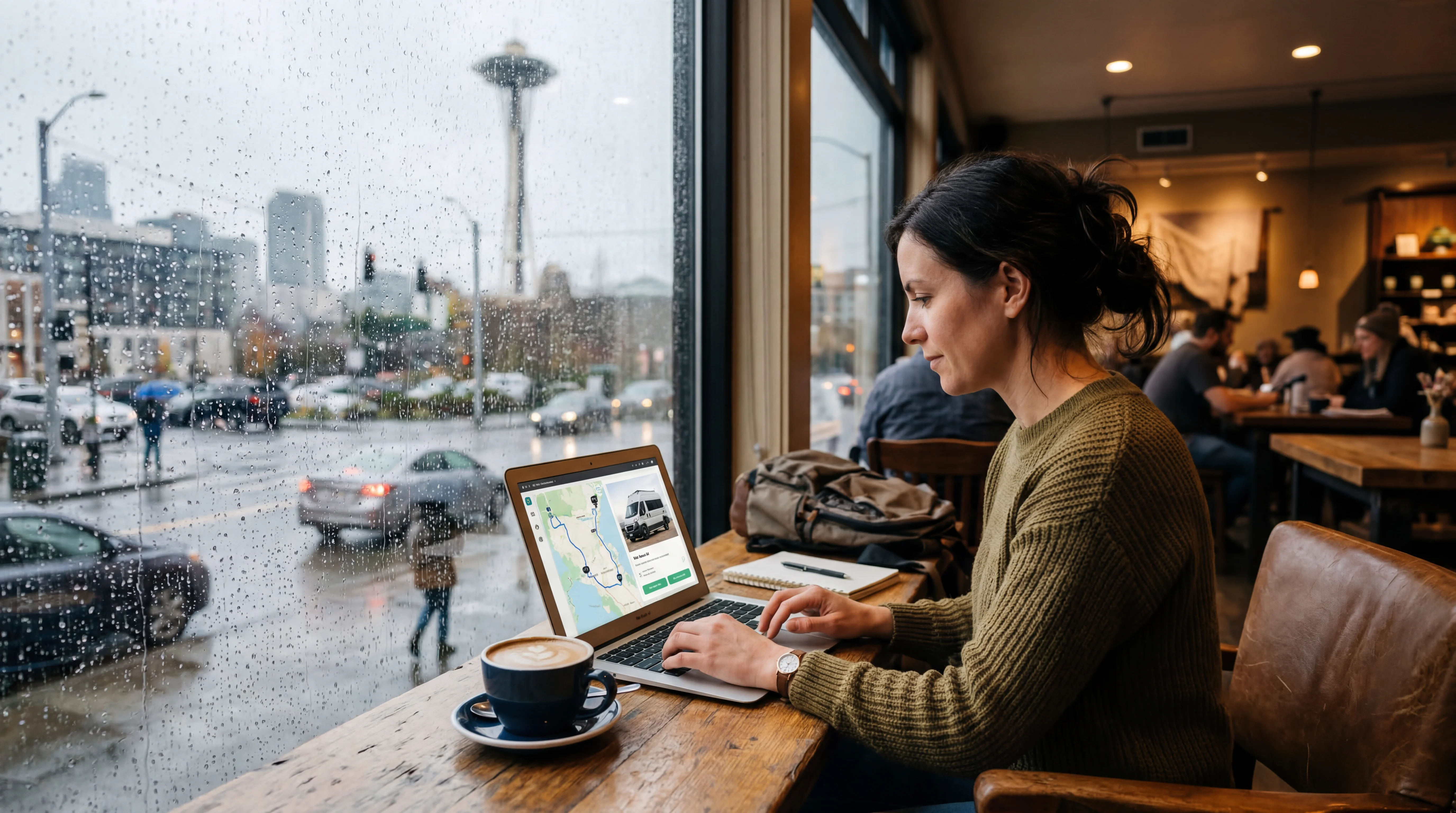
Understanding the true cost of an RV rental helps you budget accurately and avoid surprises.
Here are three worked examples for a 7 night Seattle RV rental, each one a rough planning estimate rather than a quote.
Budget Tier: Camper Van (2 Travelers)
| Expense | Cost |
|---|---|
| Campervan rental (7 nights at $150) | $1,050 |
| Insurance upgrade | $100 |
| Mileage (overage beyond the included allowance, if any) | $0 to $175 |
| Campgrounds (7 nights at $35) | $245 |
| Fuel (500 miles at 16 MPG at $4.50) | $141 |
| Groceries (7 days at $40) | $280 |
| Total | $1,816 to $1,991 |
This budget works well for couples exploring the Olympic Peninsula and San Juan Islands with a compact van.
Mid Range: Class C Motorhome (4 Person Family)
This example assumes a family of four sharing one rig for the week.
| Expense | Cost |
|---|---|
| Class C RV rental (7 nights at $225) | $1,575 |
| Insurance upgrade | $150 |
| Mileage (overage beyond the included allowance, if any) | $0 to $245 |
| Generator (10 hours at $4) | $40 |
| Campgrounds (7 nights at $45) | $315 |
| Fuel (700 miles at 10 MPG at $4.50) | $315 |
| Groceries (7 days at $70) | $490 |
| Total | $2,885 to $3,130 |
Split among a family of four, this is roughly $103 to $112 per person per night.
That covers transportation, lodging, and food combined.
Premium: Class A Luxury (6 Travelers)
Treat this one as a rough figure for six travelers who want every comfort on board.
| Expense | Cost |
|---|---|
| Class A rental (7 nights at $375) | $2,625 |
| Insurance upgrade | $200 |
| Mileage (overage beyond the included allowance, if any) | $0 to $270 |
| Generator (15 hours at $4) | $60 |
| Campgrounds with hookups (7 nights at $60) | $420 |
| Fuel (600 miles at 8 MPG at $4.50) | $338 |
| Groceries (7 days at $100) | $700 |
| Total | $4,343 to $4,613 |
Split among six travelers, this is about $103 to $110 per person per night for a luxury experience with full amenities.
Compare to Hotel Trip
A hotel based trip covering similar destinations would look something like this:
| Expense | Hotel Trip | Class C RV |
|---|---|---|
| Lodging (7 nights) | $2,100+ | $1,575 |
| Car rental (7 days) | $525 | Included |
| Dining out (7 days) | $700+ | $490 (groceries) |
| Fuel | $200 | $315 |
| Extras (insurance, fees) | $150 | $190 to $435 |
| Total | $3,675+ | $2,885 to $3,130 |
On these numbers the RV week comes out ahead of the hotel week.
The real advantage goes beyond dollars.
You camp inside the national parks, wake up to mountain views, and skip the daily commute from distant lodges.
Hidden Costs to Watch
Cleaning fees: $75 to $200 depending on the rental company.
Some Outdoorsy owners waive this if you return the RV clean.
Late return fees: $50 to $100 per hour.
Build buffer time into your return day.
Generator fees: $3 to $5 per hour of use.
Some rentals include a set number of generator hours.
Mileage overages: Check your mileage limit carefully.
As a starting point, most Seattle RV rentals include 100 to 150 miles per day.
Extra miles cost $0.30 to $0.50 each.
National park entrance fees: $30 per vehicle for a 7 day pass.
Consider the America the Beautiful pass ($80 per year) if you plan to visit multiple parks.
Washington State Ferries: RV fares to the San Juan Islands rise with vehicle length and season, so check the WSF fare table for your rig.
Walk on passengers pay about $18 on the Anacortes to Friday Harbor run.
Fuel prices: Washington state gas prices average $4.25 to $4.75 per gallon.
Eastern WA is generally cheaper than the Seattle area.
Money Saving Tips
Book during shoulder season (September or late May) for lower rates than the July and August peaks.
Choose weekday pickups.
Many owners offer lower rates for Monday through Thursday bookings.
Ask about weekly discounts.
Many Outdoorsy owners offer weekly discounts on longer rentals.
Cook most meals in your RV kitchen.
A family of four can save $50 to $80 per day compared to restaurant dining.
Use free camping options.
Washington has dispersed camping on national forest land and several free overnight parking areas.
Best Campgrounds and RV Parks Near Seattle
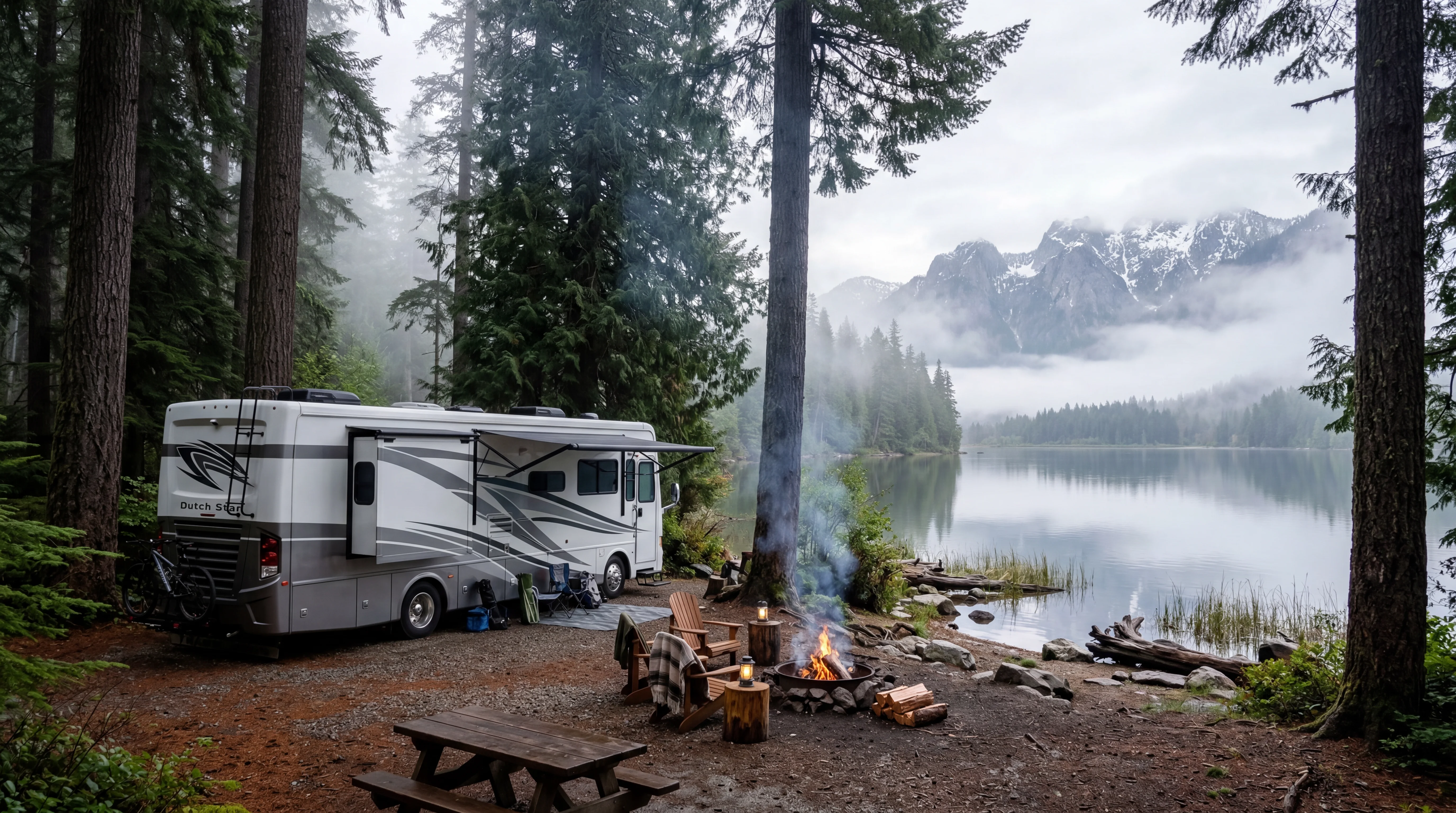
Before heading to the national parks, you may want a night or two near Seattle to get settled and explore the city.
These RV parks and campgrounds near Seattle make excellent staging points.
Drive times below are rough estimates from downtown in light traffic.
Tall Chief RV & Camping Resort
Location: Fall City, WA (30 minutes east of Seattle via I-90)
A full service camping resort with paved roads, pull through sites, and excellent amenities.
Tall Chief RV sits in the foothills of the Cascades along the Snoqualmie River.
Amenities: Full hookups (30/50 amp), Wi-Fi, laundry, camp store, playground, heated pool (summer), and clean restrooms with showers.
RV sites: 100+ sites accommodating RVs up to 45 feet, as a rough guide, so confirm your site length when you book.
Both back in and pull through options.
Rates: Check current rates on the Thousand Trails site, where no membership is needed to book a stay.
Why stay here: Perfect first night stop after picking up your RV.
Close to Snoqualmie Falls and easy access to I-90 eastbound for Cascade adventures.
Lake Pleasant RV Park
Location: Bothell, WA (a rough estimate of 20 minutes north of Seattle via I-405)
A well maintained RV park on the shores of Lake Pleasant with a quiet, wooded setting.
Amenities: Full hookups, Wi-Fi, laundry, fishing access, boat launch, and nature trails.
RV sites: 100+ level sites with full hookups.
Good mix of shade and open sites.
Rates: $50 to $65 per night.
Why stay here: Great for families who want lake activities.
Easy access to both I-5 northbound (San Juan Islands) and I-405 to I-90 eastbound.
Saltwater State Park
Location: Des Moines, WA (20 minutes south of Seattle)
Washington state park on Puget Sound with beach access, tide pools and forested trails.
Campground status: Closed.
Washington State Parks closed the campground in June 2026 while it works through flooding and erosion projects.
Day use: Beach, tide pools, trails, picnic shelters and an underwater reef for divers, with a Discover Pass ($10 a day) for parking.
Why stop here: The closest Puget Sound beach to Seattle for a picnic on the way south.
Dash Point, below, is the closest alternative for camping on the Sound.
Dash Point State Park
Location: Federal Way, WA (30 minutes south of Seattle)
Forested campground with Puget Sound beach access and miles of hiking trails.
Amenities: Water and electric hookups (some sites), restrooms, showers, 11 miles of trails, saltwater beach.
RV sites: 141 total sites (114 standard plus 27 utility with hookups).
32 foot limit on most sites, according to Washington State Parks.
Rates: $35 to $45 per night.
Why stay here: A peaceful wooded retreat with Puget Sound beach access.
Popular with families for the extensive trail system.
Issaquah Village RV Park
Location: Issaquah, WA (about 20 minutes east of Seattle via I-90, as a rough guide)
A convenient staging point for trips heading east over Snoqualmie Pass toward the North Cascades or Ellensburg.
Amenities: Full hookups, Wi-Fi, laundry, close to Issaquah restaurants and shopping.
Rates: $50 to $60 per night.
Why stay here: The best launch point for I-90 eastbound adventures.
Quick access to Tiger Mountain trails and Snoqualmie Falls.
RV Park Comparison
| Park | Distance to Seattle | Hookups | Price | Best For |
|---|---|---|---|---|
| Tall Chief RV | 30 min east | Full | $55 to $75 | Cascade staging |
| Lake Pleasant | 20 min north | Full | $50 to $65 | Families, lake |
| Saltwater State | 20 min south | None (campground closed) | Discover Pass | Beach day use |
| Dash Point | 30 min south | Partial | $35 to $45 | Puget Sound |
| Issaquah Village | 20 min east | Full | $50 to $60 | I-90 staging |
Found your perfect campground? Browse Seattle RVs on Outdoorsy → Compare top rated RVs near Seattle with verified owner reviews and instant booking. Affiliate link. We may earn a commission if you book, at no extra cost to you.
Skip the Crowded Campgrounds
Camp overnight at wineries, farms, and breweries instead.
One annual membership opens a network of 9,600+ unique locations across the US, with no nightly fee once you join (verified October 2026).
Affiliate link. We may earn a commission at no extra cost to you.
Find Off Grid Camping Spots
Now that you know your solar setup, discover 30,000+ campgrounds with RV Life Pro.
Filter by boondocking friendly locations and cell coverage.
Affiliate link. We may earn a commission at no extra cost to you.
Must Visit Destinations from Seattle
Distances and drive times below are rough planning figures from downtown Seattle.
Olympic National Park
Distance: About 200 miles to the Hoh Rain Forest via US 101
Drive time: About 4 hours to Hoh Rainforest
Olympic is one of the most diverse national parks in the US.
Within its boundaries you will find temperate rainforest, alpine glaciers, and rugged Pacific coast beaches.
No other park offers this range of ecosystems.
Hoh Rainforest
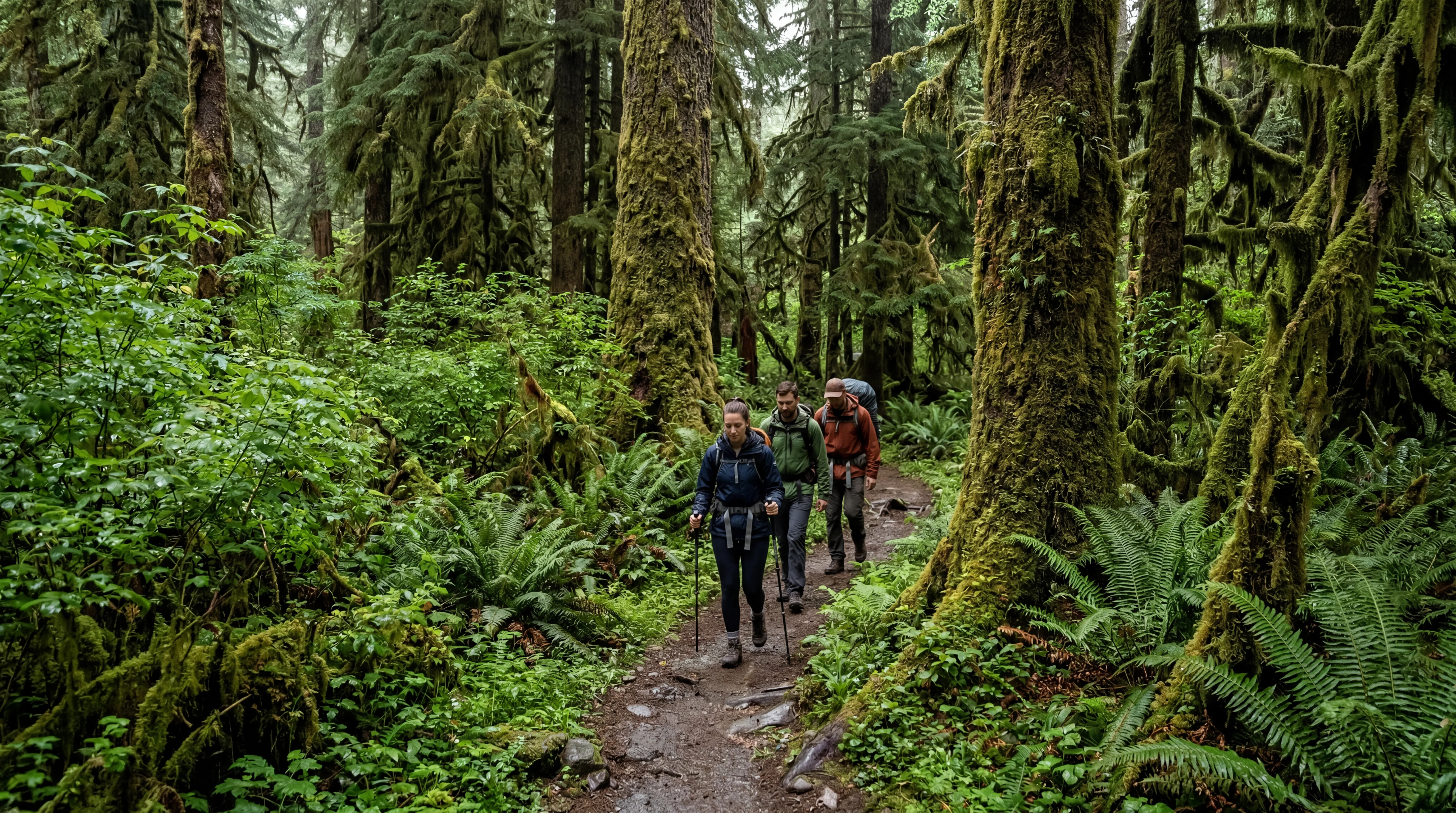
According to the National Park Service, the Hoh receives 12 feet or more of rain in a typical year, creating a mossy, cathedral like forest of Sitka spruce and western red cedar.
The Hall of Mosses Trail (0.8 miles) and Spruce Nature Trail (1.2 miles) are both flat and family friendly.
NPS publishes 72 sites at Hoh Rainforest Campground.
Maximum RV length is 21 feet in most sites, though a few accommodate up to 35 feet.
No hookups.
$24 per night.
Fills early in summer so arrive before noon.
Hurricane Ridge
Alpine meadows with panoramic views of the Olympic Mountains and the Strait of Juan de Fuca.
The road to Hurricane Ridge from Port Angeles is paved and well maintained, but as a rough guide it is not recommended for RVs over 35 feet due to tight switchbacks.
Park at the Hurricane Ridge Visitor Center and explore the short alpine trails.
Ruby Beach
Dramatic sea stacks and driftwood covered shoreline along the Pacific coast.
Day use area with parking that fits most RVs.
No camping directly at Ruby Beach, but Kalaloch is nearby.
Sol Duc Hot Springs
Natural hot springs in a forested canyon.
Sol Duc Hot Springs Resort Campground has 82 tent campsites plus 17 RV sites in a separate RV park for rigs from 26 to 36 feet.
RV sites have 50 amp electric hookups, according to the resort.
Tent sites have no hookups.
Check Recreation.gov for current RV site rates.
The hot springs pool is a short walk from the campground.
Kalaloch Campground
Oceanfront camping on a bluff above the Pacific.
NPS publishes 170 sites here, with a few taking RVs up to 35 feet.
No hookups.
$24 to $48 per night depending on site type.
One of the most scenic campgrounds in Washington.
Book well ahead for summer.
The sound of the surf makes this one of the best campgrounds on the entire Pacific coast.
Road conditions: US 101 is well maintained and works for all RV types around the Olympic Peninsula loop.
Side roads into the Hoh and Sol Duc valleys are narrower.
Take your time and use pullouts.
Mount Rainier National Park
Distance: 90 miles south via SR 706 (a rough figure from downtown)
Drive time: 2 hours to the Nisqually entrance
Mount Rainier is the iconic glacier covered volcano that dominates the Seattle skyline on clear days.
According to the National Park Service, it rises to 14,410 feet, the tallest peak in the Cascade Range.
Paradise
The most famous viewpoint in the park.
Wildflower meadows explode with color from mid July through August.
Paradise itself does not have RV camping.
Drive up for the day from Cougar Rock Campground (a 20 minute drive down the mountain, as a rough estimate).
The road to Paradise is paved and open to all vehicles, but RVs over 35 feet should use caution on the curves above Longmire.
Cougar Rock Campground
The primary RV campground at Mount Rainier.
173 sites with a 35 foot maximum length for motorhomes, according to the NPS campsite guide.
No hookups.
The dump station is currently closed for the 2026 season.
$20 per night.
Open late May through late September.
Cougar Rock fills every weekend in July and August.
Reservations open 6 months in advance on Recreation.gov.
Ohanapecosh Campground
Located in the southeast corner of the park amid old growth forest.
188 sites, and Recreation.gov states a 32 foot maximum RV length.
No hookups.
$20 per night.
Quieter than Cougar Rock in a normal season, and next to the Silver Falls Trail.
2026 status: Closed for the whole 2026 season for a rehabilitation project, so check Recreation.gov before planning a stay.
Sunrise
The National Park Service states that Sunrise, at 6,400 feet, is the highest point in the park you can reach by vehicle.
Stunning sunrise and sunset views.
The road to Sunrise is narrow and winding.
Not recommended for RVs over 28 feet, as a rough guide.
Day trip only.
Fire closures shut Sunrise Road to private vehicles for the rest of the 2026 season, so check the NPS road status page before you go.
No camping at Sunrise.
Grove of the Patriarchs
According to the National Park Service, a short trail (1.1 miles round trip) leads through 1,000 year old western red cedars and Douglas firs.
Trailhead is near Ohanapecosh.
Important: This trail has been closed since suspension bridge damage from November 2021 flooding, and NPS projects the new bridge and trail will reopen in 2029.
Check NPS updates before planning your visit.
One of the most accessible old growth experiences in Washington state when open.
North Cascades National Park
Distance: 120 miles northeast via I-5 and SR 20
Drive time: 2.5 hours to Newhalem
North Cascades is the least visited national park in Washington, which means fewer crowds and a wilder experience.
The park is often called the "American Alps" for its rugged peaks and glaciers.
Diablo Lake
Stunning turquoise water caused by glacial sediment (rock flour) suspended in the lake.
The Diablo Lake Overlook on SR 20 is one of the most photographed spots in the Pacific Northwest.
Pull into the overlook parking area for photos.
All RV sizes can access this viewpoint.
Colonial Creek Campground
Located on the shore of Diablo Lake with 37 sites (North Loop).
NPS publishes an RV maximum length of 25 feet at the North Loop.
No hookups.
$24 per night.
The turquoise water and mountain backdrop make this one of the most scenic campgrounds in WA.
Kayak and canoe launch right from the campground.
Newhalem Campground
107 sites near the small company town of Newhalem.
NPS publishes a maximum RV length of 50 feet.
No hookups.
$24 per night.
Quieter than Colonial Creek and a good base for day hikes.
The Trail of the Cedars is a short loop starting from the campground.
Ross Lake
A remote reservoir accessible only by boat, trail, or a gravel road from Canada.
Worth a day trip for the solitude and fishing.
No road access from the US side.
Road conditions: SR 20 (the North Cascades Highway) is a two lane highway with some steep grades and sharp curves.
As a rough guide, most RVs under 35 feet handle it fine.
The highway closes in winter, typically from November or December until late April or May, depending on snowfall.
San Juan Islands
Distance: 85 miles north to Anacortes ferry terminal (plus 1 hour ferry ride), as a rough planning figure
Drive time: 2 hours plus ferry
The San Juan Islands are an archipelago in northern Puget Sound known for orca whale watching, kayaking, and a relaxed island pace of life.
Getting There with an RV
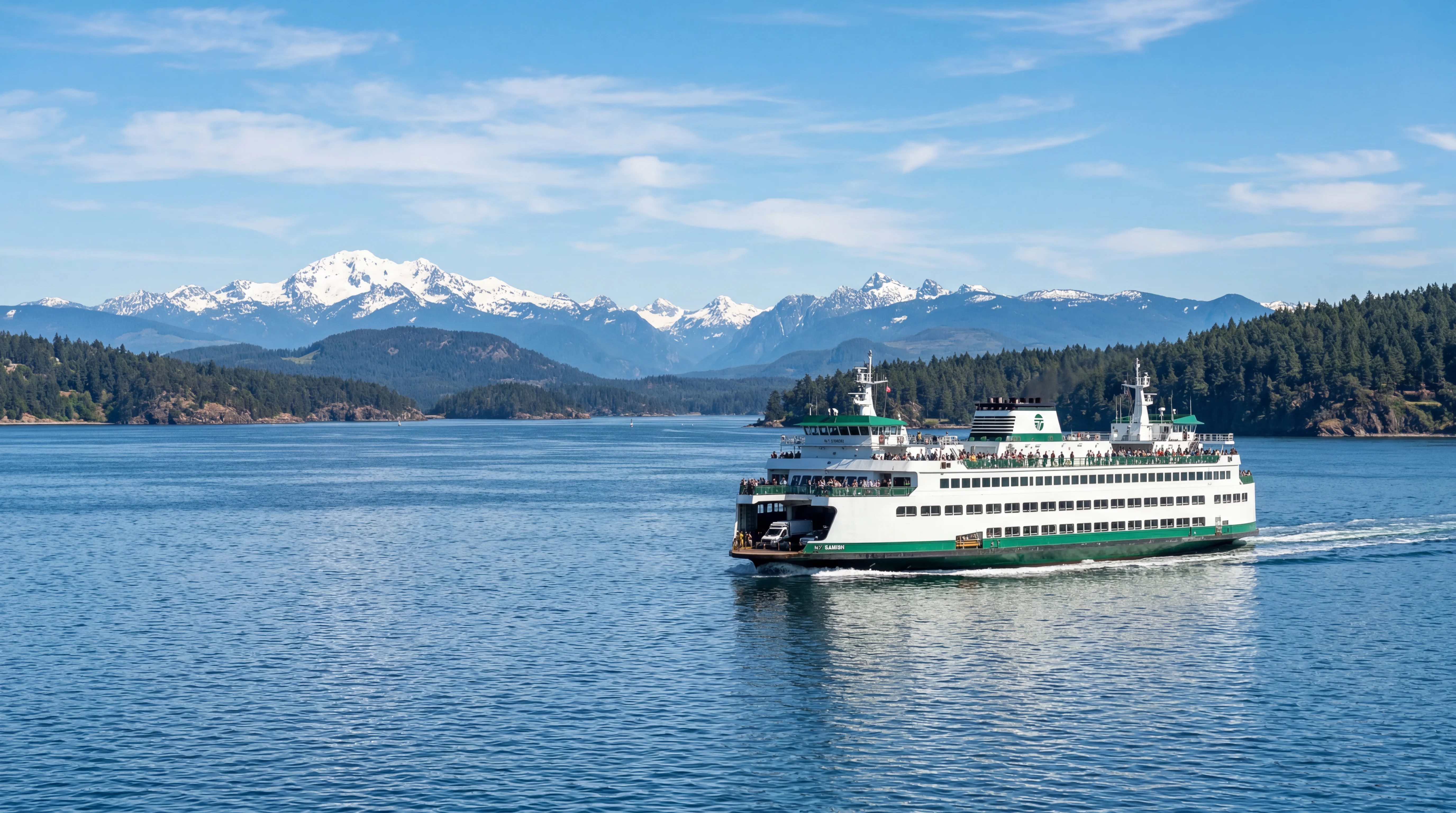
Washington State Ferries depart from Anacortes to four island destinations: San Juan Island (Friday Harbor), Orcas Island, Lopez Island, and Shaw Island.
RV ferry reservations are essential in summer.
Book 2 to 3 weeks ahead.
Washington State Ferries publishes fares for RVs over 22 feet that rise with vehicle length and season, so check the WSF fare table for your rig.
Walk on fare is about $18 per person on the Anacortes to Friday Harbor run.
Important: Check campground length limits before booking your ferry.
For example, some island campgrounds restrict RVs to 25 or 30 feet maximum.
San Juan Island
San Juan County Park on the west side of San Juan Island has 20 campsites (some RV accessible up to 25 feet).
No hookups.
$35 to $43 per night.
West facing sites offer incredible sunset views over the Haro Strait.
This is prime whale watching territory.
Friday Harbor is the main town with restaurants, shops, and whale watching tour departures.
Orcas Island
Moran State Park is the crown jewel of San Juan Islands camping.
124 standard campsites across four campgrounds, with RV sites up to 45 feet at a limited number of them.
No hookups, so arrive with full water and charged batteries.
$35 to $45 per night.
According to Washington State Parks, Mount Constitution tops out at 2,409 feet, and you can drive or hike to the summit for panoramic views of the islands, Puget Sound, and the Cascade Range.
Whale watching season: Orca sightings peak from May through September.
The resident orca pods frequent the waters around San Juan Island's west side.
Puget Sound Area Day Trips
You do not have to leave the Seattle area to find great outdoor experiences.
Whidbey Island and Deception Pass State Park
Take the bridge from Anacortes or the ferry from Mukilteo.
Deception Pass State Park has dramatic cliff views, old growth forest, and 300+ campsites with some RV sites up to 40 feet.
Full and partial hookups available at $35 to $45 per night.
The bridge over Deception Pass itself is a stunning sight.
Bainbridge Island
Washington State Ferries publishes a crossing time of about 35 minutes from downtown Seattle.
Leave your RV at an RV park and walk on the ferry for a charming day trip.
Wineries, art galleries, and waterfront dining await.
Discovery Park
Seattle's largest park with 534 acres of forest, meadows, and Puget Sound beach access.
No camping, but excellent for a day hike.
A lighthouse sits on the westernmost point with views across Puget Sound.
Lake Washington
Several parks along Lake Washington offer waterfront access and picnic areas.
Seward Park and Luther Burbank Park on Mercer Island are popular stops.
The Burke Gilman Trail follows the lake shore for miles, perfect for biking or walking.
Pacific Coast Extension
Long Beach Peninsula: 3 hours southwest of Seattle on the Washington coast.
Long, flat beaches, cranberry bogs, and the Lewis and Clark Interpretive Center at Cape Disappointment State Park.
RV camping available with full hookups.
Astoria and Cannon Beach (Oregon): 4 hours south of Seattle.
Cross into Oregon for dramatic sea stacks at Cannon Beach, the Astoria Column, and the filming locations from The Goonies.
Multiple RV parks and state parks along the Oregon coast.
Seattle City Attractions for RV Travelers
Do not skip Seattle itself.
The city has world class attractions worth at least a full day before or after your RV road trip.
Where to Park Your RV in Seattle
Parking a large RV in downtown Seattle is difficult and expensive.
The best strategy: park your RV at one of the nearby RV parks (Tall Chief RV, Lake Pleasant RV Park, or Dash Point State Park) and use a rideshare, bus, or light rail to explore downtown Seattle.
If you must drive an RV into the city, look for oversized vehicle parking at the Seattle Center (near the Space Needle) or industrial district lots south of downtown.
Street parking is generally not an option for anything over 22 feet.
Pike Place Market
One of the oldest continuously operated public farmers markets in the United States.
Fresh seafood, produce, flowers, crafts, and the original Starbucks store.
Plan for 2 to 3 hours of exploring.
Go early (before 10 AM) to avoid the heaviest crowds.
The market opens at 9 AM most days.
Space Needle and Chihuly Garden and Glass
According to the Space Needle, its observation deck offers 360 degree views of Puget Sound, Mount Rainier, the Olympic Mountains, and the Cascade Range on clear days.
Right next door, Chihuly Garden and Glass showcases the breathtaking glasswork of Dale Chihuly.
The outdoor garden is especially stunning on sunny days.
Combo tickets for both attractions offer savings.
Budget about 2 to 3 hours for the pair.
Museum of Pop Culture (MoPOP)
Designed by Frank Gehry, this museum covers music history, science fiction, fantasy, and video game culture.
The Jimi Hendrix and Nirvana exhibits are highlights for music fans.
Located at Seattle Center, next to the Space Needle.
Seattle Art Museum
The Seattle Art Museum in downtown Seattle features a diverse collection spanning global cultures and time periods.
The outdoor Olympic Sculpture Park (free admission) sits on the waterfront with views of Puget Sound and the Olympic Mountains.
Museum of Flight
The largest air and space museum on the West Coast.
Located south of downtown near Boeing Field.
Has its own parking lot that can accommodate larger vehicles, making it one of the more RV accessible Seattle attractions.
Plan for 3 to 4 hours if you love aviation.
Seattle Great Wheel
According to Visit Seattle, this waterfront Ferris wheel stands 175 feet tall, with views across Elliott Bay and Puget Sound.
Best at sunset.
As a rough guide, rides last about 15 minutes with 3 full rotations.
Seattle Waterfront
Walk along the waterfront from Pike Place Market south past the Seattle Aquarium, the Great Wheel, and the Olympic Sculpture Park.
This is a full afternoon of easy walking with water views.
The newly renovated waterfront promenade connects many of Seattle's best attractions.
Seattle Coffee Culture
Seattle is the birthplace of Starbucks and the specialty coffee movement.
Visit the original Starbucks at Pike Place Market.
Then explore local roasters like Elm Coffee Roasters, Victrola, or Espresso Vivace for a true Seattle coffee experience.
Excited about these destinations? Filter by RV type, dates, and budget → Find the right rig for Olympic National Park, Mount Rainier, or the San Juan Islands. Affiliate link. We may earn a commission if you book, at no extra cost to you.
Driving an RV in Washington State
Washington state has some of the most beautiful driving in the country, but RV travelers need to plan ahead for mountain passes, weather, and road restrictions.
Mountain Pass Driving
Snoqualmie Pass (I-90):
Elevation about 3,015 feet, a rough figure that varies slightly by source.
The most traveled east to west route.
Well maintained four lane highway that handles all RVs.
Chains may be required November through March.
Stevens Pass (US 2):
WSDOT publishes an elevation of 4,061 feet.
Two lane highway.
Best for RVs under 35 feet, as a rough guide.
More challenging than Snoqualmie in winter.
SR 20 (North Cascades Highway):
Seasonal road, typically closed from November or December until late April or May.
Two lane highway with steep grades.
Comfortable for RVs under 35 feet during summer months, as a starting point.
Hurricane Ridge Road (Olympic NP):
Paved but winding.
Not recommended for RVs over 35 feet.
Open year round (weather permitting) but check conditions before driving.
Speed Limits for RVs
Washington caps any vehicle towing a trailer, including a travel trailer, at 60 MPH, while motorhomes follow posted limits.
Those posted limits run 60 to 70 MPH on most interstates.
However, use common sense on mountain roads.
45 to 55 MPH is a safe speed for most RVs on winding two lane highways.
Use pullouts to let faster traffic pass.
It is courteous and required by law if you have 5 or more vehicles behind you.
Fuel Stops
Plan your fuel stops on longer routes.
Gas stations are sparse on US 101 along the Olympic Peninsula and on SR 20 through the North Cascades.
Fill up in Seattle, Port Angeles, or Forks before heading into remote areas.
Washington state gas prices average $4.25 to $4.75 per gallon (July 2026).
Rest Areas
Washington state maintains excellent rest areas along I-5 and I-90 with restrooms, picnic areas, pet walking areas, and RV accessible parking.
Some rest areas allow overnight parking for up to 8 hours.
Check signage at each location.
Weather Precautions
Rain: Western Washington receives 35 to 60 inches of rain per year, a ballpark that varies widely by town.
Rain is heaviest October through March.
Drive at reduced speed and increase following distance.
Mountain snow: Carry tire chains November through April even if you plan to stay at lower elevations.
WSDOT can close passes without warning and require chains within hours.
Fire season: Eastern Washington can experience wildfire smoke in August and September.
Check air quality reports before heading east of the Cascades.
Know the roads? Now find your rig. See Seattle area RVs for your dates → Campervans, Class Cs, and travel trailers ready for Washington's highways and mountain passes.
Affiliate link. We may earn a commission if you book, at no extra cost to you.
Seattle Events and RV Camping
Seattle hosts distinctive events from spring through fall that draw visitors from across the region.
An RV gives you a comfortable base without paying downtown hotel rates.
Bumbershoot: Labor Day Weekend
What: Seattle's iconic music and arts festival at Seattle Center (home of the Space Needle).
Multiple stages with indie, hip hop, rock, and electronic acts plus comedy and visual arts.
The Problem: Labor Day weekend is peak Seattle tourism.
Downtown hotels run $300 to $500 per night.
Parking near Seattle Center is expensive and limited.
The RV Solution: Camp at Trailer Inns RV Park in Bellevue (20 minutes from Seattle Center, as a rough estimate) or Blue Sky RV Park in nearby Auburn.
Take light rail or rideshare to the festival.
Tips:
- September weather in Seattle is often the best of the year (70s and sunny)
- Book your campground 4 to 6 weeks ahead. Labor Day is the last big camping weekend of summer
- Seattle Center has food vendors, but cooking breakfast and dinner at your RV saves money over 3 festival days
Seafair: July to August
What: A month long summer festival culminating in the Blue Angels air show and hydroplane races on Lake Washington.
Hundreds of thousands of spectators attend the final weekend alone.
The Problem: Hotels near Lake Washington spike during Blue Angels weekend.
Lakeside viewing spots fill up early.
The RV Solution: Camp at Lake Pleasant RV Park or Issaquah Village RV Park and drive to viewing locations.
Some private properties near Lake Washington offer RV parking for the air show weekend.
Tips:
- Blue Angels practice days (Thursday and Friday before the show) offer the same flying with fewer crowds
- Arrive at lakeside viewing spots by 8 AM on show day to secure a good position
- August weather is among Seattle's warmest and driest, with July usually the driest month
Washington State Fair: September
What: One of the largest state fairs in the country, held in Puyallup (30 minutes south of Seattle).
Approximately 20 days of rides, livestock, concerts, and food.
The Problem: Hotels in the Puyallup and Tacoma area fill up and raise their rates during the fair.
The RV Solution: Camp at Majestic Mobile Manor RV Park in Puyallup or Tacoma RV Park.
Both are within 15 minutes of the fairgrounds, as a rough guide.
Seattle International Film Festival: May to June
What: One of the largest and longest film festivals in North America.
About two weeks of screenings across multiple Seattle venues.
The Problem: The festival runs so long that hotel costs add up quickly for film enthusiasts who want to attend multiple screenings.
The RV Solution: Camp at a nearby RV park and attend screenings over several days.
The length of the festival means you can be selective about which days to visit.
Planning around a Seattle event? Browse Seattle RVs on Outdoorsy → Filter by dates for best availability.
Affiliate link. We may earn a commission if you book, at no extra cost to you.
Planning an Island or Coast Trip?
Seattle RV rentals come with a protection plan built in, at state liability limits, with $500,000 available on the paid Peace of Mind package.
See Seattle RVs Available Now(opens in new tab)Affiliate link. We may earn a commission if you book, at no extra cost to you.
San Juan Islands Ferry Guide for RV Travelers
The San Juan Islands are one of the top destinations for Seattle RV travelers, but the ferry system requires planning.
Ferry Basics
Washington State Ferries operates the Anacortes to San Juan Islands route.
The ferry departs from Anacortes (about 1.5 hours north of Seattle).
It serves four islands: Lopez, Shaw, Orcas, and San Juan (Friday Harbor).
RV Size Restrictions
The ferries accommodate oversize vehicles including RVs, but space is limited and rates increase with vehicle length.
Class B campervans (under 22 feet) fit easily and pay the standard rate Washington State Ferries publishes.
Class C motorhomes (22 to 30 feet) fit but cost more and are harder to maneuver on island roads.
Avoid bringing a Class A rig over 30 feet. Island roads are narrow, parking is tight, and ferry costs for large vehicles are significantly higher.
Reservation Strategy
As a rough guide, reservations are essential for vehicles over 22 feet during summer (June through September).
Book 2 to 4 weeks ahead for peak summer weekends.
Walk on passengers rarely have issues, but vehicle reservations sell out.
Check wsdot.com/ferries for the schedule and booking.
Fares vary by vehicle length and season.
Island Camping with Your RV
San Juan Island: San Juan County Park offers waterfront camping with 20 sites (no hookups, 25 foot RV limit).
Reservations required months in advance for summer.
Orcas Island: Moran State Park has RV accessible campsites near Mountain Lake.
Drive to the top of Mount Constitution for panoramic views of the islands and Cascade Range.
Lopez Island: Spencer Spit State Park has walk in and drive in sites.
Lopez is the flattest and most bike friendly island.
Orca Whale Watching
The San Juan Islands are one of the best places in the world to see orcas in the wild.
Southern Resident orcas are most commonly spotted from May through October.
Lime Kiln Point State Park on San Juan Island is among the most popular shore based whale watching locations in the country.
Whale watching boat tours depart from Friday Harbor daily during summer ($85 to $120 per person, 3 to 4 hour trips).
Rain Preparation for Pacific Northwest RV Camping
Seattle gets 37 inches of rain per year (less than New York City), but it rains frequently.
The rain is different here.
Light, steady drizzle rather than heavy downpours.
What This Means for RV Campers
Awning management: Do not leave your awning extended during rain without proper angle for drainage.
Pooling water can collapse or damage the awning.
Mud at campsites: Many Pacific Northwest campgrounds have gravel or packed dirt sites that get muddy in rain.
Bring outdoor mats for your entry area.
Condensation: With rain and cooler temperatures, condensation builds inside your RV.
Crack a roof vent or window slightly to promote air circulation.
Run the bathroom fan after showers.
Firewood: Bring dry firewood or buy kiln dried wood from camp stores.
Finding dry wood in a Pacific Northwest forest after rain is nearly impossible.
Gear to Pack
- Rain jackets (not umbrellas because wind makes them useless on trails)
- Waterproof hiking boots (not sneakers)
- Quick dry clothing layers
- Outdoor mat for RV entrance
- Extra towels for drying off before entering the RV
When It Does Not Rain
July through September is Seattle's dry season.
Many summers see 6 to 8 weeks without significant rain.
This is prime RV camping season.
As a starting point, book campgrounds 60 to 90 days ahead for summer weekends.
Wildfire Smoke Season in Washington
Wildfire smoke has become a regular part of Pacific Northwest summers, typically from mid July through September.
What to Expect
Smoke from fires in Washington, Oregon, California, and British Columbia can drift into the Puget Sound region.
On bad smoke days, the air quality drops to unhealthy levels and visibility decreases to a few miles.
Mountain views disappear entirely.
How Smoke Affects RV Camping
Air quality: Close your RV windows and run the AC on recirculate mode.
The RV interior stays cleaner than a tent.
Outdoor activities: Hiking, biking, and campfires may be restricted or inadvisable during poor air quality days.
Check airnow.gov for current conditions.
Campfire bans: Washington State frequently issues burn bans during fire season.
Check with your campground about fire restrictions before planning campfire cooking.
Planning Around Smoke
Smoke events are unpredictable.
Some summers have almost no smoke.
Others see 2 to 3 weeks of poor air quality.
Check the forecast but do not cancel your trip over smoke predictions.
Conditions change quickly and the coast (Olympic Peninsula) is often clear when eastern Washington is smoky.
If smoke hits your planned mountain destination, pivot to the coast.
The Pacific coast typically has cleaner air because onshore winds push smoke inland.
Ready for the Pacific Northwest? Browse Seattle RVs on Outdoorsy → Protection plans selected at booking. Roadside assistance with protection packages.
Affiliate link. We may earn a commission if you book, at no extra cost to you.
First Time Pacific Northwest RV Tips
First Time Renter Tips
New to RVs?
Our guide for anyone renting an RV for the first time walks through everything from booking to return, especially useful before your first Pacific Northwest trip.
Rain Preparation
The Pacific Northwest earns its reputation for rain, especially outside the July to September dry season.
Pack rain gear for hiking even in summer.
Quick afternoon showers happen occasionally.
Use your RV's awning to create a dry outdoor living space at your campsite.
Many experienced PNW campers set up a tarp shelter between trees for extra covered area.
Bring extra towels.
Wet gear, wet dogs, and wet kids are part of the experience.
Ferry Reservations
Washington State Ferries are essential for reaching the San Juan Islands and several Puget Sound destinations.
Book RV ferry reservations 2 to 3 weeks ahead in summer.
Walk on passengers rarely have trouble, but vehicle space fills up.
Arrive at the ferry terminal 45 to 60 minutes before departure for RVs.
Allow extra time for the oversized vehicle lane and loading.
Check the Washington State Ferries website for current schedules and rates.
Mountain Pass Conditions
Check WSDOT pass reports before crossing Snoqualmie Pass (I-90), Stevens Pass (US 2), or driving SR 20.
In shoulder season (May and October), passes can close temporarily for snow even when Seattle weather is mild.
Download the WSDOT app for real time pass conditions and camera views.
Campground Reservations
National park campgrounds in Washington sell out months in advance for summer dates.
Cougar Rock (Mount Rainier) and Kalaloch (Olympic) reservations open 6 months ahead on Recreation.gov.
Set a calendar reminder.
Washington State Parks reservations open 9 months ahead.
Popular parks like Deception Pass and Moran State Park fill quickly for July and August weekends.
Cell Service and Connectivity
Cell service is unreliable in much of the Olympic Peninsula, the North Cascades, and parts of the San Juan Islands.
Download offline maps before you leave Seattle.
T-Mobile and Verizon offer the best coverage in western Washington, but dead zones are common on US 101 and SR 20.
Many RV parks and campgrounds near Seattle offer Wi-Fi, but do not expect connectivity in national parks.
Found Your Pacific Northwest Itinerary?
Popular Seattle listings get scarce ahead of July and August travel, so reserve your window early in the hiking season.
Check Seattle RV Availability(opens in new tab)Affiliate link. We may earn a commission if you book, at no extra cost to you.
Sample Itineraries
Drive times below are rough estimates for dry roads and light traffic.
3 Day Olympic Peninsula Loop
Day 1: Collect your RV in Seattle and get familiar with the controls.
Drive west on I-5 to Olympia, then north on US 101 to Kalaloch Campground on the Olympic coast.
3.5 hours driving.
Spend the afternoon on the beach watching the sunset over the Pacific.
Day 2: Drive north on US 101 to the Hoh Rainforest.
Hike the Hall of Mosses Trail.
Continue to Sol Duc Hot Springs for a soak.
Camp at Sol Duc Campground.
2 hours driving total.
Day 3: Drive to Hurricane Ridge for alpine views.
Explore Port Angeles for lunch.
Return to Seattle via US 101 and I-5.
4 hours driving.
Drop off your RV.
Total distance: Approximately 400 miles.
5 Day Cascades and Islands Loop
Day 1: Handover morning in Seattle.
Drive north on I-5 to Anacortes.
Take the Washington State Ferries to Orcas Island.
Camp at Moran State Park.
3 hours including ferry.
Day 2: Explore Orcas Island.
Drive to the top of Mount Constitution.
Kayak in the afternoon.
Camp at Moran State Park.
Day 3: Ferry back to Anacortes.
Drive east on SR 20 to North Cascades National Park.
Camp at Colonial Creek Campground on Diablo Lake.
2 hours driving.
Day 4: Explore the North Cascades.
Hike to Rainy Lake (easy 2 mile trail).
Photo stop at Diablo Lake Overlook.
Continue east on SR 20 and loop back via US 97 and I-90 to Ellensburg or Cle Elum.
Camp at a Cascade foothills campground.
3 hours driving, which is a rough figure.
Day 5: Drive west on I-90 over Snoqualmie Pass.
Stop at Snoqualmie Falls.
Return to Seattle for RV drop off.
1.5 hours driving.
Total distance: Approximately 500 miles.
7 Day Pacific Northwest Grand Tour
Day 1: Take delivery in Seattle and load up for the week.
Drive to Tall Chief RV & Camping Resort in Fall City.
Get settled and explore Snoqualmie Falls.
30 minutes driving.
Day 2: Drive south to Mount Rainier via SR 169 and SR 410.
Camp at Cougar Rock Campground.
Afternoon hike at Paradise.
2.5 hours driving, which assumes light traffic.
Day 3: Morning hike on Skyline Trail at Paradise.
Drive to the Grove of the Patriarchs parking lot for the Silver Falls Trail, since the Grove of the Patriarchs trail itself is closed.
Camp at Cougar Rock, since Ohanapecosh Campground is closed through the 2026 season.
1 hour driving.
Day 4: Drive west to the Olympic Peninsula via I-5 and US 101.
Camp at Kalaloch on the Pacific coast.
4 hours driving.
Beach sunset.
Day 5: Hoh Rainforest in the morning.
Sol Duc Hot Springs in the afternoon.
Camp at Sol Duc Campground.
2 hours driving.
Day 6: Hurricane Ridge morning drive.
Port Angeles for lunch.
Drive north to Anacortes.
Camp at Deception Pass State Park on Whidbey Island.
3 hours driving, as a ballpark.
Day 7: Morning at Deception Pass.
Return to Seattle via I-5.
Explore Pike Place Market and the Space Needle by rideshare from your RV park.
Drop off RV.
1.5 hours driving.
Total distance: Approximately 700 miles.
Washington RV Regulations
Driver's license: A standard driver's license is valid for all RVs used for personal, noncommercial purposes in Washington state.
No special CDL is required for rental RVs.
Speed limits: Vehicles towing a trailer are capped at 60 MPH, and motorhomes follow posted limits.
Posted limits run 60 to 70 MPH on interstates and 50 to 60 on state highways.
Seat belts: All passengers must wear seat belts.
Children under 2 must be in rear facing car seats.
Washington law is strict on child restraints.
Overnight parking: Overnight parking in rest areas is allowed for up to 8 hours.
Walmart and Cracker Barrel may allow overnight RV parking at some Washington locations (always ask the manager first).
Propane: Propane tanks must be turned off when fueling and on ferries.
Some tunnels restrict propane transit.
Waste disposal: Dumping gray or black water anywhere other than a designated dump station is illegal and subject to fines.
All state parks and most RV parks have dump stations.
Pet Friendly RV Camping in Washington
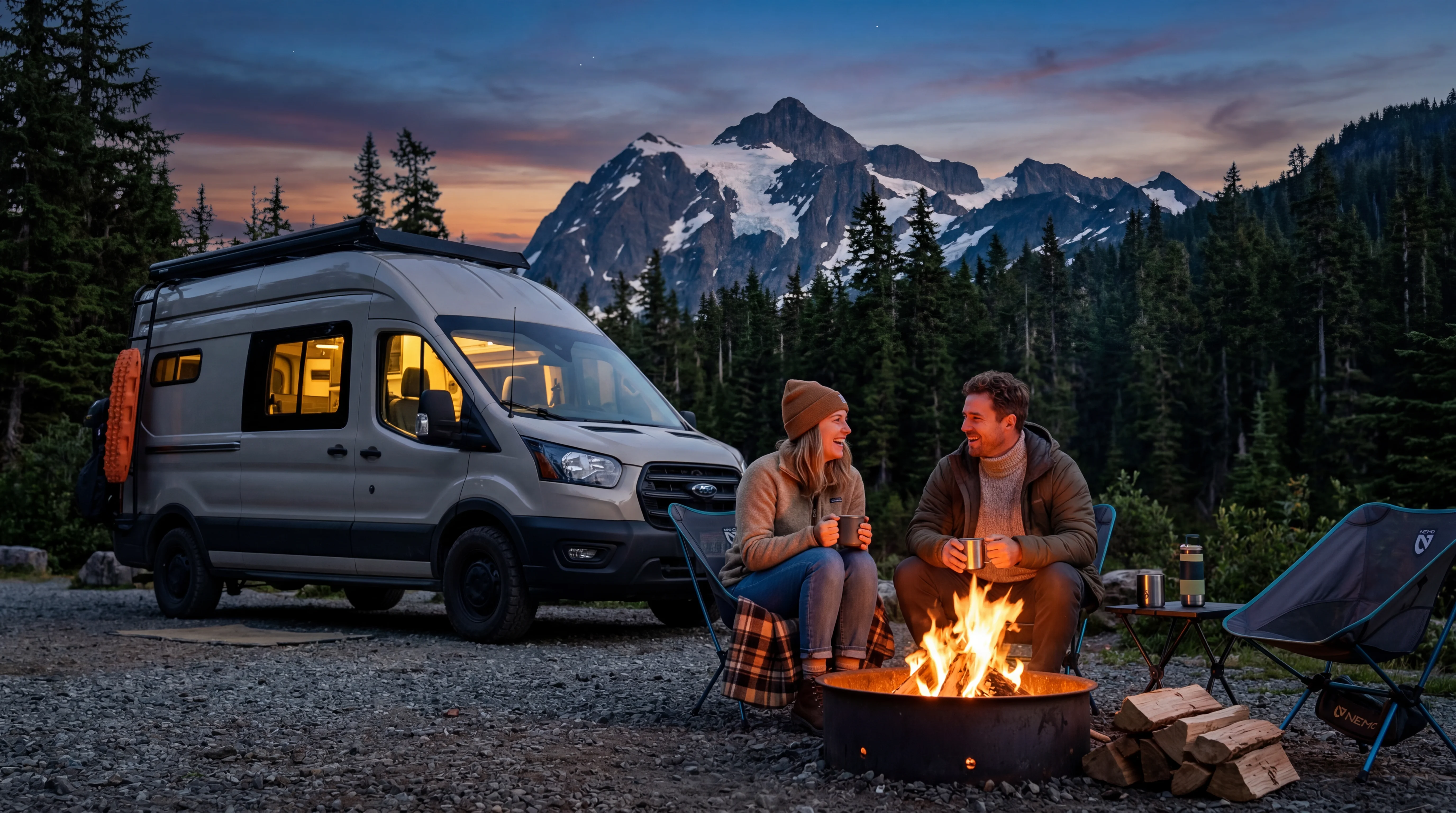
Traveling with pets is one of the biggest advantages of RV camping over hotel travel.
National parks: Dogs are allowed in campgrounds, parking areas, and along roads in Olympic, Rainier, and North Cascades.
Dogs are NOT allowed on most trails in national parks.
Keep pets on a leash (6 feet or shorter) at all times.
Washington State Parks: Dogs are welcome in all campgrounds on a leash.
Many state parks have designated off leash dog parks or beaches.
Pet friendly campgrounds near Seattle: Tall Chief RV & Camping Resort, Lake Pleasant RV Park, and most Washington State Parks welcome leashed pets.
Outdoorsy pet policy: Many Outdoorsy owners welcome pets in their RVs (check the listing for pet friendly badges).
Some charge a $25 to $50 pet fee.
Always disclose pets when booking.
Tips for RV camping with dogs:
- Bring a portable water bowl and shade setup for your campsite
- Never leave pets unattended in the RV in warm weather
- Pack familiar bedding so your dog is comfortable in the new space
- Carry waste bags for trails and campgrounds
Ready to book your Seattle RV adventure? Search available RVs now → Protection plans selected at booking. 24/7 roadside assistance available with protection packages. Affiliate link. We may earn a commission if you book, at no extra cost to you.
Frequently Asked Questions
How much does it cost to rent an RV in Seattle?
In Seattle, where summer demand peaks during the Pacific Northwest's narrow dry window of July and August, RV rental rates typically range from $125 to $400 per night depending on RV type and season.
Campervans and compact RVs, the most practical choice for ferry routes and tight forest roads, start around $125 to $175 per night.
Class C motorhomes, the most popular choice for families heading to Olympic or Rainier, run $175 to $300 per night.
Luxury Class A motorhomes, best suited to major corridors like I-5 and I-90 rather than narrow Cascade passes, can exceed $350 per night.
Prices peak in July and August when Pacific Northwest weather is at its best.
September offers similar weather with lower rates.
Where can I pick up an RV rental in Seattle?
Most Outdoorsy owners offer pickup throughout the Seattle area, from Everett to Tacoma.
Many offer delivery to Seattle Tacoma International Airport for $75 to $175.
Check Cruise America's and Road Bear's location pages for current Seattle pickup and airport transfer options.
You can also pick up your RV at private locations near major highways for easy departure.
Some premium rental options are in Portland (3 hours south) with one way rentals available.
What is the best time to rent an RV in Seattle?
July and August offer the best weather: 70 to 80°F, minimal rain, and long daylight hours.
September is excellent if you want fewer crowds with still great weather and lower rental rates.
May and June are good for budget travelers willing to accept occasional rain.
Avoid October through April unless you are comfortable with frequent rain and mountain campground closures.
Can I take a ferry with my RV to the San Juan Islands?
Yes.
Washington State Ferries accommodate RVs on routes from Anacortes to the San Juan Islands.
Reservations are essential in summer.
Book 2 to 3 weeks ahead for RV vehicle space.
Ferry fares for oversized vehicles (RVs) rise with vehicle length and season, so check the WSF fare table for your rig.
As a rough guide, some island campgrounds have length restrictions (25 to 30 feet maximum).
Check specific campground requirements before booking your ferry.
Where can I camp in an RV near Seattle?
Best options include Tall Chief RV & Camping Resort (Fall City, full hookups), Lake Pleasant RV Park (Bothell, lakeside), and Dash Point State Park (Federal Way, Puget Sound beach).
For national park camping, Mount Rainier's Cougar Rock (35 foot limit), Olympic's Kalaloch (oceanfront), and North Cascades' Colonial Creek on Diablo Lake are top choices.
Book summer reservations months in advance.
What size RV should I rent for Pacific Northwest driving?
As a rough guide, choose an RV under 30 feet for the most flexibility on PNW roads.
Class B camper vans (18 to 22 feet) offer the easiest driving on mountain roads and fit at every campground.
Class C motorhomes (24 to 28 feet) give families more space while still fitting at most national park campgrounds.
Avoid Class A motorhomes over 35 feet unless you plan to stay on major highways and RV parks with pull through sites.
How far in advance should I book a Seattle RV rental?
For July and August travel, book your RV 3 to 4 months ahead.
Popular Outdoorsy listings are often fully booked by April for peak summer.
For September shoulder season, 6 to 8 weeks ahead is usually sufficient.
National park campground reservations (Cougar Rock, Kalaloch) open 6 months ahead and fill immediately for summer weekends.
Is it cheaper to rent an RV or stay in hotels in Seattle?
For solo travelers or couples, hotels may be comparable or slightly cheaper.
For families of 4 or more, RV rentals typically offer savings.
A family Class C rental at $225 per night with campground fees ($45) and groceries ($70) totals about $340 per day.
Compare that to a hotel room ($300+), car rental ($75), and restaurant meals ($100+) at $475+ per day.
The savings increase with larger groups.
Can I rent an RV one way from Seattle to Portland?
Yes.
Cruise America offers one way rentals from Seattle to Portland, while Road Bear RV and El Monte RV run one way trips between their own locations, such as Seattle to San Francisco or Los Angeles.
One way fees vary by company and season, and some one way specials waive them.
Some Outdoorsy owners also allow one way rentals.
As a rough planning figure, the Seattle to Portland route along I-5 is 175 miles (about 3 hours).
Many travelers extend this into a Pacific coast road trip via US 101.
Are there RV rentals near Seattle Tacoma Airport?
Several rental options are available near Seattle Tacoma International Airport.
Many Outdoorsy owners deliver RVs directly to the airport or nearby meeting points.
Road Bear RV offers shuttle transfers from Sea Tac airport hotels when booked in advance, and Escape Campervans runs a free shuttle from the airport to its nearby lot.
This makes it easy to fly into Seattle, pick up your RV, and start your Pacific Northwest adventure the same day.
What are the best RV parks near Seattle for families?
Tall Chief RV & Camping Resort in Fall City is a top family choice with a heated pool, playground, and river access.
Lake Pleasant RV Park in Bothell offers lake swimming and fishing.
Dash Point State Park in Federal Way has beach access on Puget Sound and miles of trails.
For island camping with kids, Moran State Park on Orcas Island and Deception Pass State Park on Whidbey Island both offer excellent facilities and activities.
What do I need to know about driving an RV in Washington state?
A standard driver's license covers all rental RVs for personal use in Washington (no CDL required).
Vehicles towing a travel trailer are capped at 60 MPH, and motorhomes follow posted limits.
Mountain pass conditions change rapidly.
Check WSDOT reports before crossing Snoqualmie Pass (I-90) or Stevens Pass (US 2).
Carry chains November through April.
Use pullouts to let faster traffic pass on two lane highways.
Washington gas prices average $4.25 to $4.75 per gallon.
Fill up before entering remote areas like the Olympic Peninsula or North Cascades.
How much does it cost to rent an RV in Seattle for a week?
Based on local listing estimates, a week of RV rental in Seattle comes to about $1,050 for a camper van, $1,575 for a Class C and $2,625 for a Class A, which is seven nights at $150, $225 and $375 a night.
Add insurance, mileage, campgrounds, fuel and groceries and the sample weeks in this guide come to $1,991, $3,130 and $4,613.
Price a Seattle week for your own dates once you know your ferry and campground plans.
What is the best RV rental in Seattle for traveling with small kids?
A Class C motorhome under 30 feet is the best RV rental in Seattle for traveling with small kids, because the bunk above the cab gives children their own berth. As a rough guide, that length still fits park campgrounds such as Cougar Rock.
Ask the owner which belted seats will take your car seats, and keep driving days short between ferry and park stops.
Plan Your Seattle RV Adventure
Plan your route: Use RV aware GPS routing to find RV safe routes through mountain passes, avoid bridges too low for your rig on forest roads, and locate campgrounds that fit your rig.
Essential for navigating the Cascades and Olympic Peninsula.
Love mountain adventures? Check out our guide to the best Denver RV rentals for Rocky Mountain National Park, stunning alpine drives, and incredible Colorado camping.
Exploring the Southwest? Our Phoenix rental roundup covers the Grand Canyon, Sedona, and desert camping.
California coast? See the Los Angeles RV rental guide for Pacific Coast Highway drives and Joshua Tree.
Southern California beaches? Check out the San Diego RV rental guide, year round sunshine and beachfront campgrounds.
Calculate your costs: Use our free rental budget tool to estimate your total trip budget including mileage, insurance, and campground fees.
New to RV renting? Our rental guide for newcomers and guide to rentals close to home help you find local owners and book with confidence.
Before You Book in Seattle
Pick the class first. Ferry decks and Olympic Peninsula turnouts both reward a shorter rig, so start with which RV class suits a Washington trip.
Camper vans earn their keep here. Narrow island roads and tight trailheads are where a camper van makes sense in the Cascades rather than a full size motorhome.
Know the real total. Ferries, fuel over the passes and campground fees stack up, so read what an RV week actually costs before you set a budget.
Check the coverage. Gravel forest roads chip windshields, and what rental insurance covers in the Pacific Northwest is worth reading before you decline anything.
First trip out of Seattle. Our checklist for a first RV rental covers the pickup walkthrough most renters rush.
Pack for rain. The rental packing list flags what a Washington rig does not include.
Driving one way to Portland. Drop off terms vary by owner, and how one way rentals are priced explains the fee.
Trim the total. The tactics in our cheap rental guide work hardest in a market with a short peak like Seattle's.
Shoulder season is real here. September holds the weather and drops the rates, which is the pattern behind the cheapest months to book.
Bringing the dog. Trail rules and owner policies both matter, so check how pet friendly rentals work first.
Staying a month. Long bookings often unlock a different rate card, covered in renting by the month.
Something special. A milestone trip up to the San Juans is where a premium motorhome rental starts to make sense.
Free nights in Washington. National Forest land around Mount Baker and Gifford Pinchot is where free National Forest camping is genuinely available.
Dry camping in the Cascades. No hookups is normal at elevation, and camping with no hookups explains what to prepare.
A late arrival. Ferry queues run long, so know where an RV can legally park overnight before you need it.
Farm and winery stops. Yakima Valley and the Skagit farms are exactly the kind of stay an overnight host membership is built around.
Routing over the passes. Snoqualmie and Stevens both carry restrictions, which is the case for an RV specific navigation app.
Low clearances downtown. Seattle's older underpasses are unforgiving, so read how clearance routing works.
Finding sites that are open. Washington's state parks book out early, and our walkthrough of the campground database covers the release windows.
Where to aim. Our regional campground picks cover the Pacific Northwest loop.
Building the route. Our RV route library includes a Cascades loop you can run in a week.
Working from the road. Coverage drops fast on the Peninsula, so read connectivity choices on the road before you promise a call.
Memberships worth it here. Several networks concentrate in the Northwest, compared in the RV membership roundup.
Who you book through. Our look at how Outdoorsy works covers verification, deposits and support.
Comparing the two big platforms. Outdoorsy set against RVshare covers where each one leads.
Every platform in one place. The rental site comparison covers the smaller regional operators too.
Owners near you. Finding a rental close to home covers pickup logistics if you are flying into Sea Tac.
Run the numbers. The calculator that includes ferry fares takes ferry fares and fuel into a single figure.
Plan the whole thing. Our trip planning guide sets the order to book Washington's parks in.
Renting again and again. If Seattle is a yearly trip, renting against buying does the arithmetic.
Sleeping better. Rental beds are thin, and the RV mattress guide explains what owners upgrade to.
Park or campground. The difference matters at Olympic, and RV parks against campgrounds sets it out.
Signal on the Peninsula. A cellular signal booster is the difference between one bar and none.
When the signal goes anyway. Hoh and the upper Sol Duc have no coverage at all, so maps that keep working with the bars gone matter more here than almost anywhere.
Picking the planning app. Washington's pass restrictions and ferry timings are exactly what the trip planning apps are ranked on.
Searching for a site. Rainier and Olympic release inventory in waves, and a campground database you can filter by rig length saves a lot of refreshing.
Farm and winery nights. The Yakima and Walla Walla corridors are thick with hosts, listed in our Washington host guide.
Whether that membership pays. One host night a month covers the fee, and the break even arithmetic shows at what point it stops being close.
Power on the Peninsula. Olympic's best sites have no hookups, which is where panels sized for a week off grid earn their place.
Holding charge overnight. Cold nights on the coast pull hard on a bank, and how RV batteries hold their charge explains the difference chemistry makes.
Words on the listing. If a Seattle listing uses a term you have not met, the glossary of RV terms has it.
Leaving the rig here. Storing between Pacific Northwest trips is covered in our state by state storage directory.
Being a good guest. A winery night has its own unwritten rules, set out in what hosts expect of a guest.
Route over the passes. Snoqualmie and Stevens both punish a badly planned day, which our guide to planning a driving route covers.
Water on the Peninsula. Well water varies a lot out west, so the RV water filter comparison is worth a read before you fill up.
Ready to Explore the Pacific Northwest?
Seattle is the ultimate starting point for a Pacific Northwest RV adventure.
From Olympic's rainforests to Mount Rainier's glaciers, from North Cascades' wilderness to the San Juan Islands' orcas, an RV from Seattle unlocks experiences that hotel based trips simply cannot match.
The best Seattle RV rentals combine the freedom of the open road with the comfort of a kitchen, bathroom, and bed that travel with you.
Whether you rent an RV in Seattle for a 3 day Olympic Peninsula loop or a full week Pacific Northwest grand tour, you will discover why this corner of WA draws travelers from around the world.
Browse Seattle RV rentals on Outdoorsy and see what local owners have open for your Pacific Northwest route.
This guide contains affiliate links. We may earn a commission when you book through our links at no extra cost to you.
Plan Your Seattle Trip Smarter
An RV owned in Seattle works hard for one short summer and then sits out a long wet winter. Opening it up to renters on Outdoorsy turns those quiet months into bookings from park bound visitors.
Work out what a Pacific Northwest rig earns off season, by RV type and location.
Before you book a ferry or a campsite, estimate your full Seattle trip cost with the RV rental cost calculator, then read up on what RV rental insurance covers before you book.
Enjoying van life in the Pacific Northwest? When you own an RV, Harvest Hosts lets you book nights parked at Washington farms, wineries, and breweries.
Many Seattle renters roll south on I-5, and our guide to Portland RV rentals covers that leg.
Heading east instead? See our guide to RV rentals near Glacier National Park for the long haul into Montana.
The same eastbound run continues toward Yellowstone country, where our Bozeman RV rental guide picks up the route.
Continue Exploring
Add Up Your Rental Costs
Nightly rates, fees and mileage in one total
Choosing Between Outdoorsy And RVshare
The differences that matter when booking
Solar Panels For Cloudy Country
Panel output when the sun is scarce
Top RV Rental Websites
Which site to use for which kind of trip
Find An RV In Your Town
Local owner listings wherever you start
Your First RV Pickup, Explained
Walk in prepared and drive away confident
Paying Less On Outdoorsy
Where discounts genuinely apply
RV Rental Cost Breakdown
What to budget for a Pacific Northwest RV trip
Rental Insurance, Plainly Explained
The cover options set out in plain terms
RV Classes Explained
Choose the right RV type for Washington state
Class B RV Rental
What a camper van costs and whether it suits your trip
More RV Rental Guides
Where To Rent In Denver
Colorado peaks and passes by RV
Best RV Rentals in Los Angeles
Find the best LA RV rental deals
RV Rentals Around Phoenix
Warm winter touring across Arizona
Best RV Rentals in San Diego
Year round beach camping in Southern California
Where To Rent In Austin
Live music trips and Hill Country stops
The Complete Renter's Handbook
All the rental basics gathered in one guide
See all RV rental guides in our roundup of every city we have written up.