First Time RV Rental Tips: Avoid the 5 Costly Mistakes New Renters Make
What to sort out before your first RV rental. No experience required.
📋 What you'll discover
- Build driving confidence over your first few hours
- Avoid costly mistakes that damage rental RVs
- Get the right RV size for your skill level
- Learn the walkthrough checklist pros use
Comparison Transparency
Smart RV Hub earns a commission on qualifying purchases or subscriptions made through links to Outdoorsy and RV LIFE Pro.
We have no affiliate relationship with RVshare, Cruise America, Campendium, and AllStays.
This material connection may influence which brands we cover, though our underlying analysis is based on published specifications and verified user reviews.
Worried about commitment? Outdoorsy bookings generally include a short grace period for a full refund shortly after booking, though the exact terms can change.
Cancellation policies otherwise vary by owner, and some refund in full for cancellations well in advance. Check each listing and Outdoorsy's current terms for specifics before booking.
Affiliate Disclosure
This page contains affiliate links to Outdoorsy.
When you purchase from Outdoorsy through these links, we may earn a commission at no additional cost to you.
This helps support our free calculators, guides, and research tools. Read our full disclosure
Your first trip confidence check
Tick each step as you sort it. Fill the ring and you are ready to roll.
Work through the list and the nerves fade fast.
Find your first RV rental on OutdoorsyAffiliate link. We may earn a commission if you book, at no extra cost to you.
Affiliate link. We may earn a commission at no extra cost to you.
What Should First Time RV Renters Expect?
First time renters often blow their budget because they underestimate generator, mileage, dump, and insurance fees. As a starting point, booking 30 days ahead and choosing a Class B or smaller Class C reduces both cost and stress.
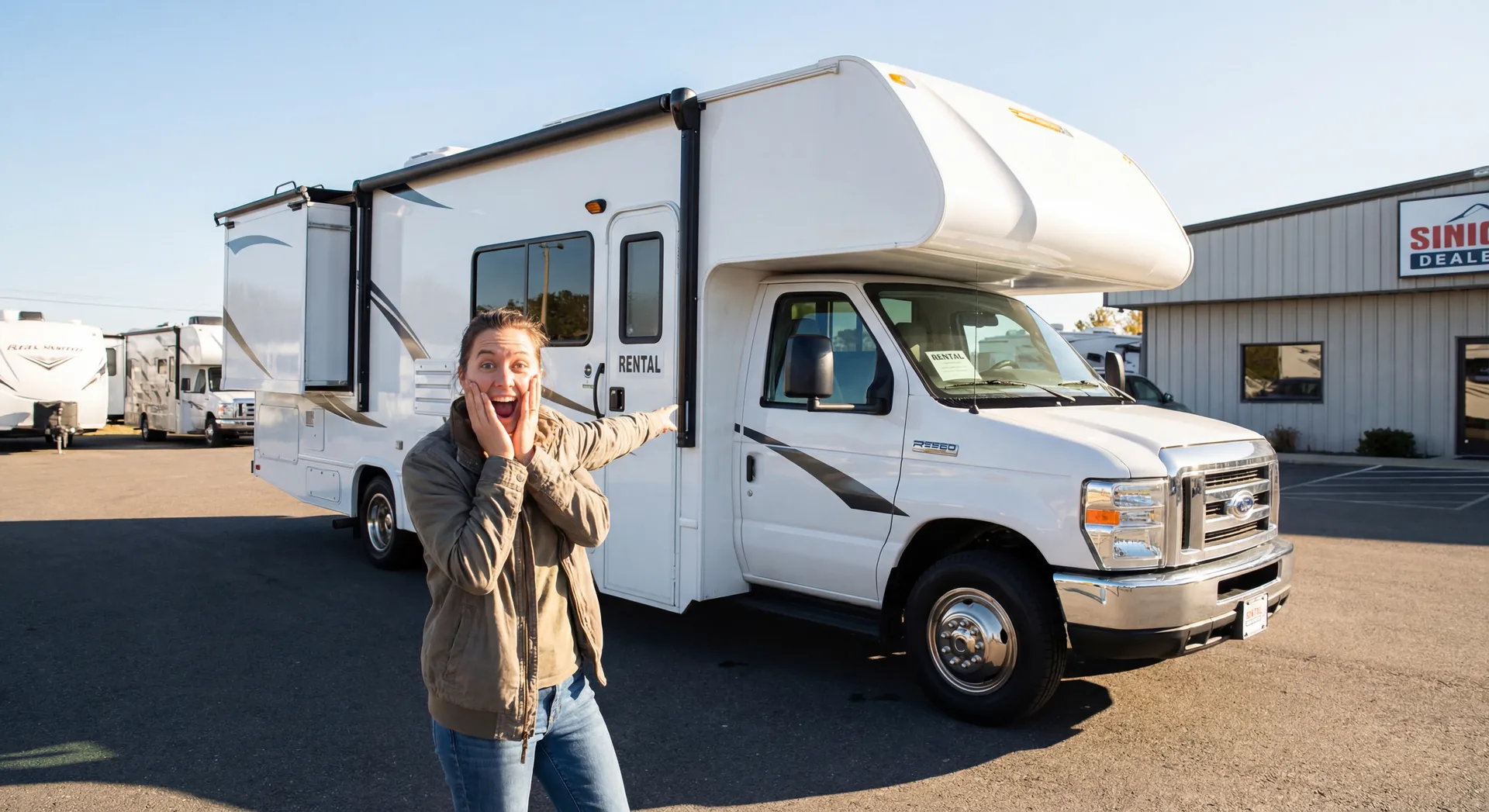
Here is what nobody tells you: renting an RV for the first time is both easier and harder than you expect.
The driving?
Easier than you think.
The systems (water, electric, sewer)?
Takes some learning.
But complete beginners rent RVs successfully all the time.
Renting an RV for the first time can feel overwhelming, but most first time renters find it far easier than expected. This guide covers what to sort out before your first rental.
10 Essential Tips for First Time RV Renters
As a rough idea, start with a 24 to 28 foot Class C, book through a platform with strong insurance, take a full hour for the walkthrough, and plan no more than 200 to 300 miles per day.
The ten tips below cover everything you need before your first trip.
Start Smaller Than You Think
As a rough guide, a 24 to 28 foot Class C is the sweet spot. You get full amenities (kitchen, bathroom, sleeping for 4 to 6) without the stress of driving a bus. Resist the urge to go bigger.
Book Through a Reputable Platform
Use Outdoorsy or RVshare for your first rental. Outdoorsy protection plans are selected at booking and carry state liability limits by default, with roadside help inside the plan you choose, plus verified reviews. Never rent off Craigslist or Facebook Marketplace for your first time.
Take a Full Hour for the Walkthrough
Do not rush the pickup. Have the owner show you every system: water pump, propane, AC, heat, generator, hookups, and leveling. Take notes or record videos on your phone.
Practice Driving Before You Leave
Ask the owner if you can drive around the block a few times. Practice turning, backing up, and using mirrors. This builds confidence before hitting the highway.
Plan Shorter Distances
For your first trip, drive no more than 200 to 300 miles per day. RV driving is slower and more tiring than car driving. Build in rest days.
Book Campgrounds in Advance
Do not assume you will find a spot. Popular campgrounds book months ahead, especially in summer. Reserve at least your first and last night.
Download RV Specific Apps
Get RV Life, Campendium, or AllStays before your trip. These apps show RV friendly routes, gas stations you can fit in, and campground reviews.
Pack Light
RVs have less storage than you expect. Bring essentials only. You can buy supplies on the road if needed.
Take Photos at Pickup
Document any existing damage before you leave. This protects you when you return the RV.
Embrace the Learning Curve
Things will go wrong. You will make mistakes. The dump station will confuse you. This is normal. Laugh it off and keep going.
For navigation and campground research, our guide to the best apps covers RV Life Pro for first time renters and how it routes you around low bridges.
Not sure which booking platform has better options for beginners? Our side by side comparison of Outdoorsy and RVshare breaks down selection, insurance, and pricing so you can pick with confidence.
Unsure whether to choose a Class A, B, or C? Our comparison of the three motorhome types explains the tradeoffs in size, driving difficulty, and price to help you choose the right vehicle for a first trip.
Settled on the van? Our guide to what a Class B rental involves covers the fees, the booking rules, and who the van actually suits.
Interested in a road trip that ends somewhere different from where it starts? See our guide to trips that end in a different city to learn which platforms allow drop offs and how to find the best routes.
Before you book, check for Outdoorsy discount codes to see current ways to save on your first rental.
Renting on a tight budget? Our roundup of the lowest cost ways to rent an RV shows where first timers can trim the total.
Ready for Your First RV Adventure?
Browse beginner friendly RVs on Outdoorsy across all 50 US states. Filter by RV type, read owner reviews, and book knowing you choose a protection plan at checkout, with state liability limits by default, $500,000 on the Peace of Mind package, and roadside help inside the plan.
See Beginner Friendly RVs Near YouAffiliate link. We may earn a commission at no extra cost to you.
5 Mistakes First Timers Make (And How to Avoid Them)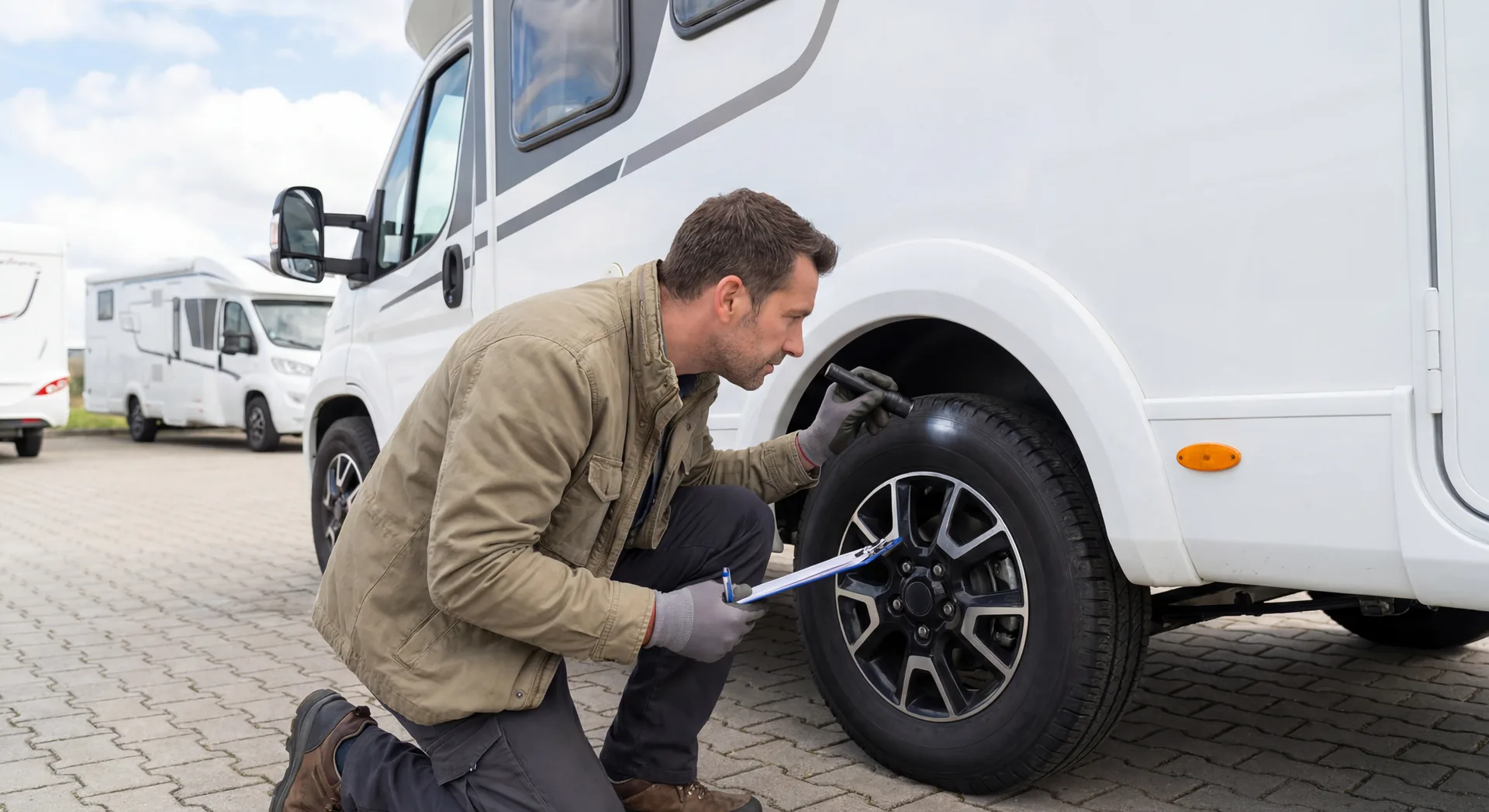
Always retract the awning before driving. Even a short move can damage it.
Use RV specific GPS or apps. Car GPS will route you under low bridges and through tight spots.
Before driving, walk around the RV. Check: power cord, water hose, sewer hose, and slide outs retracted.
Never run the generator until it stops. Refuel when the tank is at 1/4.
Fill only what the trip needs. Water weighs about 8.3 lbs a gallon, so a full tank adds hundreds of pounds.
What to Expect: Day by Day
Day one is the steepest learning curve, with a long pickup and an intense first drive. Most first timers feel comfortable by day two or three, and by day four the routine clicks and the trip becomes pure fun.
Day 1: Pickup and First Drive
Expect the pickup to take 1 to 2 hours with walkthrough. Your first hour of driving will feel intense.
By evening, you will feel more comfortable. Plan a short first day (for example, under 100 miles) and arrive at your campground early.
Day 2 to 3: Getting Comfortable
Driving becomes routine. You will figure out your systems.
The campground hookup process will make more sense. You might make some mistakes, but they will be learning experiences.
Day 4+: RV Life Clicks
This is when it clicks.
You have a routine.
You know your RV.
You are enjoying the freedom of having your home on wheels. Many first timers start planning their next trip.
Return Day: Wrapping Up
Empty your tanks the night before. Clean the RV (most require you return it reasonably clean).
Do a final walkthrough with the owner. Take photos of the condition at return.
Frequently Asked Questions
Is it hard to drive an RV for the first time?
Driving an RV is easier than most people expect.
Start with a Class C motorhome (24 to 28 feet) which drives similar to a large truck.
Take wide turns, use your mirrors constantly, and drive slower than normal.
Many first timers settle in after the first few hours of driving.
What size RV should a beginner rent?
For first time renters, a 24 to 28 foot Class C motorhome is often the best starting point.
It is large enough to be comfortable but small enough to maneuver easily.
Avoid Class A motorhomes (bus style) for your first rental as they require more driving skill.
What mistakes do first time RV renters make?
Common mistakes include: not practicing driving before hitting the highway, forgetting to retract the awning before driving, overpacking, not checking bridge heights, forgetting to disconnect hookups before driving, and underestimating fuel consumption.
A thorough walkthrough with the owner prevents most issues.
Do I need any special skills to rent an RV?
No special skills required.
You just need a valid driver's license (standard license works for most RVs under 26,000 lbs).
Basic skills include: using side mirrors, judging vehicle length for turns, and connecting to campground hookups (owners will teach you).
How much should a first time renter budget for an RV trip?
First time renters frequently underestimate total trip costs because they forget the extras beyond the nightly rate.
Budget for a cleaning fee, generator and mileage charges, campground fees, and fuel, since most RVs return only about 6 to 12 miles per gallon.
As a rough planning guide, a realistic total often adds an estimated 30 to 50 percent on top of the base nightly rate.
How long does the RV pickup walkthrough take?
Plan for the pickup and walkthrough to take one to two hours, and do not rush it.
Have the owner show you every system, including the water pump, propane, air conditioning, heat, generator, hookups, and leveling.
Take notes or record videos on your phone so you can refer back to them on the road.
How far in advance should a beginner book an RV rental?
Book two to four weeks ahead for regular travel and two to three months ahead for peak summer or holiday trips.
Reserve your campgrounds at the same time, since popular parks fill months in advance, especially in summer.
Booking early gives you a wider choice of beginner friendly RVs and better pricing.
Should a first time renter buy extra RV rental insurance?
Outdoorsy protection plans are selected at booking and carry state liability limits by default, with $500,000 available on the Peace of Mind package.
Roadside assistance comes inside the plan you choose.
You can also add a reduced deductible plan at checkout for extra peace of mind on your first trip.
Take photos at pickup and return so any existing damage is clearly documented.
Document Your Rental Before You Drive Away
Document your rental before you drive away
Build a walkaround log for pickup and return, so what was already there is on record with a date against it.
This is a record keeping aid. It does not assess the condition of any vehicle.
Your log covers
36 items
Across pickup, readings, handover and return.
Get the printable photo log
Your results above stay free either way. Add your first name and email for the printable version you can fill in and keep.
This also adds you to our RV guides list. Unsubscribe at any time.
No spam, and you can unsubscribe anytime. See our Privacy Policy.
Still choosing a rig for your trip?
Check RV availability for your datesAffiliate link. We may earn a commission at no extra cost to you.
Smart RV Hub Editorial Team
RV Technology Research and Reviews
Our writers research smart RV technology full time, covering solar power, connectivity, security, and power management.
Every guide draws on published manufacturer specifications and verified owner reviews, so you can compare options with confidence.
Meet the editorial team and our review standardsYour First RV Adventure Awaits
First time renters have successful trips every day. With the right preparation and a protection plan with state liability limits by default and $500,000 on the Peace of Mind package on every Outdoorsy booking, you can too.
Check RV Availability for Your DatesAffiliate link. We may earn a commission at no extra cost to you.
Continue Learning
Complete RV Rental Guide
In depth guide covering costs, platforms, insurance, and more.
Rent an RV Near Me
Find local RV rentals from trusted owners in your area.
Outdoorsy Savings Guide
5 practical ways to cut the cost of your RV rental.
Outdoorsy Review 2026
What to expect from the platform before you book your first rental.
Best RV Rental Websites
Side by side comparison of Outdoorsy, RVshare, Cruise America, and more.
Harvest Hosts Membership
Overnight stays at wineries, farms, and breweries with no nightly fee.
RV Rental Cost Calculator
Estimate your total trip costs including fuel and campgrounds.
RV Rentals in Los Angeles
Beach camping and desert trips from LA.
RV Rentals in San Diego
Year round RV adventures along the Southern California coast.
RV Glossary
Plain English definitions for the rental, solar, and camping terms you will meet.
Pet Friendly RV Rentals
How to find and book a rig that welcomes your dog or cat.
RV Rental Packing List
Everything to pack for your first rental, from kitchen to campsite.
RV Rentals in Las Vegas
Desert road trips and national park loops starting from Las Vegas.
RV Rentals in Orlando
Theme park trips and Florida coast adventures from Orlando.
RV Rentals in Nashville
Music city road trips and Smoky Mountains routes from Nashville.
RV Rentals in Portland
Oregon coast and Columbia River Gorge trips from Portland.
RV Rentals in Tampa
Gulf Coast beaches and Florida springs from Tampa.
Renting an RV for Major Events
Beat sold out hotels at festivals, races, and big games with an RV basecamp.
Affiliate link. We may earn a commission at no extra cost to you.
Still Planning Your Rental?
Get on the list for packing lists and first trip pointers.
See all RV rental guides in our hub for people booking their first trip.