Best RV Rentals in Denver, Colorado (2026)
For most families, the best pick is a Class C motorhome rental under 30 feet, because, according to the National Park Service, three of the four reservable Rocky Mountain National Park campgrounds cap rigs at 30 to 35 feet.
Couples do well in a Class B camper van. Book an RV rental for June through September, when mountain days run warm and sunny.
Affiliate Disclosure
This page contains affiliate links.
When you purchase through these links, we may earn a commission at no additional cost to you.
This helps support our free calculators, guides, and research tools. Read our full disclosure
Denver RVs Compared
Rocky Mountain ready rigs.
A protection plan with state liability limits comes with every booking, with $500,000 available on the paid Peace of Mind package. Protection packages add 24/7 roadside help for the mountain passes.
Affiliate link. We may earn a commission if you book, at no extra cost to you.
📋 What you'll discover
- Compare top Denver RV rental companies with verified pricing
- Find RVs perfect for Rocky Mountain National Park trips
- Get insider tips on Denver pickup locations and logistics
- Book through Outdoorsy for wide selection and strong protection
How we picked these rentals
Recommendations on this page are based on published platform inventory, verified user reviews, and pricing at time of writing.
The primary "book through" recommendation links to Outdoorsy, an affiliate partner that pays Smart RV Hub a commission on qualifying bookings.
Other platforms named in this guide (such as Cruise America) are not affiliate partners.
See our full affiliate disclosure.
Denver RV Travel Destination
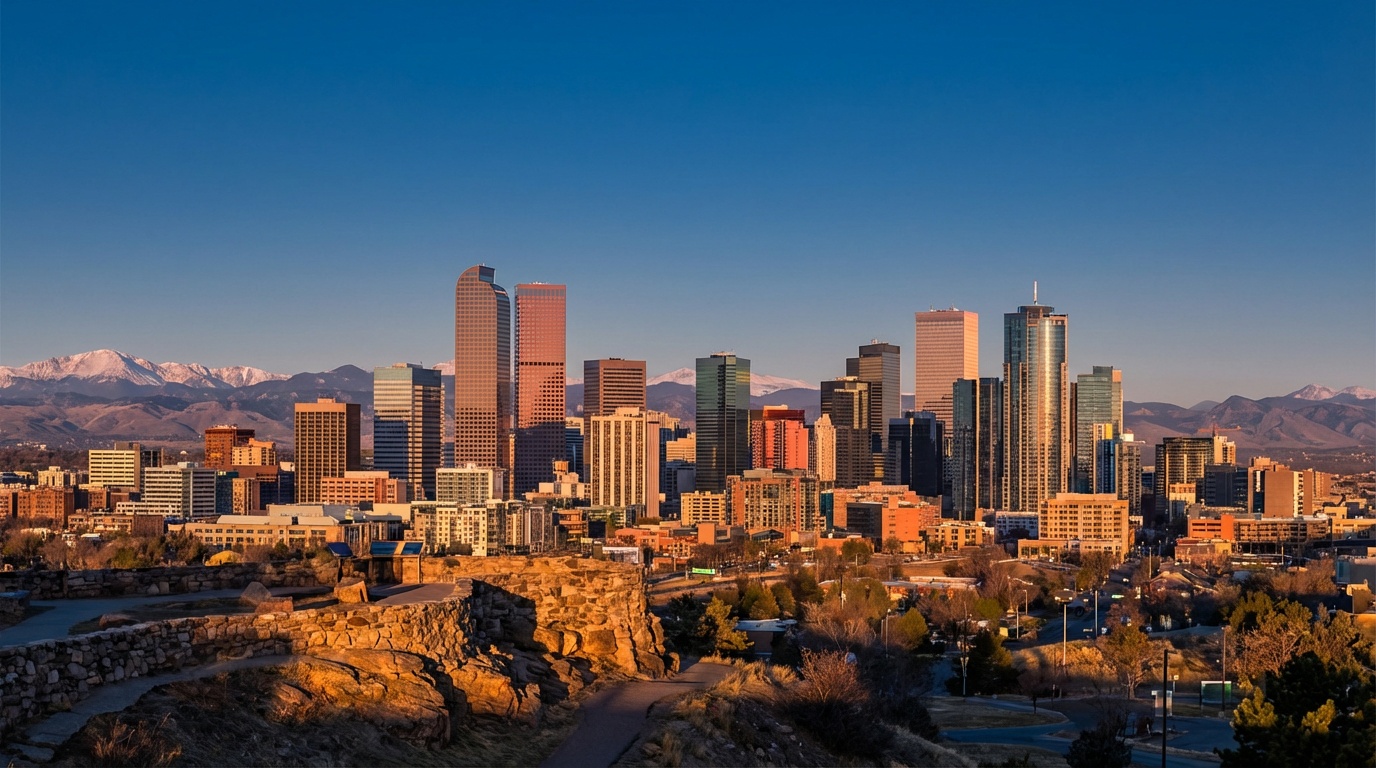
This Colorado Front Range base reaches Rocky Mountain national parks, scenic drives, and high country camping. A Denver RV rental puts every one of them within a short drive of the city.
- Rocky Mountain National Park
- Red Rocks Park
- Garden of the Gods
- Cherry Creek State Park
- Chatfield State Park
How Much Do RV Rentals in Denver, Colorado Cost?
RV rentals in Denver, Colorado run roughly $125 to $500 a night in local listings before fees, while Outdoorsy's published national ranges, read August 2026, start at $50 for travel trailers.
- Travel trailers: $125 to $200 a night
- Camper vans: $150 to $220 a night
- Class C motorhomes: $200 to $300 a night
- Class A motorhomes: $300 to $500 a night
Outdoorsy lists Denver rigs from local owners across all four of those classes. That means a Denver RV rental can be matched to your budget and your route rather than to whatever a corporate fleet has spare.
Denver RV Rentals With Unlimited Miles
Many Outdoorsy owners include unlimited mileage on their Denver listings, and the ones that do not typically allow 100 to 150 miles a day.
Based on published listing terms and user reviews, going over a daily cap costs about $0.35 to $0.50 per mile.
Mountain routes burn through a daily cap fast. A single week taking in Rocky Mountain National Park, Breckenridge and Garden of the Gods covers serious ground, so unlimited miles is worth more here than it would be on a flat weekend trip.
To find them, search Denver on Outdoorsy and open the pricing details on each listing, where the owner states whether mileage is unlimited or capped.
If the listing is not clear, message the owner and get the mileage terms confirmed in writing before you book.
Wondering what a Denver RV rental adds up to over a week in the high country? Price it with the RV rental cost calculator
Disclosure: This guide contains affiliate links. We may earn a commission if you book through our links, at no extra cost to you.
Denver, Your Mile High Launch Point for the Rockies
Save over a third against a Denver hotel week in our worked example ($2,340 in an RV vs $3,675 in hotels)
Front Range owners list everything from camper vans to diesel pushers on Outdoorsy, so check live availability for your dates
Gateway to the Rockies. Rocky Mountain National Park just 1.5 hours away
Try before you buy. Test the RV lifestyle for about $2,600 a week vs an $80K+ ownership commitment
Perfect weather. June through September offers warm, sunny days in the 80s and wildflower filled mountain views
Ready to explore? Browse Denver's best RV rentals on Outdoorsy and start planning your mountain adventure today.
The Problem with Traditional Denver Vacations
You're scrolling through hotel prices for your Denver vacation.
$300 per night for a cramped room with a parking lot view.
Times four nights.
Plus meals out.
Plus rental car.
Plus activities.
You're looking at $3,000+ before you even see the Rockies.
There's a better way.
RV rentals in Denver unlock the Colorado experience hotels can't match.
Wake up to mountain views at Rocky Mountain National Park.
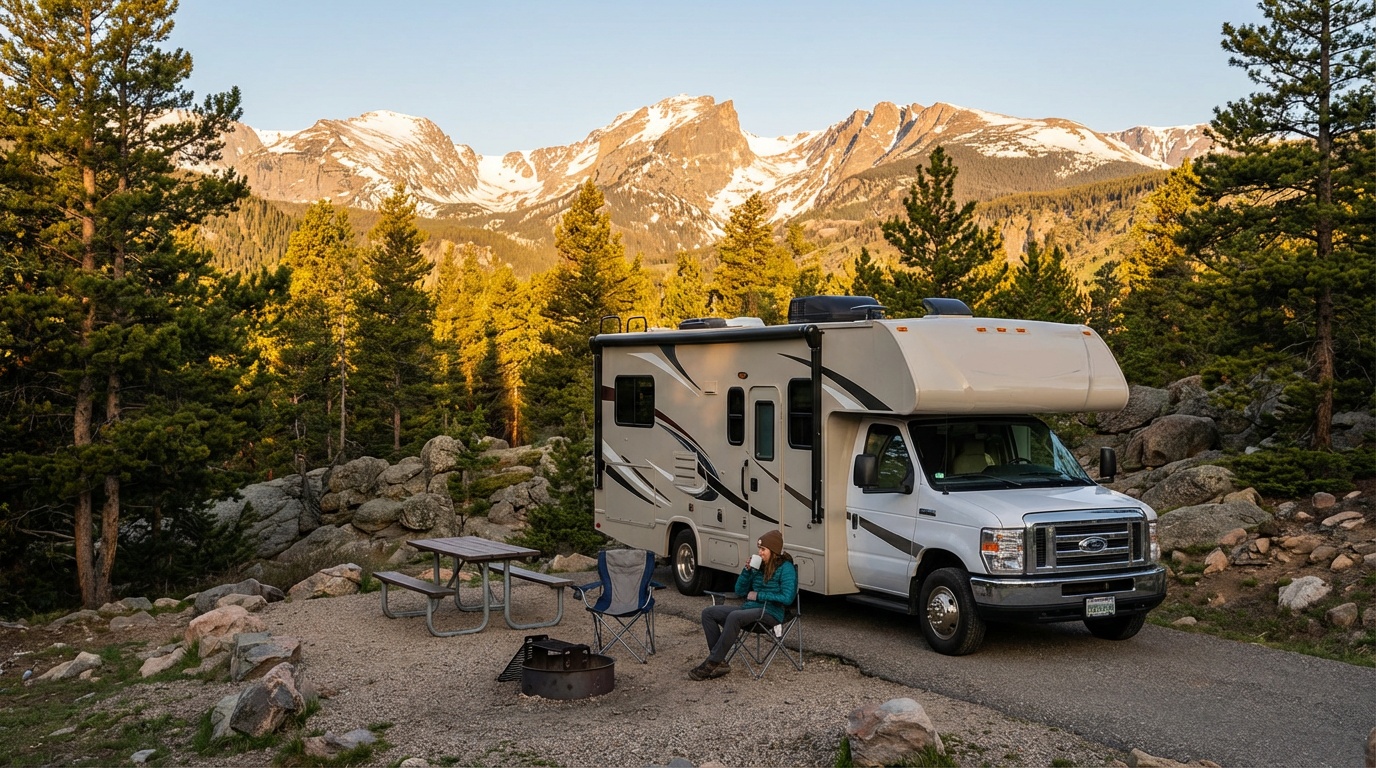
Cook breakfast with a sunrise backdrop over the Continental Divide.
Drive straight to Breckenridge, Estes Park, or Garden of the Gods without worrying about accommodation costs piling up.
No checkout times.
No restaurant markup.
No missing the best sunrise because you're stuck in a hotel far from the trailhead.
This guide covers exactly how to choose the right RV for Colorado mountain roads, what a Denver rental actually costs, and where to go once you clear the city limits and head into the high country.
For a broader overview, see our rental guide covering every stage.
Why Denver is Perfect for RV Rentals
Denver sits at the geographic heart of Colorado's adventure playground.
Within 100 miles, you have access to more natural beauty than most states offer in their entirety.
Geographic Advantages
Rocky Mountain National Park: 1.5 hours from downtown Denver.
415 square miles of alpine wilderness, elk herds, and Trail Ridge Road (highest continuous paved road in North America).
Breckenridge & Vail: 2 hours west on I 70.
Summer hiking and mountain biking transform these ski towns into warm weather adventure bases.
Garden of the Gods: 1 hour south in Colorado Springs.
Dramatic red rock formations with free admission and RV friendly parking.
Great Sand Dunes National Park: 4 hours south.
The tallest sand dunes in North America rise 750 feet from the San Luis Valley floor.
Weather Sweet Spot (June to September)
Summer in Denver means warm days in the 80s with low humidity.
Mountain temperatures run 10 to 15 degrees cooler (perfect for hiking).
July to August brings peak wildflower season across alpine meadows.
September delivers fall colors without the summer crowds.
Insider Tip: Book Denver RV rentals 60 to 90 days ahead for summer weekends.
Rocky Mountain National Park campgrounds require reservations 6 months in advance.
RV Friendly Infrastructure
Denver offers stronger RV infrastructure than most cities.
Plenty of campgrounds within 100 miles, for example the national forest loops off US 285 and the full service resorts in Golden.
Multiple dump stations throughout the metro area (check local resources for current dump station locations).
Propane filling stations at U Haul locations, Camping World, and most campgrounds.
RV service centers provide emergency repairs and maintenance if needed.
Cost Advantage Over Hotels
Here is how one Front Range week adds up both ways, using the planning figures in this guide.
Seven Nights in Denver Hotels:
- Downtown room, 7 nights at $300: $2,100
- Car hire, 7 days at $75: $525
- Eating out, 7 days at $150: $1,050
- Hotel week: $3,675
Seven Nights in a Rented Class C:
- Rig, 7 nights at $225: $1,575
- Cleaning charge: $100
- Groceries for the galley, 7 days at $80: $560
- Generator hours and small fees: $105
- RV week: $2,340
The gap is $1,335, roughly 36% below the hotel plan.
Your bed and your ride to the trailhead are the same vehicle, so there is no separate car to park.
Find Your Rig Before the Mountains Fill Up
Outdoorsy connects you with local Denver owners who already know which of their rigs handle I 70 and which are happier on the plains.
What comes with a Denver booking:
- A protection plan on every trip, with state liability limits by default
- Roadside help day and night, inside the protection package you pick
- Owners who brief you on altitude, grades and pass closures
- Cancellation terms you can read before you commit
Search Denver RV Rentals on Outdoorsy →
Affiliate link. We may earn a commission if you book, at no extra cost to you.
Choosing the Right RV Type for Colorado Mountains
Denver's official elevation measures 5,280 feet, so you start a mile up before you even leave the city.
Every mile you drive west from the Mile High City adds elevation, steeper grades, and narrower switchbacks.
The RV that glides through Texas is not necessarily the right rig for I 70 canyon corridors and Trail Ridge Road.
Class B Camper Vans (Best for Solo/Couples)
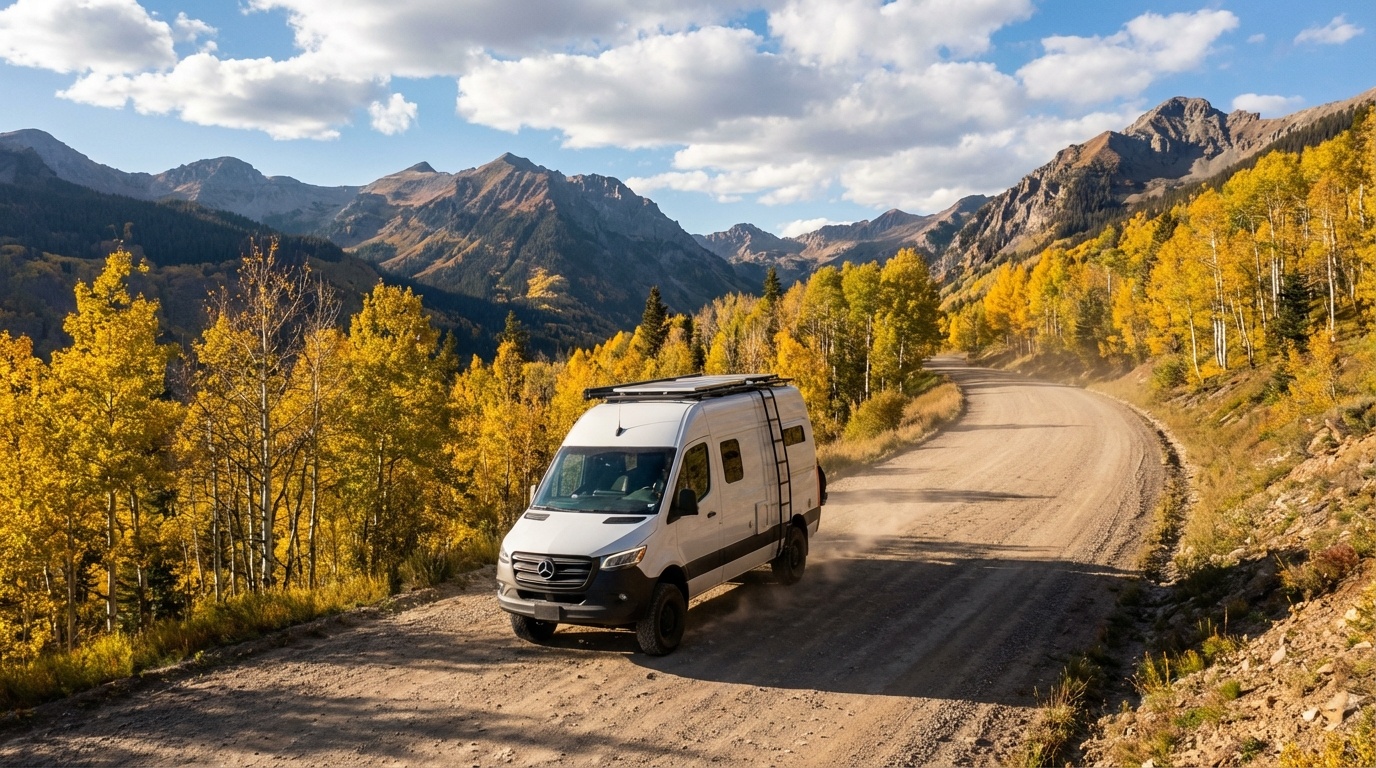
Suits: Couples splitting time between LoDo and the high trails, and first time renters
Summer planning rate: $150 to $220 a night
Class B vans start life as Sprinter, Transit or ProMaster cargo vans, the chassis delivery fleets run every day, before a builder fits them out for camping.
From the outside they read as a tall work van; step inside and you have a fully equipped living space ready for a week in the mountains.
Where a van shines around Denver:
- Drives like an oversized SUV on I 70 and the Peak to Peak Highway
- Slots into an ordinary space in downtown Boulder or Estes Park
- A rough guide is 14 to 18 miles per gallon on the climb to the Divide
- Gentle learning curve for a first rental
Trade offs:
- No slide outs, so floor space stays tight
- Comfortable for two, cramped beyond that
- Small tanks mean more trips to the dump station
Best Outdoorsy Denver examples:
- Mercedes Sprinter conversions (modern, efficient)
- Custom Airstream Interstate (luxury van conversion)
Why Sprinter Vans Work Here: Sprinter vans fit in standard parking spaces at Rocky Mountain trailheads where larger RVs cannot.
They handle Berthoud Pass and Trail Ridge Road without the stress of steering, for example, a 30 foot motorhome on narrow mountain switchbacks.
Class C Motorhomes (Best for Families)
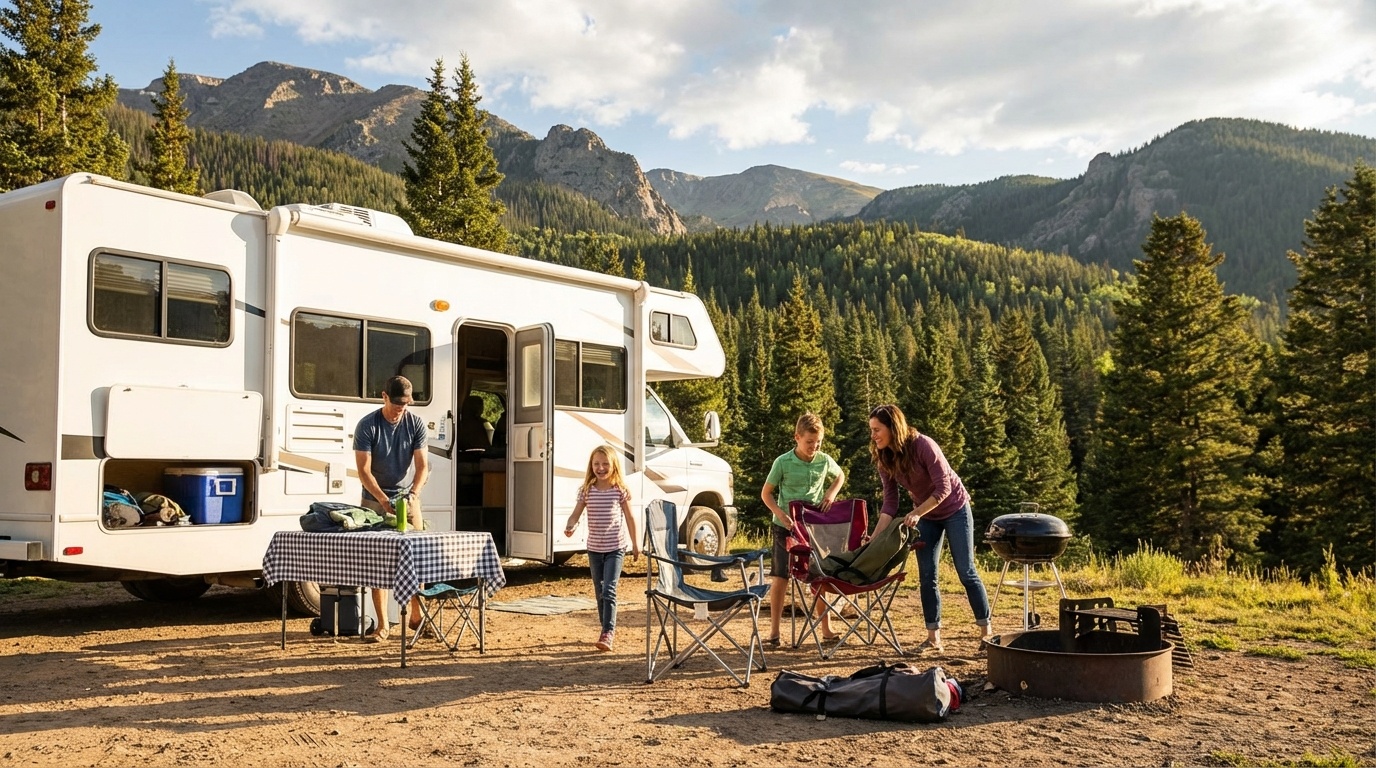
Suits: Families of four to six who want a bathroom, a kitchen and a bunk for the kids
Summer planning rate: $200 to $300 a night
Class C motorhomes are built around the distinctive cab over bunk that sits above the driver's cabin, extra sleeping real estate that families heading to Rocky Mountain National Park put to immediate use.
The coach rides on a truck chassis, giving it the torque needed to climb the grades on I 70 and mountain passes without straining the drivetrain.
What Colorado families get:
- A bunk over the cab that the kids claim on day one
- A real galley and a wet bath for days far from town
- A higher seat and clearer sight lines than a Class A
- Enough engine for the long pull toward the Eisenhower Tunnel
Trade offs:
- Roughly 8 to 12 miles per gallon as a ballpark, and less on long climbs
- Hard to park near Union Station, so leave it at camp
- Slows down noticeably on the steepest passes
Best Outdoorsy Denver examples:
- Thor Four Winds (dependable drivetrain, practical layout for families)
- Coachmen Freelander (competitive price point, available with solar for mountain boondocking)
- Winnebago Minnie Winnie (well built, good reputation among long term owners)
Denver specific tip: Choose Class C models under 30 feet for easier navigation to Rocky Mountain National Park campgrounds (the National Park Service states most have 30 to 35 foot limits).
Travel Trailers (Best for Extended Stays)
Suits: Renters with a capable truck who want one base camp and a week of day trips
Summer planning rate: $125 to $200 a night for the trailer alone
On a typical Denver search, for example, travel trailers run from compact 16 foot options up to spacious 30 foot models, covering most of what Denver renters need for a basecamp setup.
You tow to a single mountain campground, unhitch, and use your own truck or SUV for day runs into Rocky Mountain National Park, Breckenridge, or Boulder, no repacking an entire motorhome each morning.
How the base camp plan plays out:
- Leave the trailer on one site for the whole week
- Unhitch and explore Denver, RMNP or Breckenridge with just the truck
- Skip the daily routine of stowing gear and unhooking
- Pay the lowest nightly rate of any class
Trade offs:
- Needs a capable tow vehicle, and a three quarter ton truck is the usual advice for mountain grades
- Leveling and stabilizing add time at every stop
- Reversing into a site takes practice
- Nobody can use the bathroom or kitchen while you are moving
Best Outdoorsy Denver examples:
- Airstream (well built, timeless layout, good resale)
- Forest River Rockwood (wallet friendly, proven at altitude)
- Grand Design Imagine (current features, solid construction)
Class A Motorhomes (Best for Luxury/Groups)
Suits: Groups of six to eight, and drivers who already have big rig miles behind them
Summer planning rate: $300 to $500 a night
The biggest rentals on the Denver market are bus shaped Class A coaches on commercial chassis, finished inside to apartment standard.
For groups heading to Breckenridge or Vail for an extended summer stay, the multiple slide outs and full size amenities make the price premium straightforward to justify.
What the extra cost buys:
- Two or three roof air conditioners for hot afternoons on the plains
- A household size fridge that holds a week of groceries
- A king bed in the rear bedroom
- Room for a washer and dryer on some floor plans
- A second bathroom on larger layouts
Trade offs:
- Takes real practice to place on a narrow site
- Assume 6 to 10 miles per gallon when you budget fuel
- Hard work on tight mountain roads
- Best kept off downtown streets
Best Outdoorsy Denver examples:
- Newmar Dutch Star (diesel torque handles altitude grades; premium finish throughout)
- Tiffin Allegro (thorough build quality, typically listed with solar already installed)
- Thor Palazzo (an entry level diesel pusher on a Freightliner chassis that still sleeps a big group)
A warning for the high country: as a rough guide, a Class A longer than 35 feet is hard work on tight switchbacks and over the passes.
Consider renting a smaller RV or travel trailer if you plan extensive mountain exploration.
Quick Comparison Table: Denver RV Types
| Class | Summer Planning Rate | Who It Suits | Beds For | Miles per Gallon | Mountain Roads | Parking |
|---|---|---|---|---|---|---|
| Class B Van | $150 to $220 | Pairs and first time renters | Two or three | 14 to 18 | ✅ Excellent | ✅ Easy |
| Class C | $200 to $300 | Families | Four to six | 8 to 12 | ✅ Good | ⚠️ Moderate |
| Travel Trailer | $125 to $200 | A base camp on a budget | Four to eight | Varies* | ✅ Good | ⚠️ Takes skill |
| Class A | $300 to $500 | Big groups wanting comfort | Six to eight | 6 to 10 | ❌ Challenging | ❌ Difficult |
*Trailer mileage depends on the truck pulling it
Change plans if needed on many rentals
Try RV Living Before You Buy an RVAffiliate link. We may earn a commission at no extra cost to you.
Top RV Rental Companies in Denver
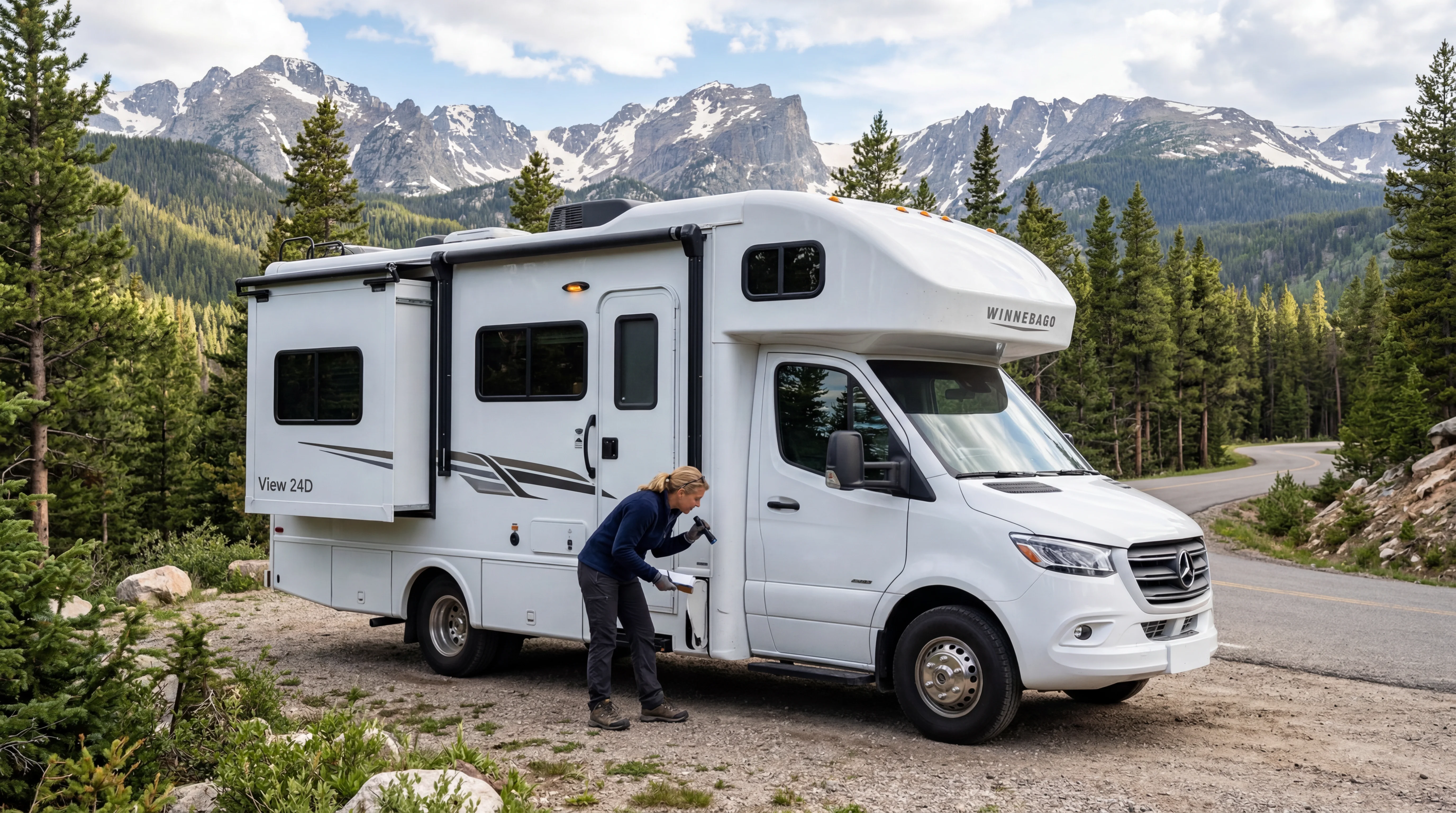
Denver renters choose between owner marketplaces, a corporate fleet, and a handful of independent dealers.
Each one suits a different kind of trip.
(For a wider look at all major platforms, see our best RV rental websites guide.)
Outdoorsy (Featured Platform)
Rating: Trustpilot TrustScore of 3.3 out of 5, based on 26,107 reviews (checked September 2026)
Listings near Denver: Many local owners, so search your dates for a live count
Nightly prices: From $50 for a pop up or travel trailer on Outdoorsy's published price guide (August 2026), with big diesel pushers at the top end
Outdoorsy is a marketplace where Front Range owners rent out the rigs they camp in themselves.
Think "Airbnb for RVs", real people rent their personal RVs when they're not using them.
Key Outdoorsy Features
1. Protection You Choose at Booking
Your Denver trip starts with the state minimum liability limits, and the paid Peace of Mind package raises that to $500,000.
Steep grades, elk on the road and narrow switchbacks raise the stakes up here, so compare the packages before you pay.
The packages also carry up to $300,000 in comprehensive and collision cover, based on the value of the RV, which matters in the I 70 canyons far from any dealer.
2. Wide Vehicle Selection
Corporate rental companies typically offer 3 to 5 standardized models, none of them chosen with Colorado mountain driving in mind.
Denver area listings cover a far wider spread:
- Restored vintage Airstreams
- Diesel pushers with rooftop solar
- Sprinter conversions built for trailheads
- Older rigs priced for tight budgets
- 2025 and 2026 model year units
3. Owner Knowledge & Local Expertise
On Outdoorsy you deal with the person who owns the rig you are renting.
Owners typically offer:
- A handover walkthrough, often around two hours
- Their own picks for Front Range campgrounds
- Help with setup on your first night if you ask
- A phone number for questions while you are out
What to Expect: Some Denver hosts leave a binder of favorite RMNP trailheads, crowd timing advice and I 70 traffic notes.
Others answer texts while you are out, which first time renters appreciate.
4. Cancellation Terms You Can Read First
Outdoorsy's help center states that every guest has 24 hours after confirmation to cancel for a full refund when departure is 7 or more days away, or 1 hour when it is sooner (verified October 2026).
After that window the owner's own policy applies, which is worth reading before a June storm on the Divide changes your plans.
Owner terms vary, and some include:
- More generous refund windows than the platform default
- Room to move dates if weather closes a pass
- Weekly discounts set by the owner
5. Roadside Help Inside Your Package
Roadside and technical assistance, towing and tire service come inside the protection package you pick, which counts for more high on a pass, for example at 11,000 feet, than on a flat suburban highway.
Flat tire on Independence Pass?
Call the hotline.
Generator dead at a Guanella Pass campsite?
The assistance line talks you through it or sends help.
Need a tow?
Towing is part of that roadside cover, so check the package limits at checkout.
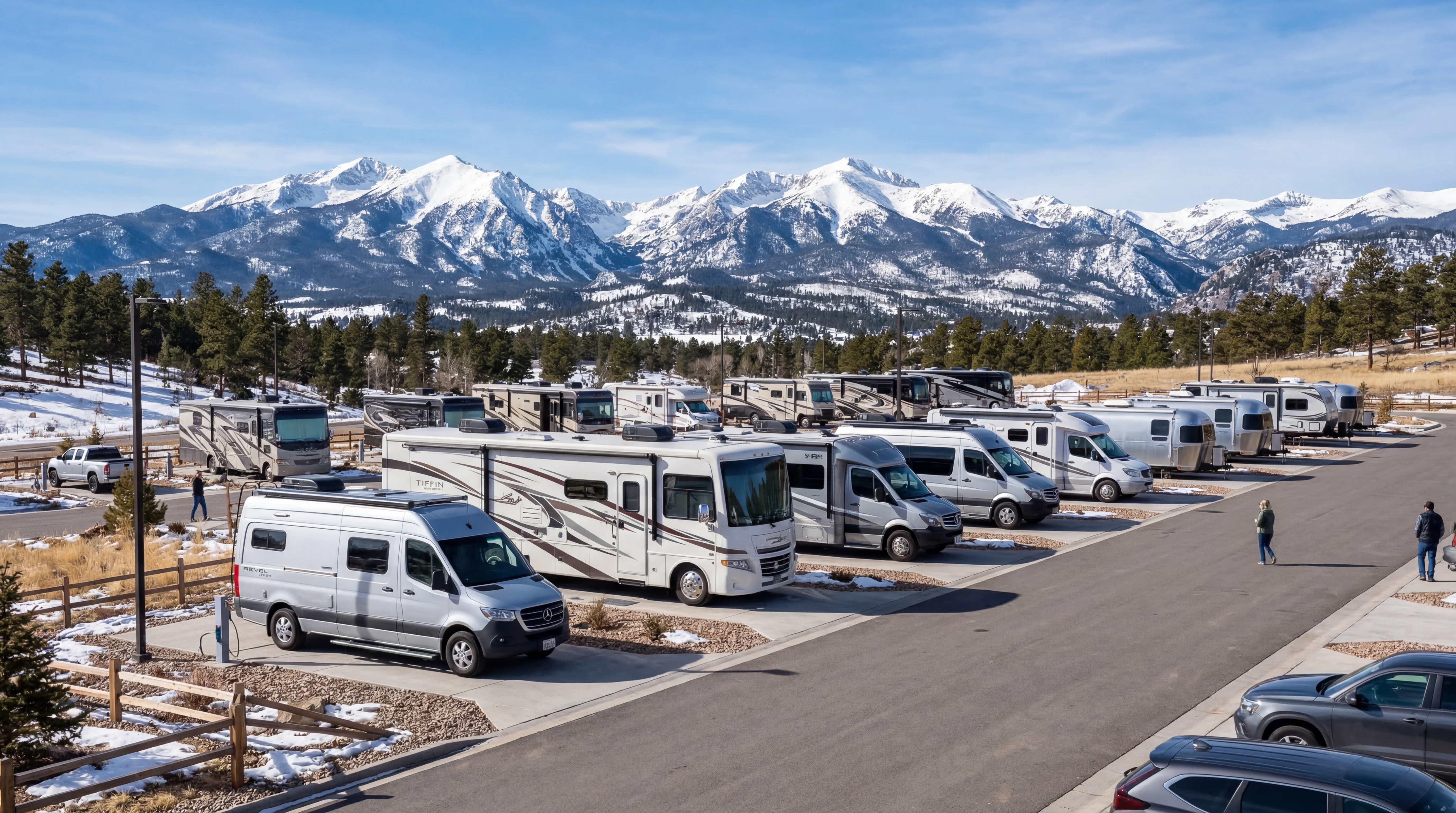
Sample Denver Weeks (Summer Planning Figures)
Class B Sprinter Van:
- Seven nights at $175: $1,225
- Cleaning charge: $75
- Miles: unlimited on this example listing
- Week: $1,300
Class C Thor Four Winds (Family RV):
- Seven nights at $225: $1,575
- Cleaning charge: $100
- Generator: $4 an hour if you use it
- Miles: unlimited on this example listing
- Week: $1,675 before generator hours
Class A Luxury Newmar:
- Seven nights at $350: $2,450
- Cleaning charge: $150
- Rooftop solar, with the generator as backup
- Miles: unlimited on this example listing
- Week: $2,600
Who does best on Outdoorsy here:
- First time renters who want an owner's briefing
- Families comparing floor plans
- Shoppers testing a model before buying one
- Budget travelers comparing owner prices with fleet quotes
- Anyone after something unusual, from vintage trailers to custom vans
What Denver Renters Get on Outdoorsy
A protection plan on every confirmed booking, chosen when you book Roadside help around the clock when you add a protection package Rigs suited to elevation, from nimble camper vans to diesel pushers with engine brakes Owners who live here and know which passes are closed in June A marketplace of 200,000+ vehicles listed in 4,800+ cities across 14 countries
Peer to peer renting, not a rental counter
Browse Outdoorsy's Denver Fleet →
Affiliate link. We may earn a commission if you book, at no extra cost to you.
Check dates, compare rigs, and message an owner before you commit to anything.
Cruise America (Traditional Corporate Option)
Rating: Look up the current Cruise America Trustpilot score before you book
Fleet in Denver: Standardized Class C motorhomes in a few fixed sizes
Price Range: Quoted by date and size on the Cruise America site
Cruise America runs its motorhomes the way a car rental counter runs sedans: one company owns every unit, and each location hands out the same few models.
Pros:
- Same rig at every location
- Straightforward corporate policies
- Two Denver area rental centers, plus Colorado Springs and Fort Collins (per Cruise America's Denver page, October 2026)
- Suits business accounts needing direct billing
Cons:
- Fleet quotes often sit above comparable owner listings, so compare both
- Narrow model selection (three standardized units)
- No owner walkthrough or local knowledge
- Rigid cancellation terms (unhelpful when mountain weather shifts plans)
- Insurance terms vary by chosen plan
Best for: Business trips, renters who want the identical rig every time, and anyone wary of renting from a private owner.
RVshare (Peer to Peer Competitor)
Rating: See RVshare's latest Trustpilot score before committing
Denver listings: A large owner marketplace, so search your dates for live counts
Prices: Set by each owner
RVshare runs on the same peer to peer concept as Outdoorsy, connecting renters with local owners across Denver.
Pros:
- Sizeable Denver marketplace
- Rates that compete on price
- Decent spread of RV types
Cons:
- Coverage details vary by plan (read the fine print before mountain driving)
- Review scores for both platforms change, so compare them side by side
- Owner screening process differs from Outdoorsy's approach
Best for: Price hunters, as long as they read the protection terms line by line.
Why Outdoorsy Stands Out for Denver Rentals
Protection: State minimum liability by default, with $500,000 on the paid Peace of Mind package
Roadside help: Included in whichever protection package you pick
Owners: Locals who know the passes and campgrounds
Reviews: Trustpilot 3.3 out of 5 in September 2026, so read each listing's own reviews too
Local knowledge: A person who drives these roads, not a call script
Mountain driving brings steeper grades, narrower roads and more wildlife than a city trip.
Pick your protection package with that in mind, and read what each level covers before you pay.
Thinking About Buying?
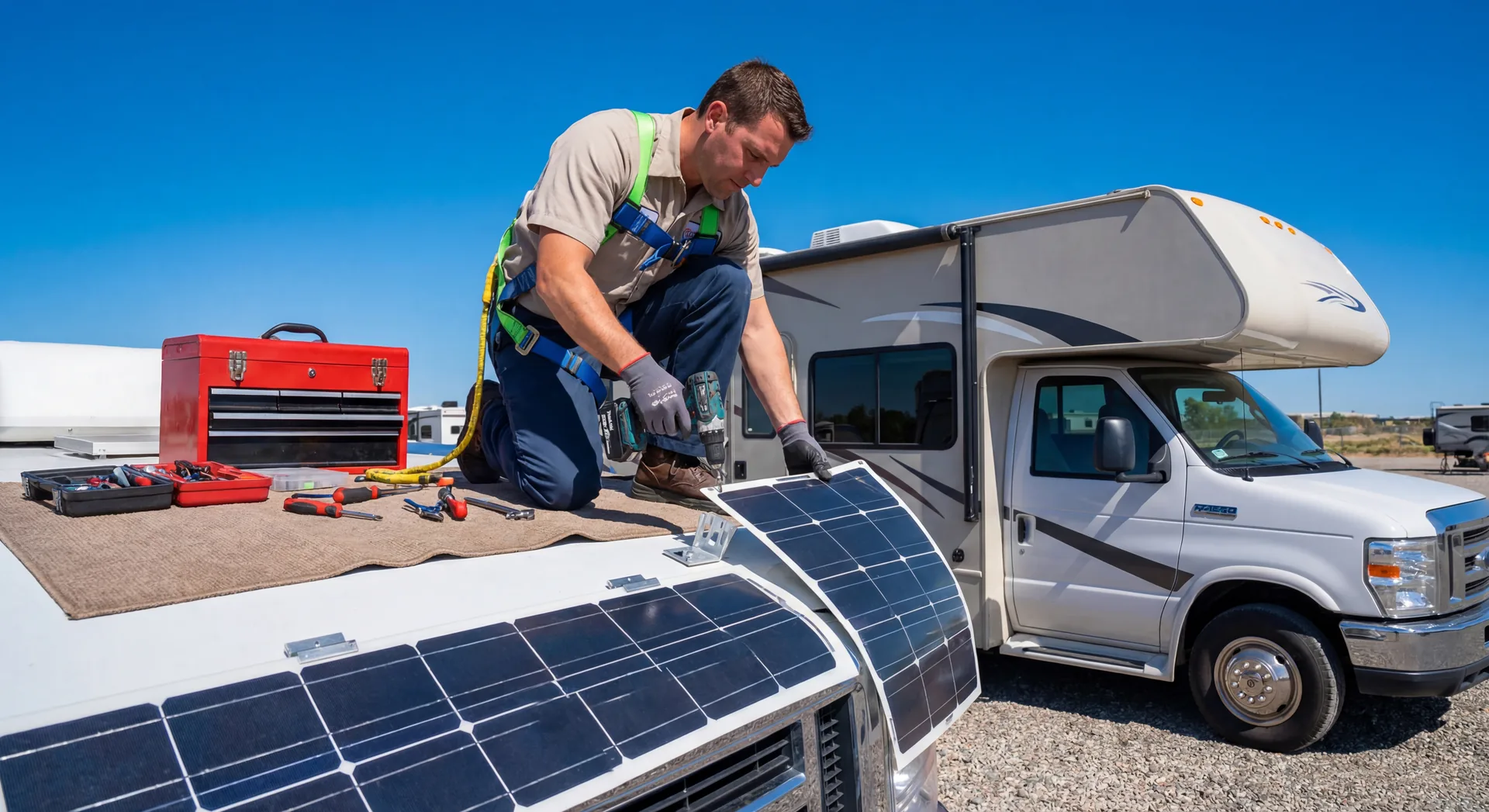
If renting leads to buying, solar is one of the strongest upgrades.
Calculate your power needs and see how much you could save with solar independence.
Free resource
Before booking, read the honest answer on Outdoorsy promo codes and the real ways to bring the total down.
What Does It Really Cost to Rent an RV in Denver?
Here is what a Front Range rental week costs once every fee is counted.
Outdoorsy's own price guide (read August 2026) puts camper vans at $100 to $200 a night, a Class C at $150 to $200 and a Class A at $175 to $275, with trailers from $50.
Summer Nightly Rates Used in This Guide
The Denver figures below are summer planning numbers that sit above those national ranges, so check live listings for your dates.
Class B Camper Vans: $150 to $220/day
Class C Motorhomes: $200 to $300/day
Travel Trailers: $125 to $200/day (trailer only)
Class A Motorhomes: $300 to $500/day
Rates usually ease in the shoulder season (May and September) and drop further from October to April.
Additional Fees to Expect
Cleaning: $75 to $150, charged once
Owners add a single cleaning charge to cover the trail dust and campfire smoke a Colorado week leaves behind.
Generator hours: $3 to $5 each
Running it for air conditioning or charging at a site without power adds up by the hour, and a rig with rooftop solar needs it far less.
Mileage:
Each owner sets the allowance, and some listings come with unlimited miles, which helps on a loop through the Rockies.
Others include a daily allowance and bill each extra mile, so read the listing before you plan a long drive.
Propane: $15 to $30 to refill a tank
It runs the furnace, the stove and the fridge away from shore power, and cold mountain nights burn through it faster than a summer week on the plains.
Dump fees: $10 to $15 at a standalone station
Many Colorado campgrounds include dumping in site fees, so your total dump cost for a week near the Rockies is often zero.
Check local RV service directories for current dump station locations and fees.
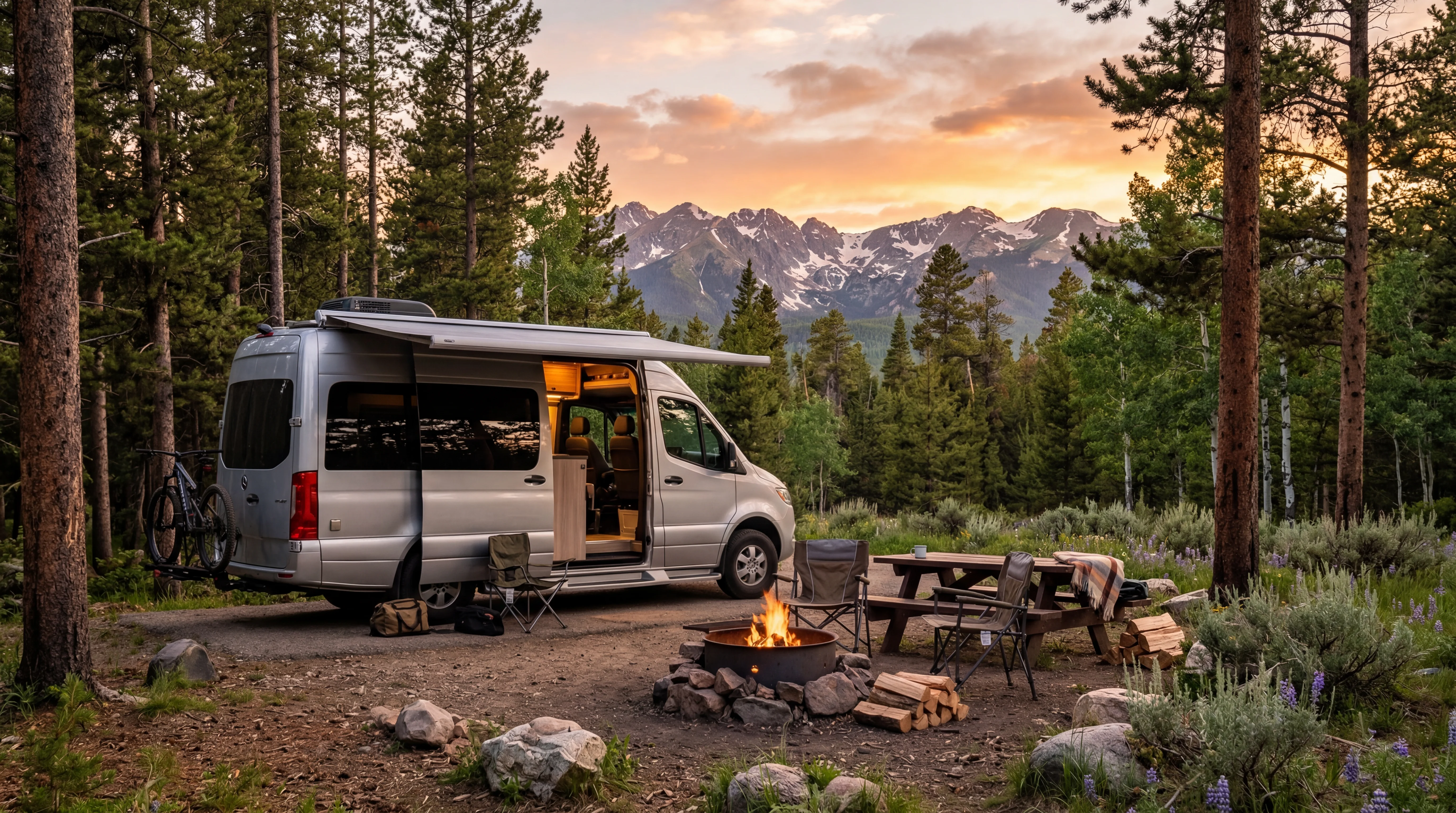
A Family Class C Week, Every Cost Counted
This worked example assumes a mid priced family rig and six paid campsite nights.
Rental: 7 nights at $225 = $1,575
Extras:
- Cleaning charge: $100
- Generator, 20 hours at $4: $80
- Miles: unlimited on this listing
- One propane refill: $25
- Dump fees: none, since the campground includes them
Campsites: 6 nights at $45 = $270
Groceries: 7 days at $80 = $560
Week total: $2,610
Split four ways, that is about $653 each for a week of beds, transport and most meals.
Compare to Alternative Vacations
A hotel stay in Denver locks you into one address, one parking lot, and restaurant prices for every meal.
An RV trip parks you inside Colorado's national parks and state forests, with a full kitchen running on propane and shore power the entire time.
The same family in hotels:
- Six hotel nights at $300: $1,800
- Car hire, 7 days at $75: $525
- Restaurant meals, 7 days at $150: $1,050
- Fuel: $120
- Activities: $400
- Hotel week: $3,895
The RV week comes in $1,285 lower, about a third less.
Compare to RV Ownership
What owning a Class C costs instead:
- Sticker price: $80,000
- Insurance: $1,500 a year
- Storage: $1,200 a year ($100 a month)
- Maintenance: $800 a year
- Depreciation: $6,000 to $8,000 a year over the first five years
First year outlay: $89,500
Each year after, through year five: about $9,500
Where renting and buying cross:
The $80,000 sticker price alone pays for about 31 rental weeks at $2,610.
The yearly running cost of about $9,500 covers roughly 3.6 rental weeks before you count the purchase.
Try before you buy:
The $2,610 week from the worked example above reveals a lot that a showroom floor cannot.
You will find out whether you enjoy the campground setup ritual after a long drive on I 70, whether high altitude reduces your generator's output more than expected, and whether a Class C fits the campground loops at Rocky Mountain National Park or leaves you reversing repeatedly.
Confirm you love the lifestyle at altitude before signing an $80,000 purchase agreement.
Why Renting First Matters in Colorado: Mountain RVing has its own learning curve, and you may discover you prefer a diesel engine for high altitude grades, a smaller rig for tight alpine campground loops, or solar panels over a generator for boondocking above treeline.
A rental week gives you real answers before an $80,000 commitment.
Money Saving Tips for Denver Rentals
Lock In Dates 30+ Days Early: Summer in the Rockies books out fast, and the best rigs go first
Pick Up Mid Week: Weekday starts are often cheaper than Friday pickups, so price both
Favor Listings With Unlimited Miles: A round trip to Rocky Mountain National Park, Breckenridge, and Garden of the Gods racks up miles quickly
Pack Your Own Supplies: Bringing bedding, kitchen gear, and camping chairs trims the add on fees some owners charge
Dump at Your Campground: Colorado mountain campgrounds typically include dumping in the site fee, making standalone dump stations ($10 to $15) unnecessary
Target May and September: Shoulder season usually brings lower rates, with spring wildflowers in May and golden aspens in September
Ask Owners About Week Long Discounts: Many owners discount stays of 7 nights or more
Filter for Solar Panels: Boondocking at high altitude is easier with solar, it cuts or eliminates generator fees ($3 to $5/hour)
Ready to compare prices? Browse Denver RV rentals on Outdoorsy → See live prices from Denver area owners with no commitment to book.
Affiliate link. We may earn a commission if you book, at no extra cost to you.
Best Time to Rent an RV in Denver
Denver's seasons create dramatically different RV experiences.
Pick a season by what matters most to you: weather, crowds, price, or which roads are open.
Peak Season (June to August)
Weather: Perfect.
Sunny days in the low to mid 80s, cool nights (50 to 60°F), minimal rain.
Pros:
- The most settled weather of the year, though mountain afternoons bring frequent thunderstorms
- All mountain passes open
- Full campground services
- Wildflowers peak (July to August)
- Longest daylight hours
Cons:
- Highest rates of the year compared with shoulder season
- Campgrounds booked solid months out
- I 70 weekend traffic challenging
- Popular trails packed
Best for: Families tied to school holidays, and first time renters who want easy conditions
When to book: At least 60 to 90 days out is a sensible starting point.
The National Park Service states that some Rocky Mountain National Park campsites open on recreation.gov 6 months ahead.
Shoulder Season (May, September)
Weather: Excellent. 60 to 70°F days, cool nights (40 to 50°F).
May conditions:
- Lower elevation trails clear, high passes still snow covered
- Fewer crowds, easier campground availability
- Wildflowers starting at lower elevations
September conditions:
- Fall colors peak (aspens golden)
- Comfortable hiking temperatures
- Elk rut season (bugling, active wildlife)
- Significantly fewer crowds
Pros:
- Lower rental rates than summer
- Better campground availability (book 2 to 4 weeks ahead)
- Fewer tourists at popular sites
- Stunning fall colors (September)
Cons:
- Some high mountain passes may close (especially May)
- Cooler nights require better heating
- Shorter daylight hours (September)
- Some campgrounds close after Labor Day
Best for: Couples, retirees, photographers chasing aspens, and anyone with flexible dates and a budget to protect
Off Season (October to April)
Weather: Cold winters with snow. 40 to 50°F days (winter), below freezing nights.
Pros:
- Lowest rental rates of the year
- Plenty of rigs available, often with a week's notice
- Ski resort RV parking opportunities
- Route to Arizona snowbird destinations
Cons:
- Snow and ice on roads
- Most mountain RV campgrounds closed
- Freezing temperatures challenge RV systems
- Limited accessibility
Best for: Ski trips (park at resort), snowbirds heading south, experienced winter RVers, extreme budget focus
Winter RV tips: Ensure RV has adequate insulation, winterized plumbing, and propane heat.
Not recommended for first timers.
Denver Event Calendar (High Demand Dates)
Red Rocks Amphitheatre Concert Season (April to October)
- Book Denver RVs early if attending concerts
- Campgrounds near Morrison fill fast
Great American Beer Festival (October)
- Largest beer festival in U.S.
- Denver metro RVs and campgrounds at capacity
Colorado State Fair (August, Pueblo)
- Regional event increases RV demand
Fourth of July Weekend
- Premium pricing, book 90+ days ahead
- Mountain destinations especially crowded
Know when you want to go? Search Denver RV availability on Outdoorsy → Check dates and compare pricing from local owners.
Affiliate link. We may earn a commission if you book, at no extra cost to you.
Skip the Crowded Campgrounds
Camp overnight at wineries, farms, and breweries instead.
One annual membership opens a network of 9,600+ unique locations across the US, with no nightly fee once you join (verified October 2026).
Affiliate link. We may earn a commission at no extra cost to you.
Find Off Grid Camping Spots
Now that you know your solar setup, discover 30,000+ campgrounds with RV Life Pro.
Filter by boondocking friendly locations and cell coverage.
Affiliate link. We may earn a commission at no extra cost to you.
Must See Destinations from Your Denver RV
The real magic of Denver RV rentals is freedom to explore Colorado's incredible landscapes.
Here's where to go.
Drive times in brackets are rough planning figures from downtown Denver in a motorhome.
Within 100 Miles (Weekend Trips)
Rocky Mountain National Park (1.5 hours)
Why Go: 415 square miles of alpine wilderness, 300+ miles of trails, Trail Ridge Road scenic drive.
RV Campgrounds (length limits according to the National Park Service):
- Moraine Park Campground (244 sites, 40 foot limit)
- Glacier Basin Campground (150 sites, 35 foot limit)
- Aspenglen Campground (52 sites, 30 foot limit)
Reservation Reality: Book 6 months in advance (recreation.gov opens reservations exactly 6 months out at 8am Mountain Time).
Sites disappear within minutes for summer weekends.
Alternative Strategy: Camp in Estes Park (15 minutes from the park entrance as a rough guide) and drive into RMNP daily.
- Estes Park Campground (full hookups, 50A power)
- Spruce Lake RV Park (mountain views, walking distance to town)
RV Size Considerations: The park's own camping page states a 40 foot limit at Moraine Park, but Aspenglen, Glacier Basin and Timber Creek cap rigs at 30 to 35 feet.
Plan accordingly.
Best Experiences:
- Trail Ridge Road (highest continuous paved road in North America, 12,183 feet according to the Park Service)
- Bear Lake area (easy accessible trails, alpine lake views)
- Moraine Park (elk viewing at sunrise/sunset)
- Alpine Visitor Center (above treeline, tundra ecosystem)
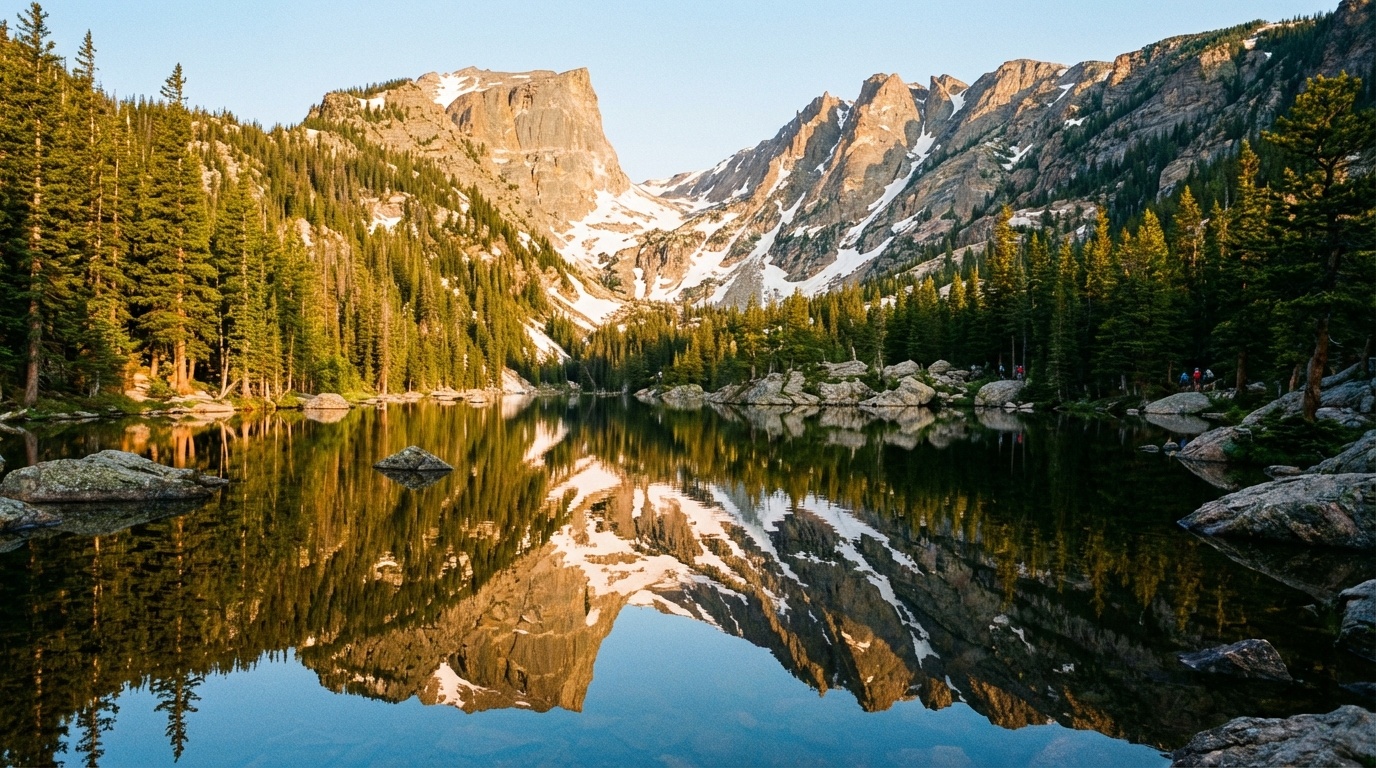
📸 Photo Op: Moraine Park is one of the best spots in RMNP to see elk at sunrise and sunset.
Camp here and you can watch herds graze from your RV window while Longs Peak lights up in the morning sun.
Boulder (30 minutes)
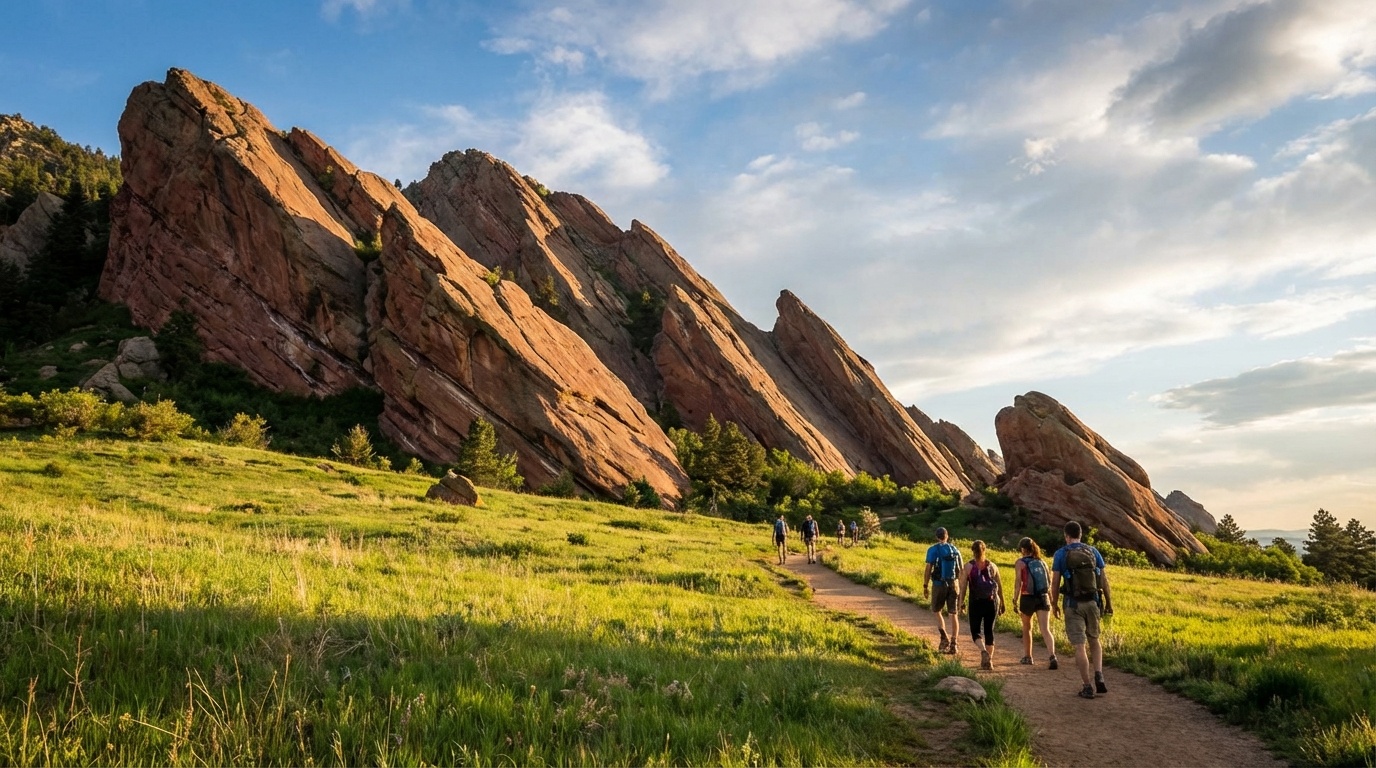
Why Go: Outdoor recreation hub, Flatirons hiking, vibrant downtown, craft breweries.
Treat the half hour drive as a starting point, since US 36 traffic stretches it at rush hour.
RV Campgrounds:
- Boulder County Fairgrounds Campground in Longmont (open year round, water and electric hookups)
- Dakota Ridge RV Park in Golden (full hookups, about 30 minutes from Boulder)
RV Parking Challenge: Downtown Boulder has limited large vehicle parking.
Park RV at campground, use city shuttle or bike to explore.
Best Experiences:
- Flatirons Hiking (iconic formations, moderate to challenging trails)
- Pearl Street Mall (pedestrian shopping, street performers)
- Chautauqua Park (historic, Flatirons access)
- Boulder Creek Path (7+ miles of paved bike path)
Garden of the Gods (Colorado Springs, 1 hour)
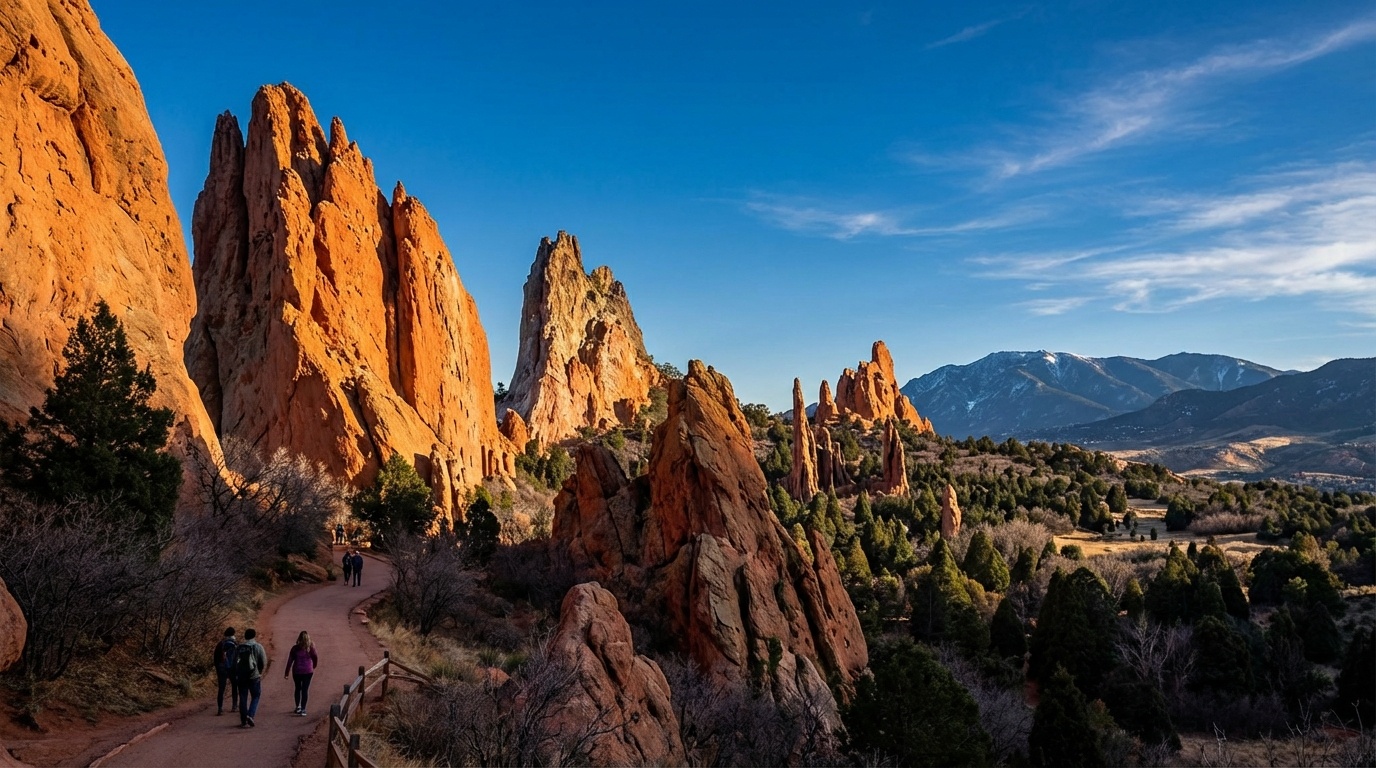
Why Go: Dramatic red rock formations, free admission, easy RV access.
RV Campgrounds:
- Garden of the Gods RV Resort (luxury, pool, full hookups)
- Cheyenne Mountain State Park (campground + trails)
Best Experiences:
- Perkins Central Garden Trail (1 mile paved loop, wheelchair accessible)
- Balanced Rock (iconic photo spot)
- Cathedral Valley (towering rock formations)
RV Advantage: Park has ample RV parking (free), unlike many Colorado attractions.
Planning a Week in the High Country?
Denver listings carry a protection plan on every booking, with state liability limits by default and $500,000 available on the paid Peace of Mind package.
See Denver RVs Available Now(opens in new tab)Affiliate link. We may earn a commission if you book, at no extra cost to you.
150 to 300 Miles (Week Long Adventures)
These distances are rough planning figures for the one way drive from Denver.
Great Sand Dunes National Park (4 hours south)
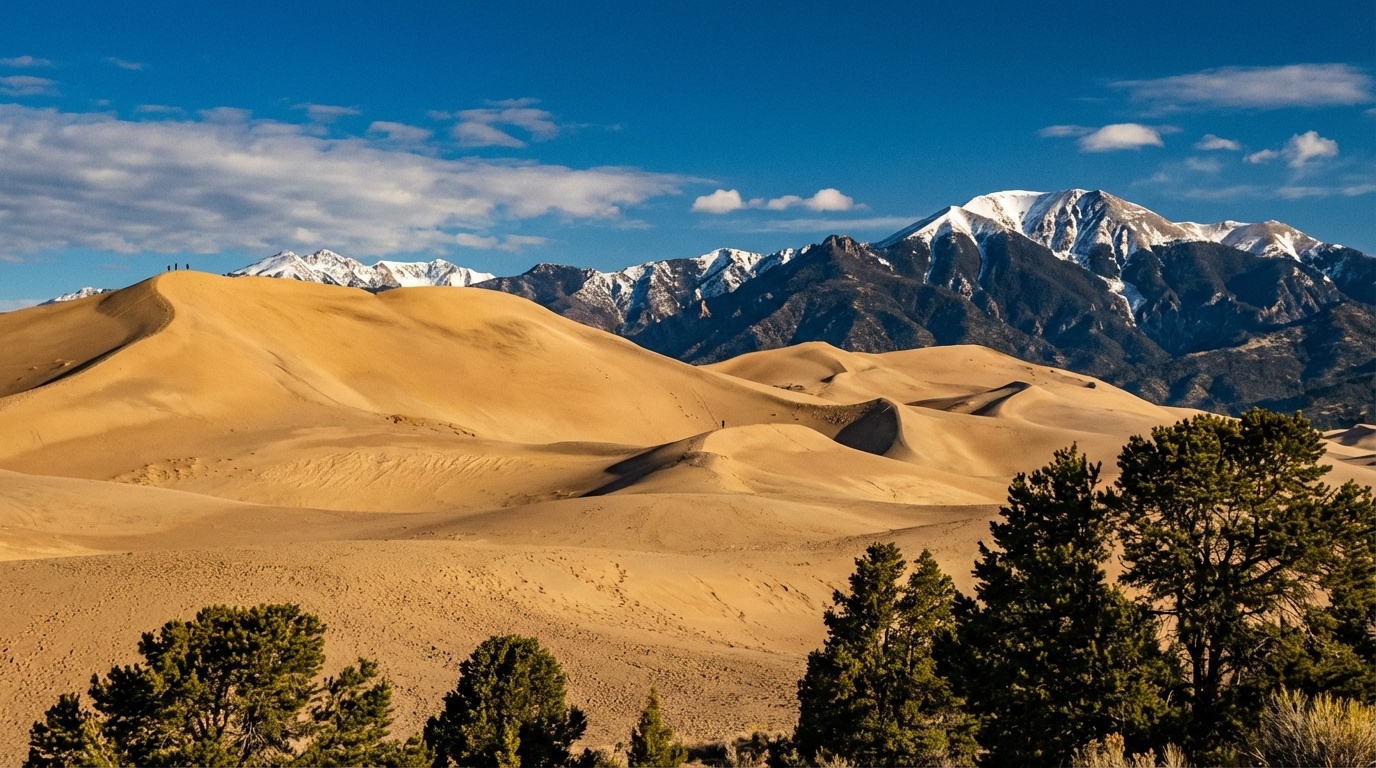
Why Go: Tallest sand dunes in North America (750 feet), unique landscape, sandboarding opportunities.
RV Campgrounds:
- Pinon Flats Campground (88 sites, reservations required, 35 foot limit)
- San Luis Lakes State Park (51 sites, reservable, nearby)
Best Experiences:
- Dunes climbing (no trails, explore anywhere)
- Medano Creek (seasonal stream at dune base, flows May to July)
- Star gazing (designated dark sky park)
RV Warning: Soft sand areas.
Stay on established roads only.
Don't attempt to drive onto dunes (you will get stuck).
Mesa Verde National Park (6 hours southwest)
Why Go: Ancient Puebloan cliff dwellings (600 to 1300 AD), archaeological significance, guided tours.
RV Campgrounds:
- Morefield Campground (267 sites, reservations required, with a 46 foot limit that the Park Service publishes)
Best Experiences:
- Cliff Palace Tour (150 room dwelling, ranger guided)
- Balcony House (ladders and tunnels, adventurous tour)
- Mesa Top Loop Drive (RV friendly scenic drive)
RV Friendly: Mesa Verde accommodates larger RVs more readily than most national parks (40+ feet OK at campground).
Maroon Bells (Aspen, 3.5 hours)
Why Go: Most photographed peaks in Colorado, stunning alpine scenery, luxury town nearby.
The drive time above is a starting point, since summer traffic on I 70 often stretches it.
RV Campgrounds:
- Difficult Campground (47 sites, 35 foot limit)
- Silver Bar, Silver Bell and Silver Queen on Maroon Creek Road (a few reservable sites each, and Silver Bar is walk in tent camping only)
RV Restriction: Maroon Bells Road has vehicle size limits.
As a rough guide, RVs over 25 feet should park in Aspen and take the shuttle to Maroon Bells.
Best Experiences:
- Maroon Lake sunrise (mirror reflection of peaks)
- Crater Lake Trail (3.6 miles, moderate, alpine lake)
- Aspen downtown (upscale dining, shopping)
Black Canyon of the Gunnison (5 hours)
Why Go: Dramatic canyon walls with 2,000 foot drops as a fair ballpark, uncrowded overlooks, stunning vistas.
RV Campgrounds:
- South Rim Campground (88 sites, 35 foot limit on the longest sites)
- North Rim Campground (13 sites, 22 foot limit for the RV and any towed car combined)
The National Park Service reports that the 2025 South Rim Fire left only 25 of those South Rim sites open in 2026, so book early.
Best Experiences:
- South Rim Drive (12 overlooks, paved, RV friendly)
- Painted Wall (tallest cliff in Colorado at 2,250 feet, according to the Park Service)
- Warner Point Trail (1.5 miles, easy, canyon views)
Insider Tip: Black Canyon receives 1/10th the visitors of Rocky Mountain NP but rivals its dramatic scenery.
Perfect escape from summer crowds.
Found Your Denver Itinerary?
Summer weekends in Denver book up well ahead, so choose your dates early rather than settling for what is left.
Check Denver RV Availability(opens in new tab)Affiliate link. We may earn a commission if you book, at no extra cost to you.
Sample Itineraries
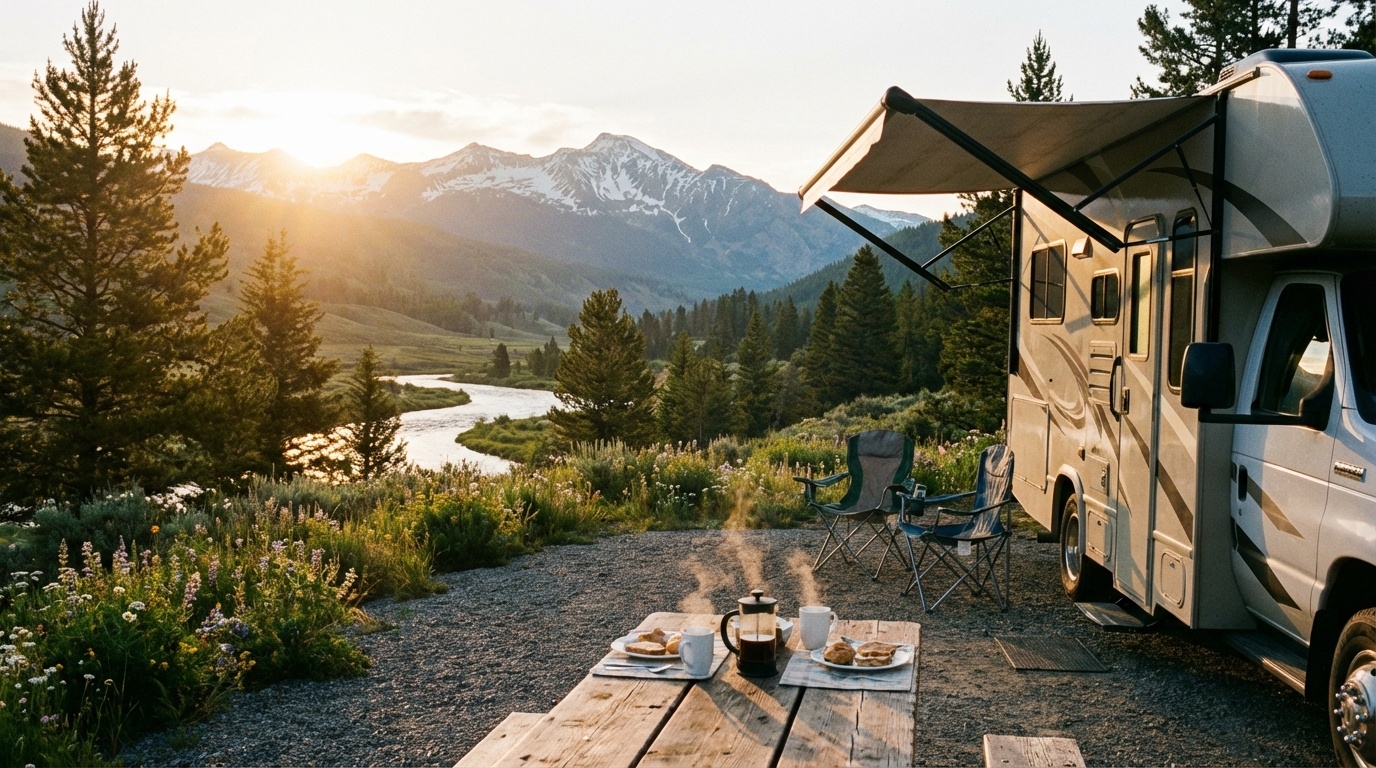
Every drive time below is a rough planning figure for a motorhome, not a car.
3 Day Rocky Mountain Express
Day 1: Your Denver handover takes about 2 hours, so plan a late morning start.
Drive to Estes Park (1.5 hours).
Set up camp at Moraine Park Campground or the Estes Park Campground at Mary's Lake.
Explore downtown Estes Park in the evening.
Day 2: Full day in Rocky Mountain National Park.
Drive Trail Ridge Road (the highest continuous paved road in North America, topping out at 12,183 feet according to the National Park Service).
Hike to Bear Lake, Nymph Lake, and Dream Lake.
Watch for elk in the meadows at sunset.
Day 3: Morning wildlife drive through Horseshoe Park (best elk viewing before 9 AM).
Drive back to Denver via Boulder (1 hour).
Hike the Flatirons trail for Front Range panoramas.
Lunch on Pearl Street.
Hand the keys back that evening.
Miles driven: about 200 | When to go: June to September (Trail Ridge Road open)
5 Day Front Range Explorer
Drive times assume light traffic and a rig that holds the speed limit.
Day 1: Start the trip with the walkthrough in Denver.
Drive to Golden (30 minutes).
Visit Red Rocks Amphitheatre and the Trading Post trail.
Camp at Clear Creek RV Park in Golden.
Evening at one of Golden's craft breweries along the creek.
Day 2: Drive to Estes Park (1.5 hours).
Settle into your site.
Head out in the afternoon for Alberta Falls or Bear Lake.
Evening stroll through downtown Estes Park.
Day 3: Full day in Rocky Mountain National Park.
Trail Ridge Road from east to west.
Stop at Alpine Visitor Center (11,796 feet, per the park's published elevation).
Picnic at Holzwarth Historic Site on the west side.
Return via the same route.
Day 4: Drive to Colorado Springs (2.5 hours as a rough estimate).
Visit Garden of the Gods (free admission, RV parking available).
Drive up Pikes Peak Highway (check height restrictions for your RV) or take the Cog Railway.
Camp at Garden of the Gods RV Resort.
Day 5: Morning at Manitou Springs (cliff dwellings, galleries, mineral springs).
Drive back to Denver (1.5 hours).
Stop at Red Rocks for a sunset walk if time allows.
Drop the rig off before dark.
Miles driven: about 350 | When to go: May to October
7 Day Colorado Grand Loop
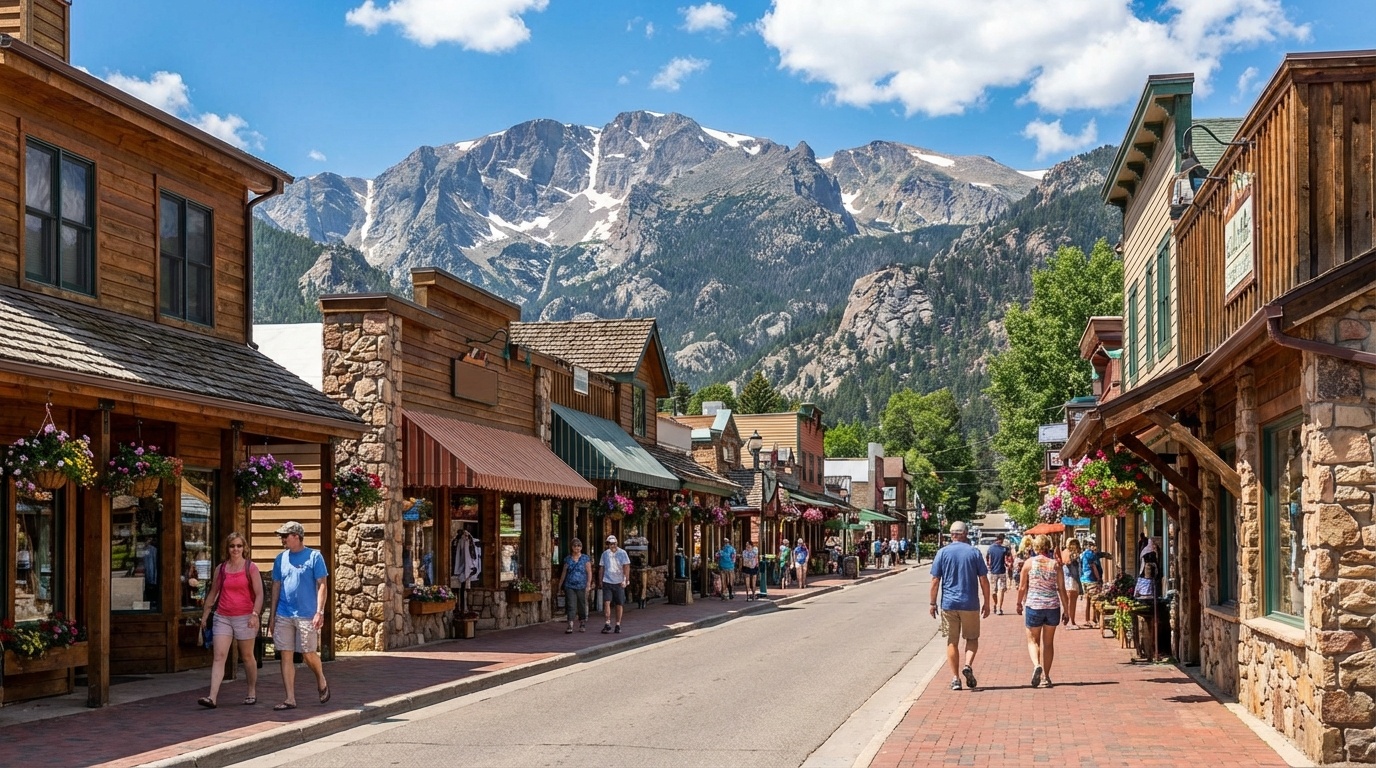
Day 1: Once the Denver handover is done, head for Estes Park (1.5 hours, a rough idea that grows on summer Fridays).
Set up camp.
Explore town and pick up supplies.
Day 2 to 3: Rocky Mountain National Park.
Trail Ridge Road, Bear Lake area trails, Sprague Lake for sunrise photography, wildlife viewing at dusk in Moraine Park.
Day 4: Drive to Boulder (1 hour).
Hike the Flatirons or Royal Arch trail.
Lunch on Pearl Street.
Afternoon at Chautauqua Park.
Camp at Boulder County Fairgrounds RV site or drive to Golden for Clear Creek RV Park.
Day 5: Drive to Colorado Springs (2 hours).
Garden of the Gods morning exploration.
Pikes Peak scenic drive or Cog Railway in the afternoon.
Stay the night at Garden of the Gods RV Resort.
Day 6: Drive back toward Denver.
Stop at Red Rocks Amphitheatre for a morning hike (free daytime access when no events scheduled).
Visit Dinosaur Ridge fossil site (10 minutes from Red Rocks).
Afternoon at a Denver brewery or explore the RiNo Art District.
Day 7: Morning cleanup and RV return to Denver.
Miles driven: about 400 | When to go: June to September (full access to all destinations)
Excited about these destinations? Find your perfect Denver RV on Outdoorsy → Filter by RV type, dates and budget, then message owners directly.
Affiliate link. We may earn a commission if you book, at no extra cost to you.
Denver Events and RV Camping
Denver hosts world class events that draw millions of visitors and spike hotel prices.
An RV turns event season into an affordable, comfortable experience with your own base camp.
Red Rocks Amphitheatre Concerts: April to October
What: One of the most famous outdoor music venues on Earth.
Natural sandstone amphitheatre 15 miles west of Denver hosting 100+ shows per season.
The Problem: Hotel rates in Denver and Morrison jump 30 to 50% on big concert nights.
Traffic on I 70 and Highway 93 gridlocks before and after shows.
The RV Solution: Camp at Dakota Ridge RV Park in Golden (15 minutes from Red Rocks as a rough guide) or Bear Creek Lake Park.
Drive to the venue early, enjoy a tailgate dinner, then walk to your seats.
Tips:
- Book your campground when you buy concert tickets because sites near Red Rocks fill fast on show weekends
- Arrive 2 to 3 hours early to avoid traffic and explore the Trading Post trail
- Morning after, hike the Red Rocks trail for free (open 5 AM to 7 PM when no events are scheduled)
- Some Outdoorsy owners price specifically for Red Rocks weekends
Great American Beer Festival: October
What: The largest ticketed beer festival in the United States.
Hundreds of breweries pour thousands of beers for tens of thousands of attendees at the Colorado Convention Center in downtown Denver.
The Problem: Downtown rooms are gone months in advance, and the few left run $300 to $500 a night during the festival.
The RV Solution: Stay at Cherry Creek State Park, about 20 minutes out, or Denver Meadows RV Park in Aurora.
Ride light rail or a rideshare in for the tastings.
Tips:
- GABF tickets sell out within hours of release. Buy tickets first, then book your RV
- The festival runs Thursday to Saturday. Book your RV for 4 to 5 nights to enjoy Denver breweries outside the festival too
- Early October days reach the 60s and nights drop into the 30s
- Pack warm layers for the campground evenings
National Western Stock Show: January
What: According to its organizers, a 16 day celebration of Western heritage, rodeo, and livestock.
One of the largest events of its kind in the country.
Held at the National Western Complex in north Denver.
The Problem: January hotel rates climb 20 to 30% during Stock Show weekends.
Parking near the complex is expensive and limited.
The RV Solution: Several RV parks in the north Denver area offer Stock Show season rates.
Camp at Denver Meadows RV Park or a nearby facility and shuttle to events.
Tips:
- January in Denver means cold nights (teens and 20s). Make sure your RV has a working furnace and insulated water lines
- Many Outdoorsy owners winterize their RVs and do not rent in January, so selection is smaller. Book early
- Stock Show runs for over two weeks, so pick specific events you want to see and plan around those dates
Denver Broncos Season: September to January
What: NFL home games at Empower Field at Mile High. 76,000+ fans pack the stadium on Sundays.
The Problem: Downtown rooms climb 20 to 40% when the Broncos are home.
Parking near the stadium is $40 to $60.
The RV Solution: Camp at Bear Creek Lake Park or Chatfield State Park and take rideshare to the game.
Tailgate culture in Denver is strong and RV tailgating is a beloved tradition.
Tips:
- Some private lots near the stadium allow RV tailgating on game day for $75 to $150
- September and October games have ideal weather for RV camping
- Late season games (December and January) require cold weather RV preparation
Excited about these events? Find your perfect Denver RV on Outdoorsy → You pick a protection package at checkout, and roadside help comes inside it.
Affiliate link. We may earn a commission if you book, at no extra cost to you.
New to RV rentals? Our checklist for renters who have never done it covers everything from pickup to drop off.
First Timer Tips for Denver RV Rentals
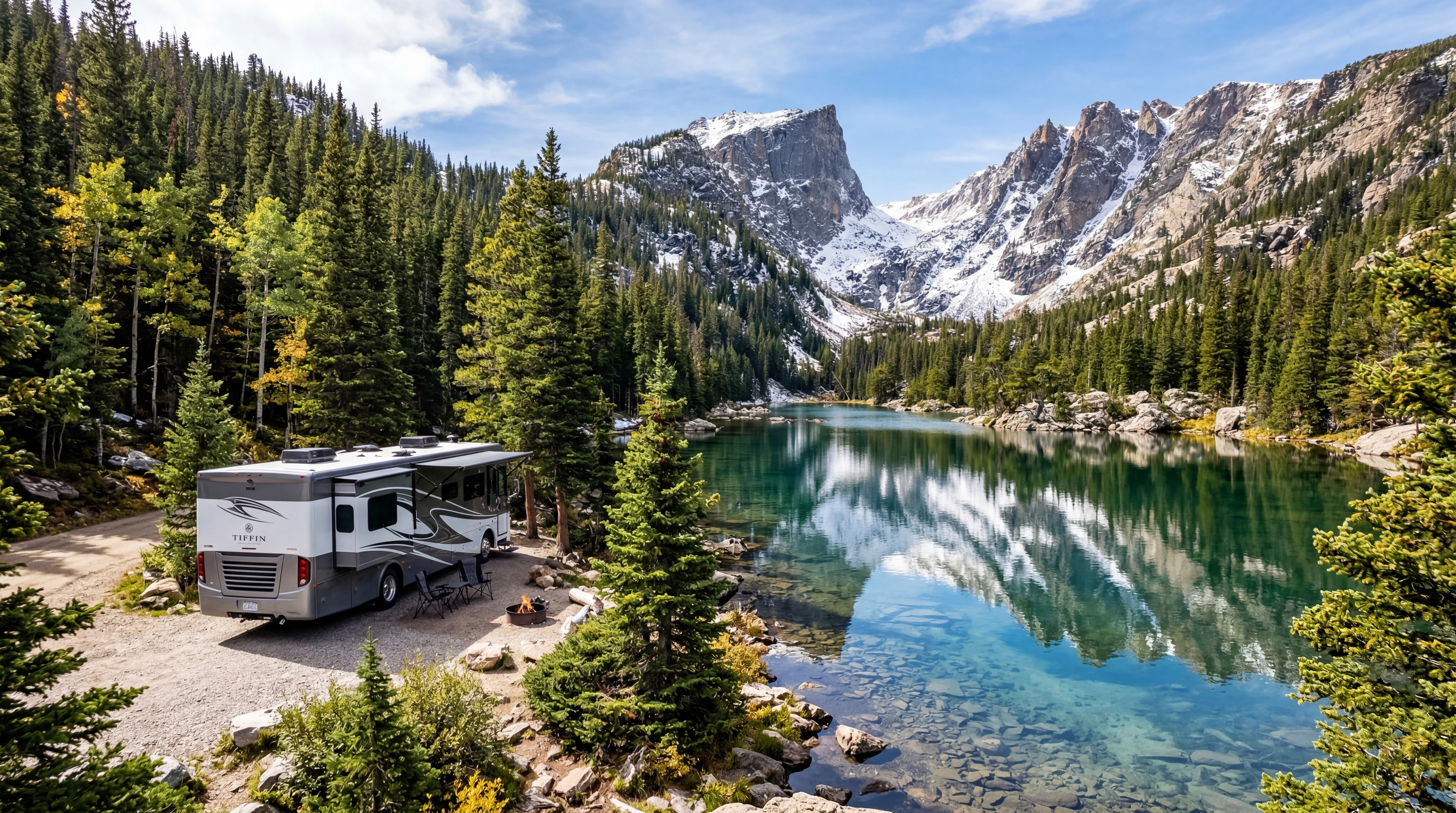
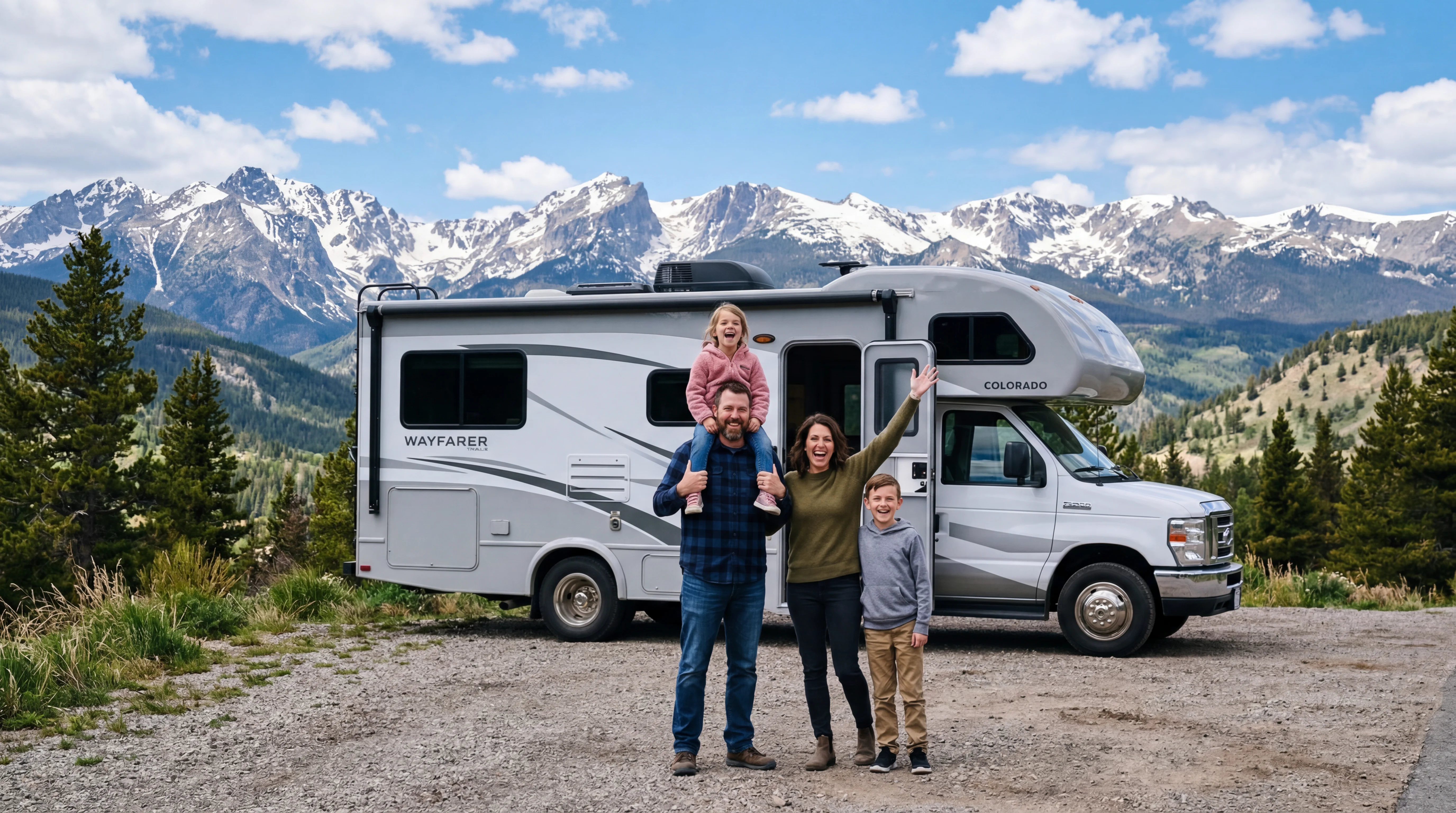
Never driven a rig larger than a minivan?
Denver rewards the first timer: strong RV infrastructure, owners who know the mountain roads, and campground hosts accustomed to coaching newcomers on the Colorado learning curve.
Our first time RV rental tips guide walks through every step from booking to return.
Here is what matters most for a Colorado debut.
Before Pickup
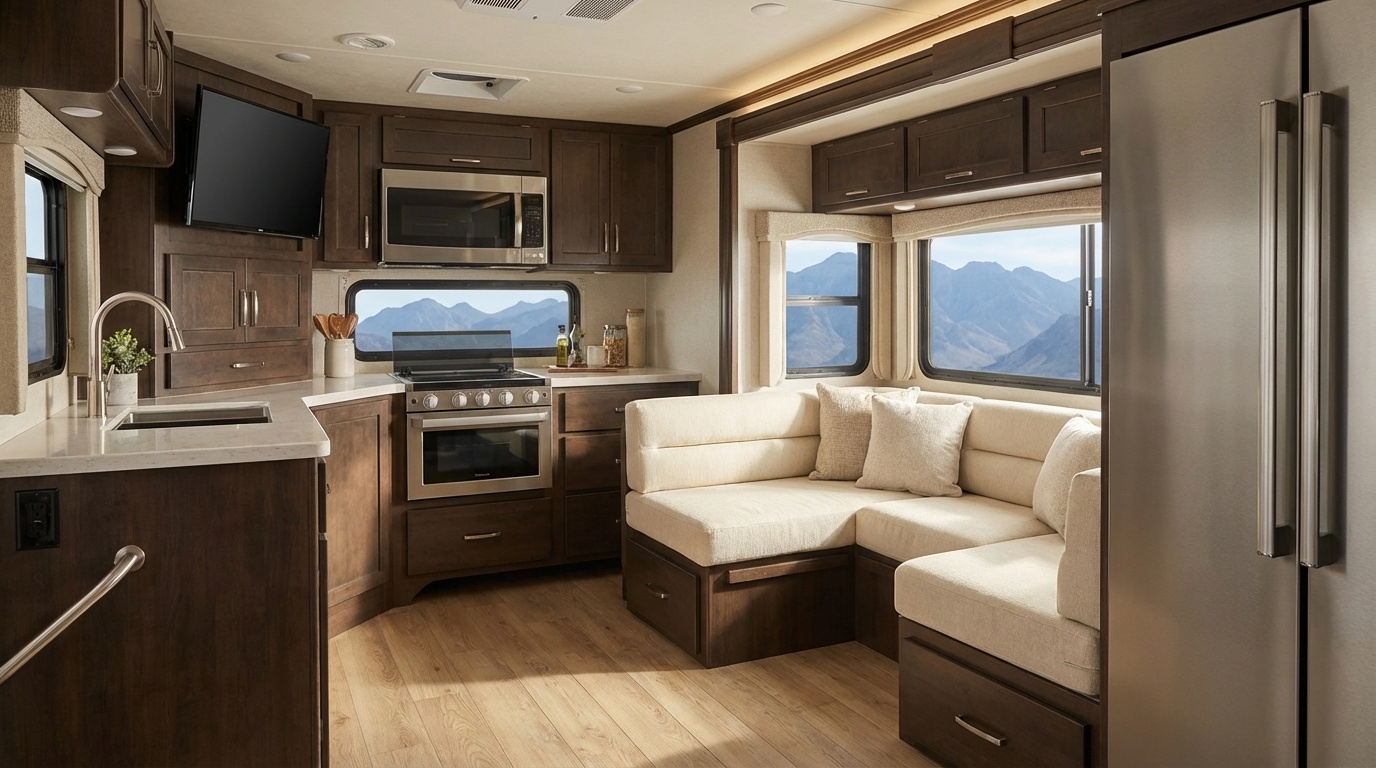
License Requirements:
According to Colorado DMV commercial license guidance, an RV driven for personal use needs no commercial license, even above 26,000 pounds.
Your ordinary license covers every rig on the Denver market, though it is worth asking the owner for a longer practice drive in the heaviest diesel pushers.
Age Requirements:
Plan on being 25 or older, since most Denver listings and fleets set that minimum.
Some accept drivers aged 21 to 24 for an extra daily charge, so confirm before booking, especially if your mountain driving experience is limited.
Insurance Verification:
Call your auto insurer first, because most personal policies cover cars and leave motorhomes out.
Your Outdoorsy protection is picked during checkout: the state minimum liability by default, or $500,000 on the Peace of Mind package.
Security Deposit:
The owner sets the amount, and it is held on your card.
Outdoorsy's help center says the hold is released 7 days after return when there is no damage.
During Pickup (Plan 2 Hours)
Budget a full two hours if this is your first rental, since Denver owners tend to walk through mountain specific habits as well as the basics.
What the walkthrough covers:
- Shore power, and what the 30 amp or 50 amp label on a pedestal means for your rig
- The three tanks: fresh, gray and black, plus how to dump them
- Propane, including the shut off valve and where the detector sits
- Getting level on a sloped alpine site with blocks and jacks
- Slide outs, and the clearance they need before you extend them
- The generator, which you may lean on high up, for example above 9,000 feet
- The awning, and the wind rule that keeps it from tearing
- Furnace and air conditioning, which you may use on the same day here
Questions for the Owner Before You Drive Off:
- Where does the main water valve shut off if a line splits on a frosty night?
- Which leveling blocks and jacks come with the rig, and where is the level?
- How many gallons do the fresh, gray and black tanks hold?
- How many generator hours a day does the owner allow?
- Who do you call first, the owner or the roadside line?
- Does this coach have any habits on long downhill grades?
Practice Lap:
Ask the owner to ride along around the neighborhood before you head for the hills, with 15 minutes as a starting point.
Use it to try:
- Swinging wide on right turns so the rear end clears the curb
- Stopping early, since a loaded coach needs far more distance
- Checking mirrors twice before changing lanes
- Backing into a space with a spotter guiding you
Driving Tips for Colorado Mountains
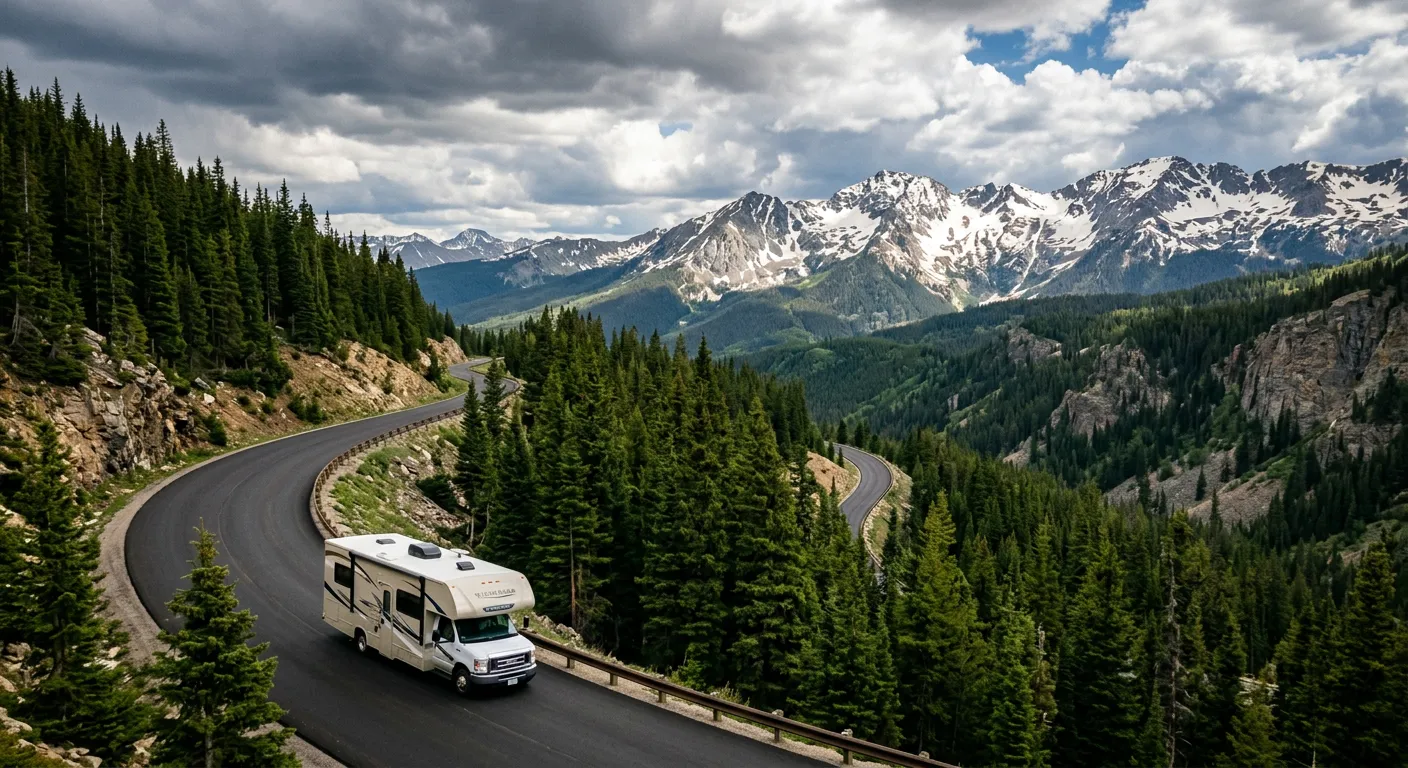
Know Your Height:
As a rough guide, a typical Class C stands 11 to 12 feet, a camper van 9 to 10 feet, and a Class A 12 to 13 feet.
Check the height of your own rig, write it on the dash, then watch for:
- The Eisenhower Tunnel on I 70, which CDOT posts at 13'11"
- Low branches over campground loops
- Older or low fuel canopies, since most clear about 14 feet but not all do
- Drive through lanes, which are best avoided
Mountain Driving:
Ascending steep grades:
- Downshift to prevent transmission strain
- Don't accelerate hard (overheating risk)
- Use turnouts if traffic backs up behind you
Descending steep grades:
- Downshift to use engine braking
- Don't ride brakes (overheating, brake fade)
- Watch for runaway truck ramps (extreme use only)
I 70 Through the Mountains:
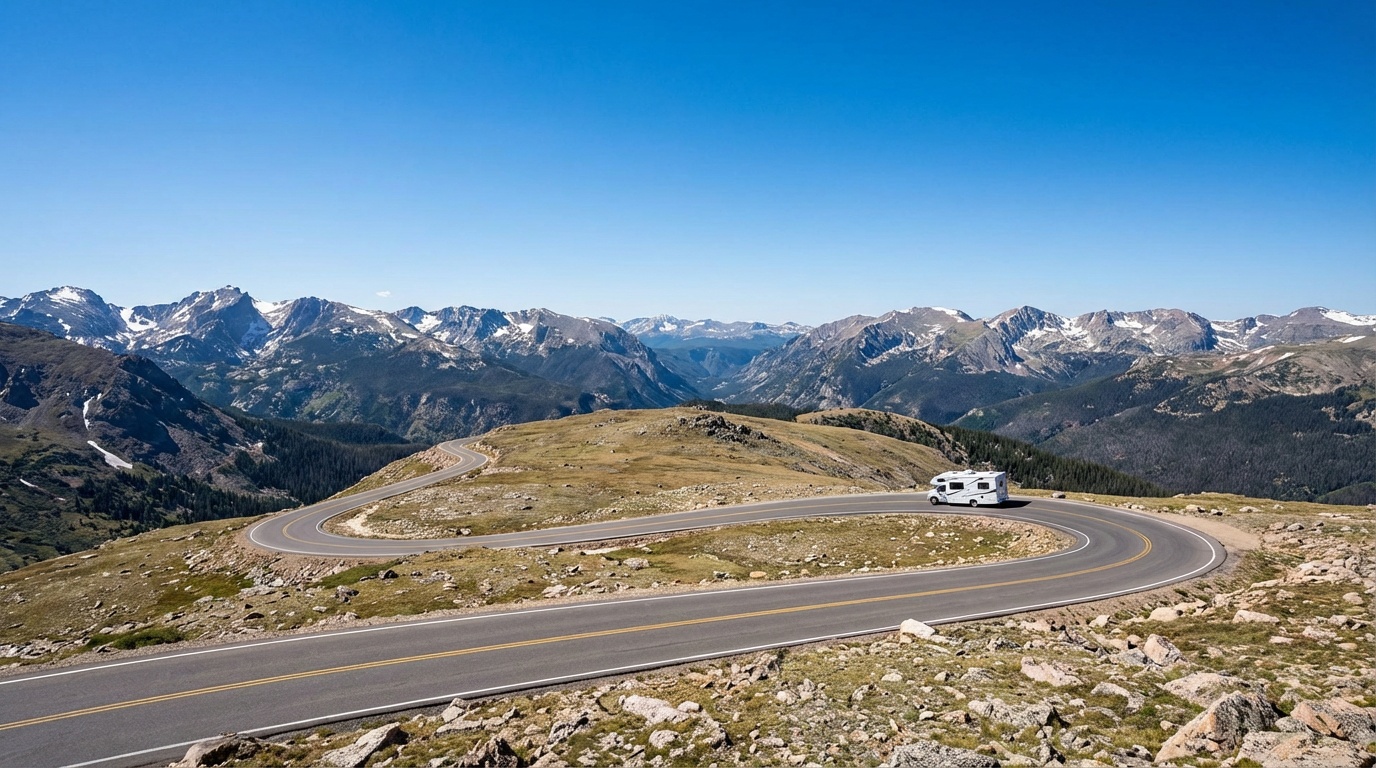
This major route connects Denver to ski resorts and western Colorado.
Challenges:
- Steep grades, which CDOT reports at 6 to 7% on the tunnel approaches
- Eisenhower Tunnel (11,158 feet elevation, according to CDOT)
- Heavy weekend traffic (ski traffic)
Tips:
- Avoid Friday afternoon/Sunday evening (worst traffic)
- Drive Tuesday Thursday if possible
- Start early morning (less traffic, cooler temps)
- Check road conditions before departure (cotrip.org)
Pace:
Most RV drivers settle around 55 to 60 MPH.
Benefits:
- Better fuel economy
- Easier handling
- Safer on mountain roads
- Less wind resistance
Let the 75 MPH traffic pass you, because the right lane is yours.
Parking Strategy:
- Truck stops: Large RV parking areas (Flying J, Pilot, Love's)
- Walmart: Many locations allow overnight RV parking (ask manager first)
- Rest areas: OK for short stops, not overnight camping
- Campgrounds: Full hookups, safest option
Avoid:
- Downtown areas (tight streets, low clearances)
- Shopping center parking (tight turns)
- Residential streets (width restrictions)
Setup at Campground (30 to 45 Minutes First Time)
Those minutes are a rough estimate for a first try, and the routine speeds up by day three.
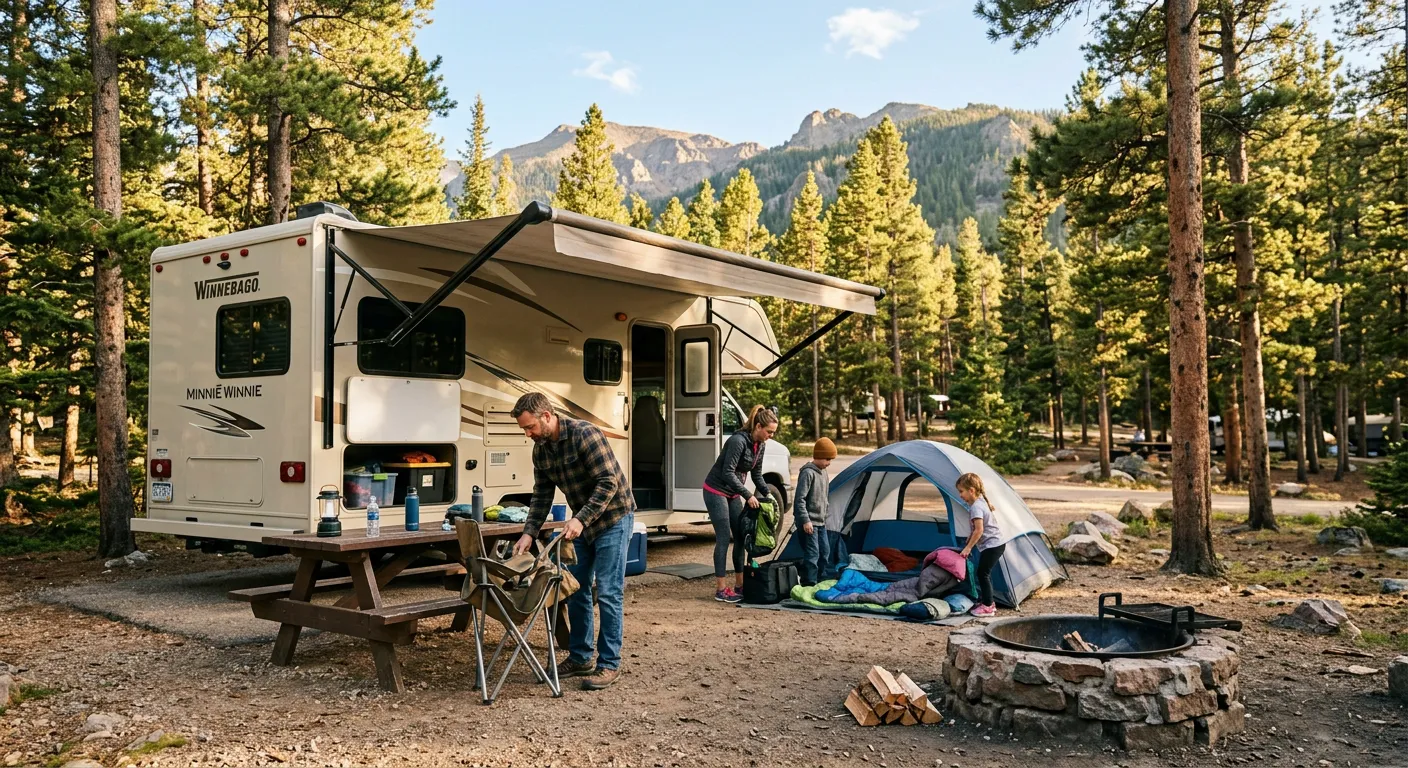
In Order:
-
Get Level
- Use bubble level on dashboard or wall
- Place leveling blocks under low side wheels
- Drive up onto blocks (spotter helpful)
- Deploy stabilizer jacks (not leveling jacks)
-
Connect Shore Power
- Verify campground power (30A or 50A)
- Use adapter if needed (owner provides)
- Plug into pedestal first, then RV
- Check circuit breaker at pedestal
-
Connect Water
- Attach water pressure regulator (owner provides)
- Connect drinking safe hose to faucet
- Turn on water slowly
- Check for leaks at connections
-
Extend Slide Outs
- Ensure clear area around slides
- Extend one at a time (electric switch)
- Don't force if resistance (check for obstruction)
-
Test All Systems
- AC/heat (give AC 5 minutes to start)
- Water pump (turn on, open faucet)
- Refrigerator (switch to propane or electric)
- Hot water heater (wait 30 minutes as a ballpark)
Dumping Tanks (Everyone's Least Favorite Part)
Black water = toilet waste.
Gray water = sinks and shower.
When to Dump:
Don't dump black tank until 2/3 full (need liquid volume to flush solids).
Gray tank can dump anytime.
How to Dump:
- Wear gloves (disposable)
- Connect sewer hose to RV outlet (secure with clamps)
- Place other end in campground dump connection
- Open black tank valve first (let drain completely)
- Open gray tank valve (rinse sewer hose)
- Close both valves
- Disconnect hose, rinse with fresh water
- Store hose in external compartment (never inside RV)
Dumping Locations in Denver:
- Camping World Denver (check for current availability)
- Cherry Creek State Park (fees apply, check current rates)
- Most campgrounds (included in site fee)
Pro Tip: Some owners will empty the tanks for you at return for a fee, so ask what they charge.
First timers often find it worth paying.
Emergency Resources
Roadside Assistance (Inside Your Protection Package):
Phone number provided in rental agreement and app.
The package covers:
- Tire service
- Towing
- Technical help by phone, including generator troubleshooting
Local Denver RV Services:
- Mobile RV repair services operate across the metro, so read recent reviews before you call one
- Camping World Denver (parts, service, propane)
- U Haul locations (propane refills at many metro stores)
Road Conditions:
- COTrip.org (real time I 70 cameras and conditions)
- 511 (dial from any phone for road updates)
Common First Timer Mistakes (Avoid These!)
❌ Rolling out with slides still extended → Structural damage on the first curve
❌ Leaving the antenna or awning deployed → Low clearances at campground entrances will tear them off
❌ Topping off the fresh water tank before a mountain drive → Weight shifts unpredictably on switchbacks
❌ Dumping the black tank at a quarter full → Not enough liquid to flush solids through; sensors give false readings for the rest of the trip
❌ Heading into the high country without checking propane → At altitude, nights turn cold fast and an empty tank means no heat and no cooking
❌ Skipping the walkthrough inspection photos → Document everything before departure so pre existing scratches stay the owner's responsibility
❌ Running the refrigerator on propane while driving through tunnels → Hazmat rules apply at the Eisenhower Tunnel, so shut the propane off and switch the fridge to 12V before you reach it
❌ Overloading for a week long trip → Excess weight stresses brakes and transmission on the downhill grades leaving the Rockies
Ready to book your Denver RV adventure? Browse Denver RVs on Outdoorsy → Protection is picked at checkout with roadside help inside each package, and cancellation terms vary by listing.
Affiliate link. We may earn a commission if you book, at no extra cost to you.
Denver Month by Month Weather Guide
Colorado weather changes fast and varies dramatically by elevation.
What works in Denver at 5,280 feet is completely different from conditions at 11,000 feet in the mountains.
The Denver highs below are a rough guide based on National Weather Service normals, and mountain sites run far colder.
January to February
Average highs 45 to 48 degrees in Denver.
Mountain passes regularly drop below zero at night.
Most campgrounds above 8,000 feet are closed.
Limited RV rental availability because many owners winterize.
Good for: Stock Show visitors, skiing base camp from Denver area RV parks.
March to April
Denver warms to 55 to 65 degrees, a ballpark that one spring storm can undo overnight.
Snow still falls regularly through April.
Mountain roads remain closed.
Trail Ridge Road in Rocky Mountain National Park typically stays closed until late May.
Good for: Early season deals, Denver city exploration, lower elevation hikes.
May
Denver hits 70 to 75 degrees.
Trail Ridge Road usually opens late May (check nps.gov for exact date).
Wildflowers begin in lower elevations.
Some mountain campgrounds start opening mid May.
Good for: Shoulder season pricing, spring wildflowers, fewer crowds than summer.
June
Plan around Denver highs of 80 to 85 degrees as a starting point.
Full access to all mountain destinations.
Afternoon thunderstorms become regular (typically 2 to 4 PM in the mountains).
Wildflowers peak at high elevations.
Good for: Early summer camping, wildflower hikes, long daylight hours.
July to August
Peak season.
Denver hits 85 to 90 degrees.
Mountain temperatures stay pleasant (60s to 70s during the day).
Afternoon thunderstorms are nearly daily in the mountains.
Lightning above treeline is dangerous.
Assume campgrounds need booking 60 to 90 days ahead.
Expect highest rental rates of the year.
Good for: Full mountain access, warm lake swimming, festivals.
September
One of the most pleasant months for Colorado RV camping, with Denver highs near 75 to 80 degrees as a rough figure.
Fall colors begin at high elevations (aspens turn gold from top down).
Crowds thin after Labor Day.
Good for: Golden aspen viewing, comfortable temperatures, fewer crowds, Broncos season starts.
October
Denver averages 65 degrees.
Mountain aspen colors peak early October at lower elevations.
Some mountain campgrounds begin closing mid October.
First significant snowfall often hits the mountains.
Good for: Fall color drives, Great American Beer Festival, shoulder season rates.
November to December
Assume Denver highs drop to 45 to 50 degrees.
Mountain roads may close for winter.
Most campgrounds above 7,000 feet are closed.
Very limited RV rental availability.
Good for: Denver city camping only (Cherry Creek, Chatfield), holiday events.
Colorado RV Regulations and Requirements
Colorado is an RV friendly state with well maintained highways and excellent campground infrastructure.
These are the Colorado rules that affect a rented rig.
Driver's License
Colorado asks for nothing beyond the license already in your wallet when you drive an RV for personal use.
The Colorado DMV lists recreational vehicles among the cases where no commercial license is needed, so a camper van, a Class C or a big diesel pusher all fall under your ordinary license.
Speed Limits
The posted 75 MPH on Colorado interstates is written for cars, and a tall motorhome crossing the Front Range is steadier somewhere in the 55 to 65 range.
On the passes the signs drop to 35 to 55 MPH through the switchbacks, and those numbers assume a vehicle far shorter than yours.
Inside Denver itself expect 30 to 55 MPH, with the lower end on the older grid streets around downtown.
Chain Law and Winter Driving
Colorado's Traction Law and Passenger Vehicle Chain Law cover I 70 in the mountains during winter storms.
Under the Traction Law, AWD and 4WD vehicles with at least 3/16 inch tread comply.
When the Chain Law is in effect, CDOT requires every vehicle, RVs included, to carry chains or an approved traction device.
Check cotrip.org before any mountain drive between October and May.
Overnight Parking
Colorado rest areas do not allow overnight parking or camping.
Use them for short breaks only.
Some Walmart and Cracker Barrel stores let RVs stay overnight, but only with a manager's OK.
For planned overnight stops, book a campground or use apps like iOverlander to find free dispersed camping on BLM and National Forest land.
Denver city ordinances prohibit overnight RV parking on public streets.
Altitude Considerations
Denver sits at 5,280 feet.
Mountain passes reach 11,000+ feet.
As a rough guide, your RV engine loses about 3% power for every 1,000 feet of elevation gain.
Expect slower acceleration and reduced towing capacity at altitude.
Drink extra water during your first 24 to 48 hours.
Altitude sickness symptoms include headaches, fatigue, and shortness of breath.
Propane and Tunnel Restrictions
Hazmat trucks are barred from the Eisenhower Tunnel on I 70 (the highest vehicular tunnel in the United States), so turning your RV propane off before you enter is the safe habit.
Hazmat restrictions apply to several Colorado tunnels.
Check signage at tunnel approaches.
State Park Reservations
Colorado state parks use cpwshop.com for campground reservations.
Reservations open 6 months in advance.
Popular parks like Cherry Creek, Chatfield, and Mueller fill fast for summer weekends.
Rocky Mountain National Park campgrounds use recreation.gov and require separate reservations.
Sites often fill within minutes of becoming available.
Pet Friendly RV Camping Near Denver
Colorado offers excellent options for traveling with dogs, but some parks have important restrictions.
Pet Friendly Campgrounds
Cherry Creek State Park: A 107 acre off leash dog area, plus leashed access at camp and on most trails.
Swimming area for dogs at the reservoir.
Chatfield State Park: Large off leash dog area near the reservoir.
Dogs on leash at campsites.
Excellent for water loving dogs.
Golden Gate Canyon State Park: Dogs on leash allowed on all trails.
Beautiful mountain setting 30 minutes from Golden.
Mueller State Park: Cool summer camping near Colorado Springs, but Colorado Parks and Wildlife allows pets only at campsites, picnic areas and on paved roads.
Dogs are barred from every trail here.
Boyd Lake State Park: Dogs on leash at campsites and trails.
Near Loveland, 1 hour north of Denver.
Important Restriction: Rocky Mountain National Park
Dogs are NOT allowed on trails in Rocky Mountain National Park. This surprises many visitors.
Leashed pets may go only in campgrounds, picnic areas, parking areas and along established roads.
If you are traveling with dogs and want mountain hiking, use Arapaho National Forest or Roosevelt National Forest instead.
Both allow leashed dogs on most trails, and as a rough guide both sit within 30 minutes of RMNP.
Pet Tips for Colorado RV Camping
Altitude Adjustment: Thin air above 8,000 feet tires dogs faster than their owners expect.
Keep the first afternoon at camp low key, and always carry more water than you think you need.
Leash Discipline on the Front Range: Colorado's wildlands are home to bears, mountain lions, moose, and rattlesnakes at lower elevations.
A loose dog on a Rocky Mountain trail is a danger to itself and to the wildlife around it.
Evening Temperature Drops: High country campgrounds can shed, as a ballpark, 30 to 40 degrees between a warm afternoon and a cold clear night.
A dog bed and a dedicated blanket keep your pet comfortable when the temperature plummets after sunset.
Trail Surface Damage: Granite and sandstone trails plus hot summer pavement at lower elevations are hard on paw pads.
For longer mountain hikes, dog boots reduce the risk of cuts and abrasions.
Outdoorsy Pet Policies: Many Denver area listings accept dogs with advance notice, and some add a pet fee.
Confirm the policy with the specific owner before finalizing your booking.
Ready to book your Denver RV adventure? Browse Denver RVs on Outdoorsy → Protection is chosen at checkout, and each package carries roadside help.
Affiliate link. We may earn a commission if you book, at no extra cost to you.
Frequently Asked Questions
How much does it cost to rent an RV in Denver?
Class B camper vans cost $150 to $220/day, Class C motorhomes run $200 to $300/day, travel trailers rent for $125 to $200/day, and Class A motorhomes cost $300 to $500/day.
Total weekly cost for a family Class C averages $2,610 including rental, fees, campgrounds, and groceries, 33% less than comparable hotel vacations.
Can I rent an RV and drive to Rocky Mountain National Park?
Yes.
Plan on about 1.5 hours from Denver to Rocky Mountain National Park as a rough estimate.
Most rental RVs work perfectly for RMNP access.
Check campground size limits, since the Park Service publishes 30 to 35 feet as the maximum at most sites.
Book RMNP campground reservations 6 months ahead, sites fill within minutes of becoming available on recreation.gov.
Do I need a special license to drive an RV in Colorado?
No. Colorado lets you drive an RV for personal use on a regular license, whatever its weight.
Most rental companies require minimum age 25, though some allow 21 to 24 with a young driver surcharge.
What's included in a Denver RV rental?
Every Outdoorsy rental carries a protection plan you pick at booking, with the state minimum liability by default and roadside help inside the package.
Many owners add kitchenware and bedding, and each owner sets the mileage allowance.
Generator use ($3 to $5/hour), cleaning fees ($75 to $150), and propane refills ($15 to $30) are usually extra.
Always verify what's included before booking.
Where can I park an RV overnight in Denver?
Use designated RV parks or campgrounds, for example Cherry Creek or Chatfield State Park, and there are plenty more within 100 miles of Denver.
Many Walmart locations allow overnight RV parking.
Ask the manager first.
Some big box store parking lots allow overnight stays, always check with management first.
Street parking overnight is prohibited by Denver city regulations.
Can I take a rental RV on mountain roads?
Yes, but check RV height for tunnel clearances.
According to CDOT, the Eisenhower Tunnel on I 70 has 13'11" clearance (most RVs fit but it's tight).
Avoid narrow mountain roads with large Class A motorhomes over 35 feet.
Class B vans and smaller Class C motorhomes handle mountain driving best.
What if I have mechanical problems during my rental?
Roadside help comes inside the Outdoorsy protection package you choose during booking.
It covers roadside and technical assistance, towing and tire service, including generator troubleshooting by phone, so check the package limits at checkout.
The owner can also assist with simple issues specific to their RV.
Should I rent from Outdoorsy vs traditional rental companies?
Outdoorsy offers competitive value for many renters: a wide choice of owner listed RVs, protection plans with $500,000 liability available on the Peace of Mind package, roadside help inside each package, and owners who know the local roads.
Traditional companies like Cruise America provide standardized corporate fleet and consistency.
Based on published specifications and user reviews, Outdoorsy offers clear protection tiers, variety, competitive pricing, and personal service.
How far in advance should I book a Denver RV rental?
As a starting point, book 60 to 90 days ahead for summer weekends (June to August peak season).
Popular Class B and C RVs disappear quickly for holiday weekends.
Spring/fall shoulder season allows 2 to 4 week advance booking.
Rocky Mountain National Park campgrounds require separate 6 month advance reservations.
Can I bring my dog on a Denver RV trip?
Yes, many Outdoorsy owners welcome pets with advance notice.
Colorado has excellent dog friendly camping at Cherry Creek State Park and Chatfield State Park, both with dedicated off leash areas.
One important note: Rocky Mountain National Park does not allow dogs on trails.
In RMNP, leashed dogs may go only in campgrounds, picnic areas, parking areas and along roads.
For mountain hiking with dogs, use nearby Arapaho or Roosevelt National Forests instead.
What altitude precautions should I take when RV camping in Colorado?
Denver sits at 5,280 feet, and mountain campgrounds reach 8,000 to 10,000 feet.
Hydrate well for the first two days as a rough guide, since altitude symptoms usually show up early.
Avoid strenuous hikes on your first day at elevation.
Your RV engine loses about 3% power per 1,000 feet of gain, so expect slower acceleration on mountain passes.
Allow extra time for mountain drives and use lower gears on steep grades to prevent brake fade.
Can I test the RV before committing to buy one?
Absolutely.
This is one of the best reasons to rent.
Test different RV types (Class A, B, C, travel trailers) before committing $50,000 to $300,000 to purchase.
Discover if you enjoy setup routines, tank dumping, and campground living.
Renting more than once before you buy helps you pin down the features you cannot do without.
Before You Book in Denver
Class matters at altitude. Underpowered rigs struggle on the passes, so start with choosing an RV class for mountain driving.
Smaller is easier here. Switchbacks above 9,000 feet, for example on Trail Ridge Road, are where a camper van for Colorado beats a 32 foot motorhome.
The real Colorado total. Fuel burn climbs with elevation, so read what a week of RV rental costs before setting a budget.
Hail and gravel. Both are common on the Front Range, and what RV rental insurance covers is worth reading before you decline it.
First rental in the Rockies. Our step by step for a first time renter covers the pickup checks worth slowing down for.
Pack for four seasons in a day. The packing list for a rental rig covers what is not supplied.
Driving one way to Moab. Read how a one way booking is priced before you plan a linear route.
Bringing the total down. The tactics in nine ways to rent cheaper apply directly to Colorado's short peak.
Late September is the sweet spot. Aspens and low rates overlap, which is the pattern in the cheapest months to rent.
Dogs on the trail. Rules differ between National Park and Forest land, so check renting with pets.
A full season in the mountains. Longer bookings change the rate, covered in monthly RV rental.
A milestone trip. Renting a high end motorhome is the option for a group that wants comfort at altitude.
Free nights on public land. Colorado has more of it than almost anywhere, mapped in free camping near you.
No hookups above the treeline. Boondocking explained covers water, power and waste when there are no services.
Arriving after dark. Denver bans street parking overnight, so read where an RV can park legally.
Wineries and farms on the Western Slope. That is exactly what a Harvest Hosts stay is.
Routing over Loveland Pass. Grade and length restrictions apply, which is the case for an RV aware navigation app.
Tunnels on I 70. The Eisenhower has a hard limit, so read how clearance and weight routing works.
Sites that are actually open. Rocky Mountain National Park releases in waves, covered in searching by booking horizon.
Where to point the rig. Our campground picks by region cover the Colorado loop.
A route worth copying. The RV road trip itineraries include a Rockies week.
Working from a campsite. Canyon walls kill coverage, so read the internet options for an RV.
Membership networks out west. Compared in the best RV membership programs.
Booking through Outdoorsy. Our Outdoorsy walkthrough covers deposits, verification and support.
Outdoorsy or RVshare. The two platforms compared shows where each one wins.
Every option in one table. The rental website comparison includes the Colorado regional fleets.
Owners near the airport. Renting close to where you land covers DIA pickup logistics.
One figure for the trip. The cost calculator for a mountain trip folds fuel, fees and campgrounds together.
The whole plan in order. Our guide to planning an RV trip sets what to book first.
Every summer in the mountains. Renting against buying does the maths on a yearly trip.
Sleeping at altitude. Thin rental mattresses show, and the mattress guide covers the upgrades.
Resort or campground. RV parks compared with campgrounds explains what each gives you.
Signal in the canyons. A signal booster for an RV is worth the space it takes.
Where a booster cannot help. The San Juans and much of Rocky Mountain National Park have no coverage at all, so maps that keep working offline matter here.
Choosing the planning app. Colorado's grades and mountain passes are exactly what apps ranked on mountain routing are tested on.
Finding a site above the treeline. Colorado's best sites go early, and a campground database you can filter by rig length saves the drive.
Hosts across the state. Front Range wineries and Western Slope farms are listed in the Colorado host guide.
Whether the membership pays. Whether the nights add up depends on the nights you actually use.
Power at altitude. Cold clear air suits panels, which is covered in panels compared on published output.
Cold nights and charge. How altitude and cold affect a bank explains what a Colorado night costs a bank.
Terms on a listing. Anything unfamiliar is defined in the RV terminology explainer.
Storing between ski and summer. Our directory of storage facilities covers the Front Range.
Turning up at a host. Colorado hosts expect the same courtesies as anywhere, set out in what good guests do at a host.
Planning around the grades. Mountain days cover far less ground, which planning a route around the grades allows for.
Mountain water. Filling from a mountain spigot is not the same as a city tap, so the filter options for an RV is worth reading.
Start Your Denver RV Adventure Today
You've seen the numbers: about $1,285 saved against hotels, a wide choice of owner listed RVs, and Rocky Mountain National Park just 1.5 hours away.
Remember the $3,000 hotel plan?
Swap it for a $2,340 week, the rough planning total from our cost section, with the Divide outside the window, breakfast cooked in your own galley, and a campsite inside Rocky Mountain National Park instead of a parking garage view.
Try Before You Buy
If you're considering RV ownership, renting in Denver first saves you from a $50,000 to $300,000 mistake.
Test mountain driving with a Class C motorhome.
Experience the daily setup and breakdown routine.
Learn what RV size actually fits your family's needs.
Discover if you enjoy campground culture.
All for about $2,600 instead of an $80,000 commitment.
Summer Season Books Fast
Between June and September, assume the best Denver rigs are booked 60 to 90 days out.
Camper vans and family sized Class C coaches go first, especially around holiday weekends and major events.
Rocky Mountain National Park campgrounds require separate reservations exactly 6 months ahead (sites vanish within minutes of becoming available).
Plan ahead for peak season.
Book Your Denver RV Adventure Now
Owner listed rigs chosen and maintained by people who drive Colorado roads A protection plan on every booking, with $500,000 liability on the Peace of Mind package Roadside help inside the protection package you select Pass by pass advice from the owner who handed you the keys A low risk way to find out whether mountain RV travel suits you
See What Is Available for Your Dates
Search Denver RV Rentals on Outdoorsy →
Affiliate link. We may earn a commission if you book, at no extra cost to you.
Compare what a rental costs per night, read what previous renters wrote, and ask an owner anything before you decide. Looking costs nothing.
Plan Your Denver RV Adventure
Route planning: An RV aware GPS app routes around the grades and switchbacks a car map ignores over the Colorado passes, and lists campgrounds along the way.
Camping past the hookups? Much of the best camping in Colorado has no power post.
The RV solar power guide explains what an off grid setup needs, and the solar panel calculator sizes one for your rig.
Love the Pacific Northwest? Olympic rainforests, Mount Rainier and orca watching off the San Juan Islands fill our Seattle RV rental guide.
Want Southwest desert adventures? Sedona, the Grand Canyon and snowbird season are all in the Phoenix RV rental guide.
Heading to the California coast? PCH drives and Joshua Tree trips start from the best RV rentals in Los Angeles.
Calculate your costs: Our free calculator for a Colorado rental budget adds mileage, protection and campsite fees into one figure.
New to RV renting? Our RV rentals guide covers the basics, and our guide to renting an RV near you walks through pickup options for RVs in Denver and the Rocky Mountains.
Next Steps
1. Search Outdoorsy Denver Fleet
Narrow the results by:
- Your exact dates
- Class, from camper van to trailer
- Nightly budget
- Extras such as solar, dogs allowed or delivery
2. Read Owner Reviews
Good signs:
- Ratings near the top of the scale
- A long run of completed trips
- Plenty of clear photos
- Reviews from the past few months
3. Message Owners with Questions
Ask about:
- How do they handle first timers heading into the Rockies?
- How many miles a day are included, if the listing caps them?
- What campgrounds and mountain roads do they recommend for renters with this specific rig?
- Do they walk through setup at pickup, and can they advise on altitude and propane use?
- How flexible are they on pickup and return times given mountain traffic on I 70?
4. Book Your Adventure
Reserve your dates and check the payment schedule shown at checkout.
Outdoorsy's help center states that if you book more than 30 days out, you pay half now and the rest 30 days before the trip.
Inside 30 days you pay in full (read August 2026).
5. Reserve RMNP Camping
If visiting Rocky Mountain National Park, book campground separately on recreation.gov exactly 6 months before your trip at 8am Mountain Time.
6. Plan Your Itinerary
Use this guide to map your route, select campgrounds, and identify must see destinations.
Ready to explore Colorado in an RV?
Your adventure starts with the right rental from the right platform.
Browse Outdoorsy's Denver fleet today and find the perfect RV for your Rocky Mountain escape.
Last reviewed October 2026. Business names, campground details and Outdoorsy policies were rechecked against official sources, and nightly rates are planning figures.
Images are illustrations created for this guide, not photographs supplied by Outdoorsy hosts or the National Park Service.
Plan Your Denver Trip Smarter
Plenty of Front Range rigs move only a few weekends each summer, exactly when visitors are hunting for one. List yours on Outdoorsy and let Rocky Mountain travelers cover its keep the rest of the time.
See the income a Colorado motorhome brings in over a summer, broken out by RV type and location.
Before you head for the high country, estimate your full Denver trip cost with the RV rental cost calculator, then find out what RV rental insurance protects on mountain roads.
Ready to make RVing your own? After you own an RV, you can book one of a kind overnight stays with Harvest Hosts at farms and wineries across Colorado.
Planning a longer loop north? Our guides to RV rentals near Grand Teton and Bozeman RV rentals cover the classic route through Wyoming into Montana.
Heading west across the Rockies instead? Our guide to Salt Lake City RV rentals covers the next leg into Utah canyon country.
Continue Exploring
Rental Budget Calculator
Work out the true cost of your dates and mileage
Comparing Outdoorsy And RVshare
Fees, cover and choice on each platform
Solar Gear For High Altitude Camping
Panel picks for thin air and strong mountain sun
Rental Websites Ranked
How the main booking sites stack up
Local RVs Available Nearby
Owners renting within driving distance
Renting An RV For The First Time
The checks that save a first trip
Cut The Cost Of An Outdoorsy Booking
Where the savings actually sit on Outdoorsy
RV Rental Cost Breakdown
What to budget for a Colorado RV trip
Insurance For A Rented RV
What the policy includes and what it leaves out
RV Classes Explained
Choose the right RV type for your Denver adventure
Class B RV Rental
What a camper van costs and whether it suits your trip
More RV Rental Guides
See all RV rental guides in our index of cities, costs and pickup tips.