📋 What you'll discover
- Winterize your RV properly with our step by step guide
- Prevent costly damage during storage season
- Track completion of all critical preparation tasks
- Get expert tips for long term RV storage
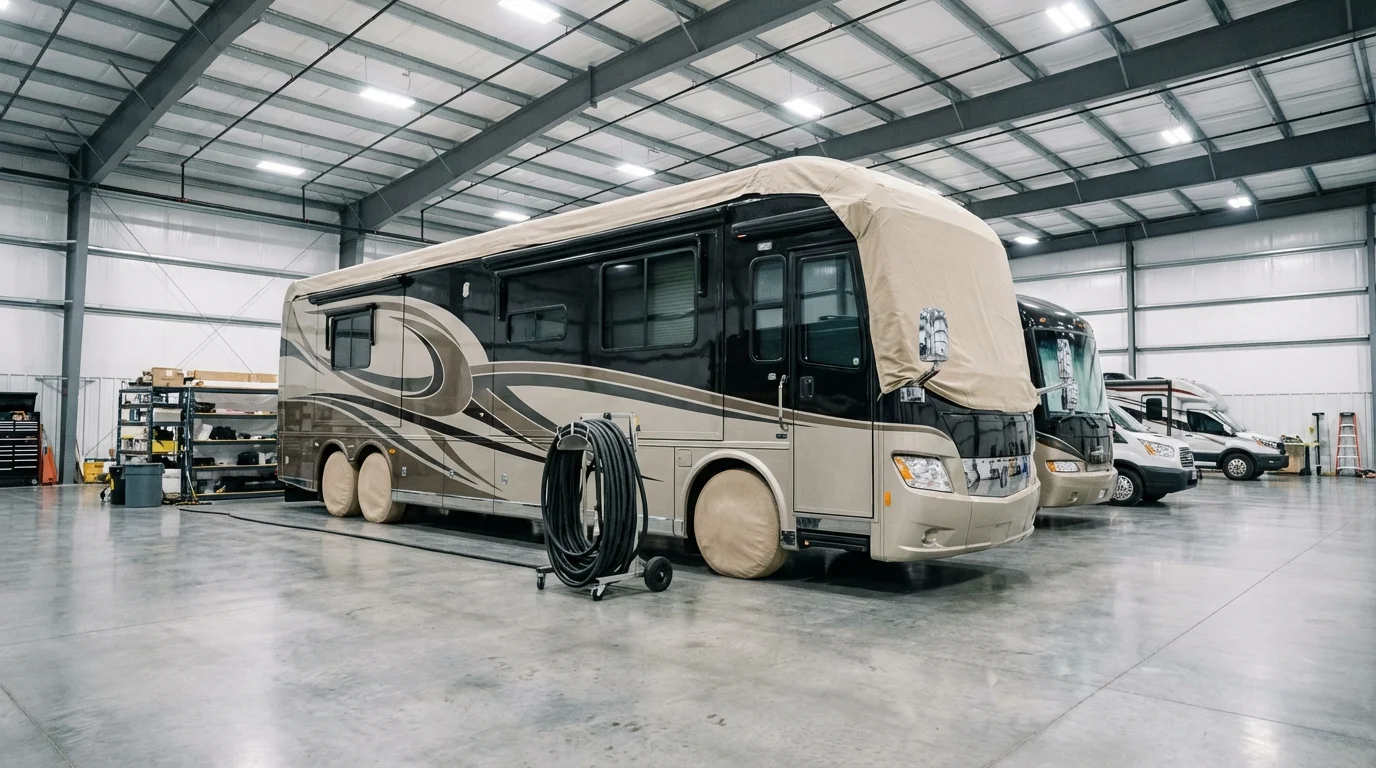
RV Storage Preparation Checklist That Prevents Frozen Pipe Repairs
Protect your investment with our comprehensive winterization and storage guide
Affiliate Disclosure
This page contains affiliate links.
When you purchase through these links, we may earn a commission at no additional cost to you.
This helps support our free calculators, guides, and research tools. Read our full disclosure
Storage Preparation Checklist
RV INFORMATION
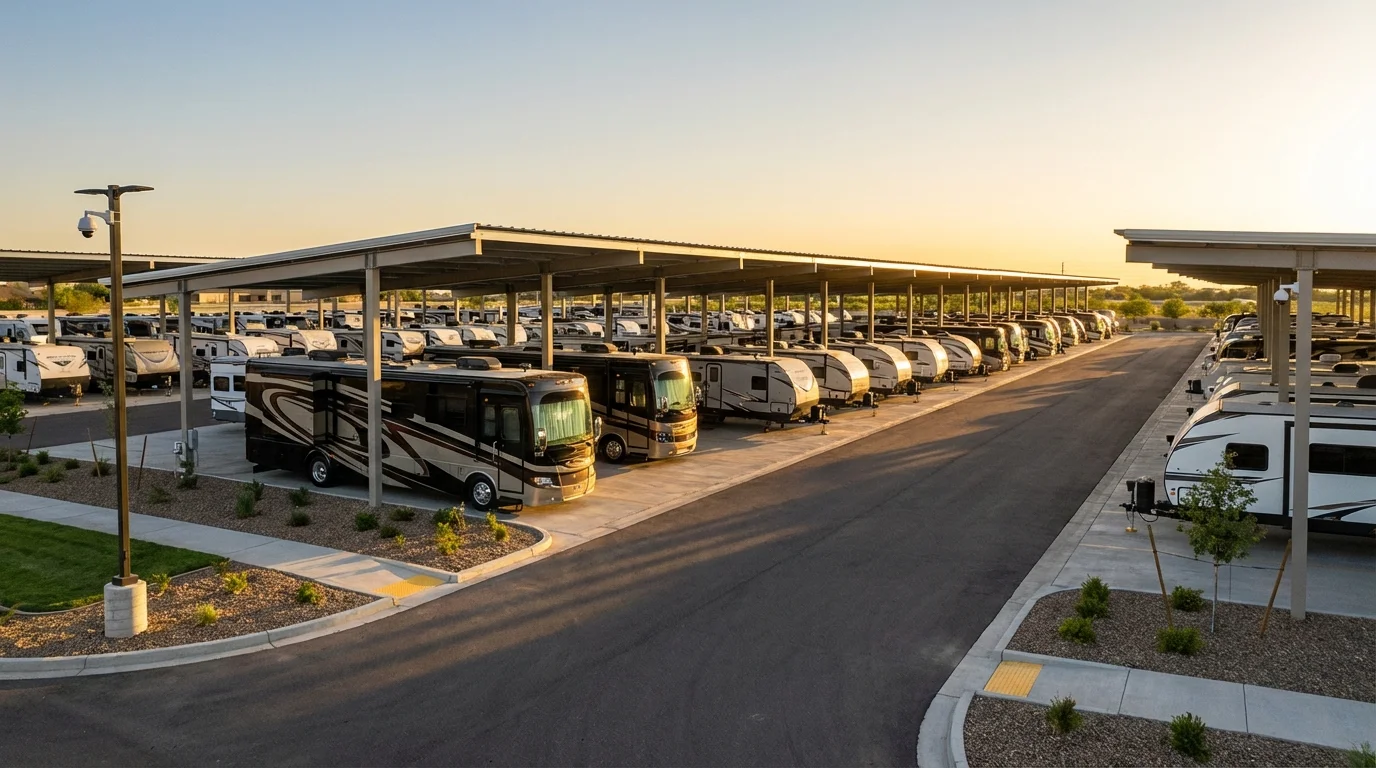
Professional Storage & Preparation Services
Expert services and quality products to properly prepare and store your RV for any season.
Plan Your Next Season
While your RV is stored, map next season's routes and track maintenance schedules with RV Life Pro, which offers a 7 day free trial.
Details verified May 2026.
- • Trip Planning Wizard
- • Maintenance Tracking
- • RV Safe GPS Routing
- • 7 Day Free Trial
Affiliate link. We may earn a commission at no extra cost to you.
Winterization & Water Systems
Complete water system protection, winterization supplies, and storage preparation products.
- • Winterization Kits
- • System Protection
- • Quality Products
- • Expert Guidance
Affiliate link. We may earn a commission at no extra cost to you.
This section contains affiliate links. We may earn a commission at no extra cost to you.
Winterization Essentials: What the Checklist Covers
The single biggest cause of expensive RV repairs after storage is frozen plumbing.
Water left in pipes, tanks, or the water heater expands when it freezes and can crack fittings, split hoses, or rupture tanks.
Proper winterization prevents all of this.
Plumbing Protection
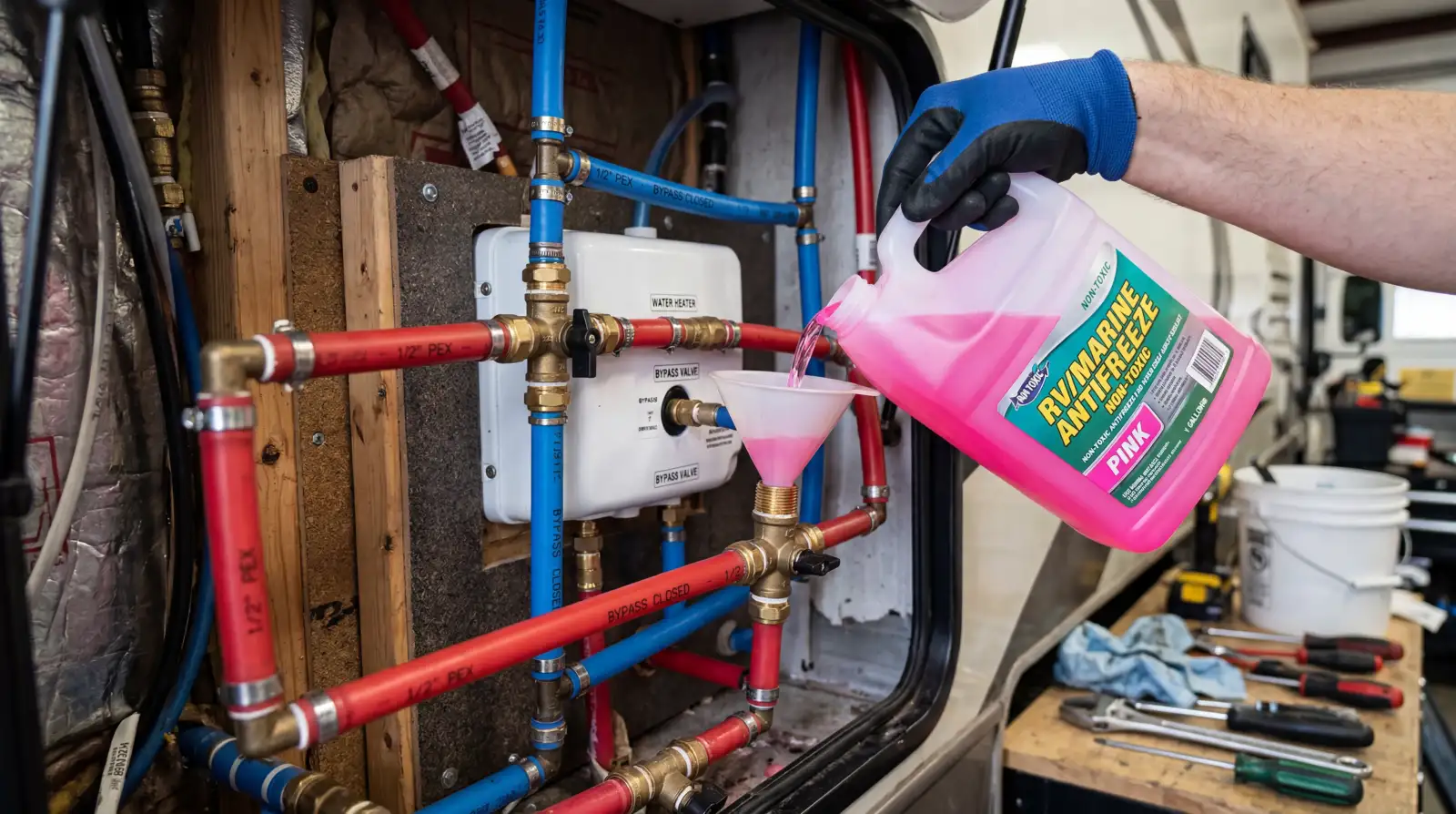
Drain the fresh water tank, hot water heater (after turning it off and letting it cool), and all low point drains. Then pump non toxic RV antifreeze through every faucet, shower, and toilet until you see pink fluid.
Don't forget the outdoor shower and ice maker lines.
Affiliate Disclosure
This page contains affiliate links.
When you purchase through these links, we may earn a commission at no additional cost to you.
This helps support our free calculators, guides, and research tools. Read our full disclosure
Battery Care
Fully charge all batteries before storage. Disconnect the negative terminal to prevent parasitic drain.
For lithium batteries, store at 50 to 80% state of charge per manufacturer guidelines.
Lead acid batteries should be on a float charger if shore power is available at your storage location.
Our battery care rundown for rigs that sit unused covers storage best practices for every battery type.
Storage is a common time to discover a battery bank is past its best. If yours will not hold charge, replacing it before spring beats discovering the problem at the first campsite.
Every job on this checklist belongs on a reminder. Our guide to scheduling those jobs automatically shows how to set that up once and stop relying on memory.
For the water system side, our cold weather prep list for plumbing and tanks walks the antifreeze sequence check by check.
Rated Excellent on Trustpilot, fast US shipping
Trust signals verified May 2026.
Shop Matched RV Solar KitsAffiliate link. We may earn a commission at no extra cost to you.
Rodent Prevention
Seal every opening larger than a pencil eraser with steel wool or copper mesh. Cover exhaust pipes, furnace vents, and fridge vents with mesh screens.
Place dryer sheets or peppermint oil sachets in cabinets and storage bays. Check monthly if your storage facility allows access.
Tire and Suspension
Inflate tires to the maximum pressure listed on the sidewall to reduce flat spotting during storage.
If storing for more than three months, consider using tire covers to block UV damage and placing the RV on jack stands to take weight off the tires and suspension.
Common Storage Mistakes to Avoid
Leaving food inside. Even sealed packages attract rodents.
Remove everything edible, including pet food, spices, and that emergency can of soup in the pantry.
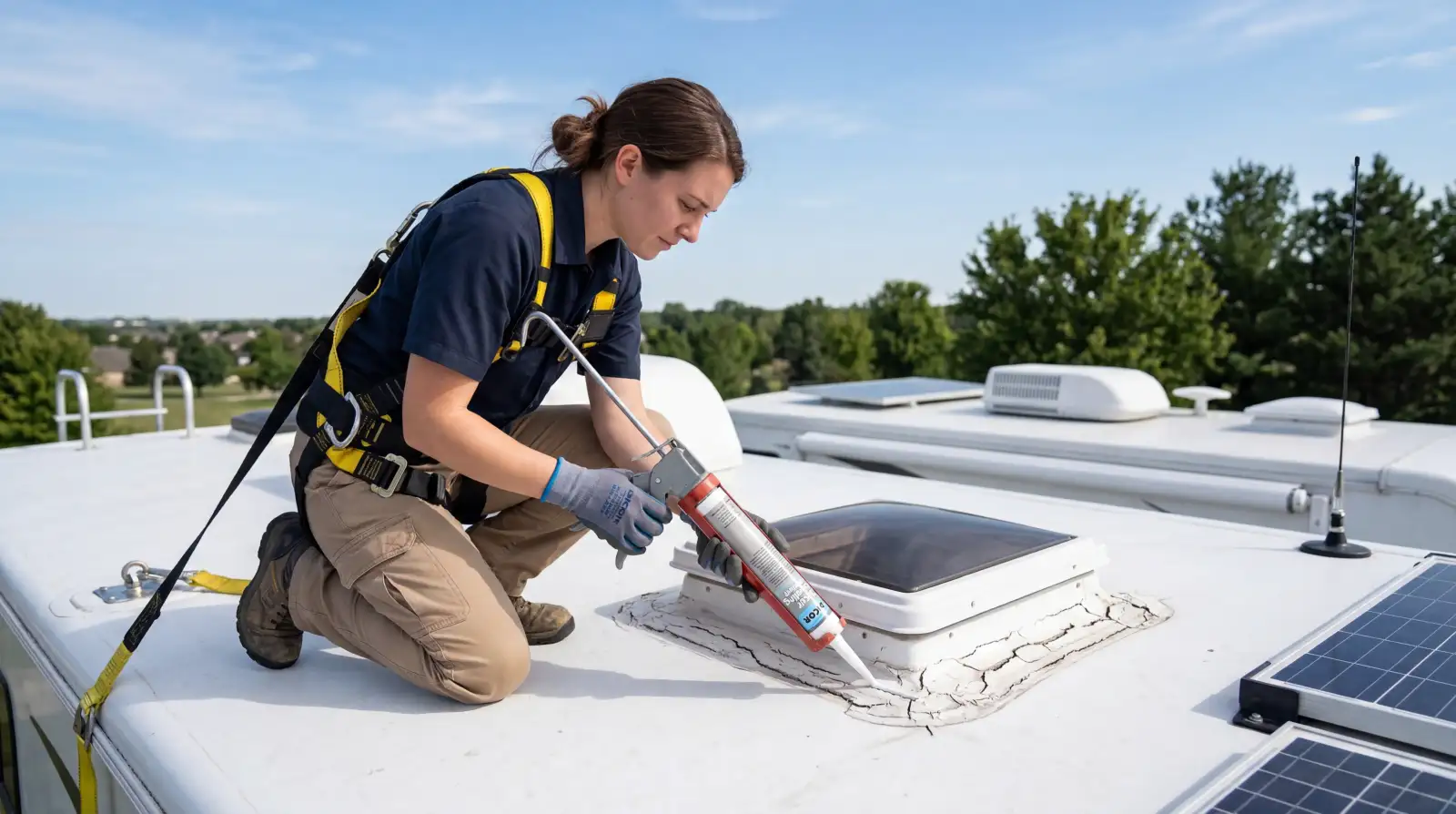
Skipping the roof inspection. A small crack in a roof sealant joint lets in moisture all winter.
Inspect and reseal any suspicious spots before covering up.
Closing all vents and windows. Your RV needs minimal air circulation to prevent mold growth.
Leave a roof vent cracked with a rain cover, or use moisture absorber products inside.
Forgetting insurance adjustments. Many insurers offer reduced premiums for stored RVs.
Contact your provider to switch to a storage policy and save money during months you are not traveling. While your RV sits, consider renting your RV out between trips to offset storage costs.
Before You Store It, Run the Numbers on Renting It Out
Storage costs money every month while your RV sits idle. Listing it on Outdoorsy can turn those idle months into rental income instead.
You set your own availability, so you can still store the RV for the deep winter and rent it out during shoulder season.
See What Your RV Could EarnAffiliate link. We may earn a commission if you list, at no extra cost to you.