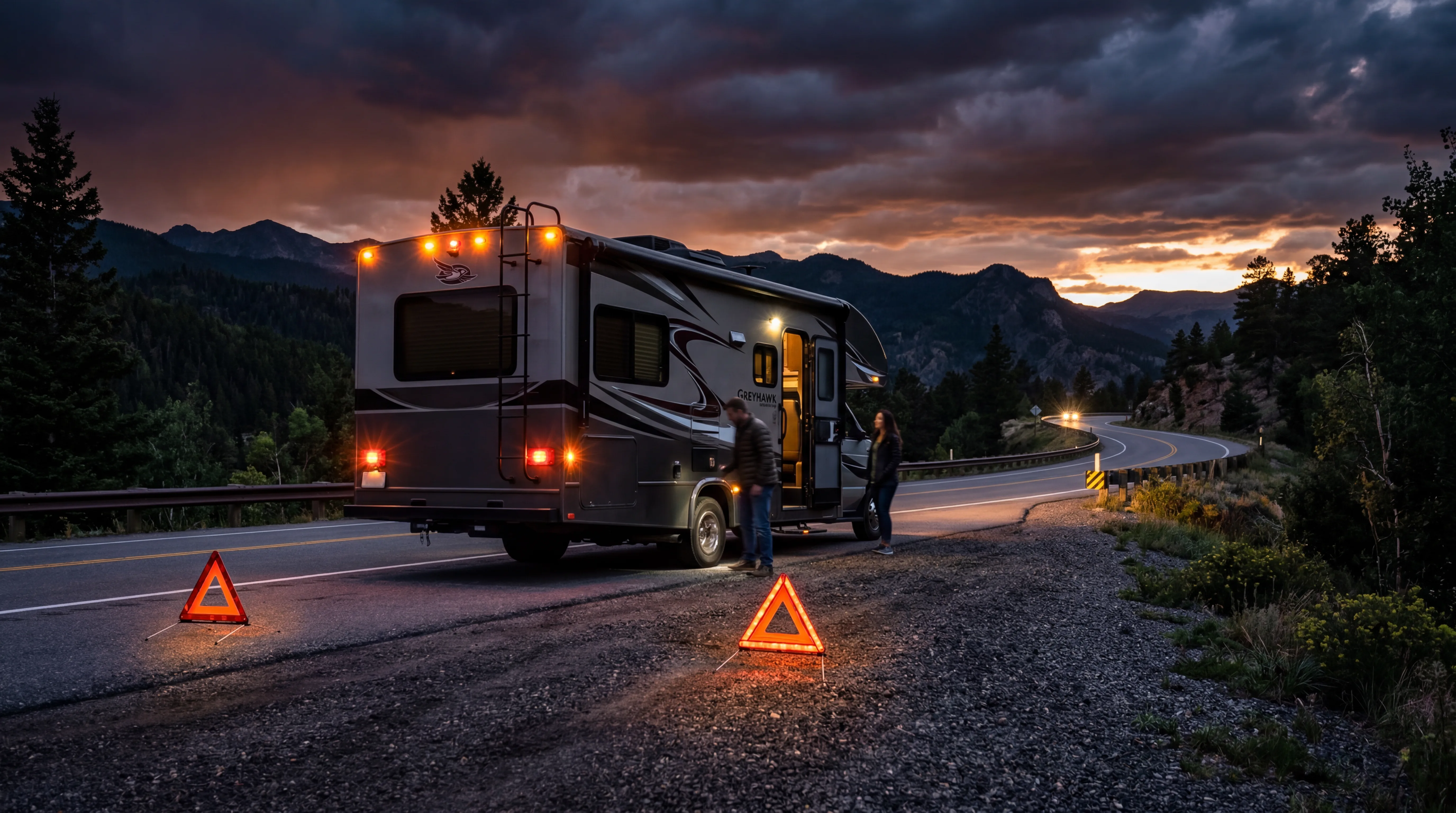
RV Emergency Center: Be Ready When the Road Turns Rough
Emergency preparedness resources, roadside services, and safety equipment for every Smart RV adventure.
Stay safe with verified contacts, breakdown checklists, and gear recommendations from experienced RVers.
📋 What you'll discover
- Find emergency contacts and resources when you need them most
- Get step by step guidance for common RV emergencies
- Access 24/7 roadside assistance and professional emergency services
- Prepare with essential safety equipment and emergency kit checklists
Emergency Contacts
- 911 - Serious or life threatening emergencies
- Good Sam: 1-877-475-4968
- Coach-Net: 1-800-264-2387
- FMCA: 1-800-543-3622
- Verify all numbers before relying on them in an emergency.
Quick Fixes
- Check circuit breakers first
- Verify propane tank levels
- Check water pump switch
- Reset GFI outlets
Emergency Apps
- Download Red Cross Emergency
- Install weather radar app
- Have offline maps ready
- Keep phone charged
RV Emergency Kit Essentials
First Aid
- First aid kit
- Medications
- Emergency contacts
Tools
- Basic toolkit
- Duct tape
- Flashlight
Water & Food
- 3 days water
- Non perishables
- Can opener
Safety
- Fire extinguisher
- Smoke detector
- CO detector
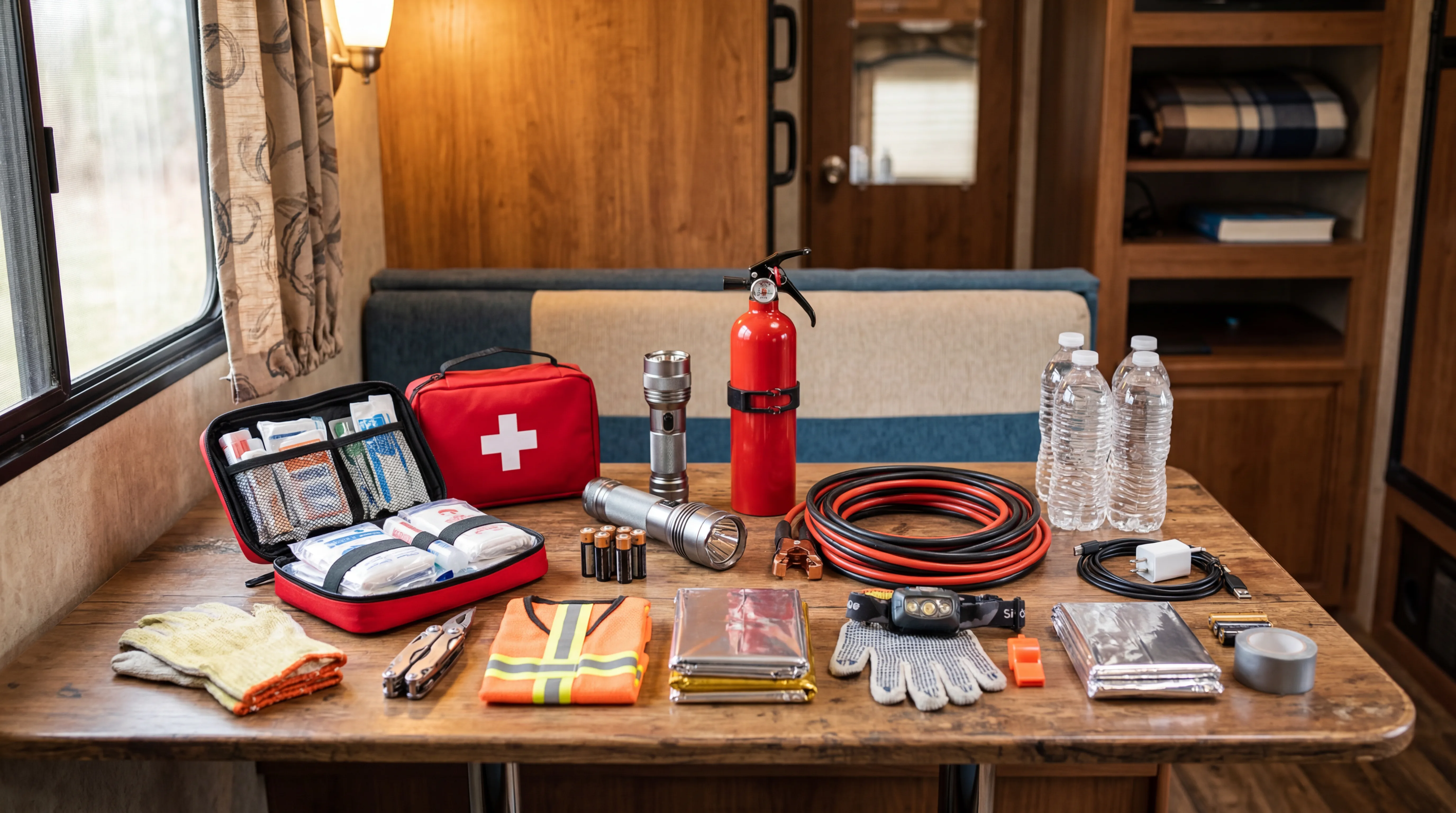
What Should Be in an RV Emergency Kit?
A complete RV emergency kit covers six things.
- First aid supplies
- Tools
- Water and food for three days
- Fire and carbon monoxide safety gear
- Copies of your insurance and registration
- Weather gear, including waterproofs and blankets
Heading into colder months? Work through the pre storage checklist that prevents many winter issues.
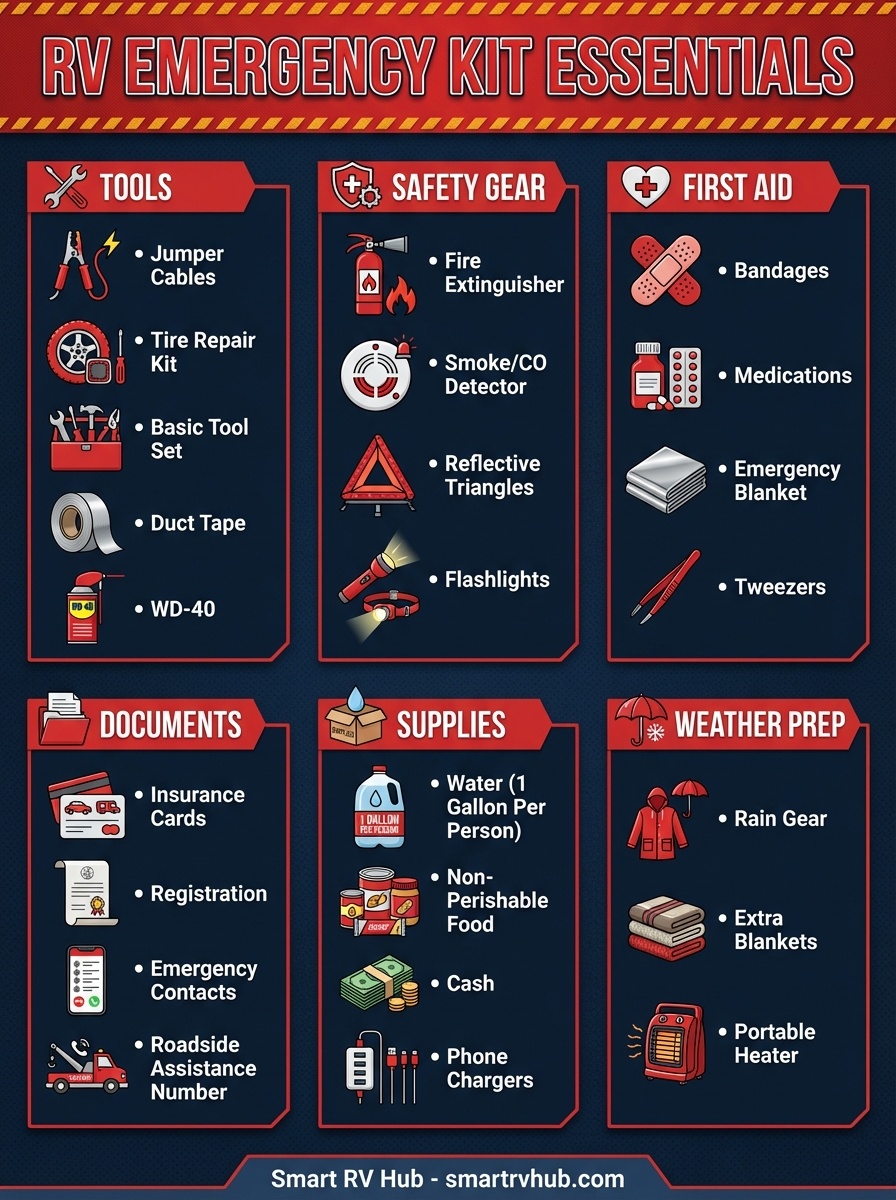
Be prepared for any emergency with this comprehensive kit checklist
Emergency Response Decision Guide
Follow this visual guide to quickly determine the appropriate response for any RV emergency
Is anyone injured or in immediate danger?
Is there fire, smoke, or gas smell?
Is severe weather threatening?
Is your RV disabled/broken down?
What system is affected?
Electrical Quick Fixes
- 1Check shore power connection
- 2Reset circuit breakers
- 3Check GFCI outlets
- 4Verify battery connections
Water/Plumbing Quick Fixes
- 1Turn off water pump
- 2Close tank valves
- 3Check for visible leaks
- 4Verify tank levels
HVAC/Climate Quick Fixes
- 1Check thermostat settings
- 2Verify propane level
- 3Clean/replace filters
- 4Check AC breaker
Emergency Numbers Quick Reference
Life Threatening
Good Sam Roadside
Coach-Net
FMCA Emergency
Pro Tip: Save This Page
Bookmark this page or take a screenshot for offline access. In emergencies, you may not have reliable internet.
Consider printing the emergency numbers and keeping them in your RV.
Affiliate Disclosure
This page contains affiliate links.
When you purchase through these links, we may earn a commission at no additional cost to you.
This helps support our free calculators, guides, and research tools. Read our full disclosure
Emergency Services
24/7 roadside assistance and emergency response
Critical PriorityBreakdown Recovery
Professional RV towing and mobile repair services
High PriorityMedical Emergency
Healthcare access and emergency medical services
Critical PriorityWeather Emergency
Severe weather alerts and shelter information
High Priority🚗 Essential Emergency Services & Equipment
Professional emergency services, essential safety equipment, and emergency preparedness tools for complete RV safety.
RV Life Pro Trip Planning
Route around low bridges and weight limits, and find campgrounds across a database of more than 30,000 sites (verified May 2026).
- • RV Safe Routing
- • 30,000+ Campgrounds
- • Trip Planning
- • Offline Maps
Affiliate link. We may earn a commission at no extra cost to you.
Emergency Water & Safety Systems
Essential emergency water filtration and safety equipment for off grid adventures and emergency situations.
- • Emergency Filtration
- • Water Purification
- • Safety Equipment
- • Off Grid Ready
Affiliate link. We may earn a commission at no extra cost to you.
Backup Power That Does Not Need Fuel
A lithium battery bank with an inverter keeps lights, phones, and the fridge running when shore power fails and the generator will not start.
- • Lithium Battery Banks
- • RV Inverters
- • Solar Charging
- • Silent Backup Power
Affiliate link. We may earn a commission at no extra cost to you.
This section contains affiliate links. We may earn a commission at no extra cost to you.
Protect Your RV Investment
An emergency hits harder when your coverage does not fit your rig. Standard auto policies often exclude larger RVs or leave gaps in total loss and personal property protection.
Compare quotes from insurers that specialize in RVs before your next trip. Ask about full timer coverage if you live in your RV, and confirm roadside assistance limits for vehicles over 10,000 pounds.
Review your policy once a year, since many insurers offer reduced premiums while your RV is in storage.
Frequently Asked Questions
What should I do if my RV breaks down on the highway?
Pull as far off the road as safely possible, turn on hazard lights, and place reflective triangles at least 100 feet behind your RV.
If you have roadside assistance coverage through Good Sam, Coach-Net, or AAA, call them first.
Stay inside the vehicle if you are on a busy highway.
If the breakdown poses an immediate safety risk such as smoke or fire, move everyone away from the RV and call 911.
How much does RV roadside assistance cost?
RV specific roadside assistance plans typically cost $80 to $200 per year depending on the provider and coverage level.
Good Sam offers plans starting around $80 per year with unlimited distance towing to the nearest qualified service center.
Coach-Net plans start around $120 to $180 per year depending on RV type and coverage level.
Standard AAA plans may not cover large RVs, so check whether your plan includes vehicles over 10,000 lbs before relying on it.
What should be in an RV emergency kit?
A well stocked RV emergency kit includes a first aid kit, fire extinguisher, reflective warning triangles, flashlights with extra batteries, and jumper cables.
Also include a basic tool set, duct tape, tire pressure gauge, and a phone charger or power bank.
Pack drinking water (one gallon per person per day for three days) and nonperishable food.
Keep copies of important documents including insurance and registration.
What do I do if I have a tire blowout while driving my RV?
Do not slam on the brakes.
Keep a firm grip on the steering wheel and gradually ease off the accelerator.
Let the RV slow down on its own, then gently apply the brakes once you are at a lower speed.
Pull off to a safe location, turn on hazard lights, and set out warning triangles.
RV tires are large and dangerous to change on the roadside, so call your roadside assistance provider rather than attempting it yourself.
When should I call 911 versus roadside assistance for an RV emergency?
Call 911 for any situation involving injury, fire, smoke, a fuel leak, a serious accident, or if you feel your safety is threatened.
Roadside assistance is the right call for mechanical breakdowns, flat tires, dead batteries, lockouts, and running out of fuel.
If you are unsure, err on the side of caution and call 911 first.
They can dispatch appropriate help and advise you on next steps.