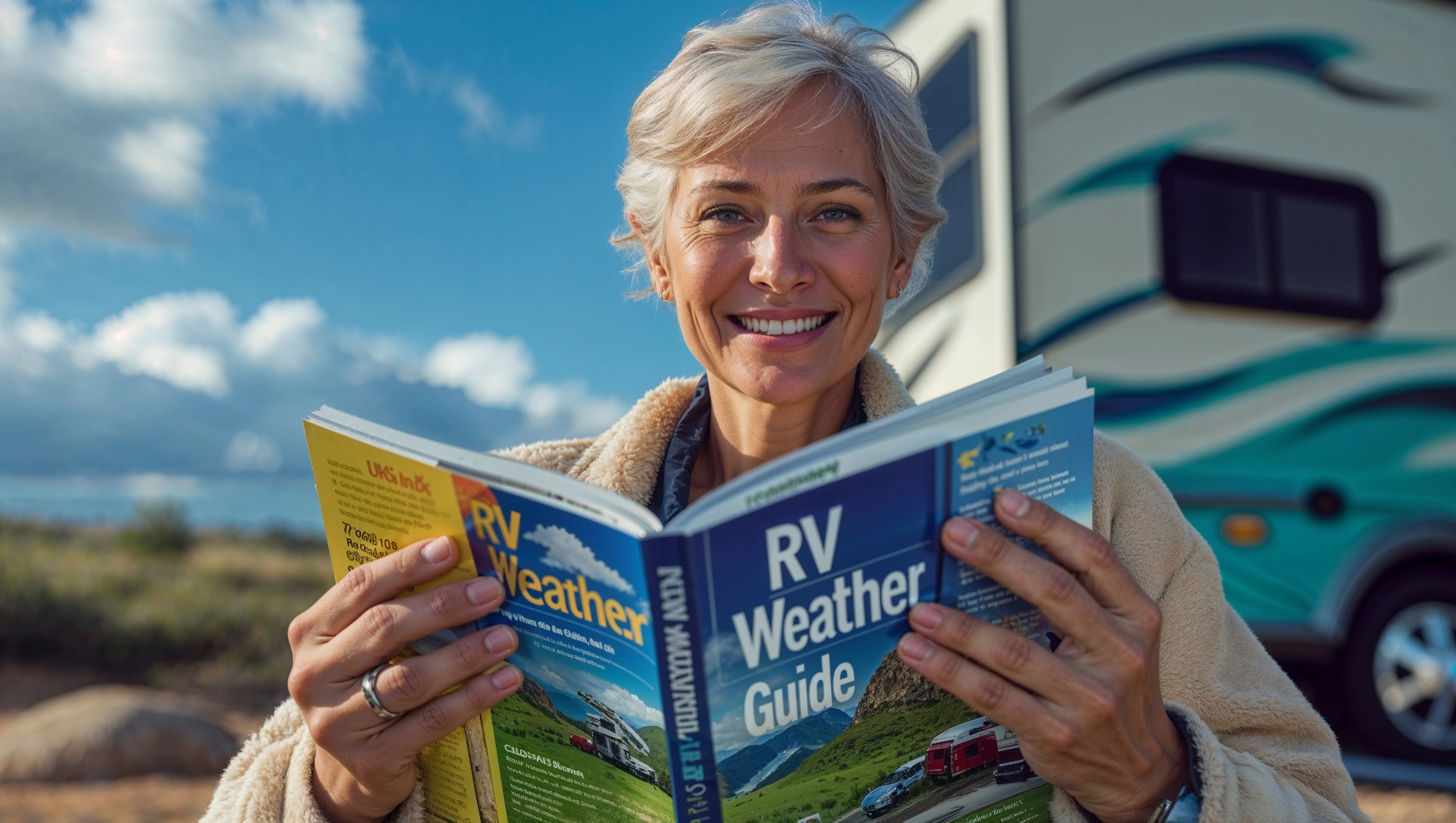
RV Weather Tracking: Know the Forecast Before You Roll
Real time forecasts, severe weather alerts, and route planning for safer RV travel.
📋 What you'll discover
- Check weather conditions at your destination before you travel
- Get severe weather alerts for your campground location
- Plan routes around storms and dangerous conditions
- View wind, precipitation, and temperature forecasts
Affiliate Disclosure
This page contains affiliate links.
When you purchase through these links, we may earn a commission at no additional cost to you.
This helps support our free calculators, guides, and research tools. Read our full disclosure
Why Weather Matters for Smart RV Travel
Weather directly affects your safety on the road, comfort at your campsite and the longevity of your vehicle. Understanding how to track, plan for, and respond to weather is essential for every smart RV owner.
Safety First
Weather conditions directly impact road safety. High winds, heavy rain, and ice can make driving hazardous, especially for high profile vehicles like RVs.
Campsite Comfort
Temperature extremes, precipitation, and wind can drastically affect your comfort level while camping, potentially turning a pleasant trip into a stressful experience.
Vehicle Longevity
Extreme weather can cause accelerated wear and tear on your RV. UV damage, freezing temperatures, and humidity all affect different components of your vehicle.
✓ Navigate confidently anywhere
Start Your Free 7 Day TrialAffiliate link. We may earn a commission at no extra cost to you.

Planning Your Trip Around Weather
Smart route planning begins with understanding the weather patterns that will impact your smart RV journey
| Weather Planning Essentials | |||||||||
|---|---|---|---|---|---|---|---|---|---|
Pre Trip Planning
| |||||||||
En Route Adjustments
| |||||||||
Seasonal Weather Tips
Summer
- Park in shade when possible
- Use reflective window covers
- Maintain proper tire pressure
- Check air conditioning before trips
Fall
- Prepare for early frost
- Watch for falling leaves on roads
- Check heater function
- Monitor weather forecasts closely
Winter
- Insulate water lines
- Use RV antifreeze
- Install thermal curtains
- Keep propane tanks filled
Spring
- Be aware of flash flooding
- Watch for severe thunderstorms
- Check roof seals after winter
- Monitor tornado warnings
Seasonal Weather Considerations
Summer Preparation
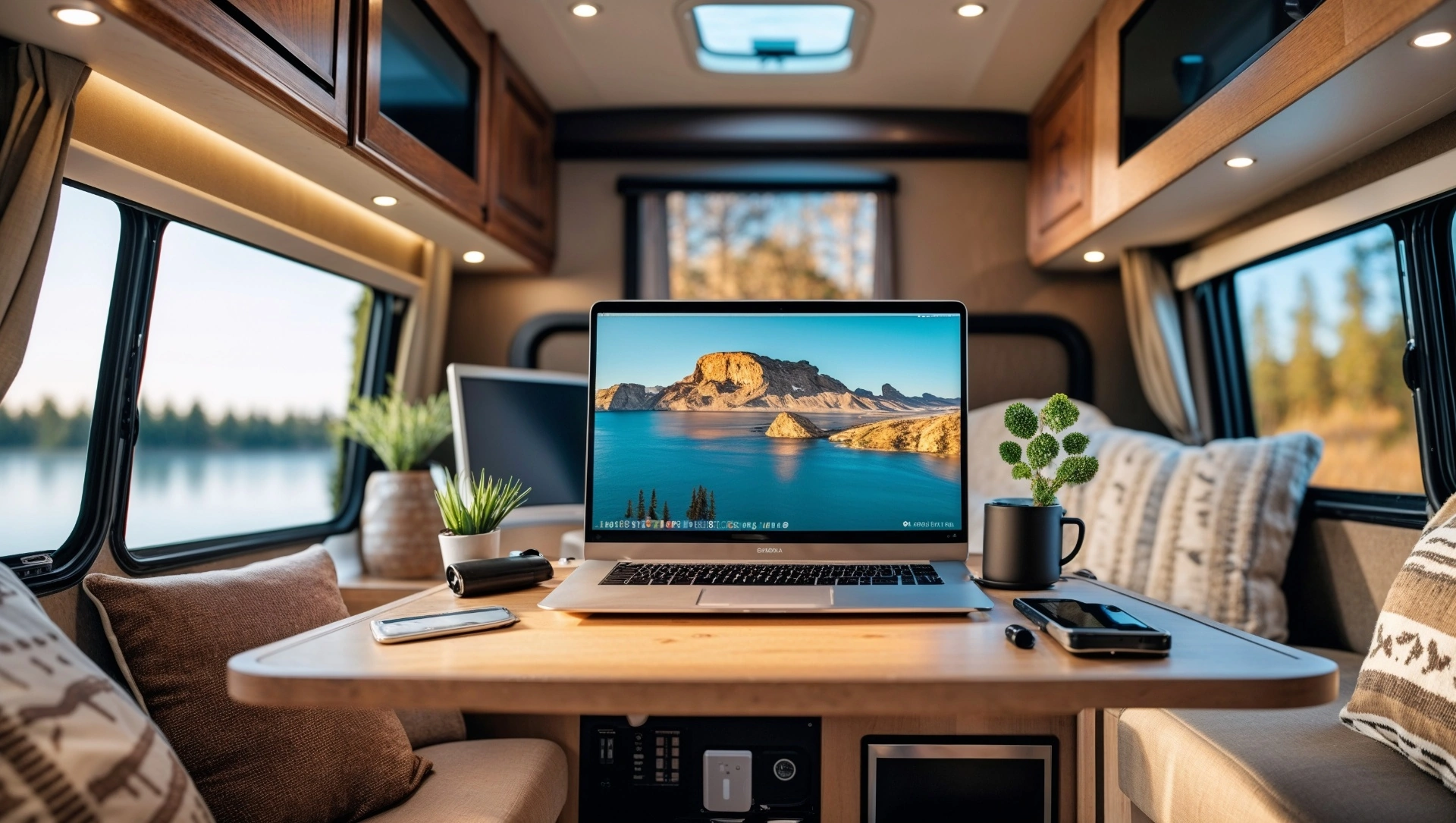
- •Keep your Smart RV cool by parking in shade when possible
- •Use reflective window covers to reduce heat gain
- •Check tire pressure frequently (heat increases pressure)
- •Test air conditioning before summer trips begin
Winter Considerations
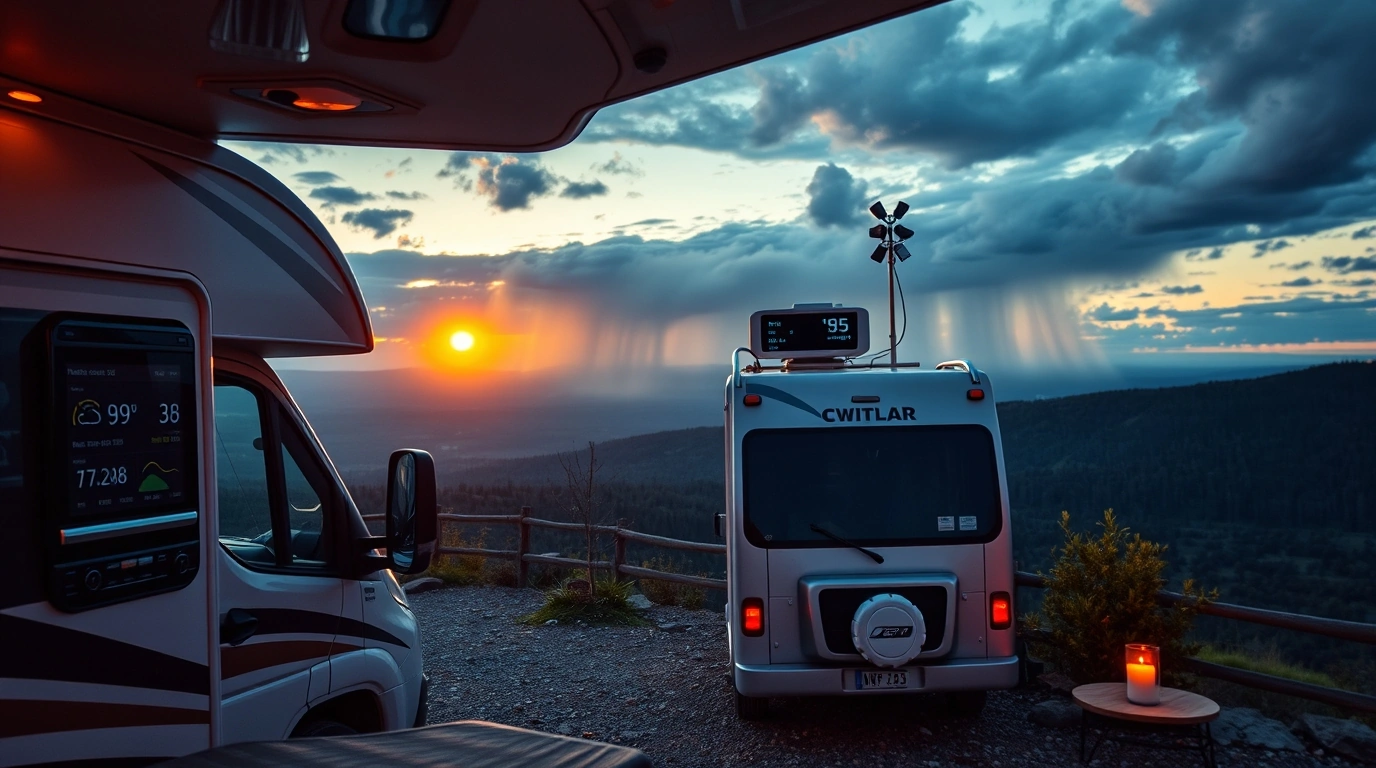
- •Insulate water lines and tanks to prevent freezing
- •Use RV specific antifreeze in plumbing systems
- •Install thermal curtains for better insulation
- •Keep propane tanks filled to at least 30%
Fall Planning
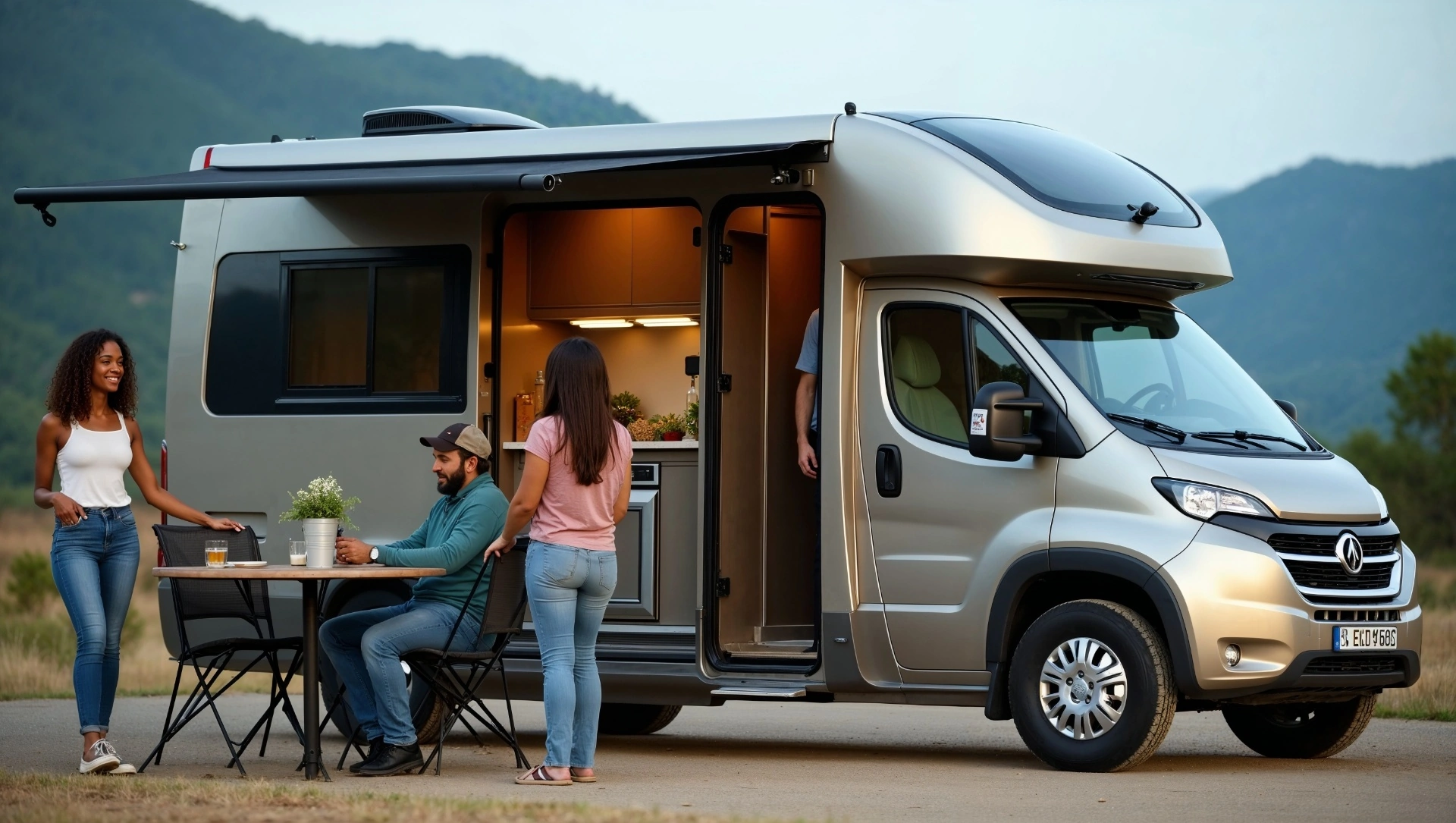
- •Prepare for early frost and temperature fluctuations
- •Watch for slippery conditions from fallen leaves
- •Check heating systems before colder weather arrives
- •Monitor weather forecasts for changing conditions
Spring Travel
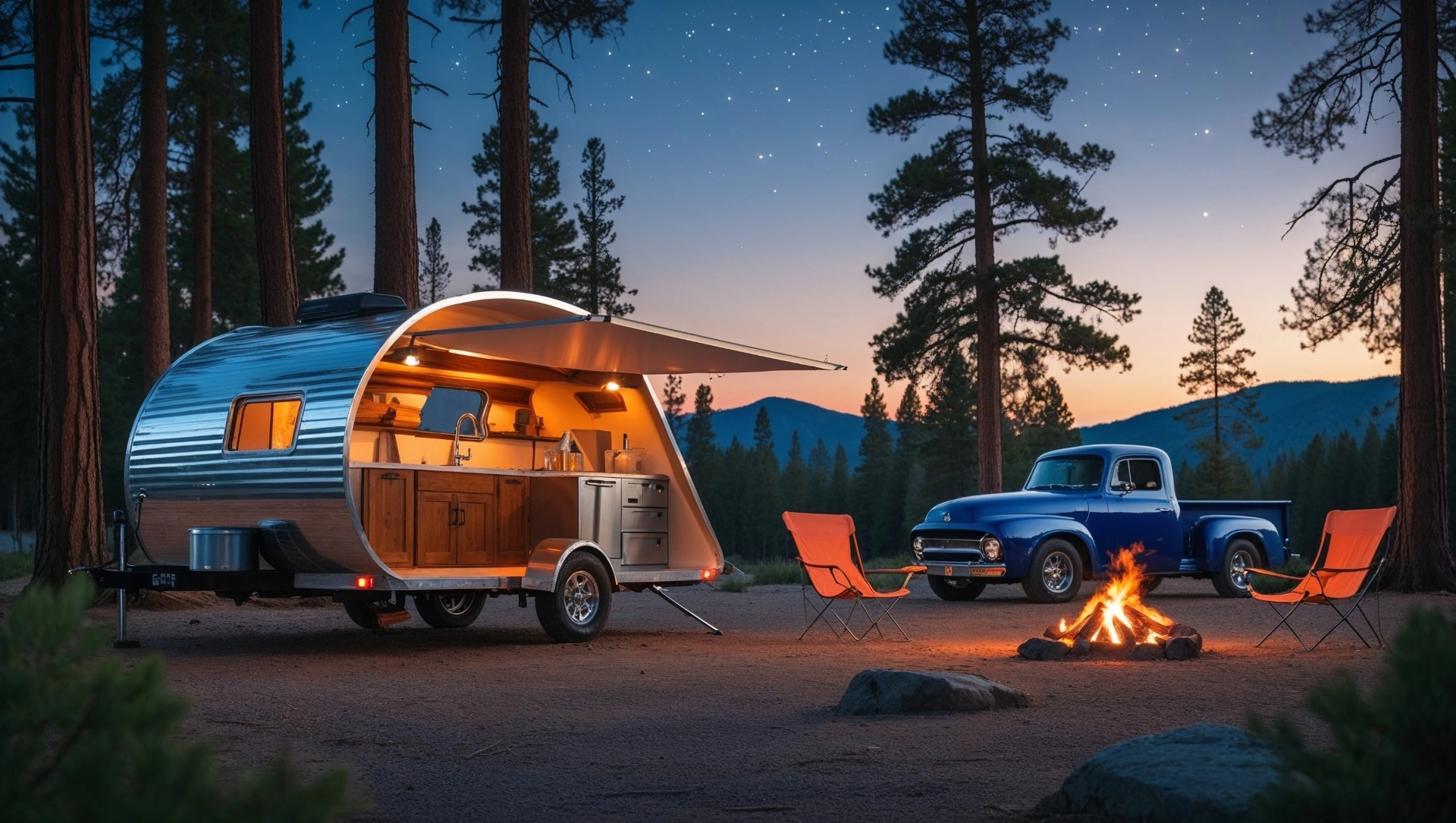
- •Be prepared for sudden rain and flash flooding
- •Check roof seals after winter expansion/contraction
- •Monitor weather alerts for thunderstorms and tornadoes
- •Ensure drainage systems are clear of winter debris
Regional Climate Guide for RV Travelers
Weather conditions vary dramatically across the United States. Knowing what to expect in each region helps you choose the right season to visit and pack the right gear for your RV.
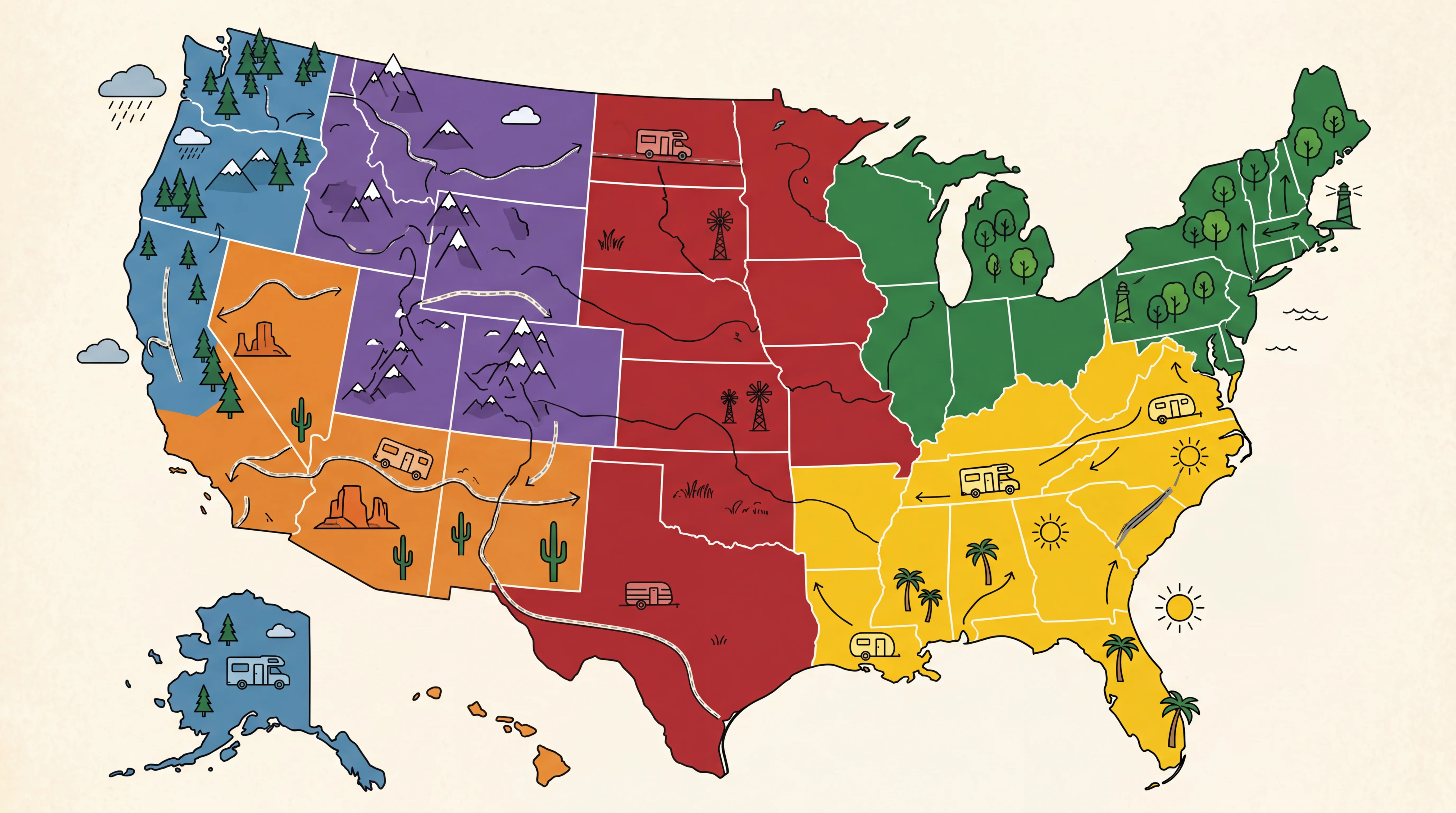
Southwest
Hot, dry summers with monsoon season from July through September.
Daytime highs regularly exceed 110°F in Arizona and Nevada between June and August.
Nights can drop 30 to 40 degrees in the desert, so carry both cooling and heating solutions.
Mild winters in lower elevations make the Southwest a top snowbird destination from November through March.
Higher elevations like Flagstaff and Santa Fe see significant snowfall.
RV Tip
Park in shade when possible and use reflective windshield covers.
Tire blowouts spike when pavement temperatures exceed 150°F, so check pressures every morning before driving.
Pacific Northwest
Mild, wet winters and dry summers define this region.
Seattle averages 152 rainy days per year, mostly between October and April.
Coastal areas see 60 to 80 inches of annual rainfall.
Summers are dry and mild with temperatures rarely exceeding 85°F, making June through September the prime RV season.
Inland areas east of the Cascades are drier and see wider temperature swings.
RV Tip
Invest in a quality dehumidifier for winter travel.
Check roof seals before entering the rainy season because even a small leak becomes a mold problem within weeks.
Northeast
Four distinct seasons with cold, snowy winters and warm, humid summers.
Winter temperatures regularly drop below 0°F in northern New England.
Fall foliage season from mid September through late October draws peak RV traffic to Vermont, New Hampshire, and Maine.
Summer humidity along the coast creates dew points above 70°F, making air conditioning essential.
RV Tip
Book campgrounds early for fall foliage season since popular sites fill 6 months in advance.
Winterize your RV if traveling north of Virginia between November and March.
Southeast
Hot, humid summers with afternoon thunderstorms almost daily from June through September.
Hurricane season runs from June 1 through November 30, with peak risk in August and September.
Winters are mild, with freezing temperatures rare south of the Carolinas.
The Gulf Coast and Florida are the most popular winter RV destinations in the country.
RV Tip
Monitor tropical weather forecasts daily during hurricane season.
Have an evacuation plan that includes a route at least 100 miles inland.
Afternoon storms are brief but intense, often dropping 1 to 2 inches of rain in 30 minutes.
Great Plains
Wide temperature extremes with severe thunderstorms and tornadoes from April through June.
Summer heat indices above 100°F are common in Kansas, Oklahoma, and Texas.
Winter blizzards can shut down highways for days in the Dakotas and Nebraska.
Wind is constant, averaging 15 to 25 mph year round across much of the region.
RV Tip
Never ride out a tornado in your RV.
Identify the nearest sturdy building or storm shelter at every campsite.
Sustained winds above 35 mph make RV travel dangerous due to the 10 to 13 foot height profile catching crosswinds.
Mountain West
Elevation drives the weather here more than latitude.
Passes above 8,000 feet can see snow from September through June.
Temperature drops roughly 3.5°F per 1,000 feet of elevation gain, so a 70°F valley can mean 45°F at a mountain campsite.
Afternoon thunderstorms build almost daily in the Rockies during summer, often bringing lightning and hail.
RV Tip
Check mountain pass conditions before crossing.
Altitude reduces engine power by about 3 percent per 1,000 feet, so plan for slower climbs and higher fuel consumption.
Let brakes cool on long descents.
California Coast
Mild year round temperatures moderated by the Pacific Ocean.
Fog is common along the northern coast from May through August.
Southern California is dry with fire risk peaking from October through December during Santa Ana wind events.
Coastal campgrounds rarely drop below 40°F or exceed 80°F, making this region comfortable for RV travel in any season.
RV Tip
Watch for wildfire evacuation orders during fall wind events.
Coastal salt air accelerates corrosion, so rinse your RV exterior and undercarriage after extended stays near the beach.
Real Time Weather Monitoring
Essential Weather Apps
Comprehensive Weather Apps
- AccuWeather - 15 day forecast plus radar
- Weather Underground - Detailed forecasts with PWS network
- The Weather Channel - Live interactive radar
Smart RV Specific Weather Tools
- RV Weather - Weather for routes specifically
- Wind Alerts - Warnings for wind/driving conditions
- Weather Radio - NOAA weather radio alerts
Understanding Weather Alerts for Smart RV Travel
Weather alerts can be critical for Smart RV travelers. Understanding their meaning and appropriate responses can help keep you safe during severe weather events.
| Alert Type | What It Means | Smart RV Response |
|---|---|---|
| Watch | Conditions are favorable for severe weather | Monitor closely, prepare for possible relocation |
| Warning | Severe weather is imminent or occurring | Take immediate protective action |
| Advisory | Less severe but potentially hazardous conditions | Use caution, possibly adjust travel plans |
Primary Alert Sources
NOAA Weather Radio
24/7 broadcasts of weather information and alerts. Consider a dedicated NOAA weather radio for your RV.
Weather Apps
Apps like Weather Channel, AccuWeather, or NOAA app provide real time alerts even when on the move.
Wireless Emergency Alerts
Make sure these are enabled on your mobile device for critical weather alerts in your area.
Weather Hazards for Smart RV Travel
High Winds
RVs are high profile vehicles. A standard Class A sits 12 to 13 feet tall with a flat side panel that acts like a sail.
At 35 mph sustained wind, lateral force on a 40 foot motorhome exceeds 1,500 pounds, enough to push you into the next lane or tip a lighter travel trailer.
- Park with front facing into wind to reduce side profile
- Retract awnings and slides before gusts arrive
- Stop driving if sustained winds exceed 35 mph
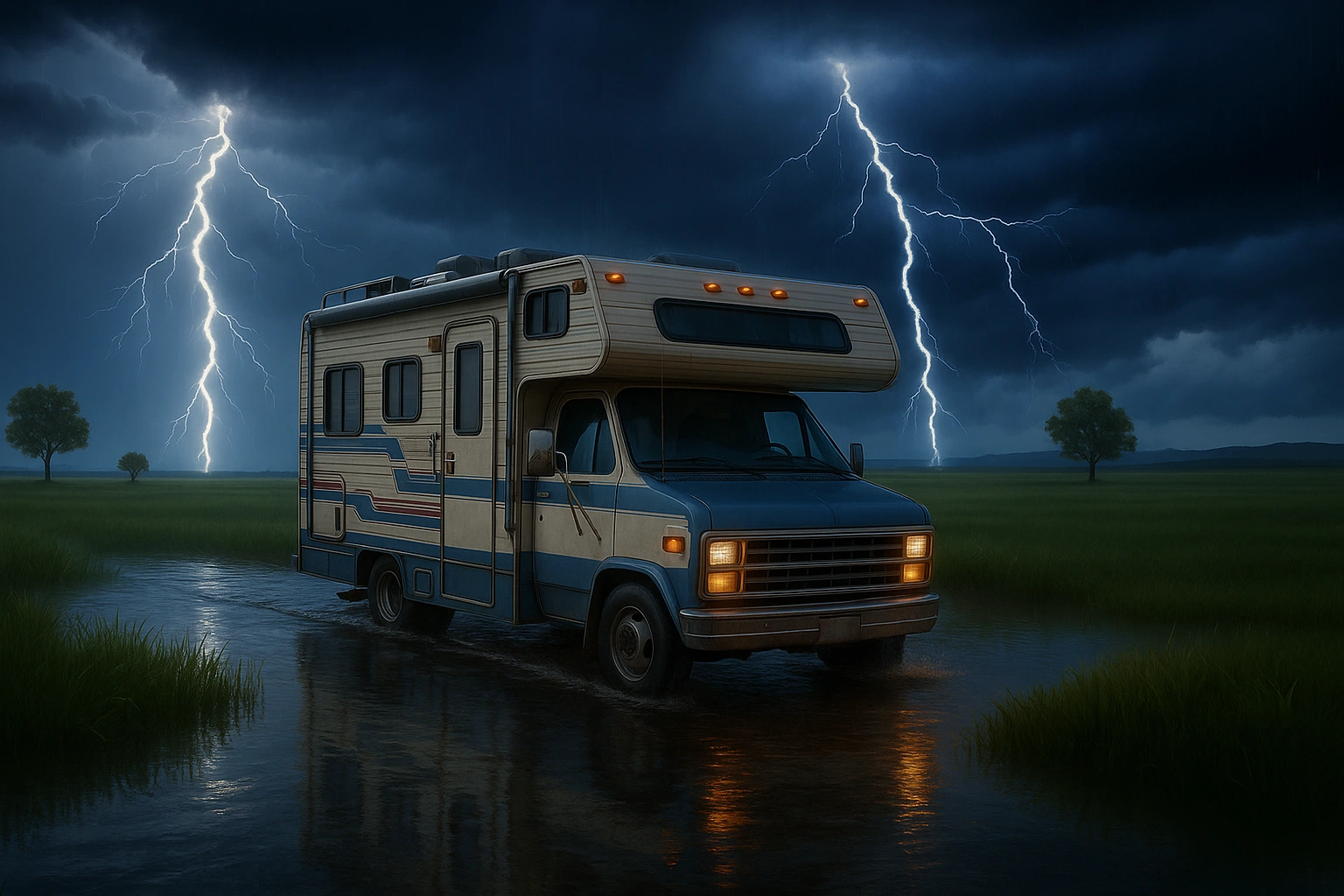
Thunderstorms
Your RV's metal frame acts as a Faraday cage, directing lightning current around the exterior rather than through the interior.
This makes the RV safer than being outside, but surge damage to electronics is still a risk through shore power connections.
- Avoid parking under trees to prevent branch strikes
- Disconnect shore power to prevent surge damage
- Stay inside the RV during lightning (Faraday cage effect)
Flash Floods
Flash floods kill more people in the US each year than tornadoes, hurricanes, or lightning.
Desert washes that look bone dry can fill with 6 feet of water in minutes from a storm 20 miles away that you never even see.
- Never camp in dry washes or low lying areas
- Identify evacuation routes to higher ground at every campsite
- Never drive through flooded roads — 12 inches of water can move a vehicle
Extreme Heat
RV roofs absorb solar radiation and can reach 160°F on a 100°F day. Interior temperatures climb 20 to 30 degrees above outside air within 30 minutes if the AC is off.
Tire blowouts also increase sharply when pavement temperatures exceed 150°F.
- Park in shaded areas and use reflective window covers
- Check tire pressure every morning during heat waves
- Never leave pets or children in the RV without AC running
Winter Weather
RV water lines freeze at around 20°F, not 32°F, because the insulation and heat tape provide a buffer down to about that point.
Below 20°F without active heat tape, exposed water lines and holding tank valves can freeze and crack within hours, causing thousands in water damage.
- Use heat tape on exposed water lines below 25°F
- Keep fuel tanks at least half full to prevent fuel line freeze
- Carry tire chains and know state requirements before mountain travel
Weather Preparedness for Smart RVers
Before a Trip
- Check historical weather averages for your destination using Weather Underground or NOAA Climate Data. Look at the same dates from the previous 3 years.
- Create an emergency contact list that includes local sheriff, nearest hospital, campground office, and your insurance roadside assistance number.
- Download offline maps for every state on your route. Also preload weather apps (Weather Underground, Windy) so they work with limited connectivity.
- Test all weather related equipment: furnace ignition, AC cooling output, NOAA radio reception, and backup generator start.
- Plan at least 2 alternate routes in case weather blocks your primary path. Mountain passes and flood prone areas need specific backup plans.
On the Road
- Check forecasts every morning before breaking camp. Look at both current conditions and the 12 hour outlook for your destination.
- Keep your NOAA weather radio on a dedicated frequency for your region. Program it for your county before each travel day.
- Identify the nearest sturdy building or storm shelter at every stop. RVs provide no tornado protection.
- Keep fuel tank at least half full at all times. In severe weather, gas stations may close or lose power.
- If winds exceed 35 mph, pull over at the next safe location. Do not try to power through hoping conditions improve.
Emergency Weather Kit
- NOAA weather radio with battery and hand crank backup. Midland WR120B or similar. Works without cell service.
- Portable power bank, minimum 20,000 mAh, to keep phones and radios charged during extended outages.
- 2 LED flashlights plus 8 AA batteries. Headlamps are more practical than handheld lights during setup or evacuation.
- First aid kit with emergency mylar blankets (pack 4), gauze, antiseptic, medications for each traveler, and a whistle.
- 3 day water supply: 1 gallon per person per day. For 2 adults, that is 6 gallons stored in dedicated jugs separate from the RV fresh water system.
- 3 day food supply: canned goods, protein bars, peanut butter, crackers. Include a manual can opener. Rotate stock every 6 months.
Weather Related Smart RV Maintenance
Seasonal Maintenance Checklist
Spring
- • Check and reseal roof seams
- • Inspect window and door seals
- • Test air conditioning system
- • Examine awnings for winter damage
Summer
- • Check tire pressure regularly
- • Clean air conditioner filters monthly
- • Inspect awnings and mechanisms
- • Check refrigerator vents and cooling
Fall
- • Check furnace operation
- • Inspect weather stripping
- • Clean and check roof vents
- • Apply UV protectant to rubber seals
Winter
- • Apply RV antifreeze to plumbing
- • Check propane system and detectors
- • Inspect roof for snow load capacity
- • Install battery maintainer if stored
Weather Impact & Prevention
| Weather Condition | Preventative Measure |
|---|---|
| Extreme Heat | Park in shade, use tire covers, check refrigerator vents |
| Freezing Temps | Winterize systems, insulate connections |
| High Humidity | Use dehumidifiers, check for water intrusion |
| UV Exposure | Use UV protectants, cover RV when stored |
How to Winterize RV Plumbing (Step by Step)
Frozen water lines cause more off season RV damage than any other weather related issue. A burst pipe can release 30 to 50 gallons of water into your RV interior before you notice.
Winterize your plumbing when overnight temps drop below 25°F consistently.
- Drain the fresh water tank completely. Open all faucets (hot and cold) and flush the toilet until water stops flowing.
- Bypass the water heater using the bypass valve (usually behind the heater access panel). This saves 6 to 10 gallons of antifreeze.
- Connect a hand pump or use your RV's winterizing valve to draw RV rated antifreeze (propylene glycol, nontoxic) from a jug directly into the water lines.
- Open each faucet one at a time until pink antifreeze flows through. Start with the closest fixture to the pump, then work outward.
- Flush the toilet until pink antifreeze appears. Pour 1 cup of antifreeze down each drain (kitchen, bathroom, shower) to protect the P-traps.
- Pour 1 cup into the toilet bowl. Add 2 cups to the black tank and 2 cups to the gray tank through the lowest drain.
Total antifreeze needed: 2 to 3 gallons for most RVs. Cost: about $12 to $20 worth of RV antifreeze.
The repair bill for a single burst pipe averages $500 to $1,500 plus water damage remediation.
Tire Pressure and Weather
Tire pressure changes roughly 1 PSI for every 10°F change in ambient temperature. A tire inflated to 80 PSI on a 90°F summer day will read 74 PSI at 30°F.
Under inflation causes uneven wear, increases blowout risk, and reduces fuel economy by 0.2 percent per PSI below spec.
Summer
Check pressure in the morning before driving, when tires are cool. Hot pavement adds 5 to 10 PSI during driving.
Never bleed air from hot tires since they will be under inflated when cool.
Winter
Re check and adjust pressure every time ambient temperature drops 20 degrees or more from your last check.
Cold tires on cold pavement lose grip faster, and under inflated tires flex more, generating heat that accelerates failure.
Frequently Asked Questions
What wind speed is too dangerous for RV travel?
Most RV safety experts recommend stopping travel when sustained winds exceed 35 mph.
RVs have a high profile (10 to 13 feet tall) with flat side panels that catch crosswinds.
At 35 mph sustained wind, lateral force on a Class A motorhome exceeds 1,500 pounds.
Travel trailers and fifth wheels are even more vulnerable due to their lighter weight and higher center of gravity.
At what temperature do RV water lines freeze?
RV water lines typically freeze at around 20°F, not 32°F.
The insulation and any heat tape provide a buffer above the freezing point of water.
Below 20°F without active heat tape, exposed water lines and holding tank valves can freeze and crack within hours.
Winterize your plumbing or use heat tape when overnight temperatures consistently drop below 25°F.
Is it safe to stay in an RV during a thunderstorm?
Yes, staying inside your RV during a thunderstorm is generally safer than being outside.
The metal frame acts as a Faraday cage, routing lightning current around the exterior.
Take three precautions: - Disconnect from shore power, so a surge cannot damage your electrics - Avoid touching metal surfaces inside the RV - Never park under trees that could drop branches
What weather app is best for RV camping?
Weather Underground provides the most campground level accuracy because it uses data from personal weather stations, not just national weather service sites.
Windy is best for tracking incoming storm systems visually.
Every RV should also carry a NOAA weather radio with battery backup for alerts without cell service.
The FEMA app provides location based emergency notifications.
Should I leave my RV during a tornado warning?
Yes, always leave your RV during a tornado warning and seek shelter in a sturdy building or designated storm shelter.
RVs provide zero protection from tornadoes regardless of size or how they are anchored.
Even a weak EF-0 tornado with 65 to 85 mph winds can flip an RV.
Identify the nearest sturdy structure at every campsite as part of your arrival routine.
How do I check weather conditions at a specific campground?
Use Weather Underground's map view to zoom into your campground's exact location and check conditions from the nearest personal weather station.
Campendium includes cell signal and weather reports from other RVers at specific campgrounds.
For extended planning, check NOAA's Climate Prediction Center for 6 to 14 day outlooks at your destination.
Essential Weather Tools & Services
Get accurate forecasts, emergency assistance, and professional weather monitoring for safer Smart RV travels.
Trip Planning Around the Forecast
Plan RV safe routes and research campgrounds along the way, then adjust plans when the forecast changes.
RV Life Pro includes a 7 day free trial.
Details verified May 2026.
- • RV Safe GPS Routing
- • 30,000+ Campgrounds
- • Trip Planning Wizard
- • 7 Day Free Trial
Affiliate link. We may earn a commission at no extra cost to you.
Flexible Overnight Stops When Weather Reroutes You
Its All Access plan spans 9,700 plus host locations, giving you overnight options along a changed route.
Hosts confirm each stay, so plan ahead rather than treating it as emergency shelter.
Details verified July 2026.
- • 9,700+ Host Locations
- • Wineries, Farms, and Attractions
- • Stays Confirmed by Hosts
- • Nationwide Network
Affiliate link. We may earn a commission at no extra cost to you.
This section contains affiliate links. We may earn a commission at no extra cost to you.